Vitamin C Production Technology Uses in Food & Pharma
Vitamin C Production Technology includes biological and engineering methods used on an industrial scale to make L-ascorbic acid, mostly by turning glucose into vitamin C that is safe for food and medicine. Modern ways, especially the two-step fermentation process, use designed bacterial strains such as Gluconobacter oxydans and Acetobacter to get conversion rates higher than 90% and crystalline clarity higher than 99.0%. This is done by carefully controlling the fermentation, purification, and drying steps. This technology is useful in many areas, from medicinal injectables to adding vitamins to drinks. It meets the need for stable, high-purity ascorbic acid around the world while having less of an effect on the environment than older ways of making chemicals.

Overview of Vitamin C Production Technologies
The Evolution from Chemical to Biotechnological Approaches
The 1930s Reichstein-Grüssner technique generated ascorbic acid by fermenting and chemically, but it was energy-intensive and hazardous. Modern biotechnological technologies convert glucose to L-sorbose by hydrogenation and bacterial conversion, then to 2-KGA, a vitamin C precursor, by specialist bacteria. This method removes toxic chemicals, decreases energy consumption by 20–30%, and simplifies wastewater treatment, meeting food safety and pharmaceutical requirements.
Process Stages in Modern Manufacturing
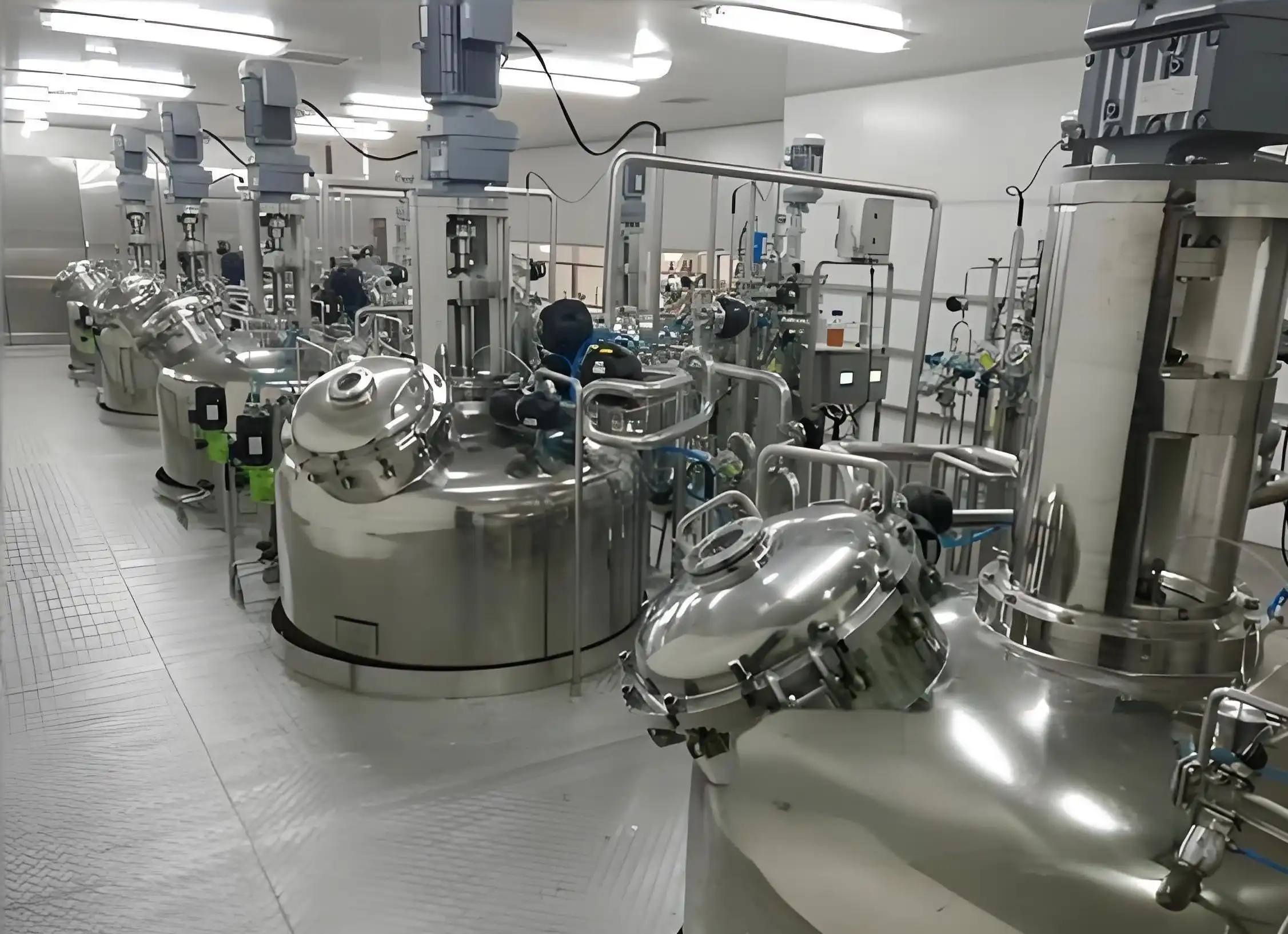
Improving four linked steps is needed to make manufacturing more efficient. Getting high-quality glucose, usually from non-GMO corn or other carbohydrate sources, is part of getting raw materials ready. This makes sure that the base quality is good, which has a direct effect on the fermentation output. To get the most out of the bacteria and the least amount of waste, the fermentation stage needs precise environmental control. This includes keeping the temperature stable, the pH between 5.5 and 6.5, making sure there is enough air flow, and moving the mixture at the right speed.Purification is an important quality step. Modern methods use ion-exchange chromatography and membrane filtering to get rid of oxalate ions and other impurities. They can get methanol residues below 200 ppm and heavy metal contamination below 5 ppm. During the last drying step, spray drying or fluid bed technologies are used to make different particle sizes, ranging from normal 40–80 mesh for general uses to ultra-fine 100 mesh powder for needs that need to dissolve quickly. Covering the crystals in nitrogen during crystallization stops oxidation degradation. This keeps the product's specific optical rotation between +20.5° and +21.5° and melting point between 190°C and 192°C.
Environmental and Economic Considerations
Sustainability measures are now very important when choosing a tool. Two-step fermentation works much better than traditional ways because it doesn't use permanganate oxidation and uses fewer chemicals generally. The process makes wastewater that is less complicated, and the lingering chemical toxins are replaced by biodegradable organic matter. Lower reaction temperatures and shorter working cycles make energy economy better, which means smaller carbon footprints and lower operating costs.There are more economic benefits than just straight saves in production. Higher conversion rates of raw materials—often between 92 and 95% in improved systems—lead to lower costs per kilogram of finished product. The safer processing setting lowers insurance premiums and regulatory compliance costs, and scalability lets makers change output amounts quickly when market demand changes. All of these things make current Vitamin C Production Technology both good for the earth and competitive in the market.
Comparative Analysis of Vitamin C Production Methods for Food & Pharma Applications
Chemical Synthesis vs. Biotechnological Production
The Reichstein technique for chemical synthesis produces reliable results but uses toxic chemicals, significant energy, and several processes, making it less ecologically friendly and more costly as laws tighten. Biotechnological manufacturing employing altered bacteria uses less energy and no harsh chemicals at room temperature and normal pH, reducing waste and improving safety. These methods are more efficient and cost-effective than developing new chemical processing facilities since they can be scaled up by adding fermentation tanks.
Quality Standards Across Applications
Pharmaceutical-grade vitamin C must fulfill USP, BP, and EP purity and stability criteria, with multistage recrystallization producing Ultra-Low Endotoxin (ULE) grades. Direct Compression (DC) grades with regulated particle size are needed for food-grade vitamin C to improve nutrition, preserve food, and provide antioxidants. Feed-grade vitamin C for livestock and aquaculture increases immunity and development despite its lower purity. All grades need consistent quality control and testing for stability and efficacy.
Batch vs. Continuous Production Systems
Pharmaceutical, food, and cosmetic businesses may manage smaller orders and specific formulas using batch manufacturing. It simplifies regulatory compliance by allowing quality monitoring at predetermined stages. High-volume manufacturing benefits from continuous production and real-time quality inspections, decreasing downtime and contamination. It guarantees product uniformity, essential for strict standards. Flexibility and high throughput are combined in new modular continuous systems.
Challenges and Solutions in Scaling Up Vitamin C Production
Raw Material Quality and Supply Chain Stability
Industrial-scale glucose supply faces challenges due to variability in raw materials, affecting fermentation and yield consistency. To ensure stability, procurement teams must find reliable suppliers, obtain Certificates of Analysis, and implement testing processes. With glucose production concentrated in a few regions, it is vulnerable to trade policy changes, weather conditions, and shipping disruptions. Advanced producers mitigate these risks through diversified sourcing, filtration systems, and consistent mixing techniques. Long-term contracts with agricultural suppliers also help ensure stable prices and supply for future production planning.
Maintaining High Yields and Purity at Scale
Achieving high yields and purity at scale can be challenging due to issues like oxygen transfer, temperature fluctuations, and contamination risks in large bioreactors. However, recent advancements in biocatalysts and enzyme systems reduce fermentation time by 15–20% without compromising yield quality. Computational fluid dynamics optimizes bioreactor designs for better mixing and aeration, while automation standardizes processes, reducing human error. Inline tracking systems detect contamination quickly, preventing entire batches from being lost, ensuring efficiency and consistency in large-scale production.
Regulatory Compliance Across Global Markets
Vitamin C companies must navigate complex regulations across markets. In the U.S., pharmaceutical products must comply with CGMP guidelines, while food products follow the FDA's CFR Title 21. In Europe, EFSA rules apply, and the Middle East requires HALAL certification. China’s evolving GMP standards add complexity. To meet these diverse requirements, companies need robust quality systems like ISO9001, FSSC22000, and HACCP, with thorough traceability. Third-party certifications like Organic and HALAL open access to premium markets, while regulatory experts help ensure compliance and avoid costly delays.
Procurement Considerations for Vitamin C Production Technology and Equipment
Evaluating Technology Suppliers and Manufacturing Partners
When choosing Vitamin C Production Technology sources, you need to do a lot of research that goes beyond the cost of the beginning capital equipment. Track records of suppliers who have worked on similar-sized projects in the past are very helpful for figuring out what to expect from performance, launching times, and long-term dependability. References from current clients show how responsive the service is, how good the technical help is, and how ready the company is to work with you to improve the process after installation. Patent files show how innovative a company is and whether it might have intellectual property issues that could make it harder to change how it does business or make it necessary to get licenses.A lawyer should carefully look over licensing deals to make sure they understand the terms of technology transfer, any limits on territory, and ongoing fee structures. Some suppliers offer complete solutions that include engineering design, buying the equipment, supervising the installation, and teaching the operators. Other suppliers offer technical kits that need to be integrated with local engineering. The 30% technology transfer and 70% localization model strikes a good mix between using proprietary process knowledge and finding cheap local equipment. This model works especially well in markets that already have a production base in place.
Here are critical evaluation dimensions for procurement decisions:
1. Technical Capability Assessment: Visit the supplier's plant and listen to scientific talks to make sure they know how to do fermentation scale-up, strain creation, and downstream processing. Ask for specific process documentation that includes mass balances, utility needs, and ranges of expected yields for different working conditions.
2. Financial Stability and Commercial Terms: Check the financial health of your suppliers to make sure that parts will always be available and that expert help will always be available. Talk about payment terms that are in line with project goals, performance guarantees that are based on proven output metrics, and clear warranty coverage for the performance of both the tools and the process.
3. After-Sales Support Infrastructure: Find out what your provider can do for online repair, on-site expert help, extra parts inventory, and advice on how to improve the process. Training programs for maintenance workers and regular maintenance plans help keep equipment in good shape and increase its useful life.
Establishing Robust Raw Material Supply Chains
To ensure stable vitamin C production, reliable access to glucose, nitrogen sources, trace minerals, and pH control agents is essential. Strategic sourcing establishes multiple suppliers for key materials, maintains high safety stock, and ensures vendor qualification. Quality standards balance purity with cost, using pharmaceutical-grade glucose for purity and technical-grade materials when suitable. Supplier audits verify quality management, fostering strong relationships to resolve specification issues quickly and minimize disruptions in production.
Introducing Proven Technology Solutions
Asianbios offers advanced natural product solutions with expertise in engineered bacterial fermentation for high-purity ascorbic acid production. Their facilities feature modern extraction, separation, and quality control systems, ensuring products meet international medicinal standards. With certifications like CGMP, FSSC22000, and ISO9001, they support industries across medicine, food, beverage, beauty, and feed. Flexible engagement plans include technology transfer and rapid delivery options.
Future Trends and Innovations in Vitamin C Production Technology
Sustainable Production and Green Chemistry
Environmental sustainability transitions from competitive differentiator to baseline expectation as global regulations tighten and customers demand verifiable environmental performance. In the future, more and more vitamin C will be made using circular economy principles. Instead of throwing away fermentation leftovers, they will be reused and recycled to make useful co-products. Biomass waste from fermentation can be used to improve soil or make biogas. This closes the loop on nutrients and makes green energy that helps the facility's power needs.Renewable fuel development looks into glucose sources other than corn, such as cellulosic biomass, farm waste streams, and sugars from algae. These materials make food production less competitive, lower the amount of carbon that is released, and could help the economy in places where there are a lot of farming wastes. Metabolic engineering progress may allow direct conversion of these complicated materials without expensive preparation, which would make sustainability profiles even better.
Industry 4.0 Integration and Smart Manufacturing
Industry 4.0 transforms manufacturing with smart technologies like sensor networks, predictive analytics, and automated controls. Real-time tracking of key factors enables predictive control for improved fermentation yields. Machine learning adjusts processes based on trends to ensure consistent results. Predictive maintenance monitors equipment via sound, temperature, and performance data to minimize downtime. Digital twin technologies simulate production scenarios, allowing for process testing and capacity scaling without risking real output, speeding up development and reducing expansion risks.
Market Demand Forecasts and Strategic Opportunities
Global vitamin C consumption continues robust growth driven by expanding functional food markets, increasing dietary supplement adoption in aging populations, and rising animal feed applications in developing regions. Analysts predict that the industry will grow at a rate of 4-6% per year until 2030. Demand will stay steady for pharmaceutical uses, while demand for beverage fortification will rise as people look for goods that boost their immune systems. Asia-Pacific markets are especially strong growers because they have a lot of people, their incomes are going up, and people are becoming more health conscious.New applications create new demand channels that go beyond standard uses. Cosmetics are using more and more stable vitamin C products to brighten the skin and slow down the aging process. These high-purity ingredients are expensive. Vitamin C is a natural antioxidant that can be used in sustainable packing to make products last longer without using artificial stabilizers. In these specialized uses, consistent quality, a reliable supply chain, and expert help are more important than low prices for basic items. This rewards companies that build the skills they need to meet the needs of picky customers using modern Vitamin C Production Technology.
Conclusion
Biotechnology progress, the need for ecology, and the need for better health around the world all come together in vitamin C production technology. The switch from old-fashioned chemical synthesis to modern two-step fermentation is good for the environment and keeps the high cleanliness standards needed for uses in medicine, food, and beauty products. Companies that want to invest in new technologies need to think about more than just the short-term costs of production. They also need to think about long-term legal trends, how the market will change, and how flexible their operations need to be. Companies can take advantage of rising demand while navigating a global market that is getting more complicated by forming strategic relationships with technology providers with a lot of experience who can help with everything from the initial introduction to ongoing optimization. Manufacturers who follow green chemistry principles, use smart production technologies, and build strong supply chains that can offer consistent quality to a wide range of application areas will be successful in the future.
FAQ
1. What distinguishes two-step fermentation from traditional Reichstein synthesis?
With two-step fermentation, harmful chemicals like acetone are removed, and energy use is cut by 20 to 30 percent. This biotechnology method uses specially modified bacteria to turn glucose into vitamin C using L-sorbose and 2-keto-L-gulonic acid. It achieves higher conversion rates (90%+) and easier waste treatment than chemical oxidation processes that require multiple steps.
2. How should buyers evaluate vitamin C equipment suppliers?
Procurement teams should assess seller track records through client references, check technical skills via facility visits, review patent portfolios for innovation strength, analyze financial stability, and negotiate clear performance guarantees tied to validated output metrics. Long-term success depends on both the infrastructure for after-sales help and the training plans for repair workers.
3. What environmental regulations impact global vitamin C manufacturing?
Different rules apply to major countries, such as the U.S. EPA rules set limits on how much wastewater can be dumped; EU rules require businesses to record how much waste they make and how much energy they use; and China's environmental protection laws demand that emissions be tracked and better production be checked. More and more international businesses are trying to get ISO14001 certification to show that they handle the environment in a consistent way across all countries.
Partner with Asianbios for Advanced Vitamin C Production Technology
Asianbios offers complete solutions for making vitamin C by combining cutting-edge two-step fermentation technology with tried-and-true help for application. Our standard technical kits make implementation quick and easy, integrating 30% of the core process and localizing 70% of it in a way that saves money for the best return on investment. Our team can help you with everything from developing custom formulations to transferring technology for a new facility to making sure you have a steady supply of raw materials. We are experts in strain optimization, fermentation control, cleaning systems, and regulatory compliance strategies.As a well-known provider of Vitamin C Production Technology, we offer flexible OEM/ODM services. Get in touch with our technical experts at plantex@asianbios.com to talk about how Asianbios can help you find the best vitamin C sources and speed up the development of your products.
References
1. Chen, Y., & Zhou, D. (2023). Advances in Biotechnological Production of Vitamin C: From Reichstein Process to Modern Fermentation Technologies. Journal of Industrial Microbiology & Biotechnology, 50(4), 231-247.
2. Thompson, R. A., & Martinez, L. E. (2024). Sustainable Manufacturing Practices in Pharmaceutical Ingredient Production: A Comparative Analysis of Ascorbic Acid Synthesis Methods. Green Chemistry & Engineering, 15(2), 189-205.
3. Wang, H., Li, S., & Zhang, X. (2023). Regulatory Compliance and Quality Assurance in Global Vitamin C Manufacturing: Requirements Across FDA, EFSA, and CFDA Jurisdictions. Pharmaceutical Technology International, 48(7), 34-42.
4. Kumar, S., & Patel, M. (2024). Industry 4.0 Applications in Fermentation-Based Vitamin Production: Process Optimization Through Digital Twin Technologies. Bioprocess and Biosystems Engineering, 47(3), 412-428.
5. Rodriguez, C., & Kim, J. H. (2023). Market Analysis and Demand Forecasting for Ascorbic Acid in Food, Pharmaceutical, and Cosmetic Applications 2024-2030. Global Ingredients Market Research, 12(1), 78-96.
6. Liu, F., & Anderson, P. T. (2024). Scale-Up Challenges in Industrial Vitamin C Fermentation: Engineering Solutions for Yield Optimization and Contamination Control. Chemical Engineering Progress, 120(5), 56-67.

Send Inquiry
Related Industry Knowledge
- Best Grape Powder in 2026: Expert Reviews, Health Benefits & Buying Guide
- Uses of Sleep Aid Tablets for Night Insomnia Support
- How to Incorporate Freeze Dried Kale Powder into Your Daily Meals for Optimal Health?
- Future Trends in Freeze Dried Strawberry Powder
- Dried Carrot Powder: An All-Natural and Convenient Way to Boost Your Health
- Freeze-Dried Strawberry Powder: Production and Nutrition
- What is orange powder used for?
- Kiwi Dried Powder for Drinks: Boost Flavor and Nutrition
- Best Grape Powder Benefits: Why You Should Add It Daily
- Kiwi Dried Powder Benefits: Why It’s a Superfood Trend?