Inside Production Technology Of Hyaluronic Acid: Purification
In the last 20 years, the production technology of hyaluronic acid has firmly transitioned from animal tissue extraction to microbial fermentation. Today, more than 80% of the world’s HA is produced in Chinese fermentation plants utilising genetically altered strains of the bacterium Bacillus subtilis. Purification is at the core of this process, controlling the distribution of molecular weights, levels of endotoxin and protein residues and finally deciding whether the final white powder fits cosmetic, food or injectable-grade criteria. Understanding the inner workings of purification in a contemporary HA manufacturing line gives procurement decision makers the confidence to assess supplier competency.
Understanding Hyaluronic Acid Production Processes
From Animal Extraction to Microbial Fermentation
It used to be that HA came from rooster combs, but those combs only contained 0.1% to 0.5% HA by weight. This method of hyaluronic acid production has been completely replaced by aerobic microbial fermentation, in which modified Bacillus subtilis directly secretes HA into the extracellular soup. The fermentation process now makes 8–12 g/L, which is 20–100% more than the extraction way and gets rid of all the risk of avian diseases.
Alternative Routes and Their Limitations
Making chemicals and enzymes in a lab dish is still a niche field. It is hard to control the molecular weight ranges that come from chemical routes, and it is harder to meet wastewater compliance standards when chemical waste streams are present. Most B2B buyers today can't use enzyme-based synthesis on a big scale because it only works on a small scale and costs a lot of enzymes. So, you can't exactly control the length of the chain.
Sustainability Angle in Modern HA Production
Synthesis of hyaluronic acid is based on fermentation of corn starch derivatives, which are a renewable feedstock. This method cuts carbon pollution by about 60% compared to using animals, and it doesn't make any waste because animals aren't killed. That profile is getting more and more important for procurement teams that need to pick a long-term HA supplier because of ESG concerns.
| Production Route | Yield (g/L) | Pathogen Risk | Carbon Footprint |
|---|---|---|---|
| Animal Extraction | 0.1–0.5 | High (prions, viruses) | High |
| Microbial Fermentation | 8–12 | None (GRAS strains) | Low (−60%) |
| Enzymatic Synthesis | <1 | Low | Medium |
Purification Techniques in Hyaluronic Acid Production
Primary Separation: Membrane Filtration and Centrifugation
The broth goes through microfiltration to get rid of the whole bacteria cells after 48 to 72 hours of fermentation at 30 to 37°C and pH 6.8 to 7.2. It then goes through ultrafiltration to concentrate the HA polymer. Now, centrifugation might be able to help get rid of the dead cells. These steps, which also have a direct bearing on the quality of the final product, must be taken before any effective method of hyaluronic acid production can begin. Proteins from the host cell get in when membranes aren't handled well. These proteins make it harder to get rid of later.
Intermediate Purification: Enzymatic Proteolysis and Activated Carbon Decolorization
The membranes are then separated and any excess proteins are broken down by protease enzymes. The pH and temperature are carefully controlled. Then, a procedure called activated carbon adsorption, removes the residues comprising colours, bits of nucleic acids and organic materials of low molecular weight. The combination of the two processes removes less than 0.05% of the protein residue. This phase accounts for the bulk of the quality discrepancy between manufacture of injectable-grade and standard-grade hyaluronic acid.
Advanced Purification: Ethanol Precipitation and Graded Ultrafiltration
Ethanol precipitation eliminates just the HA polymer and leaves smaller toxins in solution. Then the residue is again mixed together and passed through ultrafiltration membranes graded to stop at various molecular weights. This allows the separation of molecules with accurate molecular weights from 500,000 to 20,000,000 Da. The same process may be used by hyaluronic acid manufacturers to produce low-MW HA for transdermal cosmetics and high-MW HA for intra-articular injections.
| Purification Step | Primary Target Removed | Key Parameter |
|---|---|---|
| Microfiltration/UF | Bacterial cells, cell debris | Membrane pore size 0.1–0.45 µm |
| Enzymatic Proteolysis | Host-cell proteins | Protein residue <0.05% |
| Activated Carbon | Pigments, nucleic acids | UV 260/280 nm ratio |
| Ethanol Precipitation | Small organic molecules | Ethanol concentration 60–80% |
| Graded Ultrafiltration | MW fractionation | Cutoff 300 kDa–3,000 kDa |
Optimization Strategies for Purification Efficiency
Molecular Weight Control as a Process Variable
The molecular weight isn't just a number that is calculated later; it changes all the time as the product ferments and is refined in the production technology of hyaluronic acid. How long the chain is depends on how long it ferments, how fast it moves, and how much liquid oxygen is present. Once the fermentation process is done, hyaluronidase is used to cut the chains to the right MW ranges using an enzyme cut under certain conditions. Gel permeation chromatography (GPC) is used to keep an eye on things all the time and keep batch-to-batch differences within ±10%. With this standard, professional HA makers can be told apart from cheap sellers.
Fermentation Tank Design and Its Impact on Purification Load
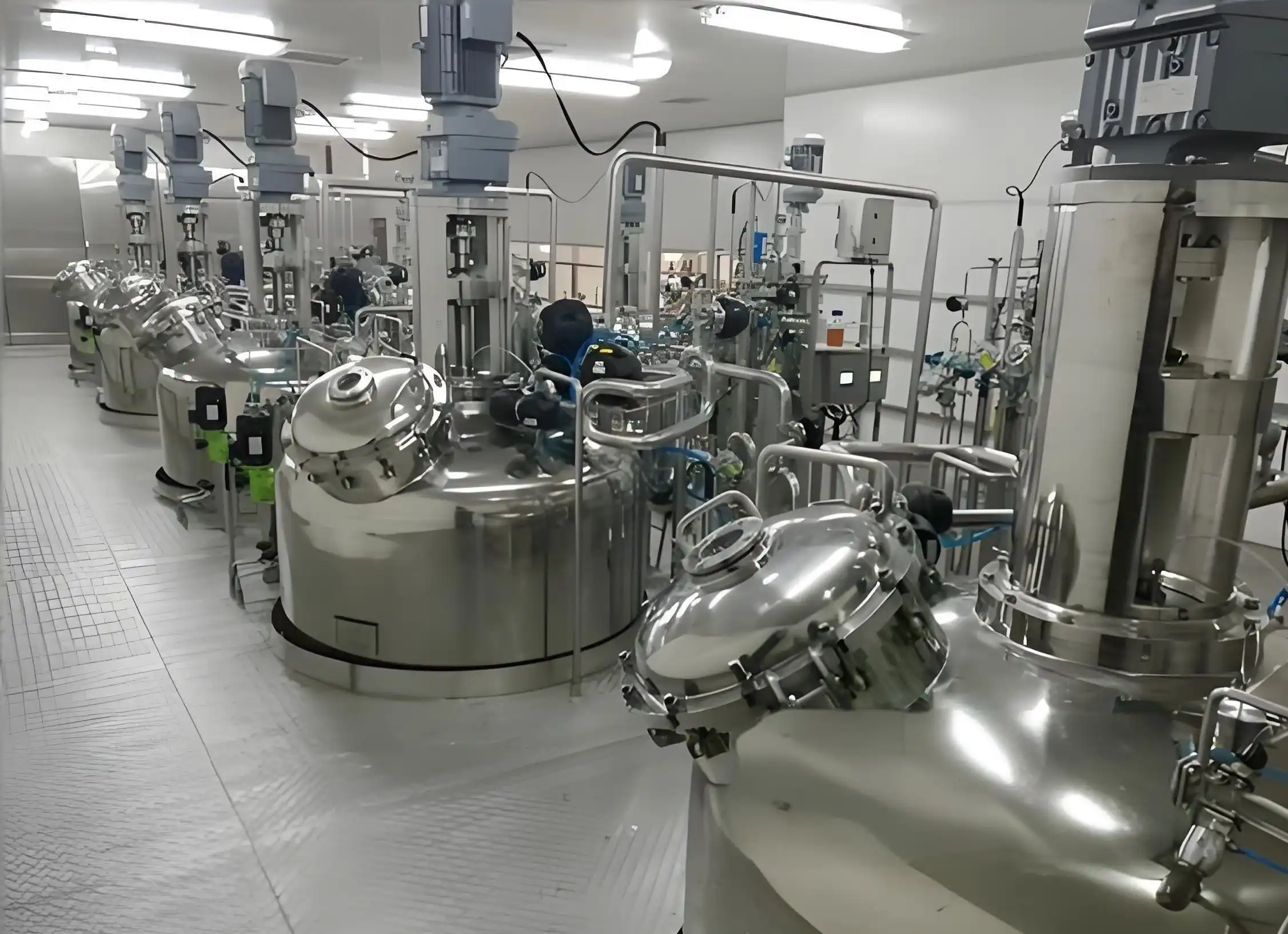
How uniform the broth is and how well the HA chain stays together depends on the shape of the tank, the design of the impeller, and how well the dissolved oxygen moves through it. It can be hard to clean if the fermentor isn't built properly because it can make shear zones that randomly break up polymer chains. With the same geometric ratios, industrial lines that hold 100 tons are made from 50-liter pilot tanks that have been improved. In this way, the impurity profile stays the same, and less activated carbon and membrane are used per kilogram of output. The production method of hyaluronic acid process kits must include both tools for fermentation and tools for cleaning.
Reducing Endotoxin Below Injectable-Grade Thresholds
Controlling endotoxins is the hardest part of making HA clean enough for medicinal use. The goal is 0.05 EU/mg, which is what the FDA, the EMA, and the Chinese Pharmacopeia all say should be done for drugs that are meant to be injected. This has to be done in a clean room with ultrafiltration membrane lots that have been approved and a final LAL kinetic chromogenic test to look for endotoxin. The suppliers who always do this do so by making sure their systems work, not by adding extra steps to polish them right away.
Comparing Production and Purification Methods: Making the Right Procurement Choice
Biofermentation vs. Chemical Synthesis for B2B Buyers
For bulk procurement, biofermentation wins on every practical axis. Purity levels above 99% are routine with GMP-validated fermentation lines, while chemical synthesis rarely exceeds 95% without expensive chromatographic polishing. Lead time for fermentation-derived HA in standard grades runs 10–20 working days from a stocked facility. Chemical synthesis requires custom reaction setup and generates persistent impurities that complicate regulatory filings in the US, EU, and Chinese markets—all markets where production technology of hyaluronic acid must comply with GRAS, Novel Food, or New Food Ingredient designations.
Supplier Selection Criteria for Process Package Buyers
Buyers evaluating production technology of hyaluronic acid process packages—not just finished product—should prioritize these supplier qualifications:
- Complete process documentation: P&ID diagrams, plant layout, energy consumption tables, and yield norms from pilot to commercial scale.
- Strain authorization: Written confirmation that the production strain carries no third-party IP encumbrances and is GRAS-certified for non-pathogenicity.
- Pilot-to-commercial track record: Demonstrated scale-up from 50 L to at least 10,000 L with consistent MW and endotoxin data across batches.
- Training and commissioning timeline: A committed on-site support period of 60–180 days post-equipment installation, with clear production acceptance criteria.
These criteria directly address the most common procurement failures in HA process acquisition: underdocumented process packages, strained licensing disputes, and inadequate commissioning support after equipment delivery.
Ensuring Quality Control and Compliance in Purified Hyaluronic Acid
Key Quality Indicators and Analytical Methods
The tech used to make hyaluronic acid is only as solid as the testing system that supports it. There are four tests that are usually included in a quality control set. These are the Karl Fischer titration to check the fluidity, the LAL assay to check for endotoxin, and the UV spectrophotometry to check for protein and nucleic acid residues. The paperwork that all HA suppliers who offer a process package should send should include approved analysis methods and calibration records.
Regulatory Compliance Across Markets
As of NHFPC Announcement No. 9, 2021, China made sodium hyaluronate a new food element. However, each person can only eat 200 mg of it every day. The NDI notice route is used by HA in the US for apps that are dietary supplements. Novel Foods rules have been set for some types of mouth beauty products in the EU. Production technology of hyaluronic acid used in food-grade applications requires different purity profiles and paperwork than technology used in cosmetic or pharmaceutical applications.
Certifications That Matter for B2B Procurement
CGMP, ISO 9001, FSSC 22000, HALAL, KOSHER, HACCP, and Organic are some of the certificates that cover different parts of supply chain security. If someone wants to buy injectable-grade HA, they should also have a known authority check it to make sure that GMPs are being followed. People who buy process packages need more than just a certificate for the supplier's site to show that their certification forms are acceptable when they are building their own lines.
Conclusion
The production technology of hyaluronic acid either works or doesn't work when it comes to cleaning. HA is usually made by going through a specific order of membrane filtration, enzymatic proteolysis, activated carbon treatment, ethanol precipitation, and graded ultrafiltration. This order has been tried and recorded to make sure it meets the needs of the food, cosmetics, and pharmaceutical industries.
FAQ
Q1: What molecular weight ranges can modern fermentation-based HA production achieve?
Modern production technology of hyaluronic acid supports molecular weight fractionation across 500,000 Da to 20,000,000 Da through graded ultrafiltration. Low-MW fractions (50–300 kDa) serve transdermal cosmetic applications; high-MW grades (1,500–3,000 kDa) are used for intra-articular injection and ophthalmic viscoelastics.
Q2: What documents should a complete HA process package include?
A complete process package covers P&ID diagrams, plant layout drawings, energy consumption tables, yield norms, fermentation parameter sheets, validated analytical methods, strain authorization documentation, equipment lists, and a commissioning and training schedule covering 60–180 days post-installation.
Q3: How does biofermentation HA differ from animal-extracted HA in regulatory filings?
Biofermentation HA carries no animal pathogen risk and aligns more directly with GRAS, Novel Food, and New Food Ingredient regulatory pathways. Animal-extracted HA requires additional documentation addressing TSE/BSE risk, which most regulatory agencies now treat as a significant burden.
Partner with Asianbios for Proven Hyaluronic Acid Manufacturing Solutions
The minimum order quantity (MOQ) for a' finished hyaluronic acid is 1 kg, and samples are available. They also offer full production technology of hyaluronic acid for a range of hyaluronic acid process packages, from 50 L pilot lines to 100-ton commercial lines. CGMP, ISO 9001, FSSC 22000, HALAL, KOSHER, and HACCP are some of the certifications we have. It takes 10 days to send out standard grades, and 20 working days to send out special specs. You can email us at plantex@asianbios.com or visit asianbios.com to get research information and samples. We are a trusted source of hyaluronic acid production technology.
References
1. Liu, L., et al. "Microbial production of hyaluronic acid: current state, challenges, and perspectives." Microbial Cell Factories, 2011.
2. Chong, B. F., et al. "Novel developments in microbial hyaluronic acid production." Applied Microbiology and Biotechnology, 2005.
3. Fallacara, A., et al. "Hyaluronic acid in the third millennium." Polymers, 2018.
4. Sze, J. H., et al. "Biotechnological production of hyaluronic acid: a mini review." 3 Biotech, 2016.
5. National Health Commission of China. "Announcement on Approval of Sodium Hyaluronate as a New Food Ingredient." NHFPC Announcement No. 9, 2021.
6. Kogan, G., et al. "Hyaluronic acid: A natural biopolymer with a broad range of biomedical and industrial applications." Biotechnology Letters, 2007.
About the Author
Asianbios
Our purpose is to forge a legacy of stewardship, advancing initiatives that honor and preserve the ecological integrity of our planet.

Send Inquiry
You may like