L-Glutamine: The Unsung Hero of Gut Repair
L-glutamine is a conditionally essential amino acid that helps nourish the cells lining your intestine, maintaining immune-cell activity, and helping with nitrogen transport between tissues. This makes it an ideal choice for formulations targeting the gut, recovery drinks, and therapeutic nutrition products. We are a supplier of food quality l-glutamine powder 98% HPLC for brands, formulators and distributors at Asianbios. In this article we’ll talk about how the ingredient works, where it fits in, how to identify quality and how to get it in bulk. This means L-glutamine cannot be offered as a cure and all claims must be compliant with the standards of your destination market.
What Is L-Glutamine Powder and How Does L-Glutamine Work?
Identity: L-Glutamine vs. Glutamic Acid
Identity L-Glutamine versus Glutamic Acid Molecular Formula L-glutamine C5H10N2O3 Molecular Weight 146.14 g/mol CAS No. 56-85-9 Another is glutamic acid with CAS 56-86-0 There is consequently a large possibility for mix up on purchasing or labelling. Buyers must ensure that the chemical name, CAS number, assay and test process on the certificate of analysis (COA) meet their specification before accepting a batch. U.S. supplement firms must also ensure that each dietary ingredient is listed in 21 CFR Part 111. Here's a brief glimpse of our powder:
| Item | Detail |
|---|---|
| Active ingredient | L-glutamine |
| CAS number | 56-85-9 |
| Specification | 98% HPLC |
| Grade | Food grade |
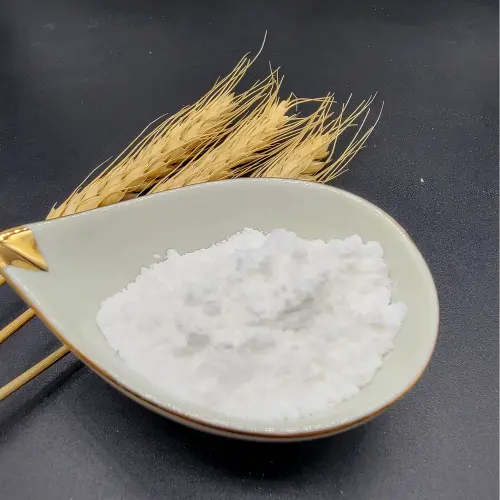
| Appearance | White powder |
| Process | Spray drying |
| Minimum order | 1 kg; samples available |
How L-Glutamine Works in the Body
L-glutamine is the most plentiful free amino acid in human blood. Cells use it to transport nitrogen between tissues, to make other amino acids and to produce energy. It is a significant fuel for intestinal cells and is also used by immune cells such as lymphocytes. Glutamine is produced by the body therefore it is conditionally essential and needs can increase with illness, injury or severe workout. These roles in metabolism and immunological function are described in Reviews in Cell Biochemistry and Function (2003) and Nutrients (2018). The studies of the supplement are varied, and we always say that L-glutamine is nutritional support, never a cure.
Why Powder Is the Preferred Format
Marketers can choose serving sizes from a stick pack to a tub or bulk powder blend. It also solves a stability concern . Glutamine in water slowly breaks down to pyroglutamic acid and ammonia . Most companies offer it as a dry mix for the user to add at feeding time . Solubility is around 40 g/l at 25 °C, which is usual for meals. Spray drying converts droplets into homogeneous particles in seconds and our final testing confirms moisture content of 2% or less. The flowability, particle size and moisture of the powder will dictate whether it will mix, fill sachets or sit in storage.
Send us an email to producttech@asianbios.com with your target market, product format, annual volume and certificate demands.
L-Glutamine Benefits and Uses: Gut Health, Muscle Recovery, and Athletic Nutrition
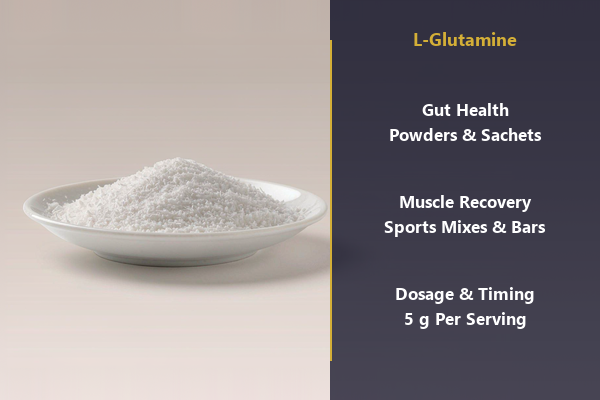
L-Glutamine for Gut Health
Glutamine is a major fuel for the cells of the gut and so formulations that target the gut contain it. A 2012 review in the Journal of Epithelial Biology and Pharmacology highlights that glutamine is associated to the tight junction proteins that seal the gut lining together. A 2017 study in the European Journal of Applied Physiology found glutamine decreased markers of intestinal permeability in people jogging in the heat. The results are good, but they do not establish that L-glutamine benefits any ailment. They should only use it when permitted by legislation and evidence. Keep language measured for brands e.g. “supports normal gut function”.
Muscle Recovery and Athletic Nutrition
Products to assist recovery often combine glutamine with protein, carbohydrates, electrolytes or other amino acids. Muscle is where the body stores the most glutamine and after long periods of intensive exercise the level in the blood can decline for a while. However, Gleeson (2008) in The Journal of Nutrition reviewed scant evidence that supplementation reliably increases performance or immunological markers in athletes and therefore should be approached with caution. They can be found in post-workout mixes, endurance drinks, travel sachets and general amino acid blends. Sugar-free and low GI goods can state that L-glutamine is an amino acid and not a sugar, but, companies should test their own blends for taste and glycaemic response before making any claims.
L-Glutamine Dosage for Adults and Best Timing
We are not recommending one recommendation for everyone since the dose varies on the kind of product, the entire nutrition, the health state and the expert guidance. A 2008 risk assessment published in Regulatory Toxicology and Pharmacology determined an observed safe level of intake for healthy persons of 14 g / day. Retail powders usually suggest roughly 5g per serving, taken during workouts, between meals or as part of a daily programme. Brands need to have clear rules for combinations and audit their taste system. Labels also have to include cautions about pregnancy, breastfeeding, medication interactions and medical conditions and consumers should see a healthcare professional before using the items.
L-Glutamine Comparisons and How to Choose High-Quality Powder
L-Glutamine vs. BCAAs vs. Collagen
Each ingredient is for a different product purpose therefore the formula brief should dictate the choice, not marketing trends. The solubility and sensory properties are also different. And the consumer expectations are changed. The main differences are presented in this table.
| Ingredient | Composition | Typical positioning | Formulation note |
|---|---|---|---|
| L-glutamine | One amino acid | Gut and recovery products | Best as a dry mix |
| BCAAs | Leucine, isoleucine, valine | Muscle-focused sports blends | Often needs flavor masking |
| Collagen | Protein with its own amino acid profile | Protein and beauty products | Larger servings |
Capsules are good for mobility and set doses, while powder allows for various servings and easy changes of doses. Each label is specific to a format, so check them before you go live.
Food Grade and Pharmaceutical Grade
Documentation is the only thing that makes grade differences significant. Our powder is food grade and may be used in nutritional supplements, sports nutrition and functional meals. L-glutamine is an amino acid in the US that is allowed as a nutrient in food under 21 CFR 172.320, therefore verify the legal usage for each category. Pharma grade typically means the item fulfils the monograph of a pharmacopoeia (ex. USP) and has a distinct regulating process. For each grade, ask what standard, what location, what quality system supports it. We are accredited with cGMP, FSSC 22000, ISO 9001, HACCP, Halal, and Kosher. Check the scope and validity dates to apply for your product.
Quality Checks Beyond Purity
One COA line is 98% HPLC assay. Formulators additionally evaluate moisture, particle size, bulk density, flowability and dispersibility since they influence how the powder acts in a mixer or stick pack filler. The file is completed with microbiology and contaminant findings, independent lab data and lot traceability. If you’re using reducing sugars like glucose powder in your mix, watch the moisture level. The Maillard reaction is the browning of amino acids and reducing sugars. Do a short bench trial of the sweetener system you’re using, whether it’s stevia, erythritol or anything else, before you scale it up. Recommended storage: 25 °C, below 60 % relative humidity. Shelf life 2 years.
L-Glutamine Procurement Guide: Bulk Price, MOQ, Packaging, and Delivery
What Shapes a Bulk Quote
The headline price per kg only tells part of the story. L-glutamine prices vary according to the grade, assay, order amount, packaging, testing, certificates, Incoterms, destination, and payment conditions. Instead, compare total landed cost. Include freight, import duty, customs broking, warehousing, repacking and any expense incurred due to delay caused by quality difficulties. Importers also must submit Prior Notice to the FDA before food shipments arrive, so factor that step into the timeline. “Ask each supplier to quote on the same Incoterm so it’s a fair comparison – FOB or CIF for example, so both sides know what’s expected of them.”
From Sample to Supply Agreement
We maintain the journey from first contact to recurring supply quick and low risk. Minimum order is 1 kilogram and samples are supplied so your formulator can undertake bench testing on solubility, taste and blend stability first. Successful trial usually results in a pilot order and subsequently a recurring supply arrangement. We maintain more than 1 tonne of stock for standard specifications. Standard orders ship in 10 days following payment. Custom orders require approximately 20 working days. For urgent small quantities we have a Green Channel service which can deliver in as short as 7-10 days.
Packaging, Shipping, and Storage
Standard packing is 25 kilogram fibre drum with LDPE bag liner. In moisture-proof aluminium foil bags and nitrogen filled packing, enhanced stability is provided. We ship via express courier, air or sea through partners such as DHL, SF Express and FedEx. Express and air for samples and urgent lots. Sea freight for larger volumes. Traceability records, export documentation and certificate of origin should be available for each lot. Store the powder in sealed containers away from moisture, heat and direct sunlight. Reseal the liner after every use to protect flowability.
Working with an L-Glutamine Manufacturer or OEM Supplier
How to Qualify a Manufacturer
First of all you have to determine who is actually producing the powder – a direct manufacturer, distributor or trading corporation. Request proof of ownership/authorization of production, capabilities of laboratories, traceability of raw materials and batch release procedures. A good checklist should include certificates, written specifications, representative COAs, manufacturing-flow information, a quality agreement, change-notification terms, and complaint and recall procedures. Asianbios has more than 10 years of manufacturing experience and 60% of our workforce are working in R&D. We have in-house laboratories for verification testing and technical guidance. We also provide progress updates with you and strive to resolve difficulties within hours.
OEM and ODM Options
OEM and ODM work can be powders, capsules, pills and gummies, built for your brand, for your target market. Our technicians can help with formula solutions, laboratory verification and technical guidance. Put obligations in writing early: your brand controls claims, artwork approval and intellectual property, while testing duties and change notices belong in the quality agreement. Needs vary by buyer. Sports nutrition brands are worried about assay uniformity, solubility. Brands in digestive health are seeking a clear identity and compatible formulas. Distributors look at price points, packaging, export history and lead times. Private-label customers are comparing MOQs and customizations. We have a low MOQ to support limited trials before volume orders.
Common Purchasing Mistakes and How to Avoid Them
Most sourcing problems boil down to a few recurring faults. The following table links common purchasing mistakes to their potential risks and practical corrective actions.
| Common mistake | Risk | Corrective action |
|---|---|---|
| Choosing on price alone | Uneven assay, shipment delays, extra testing | Compare total landed cost against written specifications |
| Mixing up food and pharmaceutical grade | Wrong documents for the intended use | Match each grade to its standard and regulatory path |
| Ignoring flowability and moisture | Clumping and filling problems | Run application trials with a sample |
| Making unsupported health claims | Regulatory and reputation risk | Complete a regulatory review of every claim |
| Skipping change-control terms | Unannounced process or material changes | Require advance written notice in the quality agreement |
Fixes like these cost much less than a failed batch. Compare each supplier on a level playing field by rating each one on quality, testing, certificates, capacity, OEM services, compliance, communication and delivery.
Send us an email to producttech@asianbios.com with your target market, product format, annual volume and certificate demands.
Conclusion
L-glutamine is a conditionally needed amino acid that fuels intestinal and immune cells and transfers nitrogen between organs. That is why it is present in solutions for gut health, recovery and clinical nutrition. Studies reveal possible roles in gut barrier function and exercise stress, but performance benefits are still limited, thus claims should be cautious and in line with destination-market restrictions. Powder is excellent for flexible servings because glutamine isn’t stable in water-based drinks. Buyers should verify identification by CAS number, check assay, moisture, particle size and flowability data and align grade with specified criteria. Look at total landed cost, stated specifications and change-control terms to avoid frequent sourcing difficulties that cause delays and additional testing.
FAQ
1. What is L-glutamine powder used for?
Brands utilise it in dietary supplements, sports nutrition, gut blends, functional meals, and in clinical nutrition. It is different from glutamic acid, CAS 56-86-0.
2. How do food grade and pharmaceutical grade differ?
Food grade refers to material that meets applicable food-safety requirements and standards for its intended use. Pharmaceutical grade generally refers to material that complies with the relevant pharmacopoeial monograph, such as USP, and follows the applicable pharmaceutical quality and regulatory requirements. Our powder is food-grade. Ask for the standard and extent of certificates underpinning any grade.
3. What are the MOQ and lead time?
Samples available. Minimum order 1 kilogram. Standard products ship within 10 days following payment, bespoke orders take roughly 20 working days.
4. Does Asianbios offer OEM production?
Yes. Asianbios offers OEM and ODM production services for powders, capsules, tablets, and gummies, allowing customers to develop products in formats suited to their brands and target markets.
5. What dosage should I recommend?
A 2008 safety study established an observed safe limit of 14 g per day for healthy people. Match the counsel to the product. Advise pregnant, breastfeeding or medicated consumers to consult a healthcare expert first.
Request L-Glutamine Samples and Bulk Quotes from Asianbios
Choosing a l-glutamine provider is more than a pricing list. Asianbios offers food grade l-glutamine powder 98% hplc for sale with significant inventory. Min Order: 1 Kilogram. Samples. OEM service. ODM service. Send us an email to producttech@asianbios.com with your target market, product format, annual volume and certificate demands, and our staff will react with specs, a COA and shipping terms. For further information, see asianbios.com.
References
-
Nutrients, 2018 – Glutamine: Metabolism and Immune Function, Supplementation and Clinical Translation
-
Regulatory Toxicology and Pharmacology, 2008 – Risk Assessment for the Amino Acids Taurine, L-Glutamine and L-Arginine
-
The Journal of Nutrition, 2008 – Dosing and Efficacy of Glutamine Supplementation in Human Exercise and Sport Training
-
European Journal of Applied Physiology, 2017 – Glutamine Supplementation Reduces Markers of Intestinal Permeability During Running in the Heat in a Dose-Dependent Manner
-
Journal of Epithelial Biology and Pharmacology, 2012 – Role of Glutamine in Protection of Intestinal Epithelial Tight Junctions
-
Cell Biochemistry and Function, 2003 – Glutamine and Glutamate: Their Central Role in Cell Metabolism and Function
About the Author

Asianbios
Our purpose is to forge a legacy of stewardship, advancing initiatives that honor and preserve the ecological integrity of our planet.

Send Inquiry
You may like