English

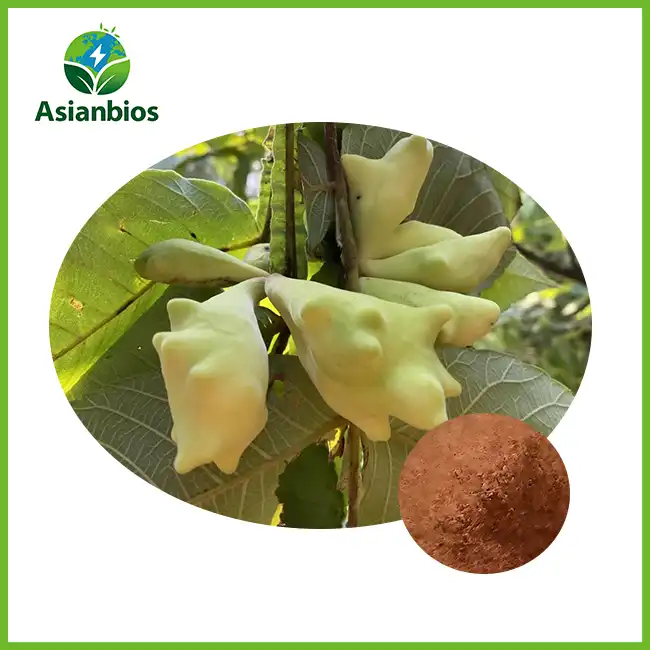
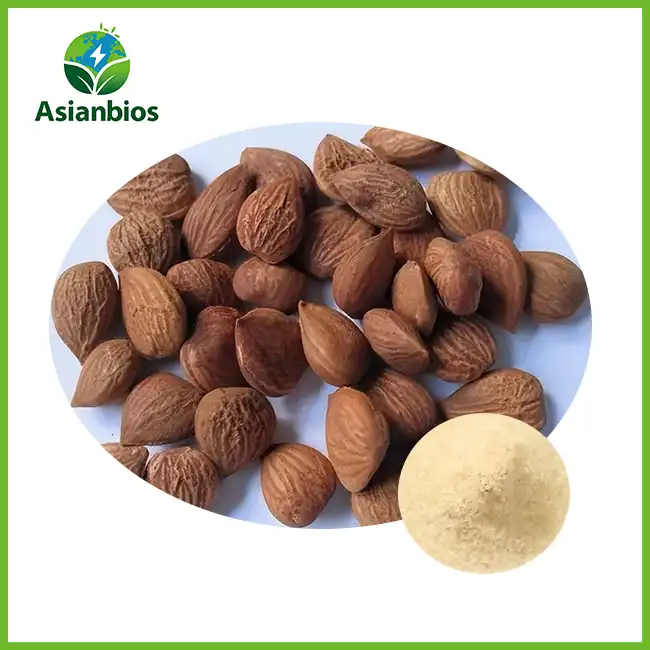
Gallnut extract
• Production process: Spray drying
• Active ingredient: Tannic acid
• Specification: 98% HPLC
• Grade: Food grade
• Appearance: Brown powder
• Packing: 25 kg/drum
• Shipping methods: Express, air freight, sea freight
• Delivery: Adequate stock, fast and safe delivery
• OEM/ODM: Available
• MOQ: 1 kg, samples available

- Fast Delievery
- Quality Assurance
- 24/7 Customer Service
Product Introduction
High-Purity Gallnut Extract | Standardized Tannic Acid 98% HPLC | Natural Astringent & Antioxidant for Food & Cosmetic Applications
Shaanxi Zhenhuacui Biotechnology Co., Ltd. produces high-quality Gallnut extract with 98% tannic acid (HPLC validated) using spray-drying technique to retain phenolic compounds' biological integrity. Mild extraction of premium Chinese gallnuts yields this food-grade botanical extract with maximum tannic and gallic acid retention. With impurity levels below 0.5%, the product has excellent natural astringent, antioxidant, and antibacterial activities and is consistent across industrial manufacturing. Over 10 years of manufacturing experience and 60% of workers dedicated to R&D, the firm maintains appropriate inventory for orders as little as 1 kg, enabling 10-day dispatch and flexible OEM/ODM customization.

Product Descriptions
Our product is a standardized botanical concentrate high in hydrolyzable tannins, especially tannic acid ($C_{76}H_{52}O_{46}$), the main bioactive marker. Temperature-controlled spray-drying turns aqueous extracts into a homogenous brown powder with constant particle size (95% passing 80-mesh filter). This method removes fiber, proteins, and other non-target biomass while preserving polyphenolic compound molecular structure.
|
Parameter
|
Specification
|
|
Active Ingredient
|
Tannic Acid
|
|
Assay
|
98% (HPLC)
|
|
Appearance
|
Brown Fine Powder
|
|
Particle Size
|
95% through 80 mesh
|
|
Moisture Content
|
≤5.0%
|
|
Ash Content
|
≤3.0%
|
|
Heavy Metals
|
≤10 ppm
|
|
Bulk Density
|
0.40–0.60 g/ml
|
|
Shelf Life
|
24 months (sealed, cool, dry)
|
Excellent water solubility makes the extract appropriate for clear liquid compositions. It may be integrated into many matrices without precipitation or color change because to its pH stability (pH 3.0–7.0).

Application Areas
Several high-value companies use botanical concentrate:
Stabilizes fermented, fruit, and tea juices. Pasteurization (72°C, 15 sec HTST) preserves tannins' antimicrobial properties.
Astringent toners, pore-minimizing serums, anti-aging creams. Stratum corneum tannic acid tightens skin by protein precipitation, whereas gallic acid protects collagen fibers from oxidation.
It fights Streptococcus mutans and soothes gums in mouthwashes and toothpaste. Oral rinses with 10–25% ethanol stabilize the extract.
Tablets and capsules for digestion. Tannins prevent diarrhea by binding mucisal protein and changing intestinal permeability.

Benefits
This standardized extract gives your formulations an edge:
HPLC standardization to 98% tannic acid reduces batch-to-batch volatility, enabling exact dosage calculation for regulatory compliance and claim support. Competitiveness cuts reformulation costs and speeds product development.
Formulators may reduce ingredient decks while maintaining performance across product claims using synergistic astringent protein binding, antioxidant electron donation, and antibacterial membrane disruption.
Since customers prefer familiar chemicals, the extract is botanically derived without synthetic solvents or chemical alteration. Some synthetic antimicrobial markets label it "natural preservative".
Low hygroscopicity and regulated moisture enhance automated filling equipment flow and avoid storage clumping. Short baking and extrusion up to 180°C are possible because to its heat stability.
Why Choose Us?
Qualitative manufacturing infrastructure gives us an edge:
Quick Shipping: Stock specifications ship in 10 days. Premium 7–10-day green channel service for urgent market launches and 20-day bespoke formulae.
Flexible Partnership Model: 1 kg MOQ with free samples facilitates feasibility studies without funding. Once your product sells, manufacture multi-ton batches.
Technical Co-Development: Our 60% R&D workforce provides formulation optimization, stability testing, and regulatory paperwork for your target markets.
We create pills, capsules, gummies, and powders along with basic materials. The vertical integration simplifies supply and quality control.

Certificate
Our facility has several international certifications to satisfy global market standards:
cGMP means "Current Good Manufacturing Practice."
Food Safety System Certification FSSC 22000
ISO 9001 means "Quality Management Systems."
HACCP is Hazard Analysis Critical Control Points.
Islam's dietary standards—HALAL?
Jewish Dietary Laws
Organic certification (for organic batches)

Quality Control
Every production batch undergoes 18-point precise validation:
Verification of Raw Material: Genetic information and a microscope test verify the plant's identity. Pb, As, Cd, and Hg were tested by ICP-MS. Limits were 50% lower than legal.
The extraction procedure can be repeated by monitoring temperature (within 2°C), pressure (within 0.1 bar), and pH (within 0.2 units). Intermediate product testing evaluate tannanic acid content before spray-drying.
The finished product is tested for HPLC strength, microbe limitations (total plate count, yeast/mold, and pathogens), pesticide residues (500+ compounds using GC-MS/LC-MS), and solvent residues.
Stability experiments include accelerated aging (40°C, 75% RH, 6 months) and long-term (25°C, 60% RH, 24 months). They determine durability and storage conditions. These values are on data sheets.
COA
A Certificate of Analysis is included with each shipment:
Identify and date production batches
HPLC chromatogram reveal pure tannic acid peak.
Physical attributes (appearance, odor, particle size)
Chemical tests (moisture, ash, heavy metals, pesticide panel)
Results of microbiological tests with detection limits
Storage suggestions and expiry date
Quality issues may be investigated using 36-month-old samples from each batch maintained under controlled circumstances.
Packaging and Transportation
Food-grade polyethylene bag heat-sealed in fiber drum (25 kg net weight) is typical. Paperboard drums that resist moisture meet UN non-hazardous packaging criteria.
Custom packaging options:
Smaller research units (1 kg, 5 kg foil bags).
Large clients might use bulk packing (500-1000 kilogram fiber drums with inner liners).
DHL, FedEx, and SF Express provide worldwide air (3–7 days) and ocean freight for cost-sensitive large shipments. If needed, shipping includes temperature dataloggers for cold-chain validation.


R&D Results
Our team set innovation standards:
After spray-drying and co-grinding, extracts were 40% more soluble in water than usual, allowing formulation in clear functional fluids without sedimentation.
Gallnut extract (0.15%) and rosemary extract (10% carnosic acid) boosted oil-in-water emulsions' oxidative stability by 180%, surpassing synthetic BHT at similar amounts in accelerated shelf-life studies.

Exhibition
To demonstrate advances, our firm attends top industry events:
Annual expo showcases new standardized extracts and OEM capabilities.
At SupplySide West showcased specialized formulation services and technical support programs, cosmetic-grade botanical actives were presented and applied in workshops.
These platforms allow formulation scientists and procurement teams to address technical issues directly, allowing market-driven product development.

FAQ
Q1: How does the purity of 98% tannic acid affect dosing compared to lower-grade extracts?
A: The higher the purity, the more accurate the estimate of the active dose. Tannic acid levels can be reached with 102 mg of 98% extract compared to 200 mg of 50% extract. Smaller capsules, lower excipient costs, and less interference from co-extracted compounds in sensitive formulations are all benefits of this.
Q2: Can this extract handle the acidic pH of fizzy drinks?
A: The answer is yes. Tangerine acid's structure stays the same from pH 2.5 to 7.0. With fizzy systems (usually pH 3.0–3.5), the extract keeps its antioxidant action without forming a solid layer. It is best to avoid mixing directly with iron-rich materials (>5 ppm), tho, because the tannin-iron complexation could lead to blue-black coloring.
Q3: Assuming the extract has a 24-month shelf life, how should it be stored?
A: Keep products in covered cases that are cool (below 25°C), dry (relative humidity <60%), and out of direct sunlight. Use within 6 months of opening. Reseal tightly. Refrigerating opened containers (2–8°C) makes them last longer, but it may cause temporary clumping due to condensation; let them come to room temperature before using.
Contact Us
Ready to enhance your formulations with premium Gallnut extract? Contact our technical team at plantex@asianbios.com for samples, COA review, or custom development consultations.
Send Inquiry