Best Tryptophan Production Technology for Feed Industry
High-quality amino acids are needed in modern feed manufacturing. The best feed industry Tryptophan Production Technology uses innovative microbial fermentation techniques to create over 98.5% pure L-tryptophan in regulated bioprocesses. More than 98% of the world's manufacturing capacity employs this technology instead of harmful chemical synthesis pathways and cyanide-free goods, ensuring safety. We make tryptophan using genetically enhanced Escherichia coli or Corynebacterium glutamicum strains that bypass feedback inhibition. This allows fermentation titers of 45-65 g/L and sugar-to-acid conversion rates of 18-20%, establishing new benchmarks for efficiency, safety, and environmental responsibility in delivering this third-limiting amino acid to animals that require it.
Introduction
The amino acid L-tryptophan is added to animal feed. Health, stress, and growth success are directly affected in all cattle regions worldwide. As the animal protein industry increases and environmental regulations tighten, feed additive procurement managers, R&D specialists, and OEM partners must pick the optimal production methods. This comprehensive handbook discusses the latest production technologies, how they function, how much they save, and their drawbacks. Parties can make cost-effective, scalable, and environmental-compliant options if they know these technical specifics. New fermentation technology has replaced outdated techniques with sustainable, high-yield bioprocesses for amino acid production. Our research prepares your firm for shifting market demands and offers you a competitive advantage via smart technology and strategic supplier connections in this vital feed ingredient field.
Understanding Tryptophan Production Technologies
Why Tryptophan Matters in Feed Formulation
The third limiting amino acid in complicated feed formulations is L-tryptophan. This greatly impacts pig and chicken productivity. This crucial ingredient enhances protein utilisation, aggressiveness, stress feed intake, and growth efficiency when supplemented at 0.05-0.2%. The chemical helps formulators adopt low-protein diet programs, reducing crude protein by 2–4% while maintaining performance. This nutritional strategy dramatically lowers nitrogen loss in high-density farming, helping the environment. Modern precision nutrition relies on crystalline amino acids to balance diets. Nutritionists and feed manufacturers prioritise production method selection.
Main Production Methods Overview
Industrial L-tryptophan production involves chemical synthesis, microbial fermentation, and enzyme conversion. Tryptophan Production Technology demonstrates that microbial fermentation is the most preferred approach since it is cheaper, safer, and regulator-approved. Past chemical synthesis employed indole condensation with serine derivatives, but it required toxic substances like cyanide compounds and benzene derivatives to generate racemic mixtures that needed optical resolution. This route is unsafe, polluting, and expensive, thus it's seldom utilised. Enzymatic synthesis has several advantages, however enzymes are costly and not scalable, therefore it can only be employed in research. Fermentation is growing because to greater technology, cheaper prices, and clean production principles promoted by feed producers and governments worldwide.
Comparing Production Methods
Industrial fermentation technique converts glucose into products at 18-20% and 45-65 g/L. This approach produces pure L-isomer products without optical resolution. Temperature and pH remain 35°C–37°C and 6.8–7.2, respectively. Fermentation takes 50–70 hours and produces feed-grade and medicinal-grade material with purity exceeding 99.5%. The earlier chemical techniques had a poorer atom economy, created toxic waste, and required a lot of energy for purification. Environmental impact studies demonstrate that fermentation reuses more than 65% of wastewater after biochemical treatment, whereas chemical techniques generate costly, lasting organic pollutants. Fermentation is more scalable than chemical plants since it doesn't need sophisticated adjustments or harmful chemical-resistant materials.
Comparing Microbial Fermentation vs Chemical Synthesis for Tryptophan Production
Fermentation Process Framework
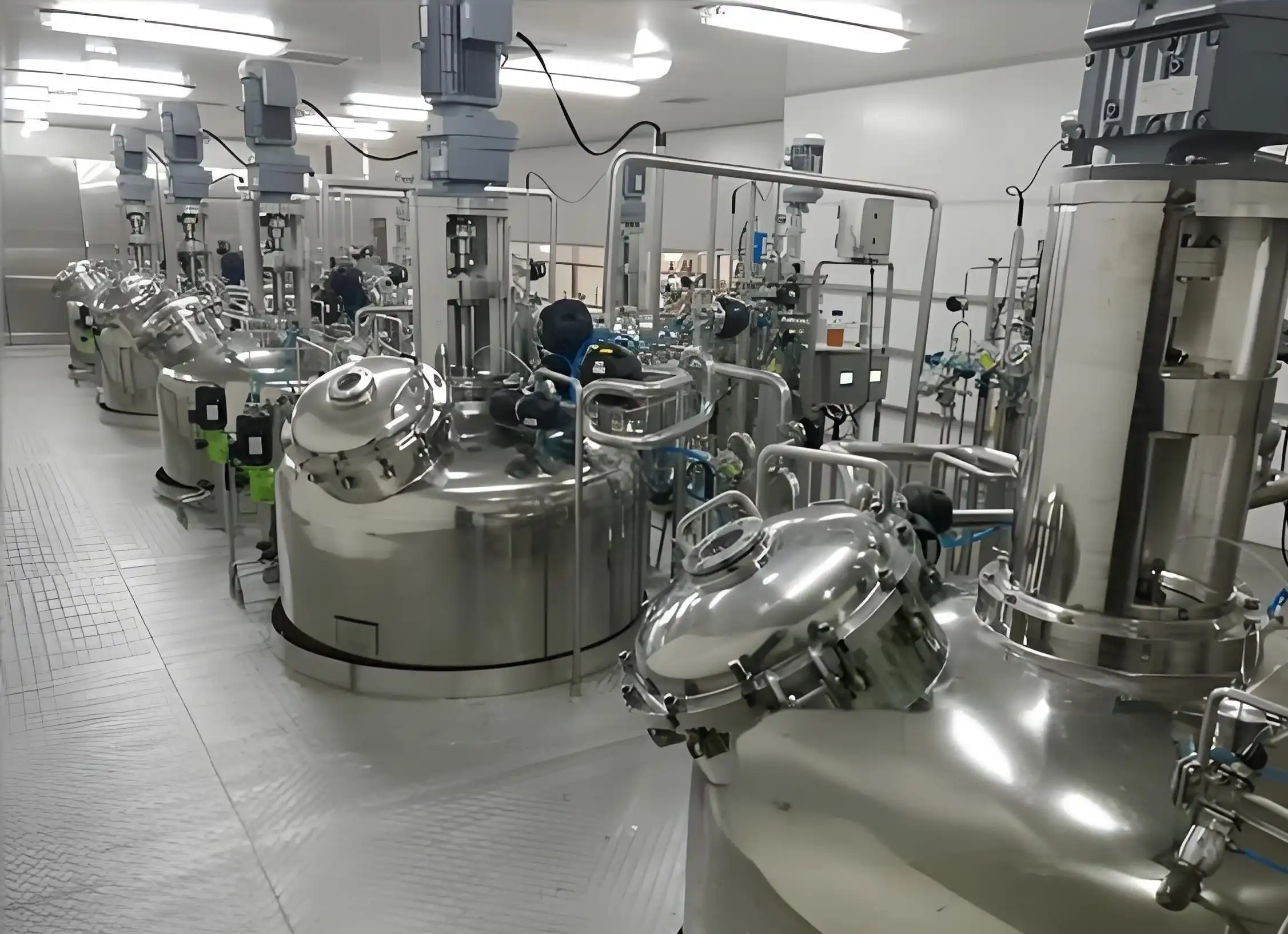
Biologically developed bacteria make tryptophan nowadays. Key alterations enable aromatic amino acid pathway feedback blocking. The shikimic acid pathway converts glucose into L-tryptophan precursor anthranilate via chorismate. Production strains inhibit phenylalanine and tyrosine pathways, directing carbon flow to tryptophan accumulation and release outside cells. Corn or cassava starch hydrolysates provide glucose carbon and liquid ammonia adjusts pH in fermentation medium. Enzymes require trace minerals such phosphates, magnesium salts, and iron compounds. High dissolved oxygen at 35% saturation maintains aerobic metabolism, and a pH between 6.8 and 7.2 improves enzyme performance in all biosynthetic pathways.
Cost-Efficiency Analysis
Industrial tests show fermentation-based Tryptophan Production Technology costs 45% less per tonne than chemical synthesis. Green feedstock avoids expensive chemical handling facilities and streamlines downstream processing. Standard bioreactor technology and established methods make fermentation facility building cheap. Over the last decade, strain augmentation has enhanced conversion efficiency by 25%, cutting operating expenses. Rust-proof equipment, cyanide safety devices, and complex optical resolution techniques raise processing expenses for chemical synthesis. Fermentative tryptophan production uses plentiful agricultural feedstocks instead of volatile petrochemicals, cutting raw material prices.
Environmental and Regulatory Considerations
Green production principles say fermentation is healthier for the environment since it doesn't leave hazardous chemicals and can reuse wastewater for circular economy concepts. The technology fulfils FAMI-QS, USP, and EP food and medicine standards, is HALAL and KOSHER, and follows GMP pharmaceutical requirements. Regulators used to monitor chemical routes for tiny impurities and potentially harmful substances. Modern environmental regulations increasingly encourage biotechnology approaches that reduce carbon footprints and toxic waste. Metabolic engineering and synthetic biology are still utilised to increase feedstock utilisation, fermentation speed, and product recovery.
Latest Advancements and Innovations in Tryptophan Production Technology
Synthetic Biology Breakthroughs
Through rigorous pathway improvement and regulatory modification, metabolic engineering has changed the way strains work in a big way. Computational flux balance analysis identifies bottleneck enzymes limiting production rates, guiding targeted genetic modifications. Recent progress uses dynamic pathway regulation, in which biosensors control gene expression based on tryptophan amounts inside cells. This increases output while avoiding toxic buildup. CRISPR-based genome editing speeds up the growth of strains, making it possible to make exact changes that used to require time-consuming and laborious methods of mutagenesis. These genetic tools have greatly raised fermentation titers and made strain stability better during large-scale production efforts.
Process Optimization Technologies
Tryptophan Production Technology relies on automated bioreactor systems to measure dissolved oxygen, pH, nutrient levels, and metabolite concentrations in real time. This offers dynamic process control for maximum output stability. Fed-batch systems precisely regulate glucose feeding. Thus, overflow metabolism does not shift carbon to undesired byproducts and substrate constraint does not reduce production. Modern downstream processing removes kynurenine and other tryptophan pathway products with multi-stage crystallisation. These purification enhancements ensure that batch-to-batch standard differences are less than 4%, fulfilling medicinal and high-grade feed standards. Industry 4.0 enables predictive maintenance, process optimisation using machine learning algorithms, and complete output traceability, meeting current quality management demands.
Industrial Implementation Success
In the real world, reliable large-scale production that achieves 30% core process technology and 70% regional execution skills shows that technology has matured. This mixed method strikes a balance between using unique fermenting knowledge and being able to adapt to local feedstock supply and infrastructure limitations. Several factories around the world now make more than 10,000 tons of goods every year, proving that the business can make money and the supply chain is reliable. Performance data shows steady operation with little difference in quality between runs of production, proving strong process control and strain stability. The technology works with different types of packaging, like normal 25 kg barrels, which makes shipping by express service, air freight, or sea easier.
Selecting the Right Tryptophan Production Technology for Your Feed Business
Technology Evaluation Criteria
When choosing manufacturing partners or licensing production technology, procurement professionals have to look at things like production capacity needs, technology growth levels, total cost structures, and how reliable suppliers are. When thinking about capacity, you should think about both present demand and growth forecasts for the next three to five years. This is because expanding a fermentation facility requires a lot of money and time for engineering. When judging a technology's maturity, records from several production sites are looked at, along with data on operating security and the availability of technical support infrastructure. When you do a total cost study, you need to look at more than just the unit production costs. You also need to look at things like quality consistency, legal compliance costs, and supply chain resilience factors that affect long-term competitiveness.
Supplier and Technology Provider Assessment
Leading Tryptophan Production Technology companies around the world offer complete plant solutions that include strain supply, fermentation process design, downstream cleaning systems, and full technical training packages. Patented technologies give businesses a way to stand out from the competition by offering better performance measures or special process benefits. Intellectual property portfolios, example setups with performance data that can be checked, and after-sales support services like troubleshooting help and ongoing process improvement should all be part of the evaluation criteria. Greenfield sites usually take 18 to 24 months to set up, and the engineering, equipment purchase, governmental approval, and commissioning steps all need to be coordinated. Experienced companies offer standard technical packages that speed up implementation while still allowing for changes that are specific to the site.
OEM and Customization Capabilities
Modern sellers support OEM/ODM agreements, which let brands have their own packaging and product specs that meet the needs of a wide range of markets. As little as 1 kg is needed for an initial sample and formulation development, but mass production can easily handle exports of several tons. Flexible production methods can make a wide range of grade specs, from feed-grade crystalline powder to pharmaceutical-grade material that is more than 99.5% pure. Customization includes varying particle sizes, achieving the best mass density, and using special covering technologies that make the product easier to handle or better at controlling dust. Technical teamwork should include help with formulation, help with application testing, and help with paperwork for regulatory entries in target markets.
Optimizing Industrial Tryptophan Production: Challenges & Solutions
Common Operational Obstacles
Yield is typically limited by metabolic bottlenecks or inefficient fermentation factors. This requires scheduled repair. Contamination is always a worry in industrial fermentation, as competing microbes may dramatically degrade batch quality and production. Due to mixing, oxygen transfer, or temperature control issues, production bioreactors perform poorly compared to lab or test bioreactors. Genetic mutations may diminish productivity or modify product quality throughout protracted manufacturing efforts, causing strain stability difficulties. We require solid quality standards, tested working techniques, and infrastructure for continuous process monitoring due to these issues.
Practical Solutions and Quality Systems
Advanced Tryptophan Production Technology process control monitors numerous parameters and employs automated feedback loops to optimise fermentation conditions. Cleaning inspections, aseptic transfer processes, and bioburden monitoring detect bacteria invasions before they cause damage. Quality assurance systems utilise in-process testing at critical checkpoints to verify essential parameters before going on to the next stage of production. Analytical procedures detect tiny impurities, ensuring that finished products fulfil FAMI-QS, USP, and EP heavy metal, endotoxin, and organic pollutant criteria. These organised approaches provide production consistency with less than 4% fluctuation between runs. It ensures feed additives function.
Future Trends and Digital Integration
By gathering output data, employing sophisticated analytics, and generating forecasts, Industry 4.0 technology may transform everything. Digital twins mimic fermentation processes so adjustments may be applied to the virtual system before actual alterations. AI algorithms may detect minor connections between process parameters and product quality. These linkages may propose parameter adjustments that humans may overlook. Legal authorities and premium feed firms want blockchain integration for complete supply chain traceability. Waste-reuse systems that transform fermentation wastes into valuable compounds are improving sustainable manufacturing while reducing environmental impact.
Conclusion
How to manufacture tryptophan will affect the feed business's competitiveness, sustainability, and long-term market position. Tryptophan Production Technology based on microbial fermentation is the most preferred approach because it is cheaper, safer, better for the environment, and generates high-quality items that match international requirements. The system uses green feedstocks and little waste to generate ≥98.5% pure feed-grade L-tryptophan. More productivity and cost benefits are projected as strain engineering, process optimisation, and digital integration improve. You must carefully choose technology, work with reliable suppliers, and commit to operational excellence via strong quality processes and growth practices to succeed.
FAQ
1. What makes fermentation more cost-effective than chemical synthesis?
Fermentation lowers production costs by 45% by using green material, making purification processes easier, and getting rid of the need to handle expensive and dangerous chemicals. In the past few years, continuous strain optimization has raised the efficiency of conversion by 25%. On the other hand, chemical methods have rigid performance limits and have to deal with higher raw material costs from petrochemical precursors.
2. How do environmental impacts compare between production methods?
Fermentation doesn't leave behind any high-risk chemicals, and after biological cleaning, more than 65% of wastewater can be used again. Chemical synthesis creates permanent organic pollution that are hard to get rid of and cost a lot of money to do. It also uses dangerous chemicals like cyanide compounds, which creates environmental and safety risks all along the production chain.
3. What factors matter most when selecting technology suppliers?
Check the production history across multiple sites, the quality of the technical support infrastructure, the protection of competitive benefits through intellectual property portfolios, and the ability to make OEM/ODM arrangements. Check that the company has the right licenses to follow the rules, like CGMP, FSSC22000, ISO9001, HALAL, and KOSHER. This will help them get into markets in other countries.
Partner with Asianbios for Advanced Feed-Grade Amino Acid Solutions
Asianbios offers complete technology solutions for making tryptophan. These solutions combine proven microbial fermentation knowledge with adaptable manufacturing skills to help feed additive makers all over the world. As a provider of Tryptophan Production Technology with a lot of experience, we can give you feed-grade L-tryptophan that is ≥98.5% pure. We do this through controlled bioprocesses that use corn and cassava-derived substrates to get fermentation titers of 45-65 g/L, which are the best in the business. Our facilities are CGMP-certified and have strict quality control. The RSD for each batch is less than 4%, which means they meet FAMI-QS, HALAL, and KOSHER requirements. We can quickly deliver standard specs within 10 days if we have more than 1 ton in stock, and customized recipes are finished in 20 working days. Technical cooperation includes more than just providing products. It also includes recipe optimization, application testing, and complete production line technology packages that help clients build their capacity. Get in touch with plantex@asianbios.com to talk about how our advanced fermentation and OEM/ODM services can help you add competitively priced L-tryptophan options to your feed additives.
References
1. Ikeda, M. (2017). Amino Acid Production Processes. Advances in Biochemical Engineering/Biotechnology, Volume 159, Springer-Verlag.
2. Wendisch, V.F., Bott, M., & Eikmanns, B.J. (2016). Metabolic Engineering of Escherichia coli and Corynebacterium glutamicum for Biotechnological Production of Organic Acids and Amino Acids. Current Opinion in Microbiology, Volume 29.
3. Lee, J.H. & Wendisch, V.F. (2018). Biotechnological Production of Aromatic Compounds of the Extended Shikimate pathway from Renewable Biomass. Journal of Biotechnology, Volume 257.
4. Leuchtenberger, W., Huthmacher, K., & Drauz, K. (2015). Biotechnological Production of Amino Acids and Derivatives: Current Status and Prospects. Applied Microbiology and Biotechnology, Volume 69.
5. National Research Council. (2012). Nutrient Requirements of Swine: Eleventh Revised Edition. The National Academies Press, Washington DC.
6. Evonik Industries. (2019). AMINODat 5.0: Amino Acid Composition of Feedstuffs and Recommendations for Dietary Amino Acid Supplementation in Animal Nutrition. Technical Bulletin Series.

Send Inquiry
Related Industry Knowledge
- What is sea buckthorn powder good for?
- Is grape powder good for you?
- Best Tart Cherry Powder for Sleep, Recovery, and Overall Health
- Where can i buy freeze dried strawberry powder?
- Sleep Aid Brewing Powder Guide for Better Sleep Ritual
- What is Sleep Aid Capsule? Complete Beginner Guide
- Sleep Aid Jelly Guide: How It Supports Relaxation
- Benefits of Glutathione Production Technology in Industry
- Freeze-Dried Strawberry Powder: Production and Nutrition
- Dried Kale Powder for Baking: Add Color and Plant Nutrition