English

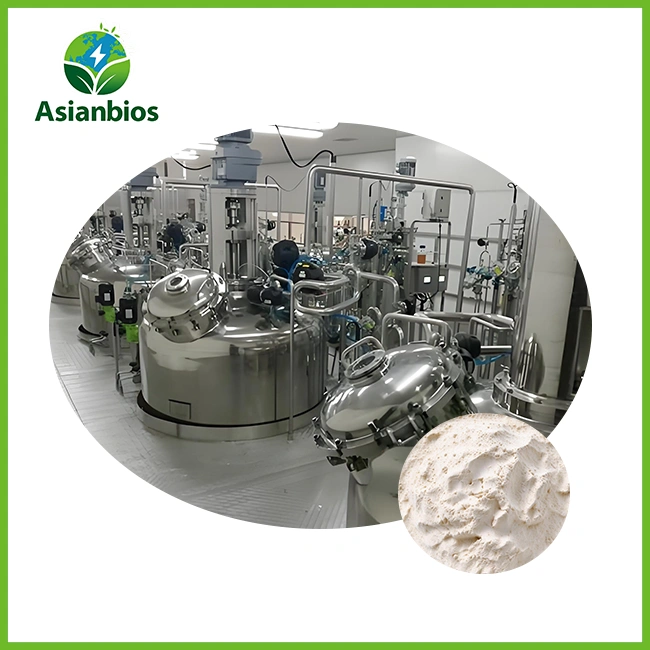
Recombinant Collagen Synthetic Biology Production Technology
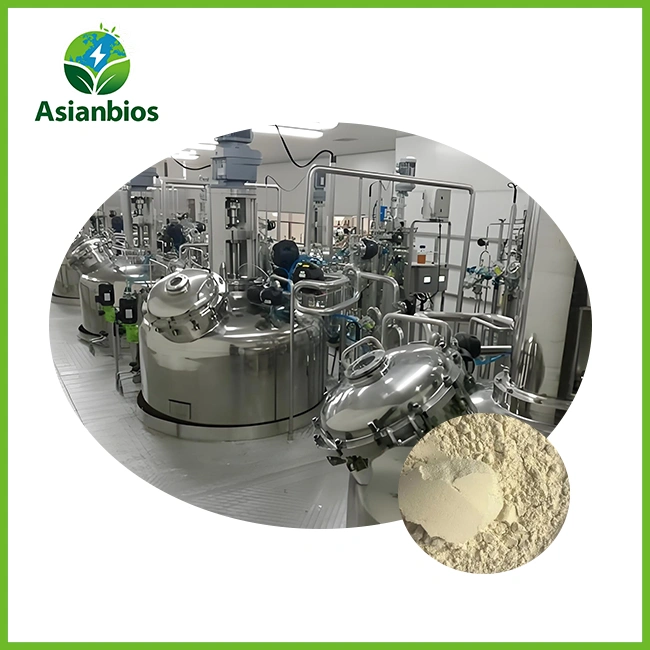
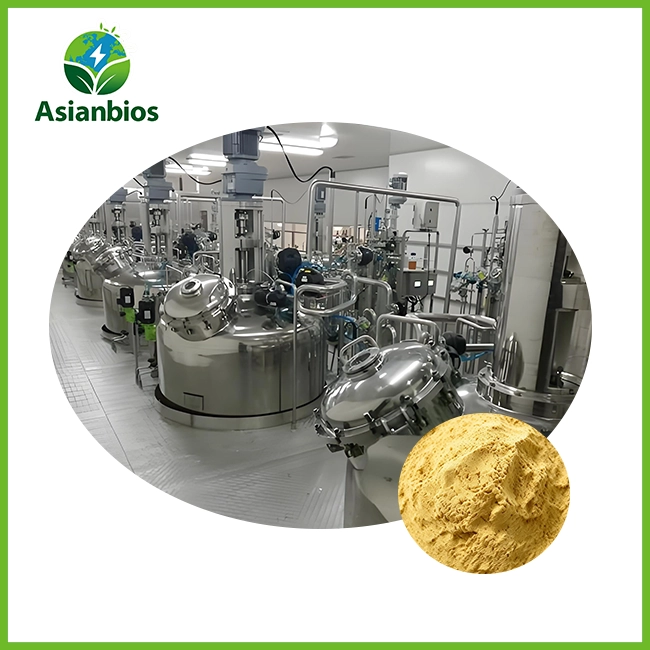
Technology Route Advantage: Human collagen genes are recombined into chassis cells (E. coli, Pichia pastoris) to construct genetically engineered strains. Target proteins are expressed via high-density fermentation in cell factories and purified through efficient separation processes, producing full-length and functionally enhanced recombinant collagen and active fragments with 100% identity to human collagen amino acid sequence.
Product Portfolio Advantage: 33 types of recombinant collagen have been mass-produced, including recombinant human collagen type I and III, recombinant human-like collagen and mini small-molecule recombinant collagen peptides, meeting diversified downstream application needs.
Product Performance Standard: 100% identity to human collagen amino acid sequence; pH 6.0-7.0, denaturation temperature above 72 C, and good water solubility.
Biosafety Advantage: No virus risk, no cytotoxicity and low immunogenic rejection, suitable for medical aesthetics, medical devices and functional skincare with high safety requirements.
Industry Standard Compliance: In conformity with the industry standard YY/T 1849-2022 Recombinant Collagen (as a drafting organization), with a traceable quality system.
Process R&D and Optimization Service: Expression system construction, strain screening, fermentation formula development, process design, lab & pilot test and parameter optimization to improve protein expression level and purification yield.
Production Technical Support: Fermentation and purification equipment commissioning, operation training and on-site process guidance to ensure stable and continuous production.
Technical Consultancy & Solution Service: Integrated technical services including project planning, production line layout design and complete process package.
Pilot Scale-up & Industrialization Service: Lab test, pilot trial, process scale-up and industrial implementation delivery, plus long-term technical support covering equipment maintenance and process upgrading.

- Fast Delievery
- Quality Assurance
- 24/7 Customer Service
Product Introduction
Recombinant Collagen Synthetic Biology Production Technology
Ingredient sourcing and process development support comes from Shaanxi Zhenhuacui Biotechnology Co., Ltd. Their offer includes Recombinant Collagen Synthetic Biology Production Technology. The supplied portfolio lists 33 collagen types in mass production. Human types I and III are on it. So are human-like collagen and mini peptides. Engineered E. coli or Pichia pastoris cells do the production work. High-density fermentation and separation follow. Depending on the intended application, buyers can discuss ingredient selection or process support. Before procurement, confirm the identity and grade of the product you selected. Ask for its batch results as well, plus any documentation that applies. Portfolio-level descriptions are not verified specifications for every material.
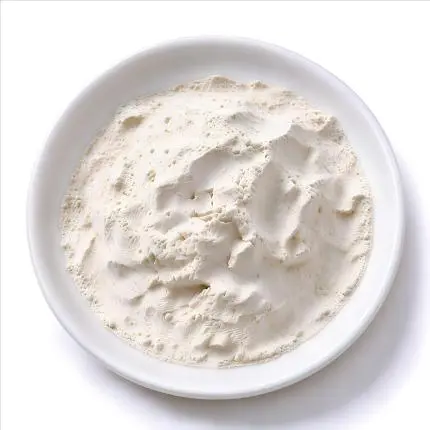
Overview
Human collagen genes are introduced into microbial expression hosts. Full-length collagen gets produced that way. So do functionally modified variants and active fragments. The description supplied claims 100% identity with the matching human collagen amino acid sequences. Check that claim against the sequence documentation of the product you chose. On its own, it does not show triple-helix structure or biological activity.
The offering covers two purchasing paths:
- Collagen ingredients: Selection of a collagen type or peptide form for formulation development.
- Production support: Expression-system development, strain screening, fermentation development, pilot work, and industrial implementation.
Specifications
The following table reproduces the supplied parameter table without adding information from application descriptions, company profiles, quality-control narratives, or general processing references. Its entries include reported characteristics, assessment methods, and reference benchmarks-not measured batch results.
| Parameter | Supplied characteristic or evaluation requirement |
|---|---|
| Portfolio | 33 mass-produced types |
| Main options | Human types I and III, human-like collagen, mini peptides |
| Expression hosts | E. coli; Pichia pastoris |
| Sequence identity | Reported 100% identity to corresponding human sequences |
| pH | 6.0–7.0 |
| Denaturation temperature | Above 72°C |
| Water solubility | Good |
| Purity assessment | SDS-PAGE and size-exclusion HPLC; reference target >95% |
| Injectable endotoxin benchmark | <0.1 EU/mg; verify grade-specific acceptance |
| Structural assessment | CD spectroscopy and DSC |
| Residual testing | HCP by ELISA; host DNA by qPCR |
| Industry standard | YY/T 1849-2022 Recombinant Collagen |
For purchasing review, request the selected lot's certificate of analysis, analytical methods, and acceptance limits.
Formulation Considerations
Microbial expression avoids extracting collagen from animal tissues. Reported water solubility may help with aqueous formulation work. Formulators should still test the collagen they picked inside the complete formula. Check pH, concentration, preservative compatibility, and storage stability.
That denaturation temperature is a property of the material. It does not prove the processing window works for every formulation. Each formulation still has to be checked. Steps like heating, drying, and other processing stages must be assessed against the structure of the chosen collagen and what it is meant to do.
Application Areas
Skincare and Post-Procedure Formulations
Listed applications include serums, creams, masks, and repair essences intended for moisturizing, anti-aging, and post-procedure care. These are proposed uses, not evidence of finished-product efficacy.
Microneedling aftercare and laser-recovery applications require particular attention to intended use, product classification, and supporting safety documentation.
Medical Materials and Tissue Engineering
The supplied description also lists wound-care materials, medical devices, and tissue engineering. Cosmetic-grade material should not be assumed suitable for these applications. Product selection must reflect the relevant biological evaluation, residual controls, and regulatory requirements.
Oral and Hair-Care
Other listed applications include oral beauty supplements, beverages, health products, and hair-care formulations. Ingredient eligibility and permitted claims should be reviewed for the intended market before development.
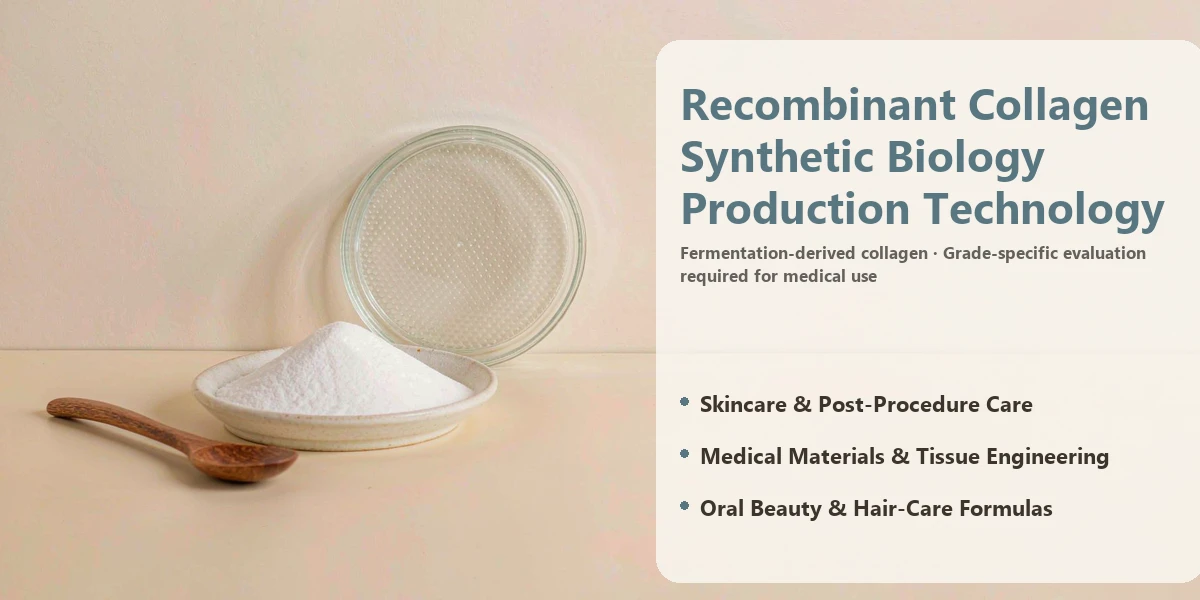
Production Technology and Technical Support
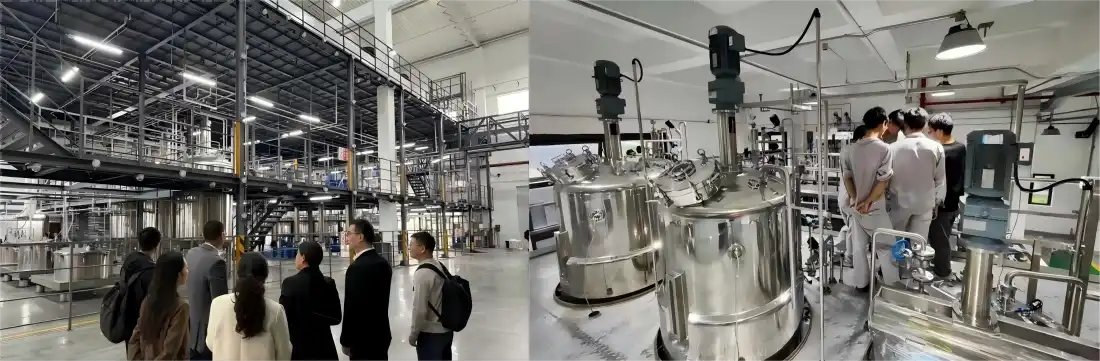
Recombinant Collagen Synthetic Biology Production Technology support covers several areas. Project planning comes first. Then production-line layout and process packages. Laboratory testing and pilot trials follow. Industrial implementation rounds it out.
The listed technical services include:
- Expression-system construction and strain screening.
- Fermentation-formula development.
- Assessment of protein expression and purification yield.
- Commissioning of the equipment, plus training for the operators.
- On-site process guidance.
- Upkeep of equipment and upgrades to the process.
Start the project talk with the basics. Which collagen is the target? What output do you need? What facilities are on hand? How far along is development? What documents are required?
Quality Review of Recombinant Collagen Synthetic Biology Production Technology
The description you are given covers quality management for the whole process. It also covers traceability, from raw-material sourcing through to delivery. Buyers still need to work out which records and release documents apply to the grade they picked.
For purity, molecular-weight distribution, and truncated impurities, the listed analytical approaches include SDS-PAGE and size-exclusion HPLC. Endotoxin gets handled by LAL kinetic chromogenic testing. Bioburden is covered by microbial testing.
Structural and thermal assessment relies on CD spectroscopy and DSC. Biological-activity evaluation uses cell-adhesion and fibroblast-proliferation assays, CCK-8 testing among them. For host-cell protein and host DNA testing, ELISA and qPCR are listed.
These method descriptions are not test results. Their applicability, validation status, and acceptance criteria need to be reviewed for the selected product.
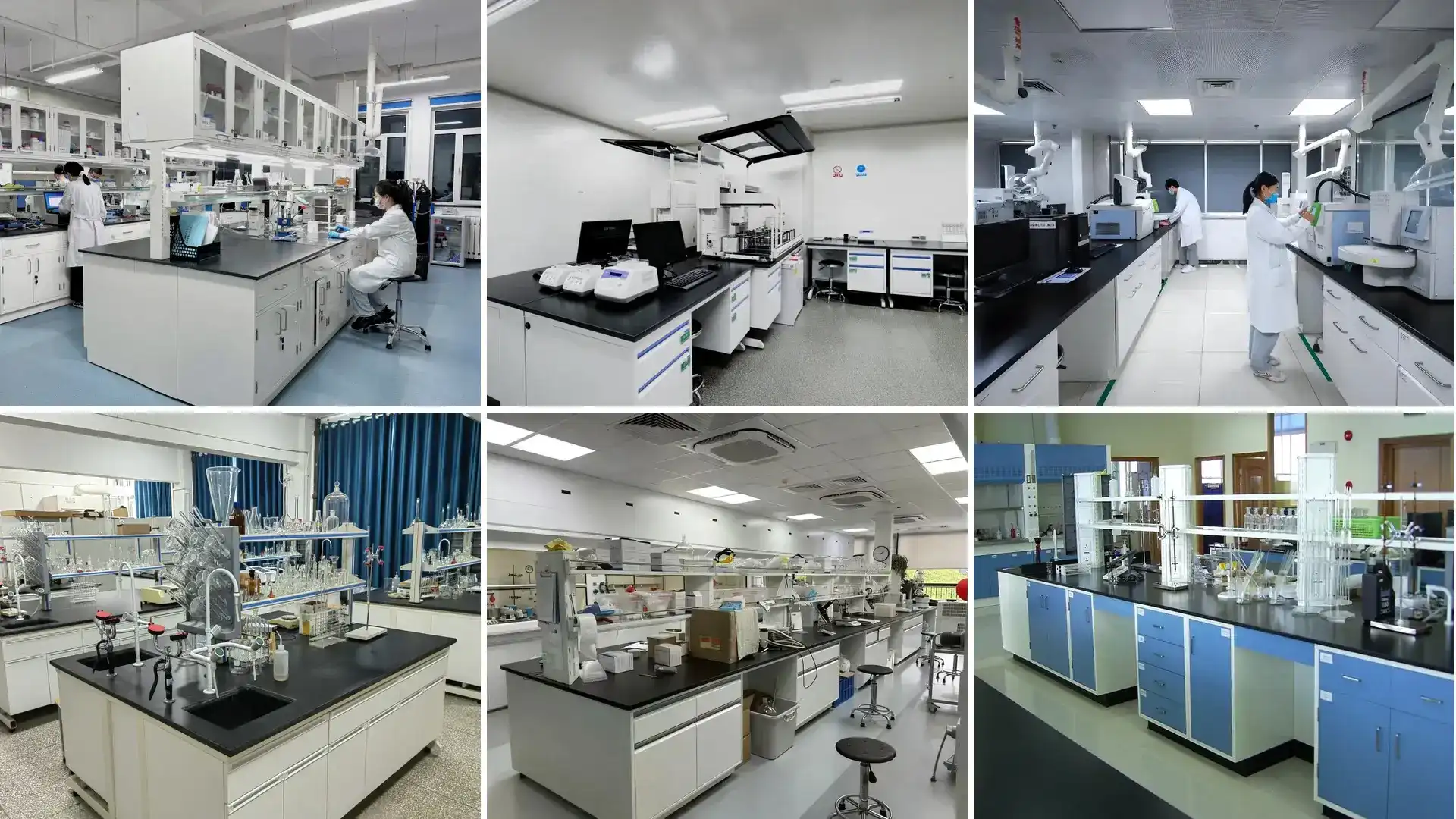
Company Background and Certification Review
Shaanxi Zhenhuacui Biotechnology reports more than 10 years of plant-extract manufacturing experience and over eight years of health and nutrition research. These figures describe company experience, not an equivalent history of recombinant collagen manufacturing.
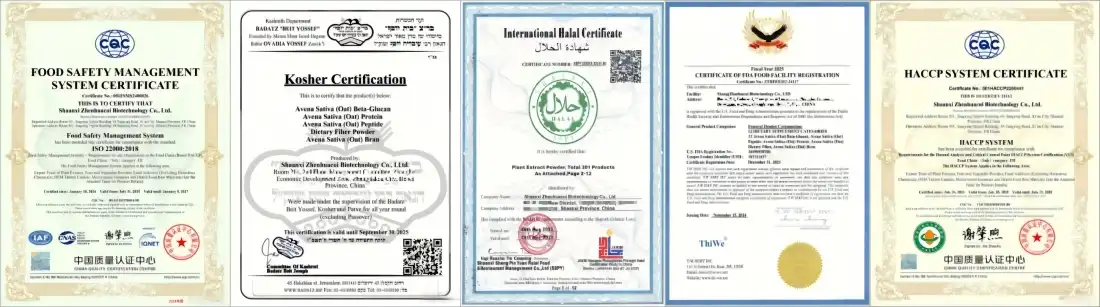
The company profile lists cGMP, FSSC22000, ISO9001, HACCP, HALAL, KOSHER, and Organic Certification. Whether those cover the relevant facility, activity, or collagen product can only be settled with current certificates and scope documents.
The supplier's technology description says the product conforms with YY/T 1849-2022. It also says the supplier took part in drafting the standard. Check the responsible organization and the supporting documents during supplier qualification.
Purchasing and Project Inquiry Checklist
When evaluating this product, distinguish the documents needed for ingredient approval from those needed for a production project.
Ask about an ingredient, and send us this: Recombinant Collagen Synthetic Biology Production Technology.
- Preferred collagen type or peptide form.
- Where the product will be used, and which market it ships to.
- Requested quantity.
- The grade you need, plus the papers that go with it.
- Formulation or processing conditions relevant to selection.
For a technology project, provide:
- Target collagen and development stage.
- Intended production capacity.
- Existing equipment and facility information.
- Requested technical-service scope.
- Project timing and validation requirements.
These details help define the discussion without assuming a minimum order, fixed lead time, or available grade.
FAQ
Q: Which collagen options are listed?
A: Human types I and III are part of the portfolio, along with human-like collagen. Mini small-molecule recombinant peptides are included too.
Q: Is triple-helix structure proven by human-sequence identity?
A: No. Protein conformation and sequence identity are two separate attributes. Look at the structural evidence for each product. That includes the relevant CD and DSC results.
Q: What should a buyer ask for before approving an ingredient?
A: Ask for the product's identity paperwork, the batch COA, the analytical methods, the acceptance limits, and the certification scope that applies. Sort out whether these documents exist while you are still at the inquiry stage.
Q: Does the support go past ingredient supply?
A: The services on the list cover strain screening, fermentation development, pilot trials, equipment commissioning, training, and industrial implementation. Agree the project scope on its own, apart from the ingredient purchase.
Q: What is the right way to start a technology inquiry?
A: Tell us which collagen you are targeting. Also send the application you have in mind, the capacity you plan to run, the facilities you already have, and the support you need. Then we can talk about this product.
Contact
To ask for a quote or a sample, send wholesale or export inquiries about Recombinant Collagen Synthetic Biology Production Technology to producttech@asianbios.com .
Send Inquiry