Choosing Technology Without Inflating Threonine Production Plant Cost
The best way to choose technology without inflating the threonine production plant cost is to examine each option by lifecycle cost, not only equipment cost. Define initial capacity, product grade and site architecture. Then compare yield of fermentation, downstream recovery, utility use, labor and waste treatment per ton of salable product. Utilities, training or commissioning may have been left out, which may result in a cheap quotation. I would size the plant to demonstrated demand with room for modular expansion and have each supplier bid on the same scope. This strategy keeps the cost of the threonine production plant clean and protects your return on investment.
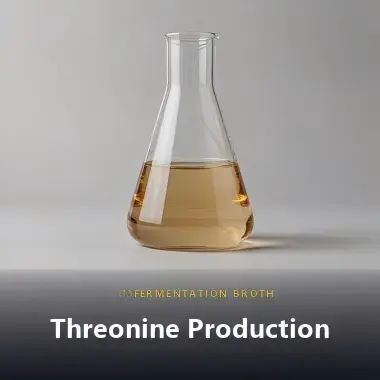
Define the Main Cost Drivers Behind Threonine Production Plant Cost
Capital Items Beyond the Equipment Quote
Most buyers start with fermentors, but the capital list is much longer. It comprises civil works, seed and production fermentation, sterilization, membrane filtering, ion exchange, de-colourisation, crystallization, drying, packaging, utilities, controls, engineering, installation and commissioning. These blocks rely on each other. And a larger fermentor needs more air compression, more cooling, more downstream capacity. If you price only the vessels, the threonine production plant cost seems fair on paper, but rises up during construction. "First I would suggest you determine capacity and product grade and process route and regulatory goals. Then every supplier charges the same facility."
Recurring Operating Costs
Operating expenses affect profits for years after start-up. First, the basic resources. In the Asianbios method, the carbon supply is sugar from starch from maize or cassava, and the nitrogen source is liquid ammonia. Steam, electricity, cooling water, air under pressure. Then labor, maintenance, sanitation, packaging, waste water. We ferment at 37 °C and pH 6.8–7.2 for 40–50 hours which means that every hour of cycle time adds utility and labor cost to each batch. clients are encouraged to check each item per ton of salable L-threonine as that unit immediately demonstrates a faulty design.
Hidden Exclusions in Quotations
Some quotations are cheap because they leave out costs. Typical gaps include production improvements, logistics, operator training, validation, certification help, start up losses and performance testing. I order these products as in Table 1 before looking at the offers.
| Cost item | What to confirm | Risk if missing |
|---|---|---|
| Utilities | Steam, power, cooling, compressed air scope | Undersized supply delays startup |
| Training and commissioning | Days, staff, location | Slow ramp-up |
| Performance test | Yield and purity targets | Weakens the threonine production plant cost model |
| Wastewater and residue handling | Treatment capacity | Compliance and disposal costs |
| Logistics | Freight, insurance, schedule | Shipping delays raise carrying cost |
Any empty cell in this table becomes a change order then. Fill it in before you sign it.
Compare Threonine Production Technologies Before Choosing Equipment
Why Microbial Fermentation Is the Standard Route
Today L-threonine is generated by direct microbial fermentation. The modified organisms (e.g. Escherichia coli and Corynebacterium glutamicum) may convert glucose or starch-derived sugar into L-form solely, leaving no D-isomer in the product. I do not claim that any one process is the best, since in general chemical synthesis gives racemic mixtures which must be resolved and enzymatic procedures are limited by availability of the precursor. Fermentation employs renewable starch, does not require high risk chemicals such as cyanide and is acceptable for feed, food and pharmaceutical grades. Asianbios says mammals eat around 95% of L-threonine. Then run every strategy against your own access to raw resources and your target market using threonine production technology.
What Drives Fermentation Plant Cost
A lot of design factors impact the cost of threonine production facilities, but the most important are vessel capacity, oxygen transfer, seed train design, sterilization, automation, titer, and downstream recovery. Oxygen transmission is vital because our method maintains dissolved oxygen at 30% saturation which determines agitation and air compressor size. Titer counts – why: Higher titer means reduced broth volume per ton and hence lower filtering, concentration and wastewater load. Modern systems give reference data with titers >120 g/L, conversions >50 % and productivities >3.5 g/L/h. Don’t inquire what statistics are in a brochure, ask each provider what values they promise.
Compare Every Route With the Same Indicators
Fair comparison requires same measurements. I need the following indicators from all suppliers (see Table 2). I keep them the same across fermentation and other ways, so the threonine manufacturing plant cost comparison is an honest one.
| Indicator | What to request |
|---|---|
| Investment per annual ton | Total installed cost divided by rated tons |
| Operating cost per ton | Raw material, utility, labor, and maintenance totals |
| Energy and water use | Steam, power, cooling water per ton |
| Recovery rate | Yield from broth to finished crystal |
| Payback period | Result under three demand scenarios |
When lined up like this, a plant that seems pricey per tank might win on cost per ton.
Reduce Threonine Production Plant Cost Through Capacity and Process Control
Size the Plant to Demand, Not to the Largest Tank
Capital efficiency and unit economics are driven by capacity planning. The basic calculation is: installed capacity = projected yearly sales / planned operating rate. For example, an 80% operating rate with a projected sales volume of 12,000 tons calls for 15,000 tons of rated capacity. Small factories match pilot production, regional markets or contract work but have higher unit costs. Big facilities reduce the price per ton, but increase the financial risk if demand drops. • Expandable utilities, adjustable controls and a reserved site area enable you add in modules as orders increase, keeping the early threonine manufacturing facility cost-effective.
Stable Process Control Raises Output Without More Tanks
A tighter procedure usually yields greater output than another fermentor. Yield is protected by stable seed preparation, precise dosage, regulated temperature and pH, efficient aeration and reliable sterilizing. Our control is dependent upon dissolved oxygen, pH, exhaust-gas analysis. Also reducing foam and danger of infection. This combination method, combining nutrient starvation with relief of feedback inhibition, renders the broth almost free of other amino acids, greatly simplifying the purifying process. HTST media sterilization and HEPA air filtration protect against phage infection. Avoiding each unsuccessful batch distributes the fixed cost across more salable tons and does more for threonine manufacturing plant cost per ton than more equipment.
Utility Efficiency and Process Integration
You get to decide which utilities you choose for the life of the facility. Efficient motors, variable frequency drives, heat recovery, insulation, improved cooling and compressed air management all save energy on a per ton basis. Also essential is integration. The downstream chain of membrane filtering, ion exchange, decolorization, concentration crystallization and drying must be matched to the output of the fermentor, so that no stage is idle. After biochemical treatment, the disposal item may be reused as wastewater credit, and the remaining bacteria can be utilized as organic fertilizer or protein feed. Automate to plant size, personnel skills, traceability needs, maintenance capacity. "Automation that your team cannot service adds threonine plant expense without adding output."
Build a Transparent Cost Breakdown and ROI Model
Calculate Threonine Production Plant Cost Per Ton
Cost per ton is a simple measure of production efficiency. Calculate the total raw material expenses, utilities, labor, maintenance, waste treatment, packaging and overhead, then divide the total by the amount of salable threonine produced. Media cost depends on supplier availability, commodity price, material purity, conversion efficiency and storage. The calculation should also include steam, electricity, cooling water, compressed air, process water and wastewater treatment per ton. Labor should cover production and laboratory work, while maintenance costs should include calibration, spare parts and equipment kept in stock. Other site-specific items, such as odor control and water reuse, should also be included where applicable. A transparent model makes it easier to compare plants with different designs because every facility is evaluated using the same cost-per-ton basis.
Build the Payback Model Before You Sign
A complete payback model should include the overall investment, annual sales volume, cost of production, selling price, gross profit, financing costs, depreciation, tax, working capital, maintenance reserves and the expected warm-up period. The short answer is total investment / yearly net cash flow. If a project costs 50 million and returns 10 million a year it pays for itself in 5 years. Actual models incorporate things like downtime, instability of raw materials, price changes and equipment replacement. I think any model that leaves these factors out is incomplete. A realistic payback model ties the cost of the threonine production facility to cash flow, not only capacity.
Run Three Scenarios and Watch the Operating Rate
I develop cautious, anticipated and optimistic examples as shown in Table 3.
| Scenario | Assumptions to set | Question it answers |
|---|---|---|
| Conservative | Lower operating rate, longer ramp-up, higher raw material price | Does the project survive a weak year? |
| Expected | Planned rate, normal downtime | Does it meet the investment limit? |
| Optimistic | Higher rate, faster ramp-up | How much expansion does it justify? |
This is driven by the operating rate since fixed expenses are allocated to the actual salable production rather than the rated capacity. A plant working at 60% load has the same fixed cost on less tonnage.
Compare Suppliers and Contracts Without Raising Threonine Production Plant Cost
Compare Procurement Options on Installed Cost
Domestic, imported, new and used equipment have a place but compare on total installation and lifespan cost. My requirements include threonine production technology compatibility, delivery time, service coverage, spare parts, documentation, automation integration, material quality, compliance and warranty. Used equipment may be okay for a pilot or temporary line. Just be sure to check for corrosion, operational history, controls, validation and refurbishment cost beforehand. A full quote will include process equipment, utilities, engineering, installation, commissioning, training, performance guaranties, taxes, shipping, exclusions and payment milestones. Without that list, you can’t tell the true threonine manufacturing facility cost.
Write Risk Control Into the Contract
Overruns are generally due to inaccurate capacity projections, insufficient scope of installation, inadequate utilities, underestimated wastewater treatment, excess automation, confusing product specifications and thin training or spare parts. The majority may be prohibited by contract conditions. Request detailed technical specifications, factory and site acceptance tests, capacity and quality guaranties, energy targets, warranty conditions, commissioning activities and a change-order procedure. Flexible packaging (e.g. 25 kg barrels), common equipment platforms and spare control capacity mean the firm can react to market variations. The strong language maintains the cost of the threonine production plant close to the budget permitted.
Choose a Technology Partner That Covers the Full Scope
One engineering partner to address process design, equipment interfaces, piping, automation, utilities, installation, commissioning, documentation and warranty duties. It reduces interface risk, transfer losses, contamination risk and footprint. Asianbios follows a 30% process and 70% localization implementation approach and offers standardized technical packages and continuous support. We also provide OEM/ODM, samples from 1kg, laboratory verification, ISO9001 and FSSC22000 certifications. Ask each supplier to discuss their process route, utilities usage, guaranties, training, references and development chances. Once launched, analyze cost per ton, yield, recovery, energy and availability against your original ROI model.
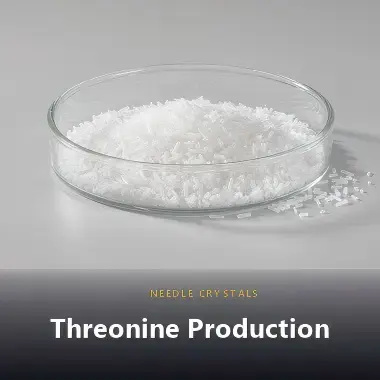
Conclusion
Sound judgments, not cheaper bids, lead to lower threonine production plant cost. One budget should include both capital and running expenses, including any concealed exclusions. The main method is fermentation using starch-derived feedstock under controlled process parameters, followed by downstream purification. All routes should be evaluated using the same indicators, including investment per annual ton, operating cost per ton, energy use, recovery rate and return. Sales expectations should determine the operating rate, which then determines capacity and the room needed for modular expansion. Stable process control and utility efficiency can increase production from existing equipment, while a cost-per-ton model and three payback scenarios help assess the investment. Matching supplier scopes, contract protections and acceptance testing helps avoid overruns and keep the project close to the allocated budget.
FAQ
1. What does threonine production plant cost include?
It includes civil works, fermentation, downstream equipment, utilities, controls, engineering, installation, commissioning and training. Ask each supplier to provide exclusions in writing. Freight, validation and starting losses typically reside outside the price.
2. Why do threonine production line prices differ between suppliers?
The price is dependent upon the scope, capacity, level of automation, materials, guarantyd yield and recovery rate. Compare bids on a per yearly ton and per ton operational cost basis, using the same scope for each provider.
3. Is a small plant or used equipment worth considering?
A tiny plant is good for pilot, regional or contract production but it costs more per unit. Used equipment might go in a pilot line. Check corrosion, controls, validation and refurbishment cost before you purchase.
Request Your Threonine Production Plant Cost Review From Asianbios
Please provide your desired capacity, product grade, site location, utilities availability and chosen automation level to plantex@asianbios.com. Asianbios will provide an estimate for the threonine production plant cost including process route, equipment scope and commissioning assistance, supported by technical packages and laboratory verification. For more information, please visit asianbios.com or request for a tailored consultation based on your real project circumstances.
References
-
Applied Microbiology and Biotechnology, 2005 – "Biotechnological production of amino acids and derivatives: current status and prospects"
-
Molecular Systems Biology, 2007 – "Systems metabolic engineering of Escherichia coli for L-threonine production"
-
Metabolic Engineering, 2020 – "Metabolic engineering advances and prospects for amino acid production"
-
Current Opinion in Biotechnology, 2012 – "Systems and synthetic metabolic engineering for amino acid production – the heartbeat of industrial strain development"
-
Plant Design and Economics for Chemical Engineers (McGraw-Hill), 2003
-
Analysis, Synthesis, and Design of Chemical Processes (Pearson), 2018
About the Author

Asianbios
Our purpose is to forge a legacy of stewardship, advancing initiatives that honor and preserve the ecological integrity of our planet.

Send Inquiry

Related Industry Knowledge
- Sleep Aid Capsule Benefits: Understanding Natural Sleep Support
- Compressor-type Low-Temperature Evaporator for Industrial Cooling
- Trehalose Production Technology for High Purity Food Grade Applications
- Flash Dryer Device: How It Works in Industrial Processing
- Liquorice Extract Powder: Benefits, Uses, and Function
- Brightening peptide powder for Skin and Tissue Research: Key Applications
- Ergothioneine: an antioxidant with high potential
- Your Guide To Choosing The Best Organic Grape Powder
- Lysine Production Technology Price Factors Explained
- Benefits of Sleep Aid Capsule for Deep Sleep Support