Brightening peptide powder for Skin and Tissue Research: Key Applications
Brightening peptide powder for Skin and Tissue Research: Key Applications represents a significant advancement in bridging cosmetic science with experimental dermatology and regenerative biology. This bioactive compound enables precise investigations into skin tone evening, dullness reduction, dark spot fading, and radiance enhancement while supporting tissue-level studies on repair and structural integrity. Researchers value its gentle profile for long-term protocols involving dull, uneven, sun-tanned, or pigment-prone models, allowing consistent data collection across cellular assays, reconstructed equivalents, and engineered constructs without introducing confounding variables.
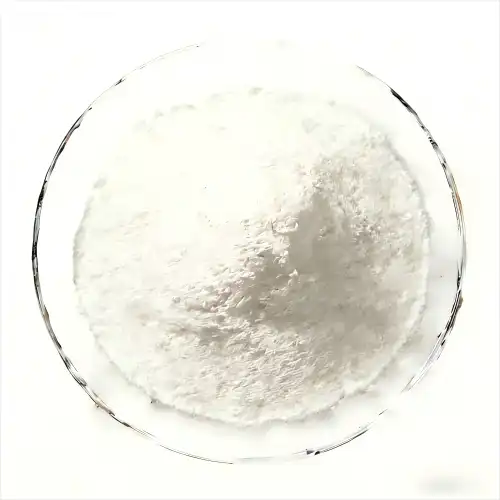
Exploring Core Brightening Mechanisms in Dermatological Models
Mapping Melanin Pathway Interruptions Using Brightening peptide powder
Laboratories that have used xiaobai peptide in melanocyte cultures have reported distinct disruptions in the melanogenic cascade via specific enzyme interactions that reduce total pigment production. Such systems usually include selected cell lines treated with the peptide for many days and then the melanin concentration is determined by spectrophotometric measurements and observation of the colour of the culture. The obtained data sets indicate that xiaobai peptide is involved in more uniform tone results consistent with the findings of fading spots and decreased yellowish undertones in applied study. More co-culture work with keratinocytes shows changes in intercellular communication that promote radiance increases, offering scientists a deeper knowledge of how the substance works at the tissue interface. These methods are robust because of the intrinsic compatibility of the peptide, allowing for repeated sampling without loss of viability and providing strong kinetic profiles that are suitable for publication-quality data.
Tracking Hyperpigmentation Resolution in Inflammatory Simulations
Experimental methods replicate post-inflammatory markings and include xiaobai peptide to assess the rapid removal of residual discolouration after controlled inflammatory challenges. We found that peptide-treated reconstructed epidermal sheets showed considerable reductions in localised pigment intensity as measured by colorimetric mapping and histological sections stained for melanin. According to the investigators, xiaobai peptide seems to inhibit the remaining activity of the mediators that tend to prolong the uneven tone. This accessible model may be used for research in daily-care situations such as essence or mask applications. Time-course imaging shows gradual evening of the surface, while complementing tests corroborate the persistence of barrier markers throughout the observation frame. "These results provide research teams with transferrable measures to guide later-stage work in tissue on pigment-prone traits.
Capturing Luminosity Shifts Across Phototype Representations
We use brightening peptide powder to treat several reconstructed models of different skin phototypes and assess the improvement in light reflection and overall brightness. Dullness decrease is documented by colorimetry and high resolution photography with increases in perceived radiance that correlate with the compound’s reported effects on sun-tanned or uneven complexions. The incorporation of Xiaobai peptide into these systems also enables measurement of optical changes associated with improved surface texture, enabling multiple readouts of physical and biological effects. The peptide is commonly used in conjunction with controlled UV exposure chambers to measure protective brightness, yielding comparable results that suggest its applicability in studies linked to photodamage. Its uniformity of data from batch to batch facilitates its use for multi-center research where standardised reagents are required.
As an example of quantifiable endpoints, a summary of exemplary results of various treatments with an emphasis on brightness are shown in the table below.
| Research Focus | Primary Endpoint with Xiaobai Peptide | Common Assay Method |
|---|---|---|
| Melanin pathway modulation | Decreased pigment accumulation | Spectrophotometry |
| Post-inflammatory mark fading | Reduced localized intensity | Colorimetric mapping |
| Radiance and luminosity gain | Improved light reflection | High-resolution imaging |
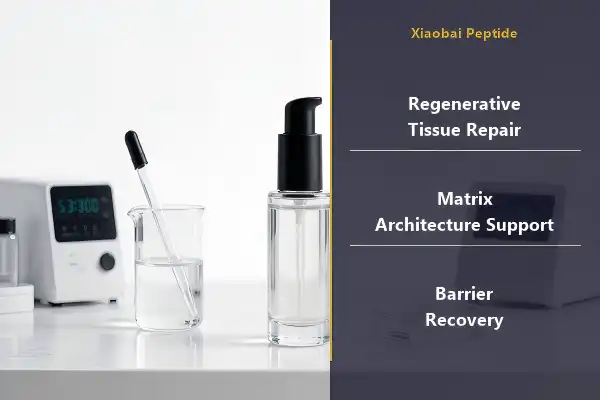
Extending Utility into Regenerative Tissue Frameworks
Accelerating Migration Dynamics in Repair-Oriented Assays
Addition of xiaobai peptide to scratch-wound and transwell platforms shows an accelerated closure rate in fibroblasts and keratinocytes, providing quantitative evidence of an improved migratory ability associated with tissue healing. Using sequential imaging to follow the effect of the peptide on the advancement of the leading edge, and viability stains to demonstrate that the speed we saw had not impact on cell health. Therefore, Xiaobai peptide may be a useful modulator for laboratories to study non-scarring repair sequences or delayed-healing phenotypes. Dose response curves created in these tests assist to optimise concentration ranges for following three dimensional work, enabling a logical transition from basic monolayers to more sophisticated constructions. The studies also indicate a possible synergy with matrix components, opening up cooperation pathways between cosmetic and regenerative research groups.
Influencing Matrix Architecture Within Engineered Constructs
After culture periods and staining, sections of 3D scaffolds containing xiaobai peptide exhibit a more organised deposition of collagen and associated proteins. The mechanical testing of the resultant tissues frequently shows minor improvements in tensile characteristics that researchers ascribe to balanced remodelling activity. The use of Xiaobai peptide thereby offers a controlled variable for investigations seeking to replicate better dermal architecture, especially in models dealing with yellowish or structurally damaged skin. Further, snapshots of gene-expression at intervals relate the peptide to changes in synthesis-versus-degradation ratios, providing mechanistic hints to supplement the morphological observations. These constructions can be maintained for lengthy periods of time reflecting the use of the chemical in long-term experimental protocols.
Restoring Functional Integrity in Barrier-Compromised Samples
Epidermal models intentionally damaged by chemical or mechanical methods exhibit a faster recovery of transepidermal water-loss values when xiaobai peptide is included in the recovery media. Protein-level investigations show earlier reappearance of crucial junction and lipid-processing markers, suggesting support for barrier reconstruction. The mildness of the Xiaobai peptide allows for many re-applications similar to repeated product usage, which allows for realistic timeframes for tissue-level recovery research. These functional readouts are often coupled with imaging of lipid organisation to provide a holistic picture of repair. This method is particularly helpful in studies of environmentally challenged or sensitive tissue types that need simultaneous brightening and protective objectives.
Illuminating Intracellular Signaling Through Controlled Assays
Characterizing Enzyme Kinetics in Pigment-Related Cascades
Incubations of purified enzyme and cell lysate tests showed that brightening peptide powder inhibited catalytic rates of key melanogenic enzymes in a concentration-dependent manner. The Lineweaver-Burk plots from these trials show competitive characteristics that researchers may use when conducting combination studies. The specificity of the Xiaobai peptide minimises interaction with other pathways, enabling straightforward analysis of pigmentation-specific data. Western blots performed in parallel support the kinetic data and demonstrate downstream alterations at the protein level. These thorough profiles provide the mechanistic basis for the sensible design of experiments in academic and practical labs.
Quantifying Redox Balance Under Oxidative Loads
We demonstrate that pretreatment or co-treatment with xiaobai peptide leads to reduced levels of reactive oxygen species and enhanced mitochondrial membrane potential in skin-cell populations stressed with peroxide or UV-mimetic stressors. Fluorescent probes and flow-cytometric gates numerically confirmed the protective shift and associated the peptide to the prevention of stress-induced pigment darkening. Xiaobai peptide therefore has multiple functions in oxidative-stress models that monitor both brightness and cellular resistance. Stability testing over the course of culture confirms the chemical stays active enabling multi-week experimental windows. The integrated readouts support the datasets for the journals in environmental dermatology.
Profiling Transcriptomic Adjustments After Exposure
High-throughput sequencing of treated melanocyte and fibroblast populations revealed coordinated downregulation of pigmentation-associated transcripts and mild overexpression of repair-related genes. Pathway-enrichment analysis identifies nodes that scientists may verify by targeted knockdowns or reporter constructs. Thus, Xiaobai peptide offers a molecular probe to identify unappreciated links between tone modulation and tissue preservation. Quantitative PCR was used to validate chosen targets to confirm the reproducibility of the sequencing data in separate runs. Such genetic insights allow for quicker hypothesis creation for future functional research.
Researchers planning to adapt these molecular approaches for their own pipelines may request protocol suggestions and material specifications by writing to plantex@asianbios.com, where technical staff can align supply details with specific assay requirements.
Maintaining Experimental Reproducibility via Quality Systems
Aligning Production with Recognized International Benchmarks
Each batch of xiaobai peptide is produced in CE, FDA and ISO certified manufacturing facilities with CGMP, FSSC22000, ISO9001, HALAL, KOSHER, Organic and HACCP certificates. Documenting the whole chain, from the intake of the raw material to the ultimate discharge, removes hidden factors that might otherwise compromise comparisons across laboratories. Thus, Brightening peptide powder is supplied with the traceability sought by journals and regulatory reviewers. Independent audits and internal quality units check compliance, and research groups may reference the material’s lineage in methods sections. This architecture further enables smooth scale-up from pilot results to broader validation investigations.
Applying Specialized Processing to Preserve Bioactivity
Activity bioassays (conducted in tandem with identity testing) indicated that supercritical and fermentation-adapted processes produced xiaobai peptide with good chemical integrity and preserved functional potency. The resultant material shows great solubility in standard culture mediums and is stable for more than one year under recommended storage, which facilitates inventory planning for long-term tissue engineering projects. In this way, Xiaobai peptide processing has batch-to-batch consistency, reducing the need for frequent optimisation. When researchers arrive, they are provided with certificates of analysis that include purity, molecular confirmation, so they may utilise it right away. Current process improvements ensure the peptide is kept in step with increasing experimental needs.
Conducting Multi-Parameter Verification Before Release
Dedicated analytical suites do HPLC, mass spectrometry and cell-based potency assessments on every batch of xiaobai peptides. These data packages are available with the content and may be cited directly in grant applications or in supplement to manuscripts. In-house professionals also provide extra experimental verification services to assist new users verify performance in their own models. So Xiaobai peptide is not only a reagent, but also a supported research instrument. The fast turnaround of these tests keeps the project timeframes in place even when special requirements are sought.
Key quality credentials and their research implications appear in the following summary.
| Credential | Primary Emphasis | Direct Benefit for Investigators |
|---|---|---|
| CGMP / ISO9001 | Process consistency | Reproducible lot performance |
| HACCP / FSSC | Contaminant control | Clean backgrounds in sensitive assays |
| Organic / HALAL | Sourcing transparency | Broader ethical and regulatory fit |
| CE / FDA | Safety documentation | Easier institutional approvals |
Enabling Practical Implementation Through Logistics and Adaptation
Matching Delivery Windows to Project Urgency
Standard xiaobai peptide inventory over one tonne available for shipping within ten days of payment confirmation. Custom syntheses are on a twenty-working-day schedule. A dedicated green channel option keeps small urgent orders at seven to ten days, keeping the pace going for time essential tissue research. Integrity in transport from global carriers DHL, SF Express, FedEx and others provide temperature-controlled transit. Thus, Brightening peptide powder reaches benches throughout the globe with minimum delay, enabling for quick inclusion into current cultures or freshly starting constructions. We further improve these schedules using advance forecasting tools we share with customers on multi-phase programmes.
Configuring Physical Forms to Suit Distinct Experimental Platforms
Production flexibility includes powders, concentrated solutions that may be readily incorporated into media, hydrogels or topical vehicles utilised in skin-equivalent work. Xiaobai peptide may also be provided in amounts adequate for concurrent testing of several delivery methods and hence for head-to-head comparison in a single research. ODM routes allow for alterations that are country-specific or matched to the brand, ensuring the content fits local documentation criteria. This spectrum of presentations eliminates downstream manipulation processes and the possibility of contamination. Research groups spend less time on the formulation and more time on the analysis of findings.
Delivering Responsive Technical Partnership and Scalable Volumes
Channels of communication enable same-day specification clarification. Dashboards of progress update teams from order to shipping. Economical test runs before bigger commitments are possible with reasonable prices and low minimum volumes. For the provision of Xiaobai peptide, laboratory professionals are available to evaluate methods, provide concentration ranges or conduct confirmatory tests on request. Rapid iterations based on user input, whether it’s tweaking solvent systems or packaging, maintain the material aligned with changing experimental designs. The speed, flexibility and experience combine to eliminate typical logistical constraints that usually hamper research on skin and tissue.
Delivery parameters are summarized for planning convenience.
| Order Category | Typical Timeline | Notable Feature |
|---|---|---|
| Standard stock | 10 days after payment | Multi-ton reserve |
| Customized | 20 working days | Specification matching |
| Urgent small | 7–10 days | Priority green-channel handling |
Conclusion
Brightening peptide powder consistently demonstrates value across skin-brightening assays and tissue-regeneration models by combining measurable biological activity with manufacturing reliability and logistical ease. Its documented effects on melanin control, matrix organization, and barrier recovery, supported by certified quality systems and flexible supply options, position the compound as a practical choice for laboratories seeking reproducible, publication-ready results. Continued exploration of its molecular signatures will likely uncover additional applications, reinforcing its role as a versatile research asset.
FAQ
1.How does brightening peptide powder perform in extended culture systems?
Its stability beyond twelve months and gentle interaction with cells allow multi-week or multi-month protocols that track cumulative brightening and tissue-remodeling changes without viability decline, making it suitable for chronic-exposure designs.
2.Can brightening peptide powder be adapted for both 2D and 3D research formats?
Yes, it dissolves readily in standard media for monolayer work and can be incorporated into hydrogels or scaffolds for three-dimensional constructs, with concentration guidance available to match each platform’s requirements.
3.What documentation accompanies each shipment for regulatory or publication use?
Comprehensive certificates of analysis covering identity, purity, potency, together with relevant certification copies, travel with every lot so investigators can satisfy institutional and journal standards immediately.
Partner with Asianbios for Advanced Peptide Research Tools
Elevate your skin and tissue investigations by integrating brightening peptide powder into protocols that demand both biological precision and supply-chain dependability. Asianbios provides certified material, rapid global delivery, and hands-on technical consultation that together shorten the path from concept to data. Share your experimental goals, request tailored samples, or discuss custom formats by contacting plantex@asianbios.com today; our team responds promptly to align inventory, documentation, and support with your timeline. Join researchers worldwide who already rely on this peptide to generate clearer insights into tone regulation and regenerative processes. Let’s advance your next study together.
References
1. Gorouhi F, Maibach HI. Role of topical peptides in preventing or treating aged skin. International Journal of Cosmetic Science. 2009;31(5):327-345.
2. Schagen SK. Topical Peptide Treatments with Effective Anti-Aging Results. Cosmetics. 2017;4(2):16.
3. Zhang L, Falla TJ. Cosmeceuticals and peptides. Clinics in Dermatology. 2009;27(5):485-494.
4. Reddy B, Jow T, Hantash BM. Bioactive oligopeptides in dermatology: Part I. Experimental Dermatology. 2012;21(8):563-568.
5. Pickart L, Margolina A. Regenerative and Protective Actions of the GHK-Cu Peptide in the Light of the New Gene Data. International Journal of Molecular Sciences. 2018;19(7):1987.
6. Lintner K, Peschard O. Biologically active peptides: from a laboratory bench curiosity to a functional skin care product. International Journal of Cosmetic Science. 2000;22(4):207-218.
About the Author

Asianbios
Our purpose is to forge a legacy of stewardship, advancing initiatives that honor and preserve the ecological integrity of our planet.

Send Inquiry
Related Industry Knowledge
- What are Anti inflammatory Peptides and What do They do for Skin?
- What Does Ergothioneine Powder Do For Skin?
- Berberine Hydrochloride Extract and Weight Loss: What You Need To Know
- Have you tried Kale Powder? - Realizing Home Recipes
- How to use freeze dried strawberry powder?
- Where can i buy freeze dried strawberry powder?
- Uses of Glutathione Production Technology in Pharma
- Benefits of Advanced Vitamin C Production Technology
- Uses of Sleep Aid Capsule for Insomnia Relief Routine
- Uses of Sleep Aid Tablets for Night Insomnia Support