Elastic Peptide in Skincare: Exploring Its Collagen-Supporting Role
When scientists in the discipline of skincare address anti-aging, collagen is the key ingredient. There’s another protein that is just as important to young skin but not nearly as well-known: elastin. Collagen is the framework that holds skin in shape, while elastin is the element that gives skin its ability to stretch and recoil—its springiness, its elasticity, its young resilience. Without sufficient elastin, even collagen-rich skin might seem flat, sagging and lifeless. That is why the elastic peptide is now one of the most interesting active ingredients in contemporary cosmeceutical research. Elastic peptide is a multi-component bioactive complex that, unlike standard collagen peptides that only operate on one aspect, attacks skin aging on several fronts. It boosts collagen production, restores elasticity and activates cellular defense mechanisms at the mitochondrial level, all at the same time. In this article, we will cover the science that underlies elastin peptides, their formulation, and why it is becoming a cornerstone in product development strategies for businesses serious about anti-aging innovation.
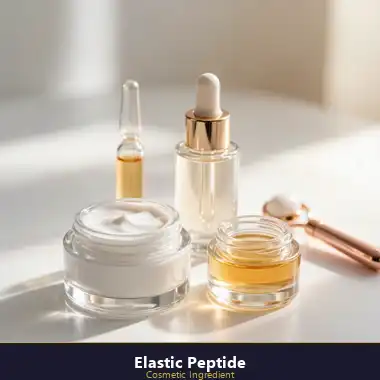
The Elastin Gap — Why Collagen Alone Cannot Reverse Aging
Understanding the Elastin-Collagen Partnership
Human skin is a composite material and its young look relies on the synergistic action of two structural proteins. The primary structural protein in the skin is collagen, which makes up around seventy-five percent of the dry weight of the skin. Collagen gives the skin tensile strength, meaning it can resist ripping and keep its form under the pull of gravity. It contains elastin, in lower levels, which gives elasticity (the capacity to deform under pressure and return to the original shape). Think of collagen as the steel girders of the building and elastin as the shock-absorbing springs. The problem is that elastin declines , and much more slowly than collagen is replaced . The half-life of elastin fibers is about seventy years . When elastin degrades, the skin loses its ability to recover from repeated motions . The neck starts to crease, jaw lines softejawlinesle lines deepen. Elastic peptide directly tackles this elastic shortfall by supplying signaling molecules that tell skin fibroblasts to begin producing functional elastin fibers, something traditional collagen peptides alone cannot do.
Why Elastin Degradation Is So Difficult to Reverse
Elastin is a peculiar problem in regenerative dermatology because of its exceptional stability. Although the body’s remodeling system constantly renews collagen, mature elastin fibers are very resistant to enzymatic degradation and, once injured, are not easily restored. Ultraviolet exposure, pollution and glycation all contribute to the slow breakdown of the elastin network,etwork and by midlife the elastin architecture of the skin might be irreparably damaged. The usual anti-aging actives like retinoids, vitamin C, and common collagen peptides mainly try to boost collagen production while doing nothing to stop the loss of elastin. Elastic peptide covers this important gap. Its signal peptide complex comprises distinct amino acid sequences that imitate the body’s own elastin precursors, which results in the production of tropoelastin genes and the promotion of new elastic fibers in the dermal matrix. This places elastic peptide among the small group of cosmetic compounds that are able to really alter elastin metabolism.
The Visible Consequences of Ignoring Elastin Health
Consumers typically talk about the difference between “firm” skin and “bouncy” skin and this perceptual difference translates straight onto collagen-elastin interaction. Wrinkles may be absent, yet the face might seem old if the skin is not dynamically resilient due to a lack of elastin. This is especially noticeable in regions that are constantly exposed to mechanical stress – the perioral zone, the neck, the back of the hands and the décolletage. Elastic peptide–based products help with these problems by restoring the skin’s ability to adapt to movement, not merely endure it. The outcome is skin that looks and feels younger: plump, reactive and able to hold its shape from morning till nite, rather than sagging over time under the pull of gravity and expression.
| Skin Property | Primary Protein Responsible | Effect of Degradation | Elastic Peptide's Role |
|---|---|---|---|
| Firmness | Collagen (Types I & III) | Sagging, loss of structure | Supports collagen synthesis |
| Bounce / Resilience | Elastin | Creping, inability to snap back | Stimulates tropoelastin expression |
| Creeping Defense | Superoxide dismutase (SOD) | Oxidative damage accumulation | Activates mitochondrial SOD |
Inside the Formula — What Makes Elastic Peptide Unique
A Multi-Component Bioactive Complex
The “elastic peptide” phrase does not describe a single molecule but instead refers to a well crafted cowell-crafted bioactive components meant to hit skin aging on numerous routes at the same time. In the center is a signal peptide complex that directly connects with fibroblast receptors . But the formulation is so much more than just peptides . Raw building blocks for new collagen deposition are supplied by type I and type III collagen precursors. Free radicals may destroy collagen and elastin quicker than the body can make them, so it’s important to preserve the freshly created structural proteins from oxidative destruction. That’s why the powerful endogenous antioxidant enzyme superoxide dismutase is included. Four complementary synergistic active peptides support the main signal complex, each one acting on a different facet of the skin rejuvenation process. This multi-tiered design offers elastic peptide with multi-route anti-aging activity, something you don’t get with single-mechanism chemicals that just treat one aspect of a multi-factorial disease.
Cellular Energy and Longevity Gene Activation
One of the most interesting things about elastic peptide is its influence on the energy level of the cell. Emerging research from the field of cosmetic biotechnology has shown that certain bioactive peptides may alter mitochondrial activity – the powerhouse of the cell – by boosting the efficiency of the electron transport chain and minimizing the formation of reactive oxygen species. Elastic peptide seems to act via this method, helping in the production of energy in fibroblast cells and enabling them to sustain greater rates of protein synthesis for longer durations. Furthermore, the formulation has been connected to the increase of the expression of longevity-associated genes, a class of cellular pathways involved in enhanced stress tolerance and longer cellular lifetime. So, for the end user, it's not just a few weeks of better looking skin, but skin that keeps on improving over months; the better-looking impact of boosted cellular vitality builds up over time.
Purity, Stability, and Bioactivity Preservation
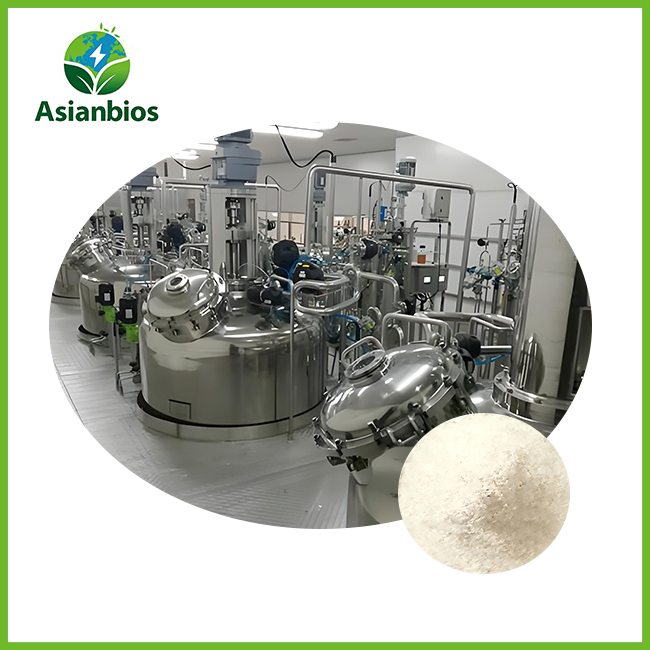
The elastic peptide powder is made in a rigorous six-step manufacturing process, which guaranties bioactivity of every component. Raw ingredients are checkguarantees the points before entering the fermentation and extraction steps. Supercritical CO₂ extraction technique isolates active chemicals without the heat or chemical degradation associated with traditional solvent-based procedures. The resultant extract is then spray-dried using pharmaceutical-grade regulated temperatures to preserve protein structure and peptide integrity. Final batch analysis by HPLC verifies 98 percent purity. Sterile packing in controlled settings guarantees the powder remains sterile in ideal condition. This detailed manufacturing technique is mirrored in the physical properties of the ingredient: a fine white powder that is completely water-soluble, stable in a wide pH range, and suitable for a wide variety of cosmetic delivery systems.
With a clear understanding of what elastic peptide is and how it functions at the molecular level, the next step for any brand is translating that science into consumer-ready products that stand out on the shelf. If you are exploring elastic peptide for your next skincare line, the formulation experts at plantex@asianbios.com can provide samples, stability data, and customized concentration recommendations tailored to your specific product concept.
From Ingredient to Product — Formulation and Application Strategies
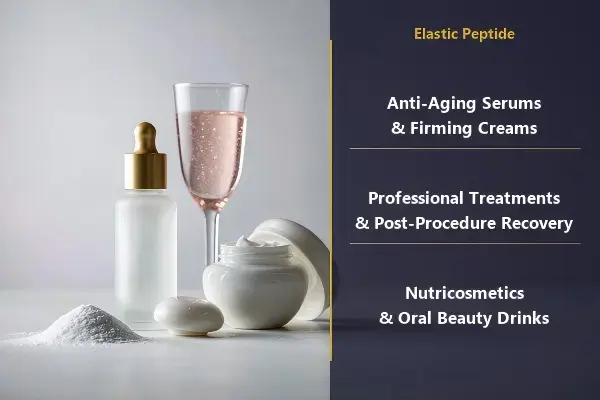
Anti-Aging Serums and Firming Creams
Serums and creams remain the leading delivery vehicles for anti-aging actives and elastic peptide may easily be formulated into either format. Excellent water solubility means it is easy to use in aqueous serum bases at three to five percent where it provides a powerful dosage of bioactive peptides in a lightweight, fast-absorbing texture that is perfect for everyday usage. Elastic Peptide is a great ingredient to use with emollients and occlusive agents in cream formulations at two or three percent. It creates a rich but not greasy formulation that may be used nightly. The ingredient’s stability over a pH range that includes most cosmetic formulations means that formulators are not limited in their choice of supporting ingredients; they can combine elastic peptide with hyaluronic acid, niacinamide, ceramides, or botanical extracts without worry of chemical incompatibility. For marketers targeting the over-40s, serums and creams with elastic peptide have a strong value proposition: observable improvements in firmness and bounce that customers may feel within weeks.
Professional Treatments and Post-Procedure Recovery
Elastic peptide formulations provide a high-margin potential in the professional beauty channel, including medical spas, dermatological clinics and esthetic treatment centers. In such cases the activity of the substance on the cells is very beneficial. During this phase, the fibroblast population of the skin is ready to improve collagen and elastin production after procedures such microneedling, radiofrequency treatments or chemical peels. During this recuperation window, the use of an elastic peptide-enriched serum or ampoule delivers the biological signals to optimize the regeneration response, hence expediting healing and optimizing the structural result of the treatment. This elastic peptide is created by bio-fermentation and supercritical CO2 extraction rather than by animal-derived processes, resulting in a good safety profile for use on compromised skin and removing the allergen concerns that have historically limited use of animal-sourced proteins in post-treatment care.
Nutricosmetics and Oral Beauty Applications
"The nutricosmetic industry is quickly growing because to the growing interest people have in the notion of beauty from the inside, and elastic peptide fits well in this category. The peptide components of the substance are stable in acidic stomach conditions and preserve their structural integrity throughout digestion, allowing for systemic absorption and delivery of bioactive signals to skin tissue from the inside. Powdered drink mixes, encapsulated vitamins and functional drinks for everyday use may use elastic peptide. This dual approach, both inside and out at the same time, peptides with topical medicines generates a synergistic impact that greatly enhances outcomes beyo,nd what each channel can do alone. Brands that provide complementary topical and ingestible elastic peptide products may position themselves as leaders in the holistic beauty revolution – which doesn’t seem to be slowing down in any major global market.
Certification, Quality Control, and the Supply Chain Advantage
International Manufacturing Standards
The truth is that any cosmetic ingredient’s trustworthiness depends on the production standards behind it. Asianbios manufactures elastic peptide powder in cGMP, ISO 9001, FSSC 22000, HACCP, HALAL, KOSHER, and organic certifications that satisfy the regulatory standards of markets across North America, Europe, the Middle East, and Asia Pacif,ic. All lots of elastic peptide are sent with a Certificate of Analysis that include third-party test findings, material safety data sheets, stability study paperwork, and allergy declarations. This complete paperwork bundle enables a more streamlined regulatory filing procedure for businesses launching in several countries, and offers the openness and confidence that end customers are increasingly demanding from luxury skincare brands.
Flexible Ordering and Rapid Fulfillment
Access to ingredient inventories may make or break the launch of a product on its planned date. Asianbios has enough elastic peptide powder in store to fulfilll regular orders within 10 days from payment confirstockn, anfulfille formulas are produced within around 20 working days. If speed is of the essence, the Green Channel service may be accelerated to deliver in as little as seven to 10 days. Sample assessment and R&D work have minimum order quantities starting at only one hundred grams, with pilot production up to five kilograms and complete commercial runs of twenty-five kilos or more. This tiered ordering system supports businesses at every level of growth, from early-stage startups confirming their initial product idea to established manufacturers ramping manufacturing for worldwide distribution.
| Order Type | Minimum Quantity | Delivery Timeline | Best For |
|---|---|---|---|
| Sample / R&D | 100 g | 7–10 days (Green Channel) | Formulation testing |
| Pilot production | 5 kg | 15–20 days | Market validation batches |
| Commercial scale | 25 kg+ | 10 days (stock) / 20 days (custom) | Full product launch |
Technical Partnership and Customization
What distinguishes a transactional supplier from a genuine technical partner is the support provided beyond the initial order. Asianbios maintains a research and development team comprising sixty percent of its total workforce—more than four times the industry average—enabling deep collaboration with brand partners on custom formulation projects. This team can develop tailored peptide ratios for specific skin concerns, optimize concentration levels for different product formats, and conduct stability testing under accelerated conditions to predict real-world shelf performance. Whether a brand requires a standard elastic peptide ingredient for a straightforward anti-aging serum or a hybrid formula combining multiple bioactive complexes for a premium product line, the technical team provides end-to-end guidance from concept through production scale-up. This level of partnership reduces development timelines, minimizes formulation risk, and ultimately accelerates the path from ingredient selection to revenue-generating product launch.
Conclusion
Elastic peptide represents a paradigm shift in anti-aging skincare by addressing the overlooked elastin dimension of skin aging alongside collagen support. Its multi-component formula—combining signal peptides, collagen precursors, SOD antioxidant enzymes, and four synergistic active peptides—works at the cellular and mitochondrial levels to restore bounce, firmness, and resilience. Applicable across serums, professional treatments, and nutricosmetics, elastic peptide gives brands a scientifically substantiated platform for creating genuinely differentiated anti-aging products.
FAQ
Q1: What is elastic peptide, and how does it differ from standard collagen peptides?
A: Elastic peptide is a multi-component bioactive complex that contains a signal peptide complex, type I and III collagen precursors, superoxide dismutase, and four synergistic active peptides. Unlike standard collagen peptides that primarily support collagen synthesis, elastic peptide also stimulates elastin production and activates cellular antioxidant defense mechanisms, addressing multiple dimensions of skin aging simultaneously.
Q2: What product formats can elastic peptide be incorporated into?
A: Elastic peptide is a water-soluble white powder compatible with serums, creams, sheet masks, professional ampoules, body lotions, and oral beauty supplements. Recommended usage rates range from 2–5% in final formulations, with specific concentrations depending on the product type and target application.
Q3: What certifications and documentation does Asianbios provide with elastic peptide orders?
A: Every batch ships with a Certificate of Analysis (COA) including third-party test results, a Material Safety Data Sheet (MSDS), stability study data, INCI name and CAS number, and allergen declarations. Manufacturing facilities hold cGMP, ISO 9001, FSSC 22000, HACCP, HALAL, KOSHER, and Organic certifications.
Partner with Asianbios for Premium Elastic Peptide Solutions
Bring next-generation anti-aging performance to your skincare line with elastic peptide powder manufactured to the highest international standards. Asianbios delivers cosmetic-grade elastic peptide at 98% HPLC purity, produced in cGMP and FSSC 22000 certified facilities and backed by a 60% R&D-dedcGMP-ed technical team ready to support your custom formulation needs. With minimum orders from just 100 grams, stock delivery within ten days, and full OEM/ODM flexibility including customized peptide ratios, packaging, and dosage forms, we give brands at every scale the tools to compete at the top of the anti-aging market. Trusted by manufacturers across more than thirty-five countries, Asianbios is the partner built for your success. Contact us at plantex@asianbios.com to request samples and begin your next breakthrough product today.
References
1. Mecham, R. P., & Wagenseil, J. E. (2015). "Elastic Fibers in Lung Development and Disease." Matrix Biology, 47, 1–2.
2. Sherratt, M. J. (2009). "Tissue Elasticity and the Ageing of Human Skin." Ageing Research Reviews, 8(2), 92–99.
3. Naylor, E. C., Watson, R. E. B., & Sherratt, M. J. (2011). "Molecular Aspects of Skin Ageing." Maturitas, 69(3), 249–256.
4. Gorouhi, F., & Maibach, H. I. (2009). "Role of Topical Peptides in Preventing or Treating Aged Skin." International Journal of Cosmetic Science, 31(5), 327–345.
5. Schagen, S. K. (2017). "Topical Peptide Treatments with Effective Anti-Aging Results." Cosmetics, 4(2), 16.
6. Langton, A. K., Sherratt, M. J., Griffiths, C. E. M., & Watson, R. E. B. (2010). "A New Wrinkle on Old Skin: The Role of Elastic Fibres in Skin Ageing." International Journal of Cosmetic Science, 32(5), 330–339.
About the Author

Asianbios
Our purpose is to forge a legacy of stewardship, advancing initiatives that honor and preserve the ecological integrity of our planet.

Send Inquiry
Related Industry Knowledge
- Trehalose Production Technology for Cosmetics Moisturizing Formulations
- What Is Xiaobai Peptide? A Beginner’s Guide to Its Research
- How Does Marigold Extract Protect Eyes? The Synergy Of Lutein & Zeaxanthin
- Marigold Extract: The Benefits for Skin and Wellness
- What is liquorice extract and what are its benefits?
- Where can I buy bulk stevia extract powder online?
- Hyaluronic Acid Formulations for Skin and Hair Hydration
- Sea Buckthorn Powder Benefits, Nutrition & Wellness Uses
- Your Guide To Choosing The Best Organic Grape Powder
- Why freeze dried strawberry powder is perfect for smoothies and baking?