Why Glutathione Production Technology Matters in Supplements
More customers are focusing on wellness and long-term health, driving a steady increase in the worldwide demand for antioxidant compounds for dietary supplements and creating new opportunities for advanced glutathione production technology. Among these compounds, glutathione has earned much acclaim as the body’s natural antioxidant peptide. Not every glutathione sold, however, is equal in purity, stability or biological consistency. This is where current technology for glutathione manufacturing comes in. The modern commercial process employs sophisticated microbial fermentation technology to manufacture ultra-pure reduced glutathione in a much more efficient and sustainable manner than chemical synthesis or classical yeast extraction. With the increasing demand for quality-assured supplements, this kind of technology has become a must-have for firms that wish to supply dependable and scientifically-backed goods to health-conscious customers.
The Rising Demand for High-Quality Glutathione in Supplements
The supplement industry has shifted significantly in recent years, with consumers becoming far more selective about ingredient sourcing and production methods. For glutathione, this change in expectations has directly driven the move towards more advanced biomanufacturing.
Growing Consumer Awareness of Antioxidant Support
More individuals are seeking for substances that promote the body’s natural resistance against common environmental stressors. Glutathione, a tripeptide containing glutamic acid, cysteine and glycine, has been gaining increasing interest in the nutritional supplement arena for its well-studied function as an antioxidant. With the growing awareness throughout the world, there is a steady growth in the demand for oral glutathione supplements. This has led to a greater requirement for large-scale manufacturing, while yet maintaining consistent quality.
Expanding Applications Beyond Basic Supplements
Glutathione was formerly employed only in a few of product types, but its uses have grown significantly. Today it is made into capsules, pills, effervescent goods, functional drinks and even beauty-oriented oral supplements. A lot of these premium formulations need pharmaceutical level or food grade purity. Such a level of uniformity may be problematic with earlier manufacturing techniques, but is much more achievable with a specialized glutathione production process particularly built for regulated supplement markets.
Why Quality of Production Now Matters More Than Ever?
As the market grows more competitive, supplement firms are likely to demonstrate the quality and traceability of their ingredients. Therefore, industrial clients are seeking for a reliable glutathione manufacturing method provider that can offer batch stability, high purity and international compliance. For companies exploring new ingredient collaborations or developing their own manufacturing capacity, selecting the correct technology has become one of the most crucial aspects for long-term success in the global supplement market.
Why Microbial Fermentation Is Replacing Traditional Methods?
The biggest advancement in glutathione manufacturing has been the shift toward microbial fermentation. Compared with chemical synthesis or direct yeast extraction, this biological route offers far better structural accuracy, higher yields and a much cleaner production process.
The Limitations of Older Production Routes
The chemical production of glutathione usually leads to inactive $\alpha$-isomers, reducing the biological consistency of the final product. Although naturally derived, the earlier baker’s yeast extraction process offers very poor intracellular yields and is difficult to maintain for large-scale commercial supply. Both processes are still not able to satisfy the increasing demand for high purity reduced glutathione, particularly in the present supplement formulations where brands want tight quality control from batch to batch.
The Advantages of Engineered Yeast Fermentation
Modern glutathione production technology uses metabolically engineered strains of Saccharomyces cerevisiae that have been optimized for efficient biosynthesis. Through overexpression of γ-glutamylcysteine synthetase (GSH1) and glutathione synthetase (GSH2), combined with the downregulation of γ-glutamyl transpeptidase (GGT) to limit degradation, the yeast cells can accumulate significantly higher levels of intracellular glutathione. With strengthened cysteine transport and improved NADPH supply, the biosynthetic pathway runs far more efficiently than in unmodified strains.
A Clear Comparison of Production Approaches
The overall difference between traditional methods and microbial fermentation becomes much clearer when viewed from an industrial perspective:
| Production Method | Structural Accuracy | Industrial Yield | Scalability | Sustainability |
|---|---|---|---|---|
| Chemical Synthesis | Prone to inactive isomers | Moderate | Limited | Higher resource demand |
| Yeast Extraction | Natural but variable | Low | Difficult to scale | Less efficient |
| Engineered Microbial Fermentation | High, natural γ-bond L-configuration | High and stable | Excellent | Much more sustainable |
This clear performance gap explains why microbial fermentation has become the preferred choice for premium glutathione used in today’s supplement products.
The Core Process Behind Glutathione Production Technology
To achieve a purity of ≥98.5% reduced glutathione with very low oxidized GSSG, the industrial fermentation process is carried out in carefully controlled stages. Each step plays a direct role in protecting product quality and maximizing overall yield.
Strain Optimization and Seed Cultivation
Production is constant because of the microbial strain. Saccharomyces cerevisiae is metabolically engineered to divert more cellular resources toward glutathione production rather than competing metabolic pathways using a GRAS-certified Saccharomyces cerevisiae. The method starts with strain activation and then continues stepwise via seed cultivation until a healthy high density cell population has been obtained. This allows the yeast cells to rapidly start their productive phase and to sustain consistent metabolic performance in fermentation upon transfer to the main bioreactor.
Precision-Controlled Main Fermentation
The seed culture is inoculated into the primary submerged fermentation step in sterilized medium containing glucose as carbon source, ammonium sulfate or yeast extract as nitrogen source and a controlled supply of L-cysteine as the important precursor. Fermentation is often carried out over a 48-72 hour period in a carefully controlled environment of 5.5 to 6.5 pH, high quantities of dissolved oxygen and micro-positive pressure protection with nitrogen when necessary. In certain process designs, a little ascorbic acid is also added to aid control oxidation during culture. With these constraints in place, intracellular glutathione may reach around 8% to 15% of the cell dry weight, or about 8 to 10 g/L at the industrial level.
Gentle Extraction, Purification and Drying
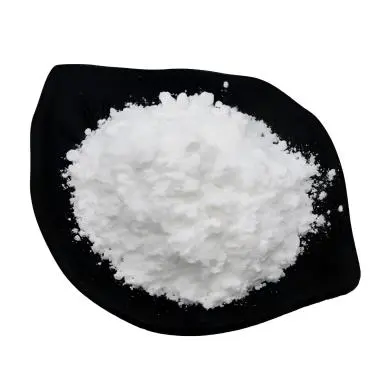
When fermentation is in full swing, the glutathione is drawn out of the yeast cells, not the broth. Cells are collected and gently disturbed by enzymatic treatment or high pressure homogenization, avoiding severe chemical exposure. The glutathione that is released is extracted in a reductive buffer of EDTA and ascorbic acid to aid in maintaining the glutathione in the reduced state. It is then subjected to activated carbon decolorization, ion exchange chromatography, ultrafiltration desalination and finally freeze-dried under low-temperature, light-protected and inert gas conditions. The outcome is a stable white powder with ≥98.5% reduced GSH and ≤1.0% GSSG, fulfilling the demanding quality demands of high-end supplement applications.
Quality Control, Safety and Compliance for Supplement Use
For an ingredient that goes directly into dietary supplements, product safety and consistency matter just as much as production efficiency. A mature glutathione production technology must be supported by a complete quality assurance system that covers the entire process from start to finish.
Full-Chain Quality Monitoring
Quality control begins at raw material screening and continues through every stage of fermentation, extraction, purification and final packaging. Critical parameters such as purity, oxidation ratio (GSH/GSSG), moisture, microbial limits and endotoxin levels are tested through validated analytical methods like HPLC. During fermentation, real-time monitoring helps maintain process stability and allows early correction if any parameter drifts from the set range. This level of control ensures minimal batch variation and delivers dependable product uniformity for supplement brands.
Meeting International Standards and Certifications
Global supplement markets require ingredients that comply with recognized safety and quality frameworks. A well-established production system is typically aligned with multiple international certifications to support broader market access. The following overview shows key certifications commonly expected for food-grade and supplement-grade glutathione:
| Certification | Importance for Supplement-Grade Glutathione |
|---|---|
| cGMP | Ensures current Good Manufacturing Practice across production and quality control |
| FSSC22000 | Strengthens food safety management throughout the full supply chain |
| ISO9001 | Maintains standardized quality systems and traceable documentation |
| HACCP | Identifies and controls critical points that affect product safety |
| HALAL & KOSHER | Helps meet specific access requirements in key global markets |
| Organic | Supports applicable market demands where certified processing is needed |
At this point in the decision-making process for businesses looking to source or implement production, it makes good sense to evaluate technical feasibility based on local resources and compliance needs. For that reason, professional project discussions can be initiated via plantex@asianbios.com to assess how well this technology can be adapted to specific market requirements.
Stability and Purity That Protect Product Value
High-end supplement formulations depend heavily on ingredient stability. By protecting the reduced form of glutathione throughout low-temperature extraction, avoiding harsh reagents and using inert processing conditions, the final powder maintains its active reduced state for a longer and more reliable shelf life. This level of purity and stability is exactly what modern supplement brands demand to uphold product quality and build long-term consumer trust.
Why This Technology Matters for the Future of Supplements
Beyond current market demand, glutathione production technology represents a broader shift toward more responsible and future-ready biomanufacturing. It brings lasting value not only to producers, but also to the supplement industry as a whole.
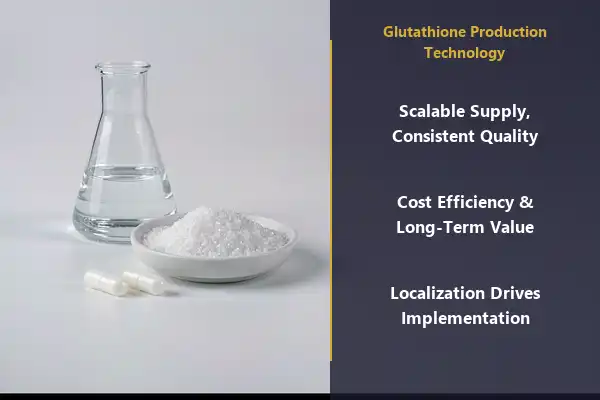
Scalable Supply Without Compromising Quality
One of the main issues for antioxidant compounds is combining worldwide demand with consistent quality. Microbial fermentation is far more predictable for industrial scale output. Yields of 8 to 10 g/L and intracellular accumulation of 8% to 15% of cell dry weight allow producers to provide much higher amounts of product without the instability associated with changes in plant- or animal-based raw materials. This results in a much more safe and reliable supply chain for supplement companies globally.
Cost Efficiency and Long-Term Industrial Value
Strain improvement, better control of precursors, better oxygen management and simpler downstream purification all cut the unit cost for high-purity glutathione over time via fermentation. The approach is less reliant on scarce natural resources and has a lower effluent burden than several previous chemical processes. These efficiencies make premium-grade reduced glutathione more readily accessible in the supplement industry without compromising the quality standards customers have grown to expect.
Localization Drives Successful Implementation
For genuine industrial projects, the success of adoption of this technology rests a lot more on execution than the technical design alone. Practical experience reveals that roughly 30% is from the standardized process core, while about 70% is from good localization. The project design must be adapted to key aspects such as locally accessible raw materials, water treatment, utilities, environmental restrictions, plant layout, supply chain preparedness, and team management. Asianbios, as an experienced provider of glutathione production technology, focuses on this adaptive strategy, giving realistic technical assistance to enable partners go from pilot planning to stable long-term commercial production with fewer implementation risk.
Conclusion
In summary, why Glutathione Production Technology Matters in Supplements is because modern microbial fermentation delivers the purity, stability, scalability and structural accuracy that today’s supplement industry demands. Through engineered yeast strains, precision fermentation, gentle purification and strict quality control, it produces high-purity reduced glutathione that brands can rely on. This technology not only secures a more consistent supply for dietary supplements, but also helps raise the overall quality standard of antioxidant ingredients for the global health market.
FAQ
1. Why is microbial fermentation preferred over chemical synthesis for glutathione production technology?
Microbial fermentation using engineered Saccharomyces cerevisiae produces the natural γ-glutamyl bond L-configuration of glutathione without creating inactive α-isomers. It also offers higher yields, better batch consistency, and a cleaner, more sustainable process compared to chemical synthesis.
2. What level of purity can industrial glutathione production technology achieve?
With properly controlled fermentation and multi-stage purification, the finished reduced glutathione typically reaches ≥98.5% purity by HPLC, with oxidized GSSG kept at ≤1.0%. Stringent endotoxin control is also maintained to meet the requirements of high-end supplement and pharmaceutical-grade applications.
3. What should supplement brands look for when choosing a glutathione production technology supplier?
Brands should look for a supplier with proven strain engineering, stable pilot-to-industrial scale-up experience, complete quality certification systems, strong downstream purification capability, localization flexibility and long-term technical support. These factors are essential to ensure a reliable, compliant and consistent supply for supplement products.
Partner with Asianbios for Reliable Glutathione Production Technology
Looking to secure a stable supply of high-purity reduced glutathione or invest in your own production capacity with advanced glutathione production technology? With proven microbial fermentation expertise, precise process control, full compliance alignment and practical localization support, Asianbios helps supplement brands and industrial partners achieve consistent quality with stronger long-term value. To discuss a tailored technical solution for your specific project, feel free to reach out to our technical team at plantex@asianbios.com and take the next confident step toward efficient, future-ready glutathione production.
References
1. Meister, A. Glutathione metabolism and its selective modification. Journal of Biological Chemistry, 1988.
2. Li, Y., Wei, G. and Chen, J. Glutathione: a review on biotechnological production. Applied Microbiology and Biotechnology, 2004.
3. Penninckx, M. J. An overview on glutathione in Saccharomyces versus non-conventional yeasts. FEMS Yeast Research, 2002.
4. Rollini, M. and Manzoni, M. Influence of different fermentation parameters on glutathione volumetric productivity by Saccharomyces cerevisiae. Process Biochemistry, 2006.
5. Grant, C. M. Role of the glutathione/glutaredoxin and thioredoxin systems in yeast growth and response to stress conditions. Molecular Microbiology, 2001.
6. Izawa, S., Inoue, Y. and Kimura, A. Oxidative stress response in yeast: effect of glutathione on adaptation to hydrogen peroxide stress in Saccharomyces cerevisiae. FEBS Letters, 1995.
About the Author

Asianbios
Our purpose is to forge a legacy of stewardship, advancing initiatives that honor and preserve the ecological integrity of our planet.

Send Inquiry
Related Industry Knowledge
- White Willow Bark Extract Powder: Benefits for Pain Relief?
- How to Choose the Best Sleep Aid Capsule for Adults
- Are Multi-effect eye peptides Effective for Under-Eye Bags?
- What Does Ergothioneine Powder Do For Skin?
- Can Jujube Seed Powder Reduce Stress and Anxiety Naturally?
- Is grape powder good for you?
- Uses of Sleep Aid Capsule for Insomnia Relief Routine
- Best Grape Powder in 2026: Expert Reviews, Health Benefits & Buying Guide
- How to Incorporate Freeze Dried Kale Powder into Your Daily Meals for Optimal Health?
- Dried Kale Powder for Baking: Add Color and Plant Nutrition