Cellulase Production Production: Current Technologies and Future Prospects
Sustainable industrial development, renewable bioeconomy, and green manufacturing need cellulase production technology. Companies searching for effective enzyme solutions are using advanced cellulase manufacturing technologies to increase enzyme activity, lower production costs, and stabilize processes. Microbial engineering, fermentation optimization, intelligent process control, and industrial-scale technology integration improve biomass conversion, biofuel production, food processing, animal nutrition, textiles, and pulp cellulase production. This article examines today's top innovations, commercial possibilities, manufacturing processes, and future trends, as well as how advanced technical service providers like Asianbios accelerate industrial adoption with comprehensive technology solutions.
Why Advanced Cellulase Production Technology Is Driving Market Growth
The global cellulase market has expanded owing to biomass use, environmental awareness, and sustainable manufacturing. Reliable cellulase production processes enhance manufacturing, uniformity, and long-term costs.
Expanding Industrial Demand Across Multiple Sectors
Cellulase enzymes are in demand globally because they effectively decompose cellulose into sugars and chemicals. Bioethanol, feed, food processing, textile finishing, paper, and waste recycling employ high-performance cellulases more. Cellulase is economically advantageous to current manufacturers and expanding biotechnology companies because better microbial fermentation boosts enzyme activity and decreases raw material usage. As sustainability laws tighten internationally, cellulase manufacturing technology will aid green industrial operations by reducing carbon emissions and resource use.
Commercial Benefits of High-Performance Production Systems
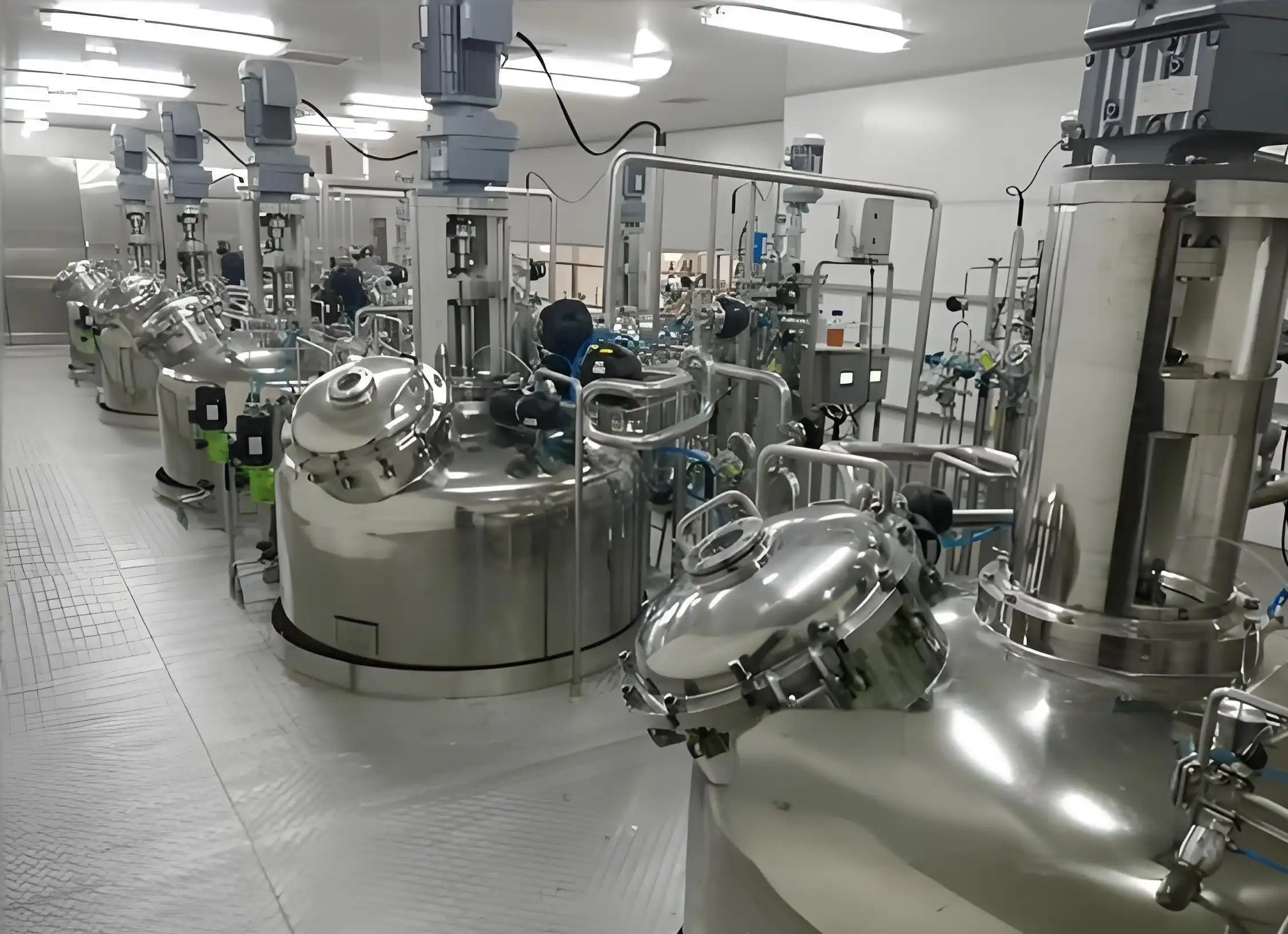
Modern cellulase production extends beyond enzyme yield. Commercial clients require repeatable batches, scalable production, technical support, and customization. Asianbios provides biological fermentation-based manufacturing, process optimization, pilot-scale verification, industrial scale-up, equipment commissioning, production line planning, and long-term technical support. This integrated approach reduces technical risks and speeds commercialization. Adjusted production parameters improve fermentation efficiency, energy consumption, and enzyme activity in big batches.
Key Advantages at a Glance
| Feature | Industrial Benefit |
|---|---|
| Biological fermentation | High enzyme activity with sustainable production |
| Process optimization | Improved yield and reduced operating cost |
| Scale-up support | Faster commercialization |
| Technical consultation | Reduced implementation risks |
| Equipment guidance | Stable long-term production |
| After-sales services | Continuous process improvement |


Core Technologies Behind Modern Cellulase Manufacturing
Improved upstream, fermentation, downstream purification, and quality control are needed for industrial enzyme production with advanced cellulase production technology. Every stage impacts production.
Microbial Strain Engineering and Fermentation Optimization
High-yield microbial strains enable advanced cellulase production. Trichoderma reesei, Aspergillus niger, and Bacillus subtilis release acidic, neutral, and alkaline cellulases. By adjusting fermentation and strains, manufacturers boost enzyme activity and stability. Food supply, dissolved oxygen, pH adjustment, and thermal control increase enzyme synthesis. These innovations shorten industrial production cycles and ensure product consistency for demanding commercial applications.
Intelligent Process Control and Industrial Scale-Up
Biotechnology's biggest challenge is commercializing lab results. Cellulase manufacture nowadays combines lab research, pilot testing, and industrial use. Through formula creation, parameter optimization, pilot validation, production-scale trials, and manufacturing, Asianbios helps enterprises commercialize inventions. Technologically, effective industrial production depends on efficient processes and great local execution, where operational expertise accounts for most long-term manufacturing performance.
Downstream Purification and Product Stability
Complex downstream processing follows fermentation in cellulase production. Separation, purification, ultrafiltration, chromatography, concentration, and formulation affect product quality and stability. These precise procedures preserve enzyme function and decrease impurities. In various industrial situations, stable formulations improve transit, storage, and application. High-quality downstream processing and batch homogeneity improve enzyme-dependent food, nutritional, and industrial bioprocesses.
If you are evaluating a customized cellulase production technology solution, pilot-scale support, or production line planning, you can contact the Asianbios technical team directly at plantex@asianbios.com for professional consultation tailored to your project requirements.
End-to-End Technical Services That Improve Industrial Success
Technology seldom guarantees commercial success. Technical assistance frequently decides whether a production project can operate reliably.
Comprehensive Production Process Development
Advanced cellulase production requires constant optimization throughout manufacturing. Asianbios provides fermentation formula design, process engineering, pilot testing, production validation, and parameter optimization. Services boost production efficiency and decrease operational costs for manufacturers. Technical experts assess client goals and adjust production strategies to product requirements, production capacity, and local manufacturing circumstances. Integrated technical assistance reduces industrial implementation uncertainty and speeds enzyme product market introduction.
Equipment Commissioning, Technical Training, and Operational Guidance
Only properly set up and operated production equipment works best. Thus, cellulase production technology requires equipment commissioning, operator training, production monitoring, troubleshooting, and on-site technical support. Professional engineering assistance helps production teams understand process characteristics, optimize processes, and maintain stable manufacturing conditions across long production cycles. Continuous knowledge transfer increases customer independence and reduces operational mistakes and equipment adjustment downtime.
Long-Term Maintenance and Process Upgrading
Industrial biotechnology develops as microbial strains, fermentation methods, and automation improve. Thus, reliable cellulase manufacturing technology suppliers provide post-project maintenance, equipment service, process modifications, and technical assistance. These continuous services let clients adapt new technology without rebuilding manufacturing systems to stay competitive. Process optimization often improves production efficiency, energy use, and industrial profitability.
| Technical Service | Customer Value |
|---|---|
| Formula development | Faster product optimization |
| Pilot-scale validation | Reduced commercialization risk |
| Equipment commissioning | Stable production startup |
| Operator training | Higher operational efficiency |
| Process upgrading | Continuous performance improvement |
| After-sales support | Long-term production reliability |
Quality Assurance, Flexible Manufacturing, and Global Supply Capabilities
Technology, manufacturing dependability, quality systems, logistics, and customer response are examined for commercial enzyme providers.
Strict Quality Systems Supporting Global Markets
Reliable cellulase manufacturing involves quality control from raw material selection to product delivery. Asianbios supports CGMP, FSSC22000, ISO9001, HACCP, HALAL, KOSHER, and Organic certifications. Consistent enzyme performance is achieved by laboratory testing, quality control, and production monitoring. Quality assurance supports food, feed, functional components, cosmetics, and industrial biotechnology applications and meets worldwide regulatory requirements.
Flexible Customization for Different Product Forms
Customers now want bespoke production over conventional items. Thus, ODM and OEM manufacturing projects with powders, capsules, tablets, gummies, and unique formulas may use cellulase production technology. Flexible manufacturing lets companies diversify their product ranges and adapt swiftly to market changes. Before scaling up production, low minimum order quantities are ideal for trial launches, market testing, and specific commercial initiatives.
Efficient Delivery and Global Logistics
Industrial clients need reliable delivery schedules to continue producing cellulase production technology. Standard product stocks over one ton may be sent within ten days after payment, while customized manufacture takes twenty. With delivery periods of seven to ten days, priority manufacturing channels may benefit urgent small-batch projects. DHL, FedEx, and SF Express help provide reliable global shipment and quick customer service.
| Capability | Performance |
|---|---|
| Standard inventory | Over 1 ton reserved |
| Standard shipment | Around 10 days |
| Customized production | About 20 working days |
| Urgent orders | 7–10 days |
| Manufacturing flexibility | OEM/ODM support |
| Logistics | DHL, FedEx, SF Express |
Future Prospects of Cellulase Production Technology
Industrial biotechnology is changing rapidly due to scientific progress. Future innovations will boost productivity and commercial uses.
Synthetic Biology and Next-Generation Strain Development
Over the next decade, synthetic biology, genome editing, and systems metabolic engineering will change cellulase production. Researchers are generating microbial strains with increased enzyme activity, temperature stability, substrate specificity, and lower fermentation costs. Artificial intelligence-assisted strain design and computational metabolic modeling may speed enzyme discovery and boost industrial efficiency.
Digital Manufacturing and Smart Fermentation
Advanced sensors, automation, cloud monitoring, and predictive process analytics are integrating industrial digitalization into cellulase manufacturing technologies. Real-time data collection helps operators adjust dissolved oxygen, pH, temperature, fertilizer supply, and fermentation timing better than manually. Smart manufacturing boosts production efficiency, quality, and predictive maintenance for industrial equipment.
Sustainable Bioeconomy and Circular Resource Utilization
The worldwide shift toward circular bioeconomy models will promote cellulase manufacturing technologies. Instead of trash, maize stover, wheat straw, sugarcane bagasse, and forestry byproducts are renewable feedstocks. Efficient cellulase systems convert biomass into biofuels, functional components, biodegradable materials, and other high-value products. Sustainable biotechnology investment will likely increase cellulase uses across several sectors while protecting the environment and conserving resources.
Conclusion
Microbial innovation, intelligent fermentation, technical services, and scalable industrial manufacturing advance cellulase production. Integrating process optimization, quality assurance, customisation, technical support, and dependable delivery helps enzyme producers compete. Asianbios' technology services range from creation to industrial implementation, helping companies optimize efficiency, decrease production risks, and speed commercialization in the fast-growing biotechnology business.
FAQ
Q1: What industries can benefit most from cellulase production technology?
A: Cellulase production technology is widely used in biofuel production, food processing, animal feed, pulp and paper manufacturing, textile processing, agricultural waste recycling, dietary supplements, and various industrial biotechnology applications where efficient cellulose degradation is required.
Q2: What technical services does Asianbios provide for cellulase production projects?
A: Asianbios provides formula development, process design, pilot-scale testing, production-scale validation, equipment commissioning, operator training, production line planning, process optimization, industrialization support, after-sales maintenance, and long-term technical consultation for cellulase production technology projects.
Q3: How does biological fermentation improve cellulase production?
A: Biological fermentation enables controlled microbial growth using optimized strains such as Trichoderma reesei, Aspergillus niger, and Bacillus subtilis. This approach increases enzyme activity, improves production efficiency, reduces manufacturing costs, supports large-scale industrial production, and enhances consistency across production batches.
Partner with Asianbios for Advanced Cellulase Technology
Whether you are planning a new enzyme production facility, upgrading an existing fermentation process, or developing customized cellulase solutions, Asianbios offers professional technical support throughout every stage of your project. From process design and pilot-scale verification to industrial implementation, equipment guidance, and long-term optimization, the team is committed to delivering dependable cellulase production technology tailored to your production goals. Contact the specialists today at plantex@asianbios.com to discuss customized solutions, explore OEM/ODM opportunities, and discover how advanced biotechnology can support your business growth with reliable quality, flexible manufacturing, and responsive technical service.
References
1. Bhat, M. K. Cellulases and Related Enzymes in Biotechnology. Biotechnology Advances.
2. Kuhad, R. C., Gupta, R., & Singh, A. Microbial Cellulases and Their Industrial Applications. Enzyme Research.
3. Lynd, L. R., Weimer, P. J., van Zyl, W. H., & Pretorius, I. S. Microbial Cellulose Utilization: Fundamentals and Biotechnology. Microbiology and Molecular Biology Reviews.
4. Singhania, R. R., Sukumaran, R. K., Patel, A. K., Larroche, C., & Pandey, A. Advancement and Comparative Profiles in the Production Technologies Using Solid-State and Submerged Fermentation for Microbial Cellulases. Enzyme and Microbial Technology.
5. Wilson, D. B. Microbial Diversity of Cellulases and Their Industrial Applications. Current Opinion in Biotechnology.
6. Zhang, Y. H. P., Himmel, M. E., & Mielenz, J. R. Outlook for Cellulase Improvement: Screening and Selection Strategies. Biotechnology Advances.
About the Author

Asianbios
Our purpose is to forge a legacy of stewardship, advancing initiatives that honor and preserve the ecological integrity of our planet.

Send Inquiry

Related Industry Knowledge
- Eggshell Membrane Peptide: waht is it and how it works
- What Makes Deep lifting peptide powder Essential in Firming Skincare?
- What Makes Bitter Melon Extract Powder a Valuable Botanical Ingredient?
- Bitter Melon Powder vs. Extract: Choosing the Right Ingredient
- Pure Glucose Powder: Complete Buyer’s Guide for Food Industry
- Is stevia extract good or bad for you?
- Kiwi Powder vs. Other Fruit Powders: What Sets It Apart?
- Is Ergothioneine a Key Player in Promoting Skin Health and Radiance?
- Production Technology Of Hyaluronic Acid for Medical Grade Use
- Chinese Cabbage Freeze-Dried Powder for Health: Benefits, Uses & Expert Tips