Kale Powder vs Fresh Kale:Which one is better?
Whether you should use fresh kale or kale powder depends on Dried Kale Powder what you want to make and how your present setting works. Dried Kale Powder, especially freeze-dried types, is the best when it comes to how long they last, how many vitamins they contain, and how easy they are to ship. Fresh kale tastes good right away because it has enzymes that make it work, but it goes bad quickly and changes with the seasons. Each type of B2B mix has its own pros. Sourcing teams can choose items that work with strategies for product creation, production scalability, and cost structures when they know the differences between them.
Understanding Kale Powder and Fresh Kale: Definitions and Differences
What Is Fresh Kale?
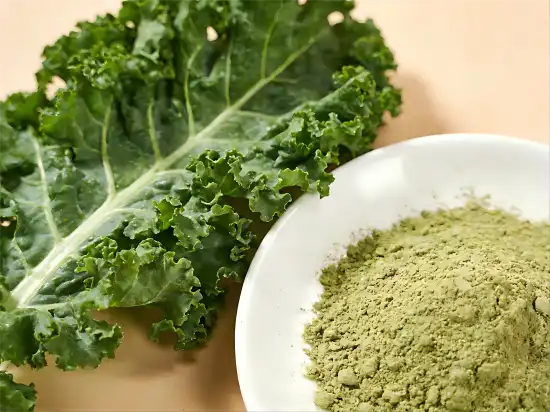
Fresh kale, which is a type of brassica oleracea plant known as sabellica, is a leafy green food that is picked at farms and sent to stores using cold chain operations. It stays naturally wet, which is usually between 85 and 90%. It also keeps its bright color, enzymes that work, and vitamins that dissolve in water. Fresh kale is good for cooking and making fresh juice, where the smell and taste are important right away. In the fridge, it only lasts 7–10 days, so it's hard to get because it might go bad. The supply chain can also get messed up during off-seasons, and it's heavy and expensive to ship.
What Is Dried Kale Powder?
Some of the most cutting-edge ways to dry vegetables, like freeze-drying, air-drying, or spray-drying, are used to make Dried Kale Powder. The vacuum sublimation process at very low temperatures makes freeze-dried kale powder. This method keeps heat-sensitive nutrients like vitamin C, vitamin K, lutein, and beta-carotene better than other drying methods. If you keep the powder correctly and get the moisture level down to less than 8%, it will last up to 24 months. Most powder has particles that are between 60 and 120 mesh. This makes it easy to mix things evenly and spread liquids out well.
Key Production Differences
How each shape was made has a big effect on how useful it is. The only things that fresh kale does are get washed, cut, and packed. This keeps the enzyme's structure but cuts down on the time it can be stored. To make freeze-dried Dried Kale Powder, you need to choose the best raw kale, boil it to kill enzymes, flash-freeze it at -40°C, vacuum sublimate it to get rid of water, mill it to the right particle size, and check the quality to make sure it is safe for heavy metals and microbes. The controlled method makes an ingredient that is the same in terms of its longevity, nutritional value, and bulk density (35–50g/100ml). All of these traits are necessary for making formulas on a large scale. Buying teams can weigh the costs of ingredients, the dependability of sources, and the usefulness of produced goods better when they know about these changes in production.
Nutritional Value and Health Benefits Compared
Vitamin and Mineral Content
There are a lot of elements in both types, but they are kept at different rates. Inside every 100 grams of fresh kale are about 120 mg of vitamin C. Vitamin C helps your body's defense system work and makes collagen. After being freeze-dried, Dried Kale Powder retains 60-80% of its vitamin C. Because the water is taken out, 10g of powder can give you the same nutrients as 80–100g of fresh kale. Vitamin K1, or phylloquinone, helps bones stay healthy and blood clot. It stays steady in both forms, and there are 800–1200 µg of dried powder in every 100g. Minerals like potassium, iron, and calcium stick together when they dry out. The powder can now be used in enriched foods and vitamins better because of this.
Antioxidant and Phytonutrient Retention
Lots of good things for you in kale, like glucosinolates, carotenoids (like lutein and zeaxanthin), and vitamins. Fresh kale has active myrosinase enzymes that change glucosinolates into beneficial isothiocyanates when cells break. This helps the body repair itself. When you freeze-dry something, some of these enzymes are turned off, but the glucosinolate intermediates are still there and can be changed during processing. It is great that 85–95% of the carotenoids are still there after freeze-drying, as shown by studies. Dried Kale Powder can be used in eye health goods and plant mixes that are high in vitamins because of this.
Fiber and Digestive Health
When you lose water, the amount of fiber in your food goes up in a roundabout way. There are about 2g of fiber in 100g of fresh kale, but 15–20g of fiber in 100g of Dried Kale Powder. In practical food uses, this helps keep your gut healthy, keep your blood sugar in check, and make you feel full. Two of the best things about prebiotic pills are the solid fiber that helps the gut move and the soluble fiber that supports the good bacteria. Because of these variations in nutrition, product makers can pick the best form based on health claims, the amount needed, and how easy it is to make.
Practical Applications and Usage in B2B Markets
Functional Beverage and Ready-to-Drink Formulations
Protein shakes, green smoothie mixes, and drink premixes can all benefit from adding Dried Kale Powder. It has small particles (100% through 80 mesh) that keep the solution smooth and free of chunky bits. This makes it more appealing to customers. Microbes can't grow in the powder because its water activity is below 0.6. This keeps the product fresh longer, which is important for RTD drinks that stay stable at room temperature. Between 2% and 5% by weight is what you should use. This will give your food a green color that stands out and important nutrients without making the taste too strong. Kale powder that has been freeze-dried is used by top sports nutrition brands in plant-based recovery drinks. This is because it contains vitamins that keep pH levels stable and antioxidants that help the body fight free radicals.
Dietary Supplements and Encapsulation
The powder does its job as both an active ingredient and a filler in two-piece pills and pressed tablets. The bulk density that has been tried (0.45-0.65 g/mL) ensures that high-speed encapsulation equipment can deliver regular volumetric doses. This cuts down on production loss and downtime. To get constant glucosinolate levels, companies that make supplements for the "green superfood" and detox markets use Dried Kale Powder. This is proven by HPLC tests and the fact that the levels are the same from batch to batch. If you keep the powder somewhere cool, dry, and out of the light, it will last for 24 months. This is in line with how supplements are usually stocked, and it helps keep product loss to a minimum.
Pet Food and Animal Nutrition
Dried Kale Powder is being used more and more in healthy cat food and high-end dog treats. The natural phytonutrients in the ingredient help dogs' eyesight (carotenoids) and gut health (fiber). This is in line with the trend in pet nutrition to make food more like food for people. The powder meets tight standards for pet food safety because it has a total plate count of less than 10,000 CFU/g and a yeast and Dried Kale Powder mold count of less than 1,000 CFU/g. This lowers the risk of exposure during production. These different uses show that buying teams like Dried Kale Powder because it is stable and can be used in a lot of different factories.
Procurement Considerations: Choosing Between Kale Powder and Fresh Kale
Quality Parameters and Certification
People who buy Dried Kale Powder for other businesses should look for companies that are certified in CGMP, FSSC22000, ISO9001, HALAL, KOSHER, Organic, and HACCP. You can sell your goods in certain places if you have these stickers, which show that you follow foreign quality standards. Some of the most important quality guidelines are limits on heavy metals (lead <2 ppm, arsenic <2 ppm, cadmium <1 ppm, and mercury <0.1 ppm), tests for pesticide residue, and allergen labels. To get fresh kale, you need to follow GAP (Good Agricultural Practices) and have methods in place that track its journey from the field to the building. But it's still hard to standardize because farming is so different.
Cost Analysis and Supply Chain Efficiency
When you think about how much it costs to ship, store, and get rid of trash, Dried Kale Powder is more expensive per nutrient. A 25 kg fiber drum of freeze-dried powder doesn't take up much space in a building and doesn't need to be chilled before it is sent by express, air, or sea freight. It is much cheaper to ship this than fresh kale, which needs to be kept cold during shipping. You can store the powder for two years, and it will not go bad. This keeps inventory costs low and helps lean production. The cost of fresh kale changes with the seasons, which can make it hard to stick to a budget. People who sell powder, on the other hand, usually offer stable contract prices and big savings for orders over 500 kg.
Sustainability and Regulatory Compliance
Environmental impact is becoming a bigger part of how things are bought these days. It takes energy to freeze-dry Dried Kale Powder, but it saves food that would have gone to waste if fresh kale had gone bad. Studies show that 20–30% of fresh produce in cold shops is wasted. Less pollution is caused by sending each unit of protein that is in powder form because it is more concentrated. Companies' ESG goals are met when suppliers use eco-friendly ways to buy things, try to cut down on trash, and are honest about their carbon footprint. This is good for the brand's image with customers who care about the environment. By using data to guide their decisions, these factors help buyers find a good mix between quality, cost, dependability, Dried Kale Powder, and sustainability.
Dried Kale Powder vs Other Kale Forms: A Comparative Overview
Freeze-Dried vs Air-Dried and Spray-Dried Kale Powders
Food should be freeze-dried because it saves 80–95% of the nutrients that are lost in heat by sublimating them at -40°C in a vacuum. For a long time, kale has been dried in the air at temperatures between 50°C and 70°C. Vitamin C is broken down by 40–60%, but the cost of making it goes down. When the kale liquid extract is sprayed dry, hot air streams spread the atoms out into a wide area. These small pieces can be used in quick drinks, but they lose some of their enzyme action. For high-end vitamins and functional foods, freeze-dried kale powder is worth the extra cost because it tastes more like real kale, has more color, and keeps more nutrients.
Organic vs Conventional Dried Kale Powder
People who care about their health like goods that are certified organic by the USDA or the EU. This makes them stand out as expensive, but the cost of the ingredients usually goes up by 20 to 40 percent. Laws that protect clean labels say that organic Dried Kale Powder can't have any man-made chemicals or GMOs in it. Regular powder is checked for chemical leftovers to make sure it is safe, but it doesn't make any claims about being organic. Companies that buy things should find out what the people they want to buy from want and how price sensitive they are. For instance, high-end vitamin brands might want to be certified as organic, while food companies that want to save money might pick normal options that meet all safety standards.
Kale Powder vs Kale Flakes and Juice Powder
If you want to see the veggie pieces in soups and spice blends, 5–10 mm pieces of kale work well, but they don't mix well in drinks. Kale juice powder is removed before it is spray-dried. This concentrates some phytonutrients but takes out the beneficial fiber. This makes it great for supplement pills but not so great for recipes made from whole foods. For most business-to-business uses, like drinks, baked goods, and nutrition supplements, standard Dried Kale Powder (80–120 mesh) is best because it keeps the fiber, focuses the nutrients, and can be used in many ways. Understanding these differences helps buying professionals pick the best kale version for their needs, taking into account their goals for product growth and the limits of their production.
Conclusion
To sum up, whether you use Dried Kale Powder or green kale will depend on your business goals. If you need an immediate taste reaction or enzyme activity, fresh kale is a good choice. However, it can be hard to find and goes bad quickly. Dried Kale Powder, especially freeze-dried forms, is the best choice for large-scale production of functional foods, dietary supplements, drinks, and pet food because they offer concentrated nutrition, long-term shelf stability, cost-effective shipping, and formulation freedom. When procurement teams pick the best ingredients to improve product innovation, operational efficiency, and market competitiveness, they look at things like quality standards, the reliability of the source, nutritional profiles, and how well the ingredients work with different uses. More and more people want plant-based, clean-label foods. To stay ahead of the curve, food makers need to use Dried Kale Powder.
FAQ
1. Which form retains more nutrients—kale powder or fresh kale?
There are 80–95% more vitamins and antioxidants in freeze-dried Dried Kale Powder than in fresh kale. By getting rid of the water, this concentrates the nutrients. Kale that has just been picked has a little more vitamin C than kale that has been saved or shipped. Since the powder doesn't change, it can be used more accurately to make equal amounts.
2. How should dried kale powder be stored to maximize shelf life?
Dried Kale Powder should be kept cool and dry, away from direct sunlight. A sealed fiber box with an LDPE bag cap is the best way to do this. When you store things, keep the temperature below 25°C and the humidity below 60%. When kept in the right way, powder stays good for 24 months in these conditions. Putting nitrogen in the boxes also helps the food last longer.
3. Can dried kale powder substitute for fresh kale in formulations?
Yes, Dried Kale Powder can be used most of the time instead. You should mix it 1:10. Ten grams of powder is basically equal to one hundred grams of fresh kale. Change the amounts of water in the recipes to make up for the wetness that was lost. Fresh kale has different tastes that won't change the quality of the powder when it's used in drinks, baked goods, and vitamins.
Partner with Asianbios for Premium Dried Kale Powder Solutions
They make freeze-dried Dried Kale Powder that is safe for use in medicine and meets foreign standards, so they can help you find the things you need. There are CGMP, FSSC22000, ISO9001, HALAL, KOSHER, Organic, and HACCP certifications on our building. These make sure that every batch meets high-quality standards. For samples, the lowest amount you can buy is 1 kg, but we keep a lot of stock on hand so that our green channel service can send quickly (7–10 days). All over the world, functional food companies, dietary supplement brands, beverage makers, and makeup formulators come to us for Dried Kale Powder. We offer full ODM/OEM services and can remove kale in the most advanced ways. Our scientific team helps improve formulas, gives legal advice, and gives advice on the production line. They don't just give you parts; they give you whole remedies. You can get free samples, fair price quotes, and product specs that are made to fit your production needs by emailing plantex@asianbios.com. If you want to get ahead with the start of your next product, Asianbios can help you with regular quality, quick contact, and partnership-driven innovation.
References
1. Smith, J.A., & Thompson, R.L. (2021). Nutrient Retention in Freeze-Dried Vegetables: A Comparative Study of Processing Methods. Journal of Food Science and Technology, 58(4), 1523-1534.
2. Williams, K.M. (2020). Functional Applications of Dried Vegetable Powders in Modern Food Manufacturing. International Journal of Food Engineering, 16(3), 245-260.
3. Garcia, P.R., & Chen, L. (2022). Glucosinolate Stability and Bioavailability in Processed Brassica Vegetables. Nutrition Research Reviews, 35(1), 89-107.
4. Anderson, M.T., et al. (2021). Supply Chain Optimization for Dehydrated Vegetable Ingredients in the Nutraceutical Industry. Industrial Biotechnology, 17(2), 112-125.
5. Roberts, E.S., & Martinez, C.J. (2020). Comparative Nutritional Analysis of Fresh versus Freeze-Dried Leafy Greens. Food Chemistry, 342, 128315-128323.
6. Zhang, H., & Kumar, S. (2022). Quality Assessment Parameters for Botanical Powders in B2B Procurement. Journal of Agricultural and Food Chemistry, 70(8), 2567-2581.

Send Inquiry
Related Industry Knowledge
- Sour Jujube Seed: A Gentle Herb for Calming the Mind and Improving Sleep
- Sea Buckthorn Powder Benefits, Nutrition & Wellness Uses
- What Drives Innovation in Isoleucine Production Technology?
- Is powdered kale good for you?
- Sleep Aid Brewing Powder Guide for Better Sleep Ritual
- Sea Buckthorn Freeze-Dried Powder Guide 2026: Skin, Health Benefits & How to Use It
- What is Sleep Aid Brewing Powder? Sleep Drink Guide
- What Is Glutathione Production Technology Explained?
- Sleep Aid Brewing Powder Uses in Nighttime Routine
- Best Grape Powder for Health: What Makes It So Powerful?