Orange Powder: Nutrition, Benefits and Uses
Sweet Orange powder has become a game-changing ingredient in many fields because it provides concentrated orange vitamins in a shelf-stable form. Using modern spray drying technology to get Sweet Orange Powder from Citrus sinensis captures the flavor of fresh oranges and solves important supply chain problems at the same time. This dried extract keeps important nutrients like vitamin C, flavonoids like hesperidin, fiber, and natural organic acids. Unlike liquid alternatives, it doesn't require cold-chain logistics, doesn't have seasonal supply problems, and has the same nutritional content all year long. This makes it essential for functional food manufacturers, supplement brands, and cosmetic formulators who need reliable, high-quality citrus ingredients.
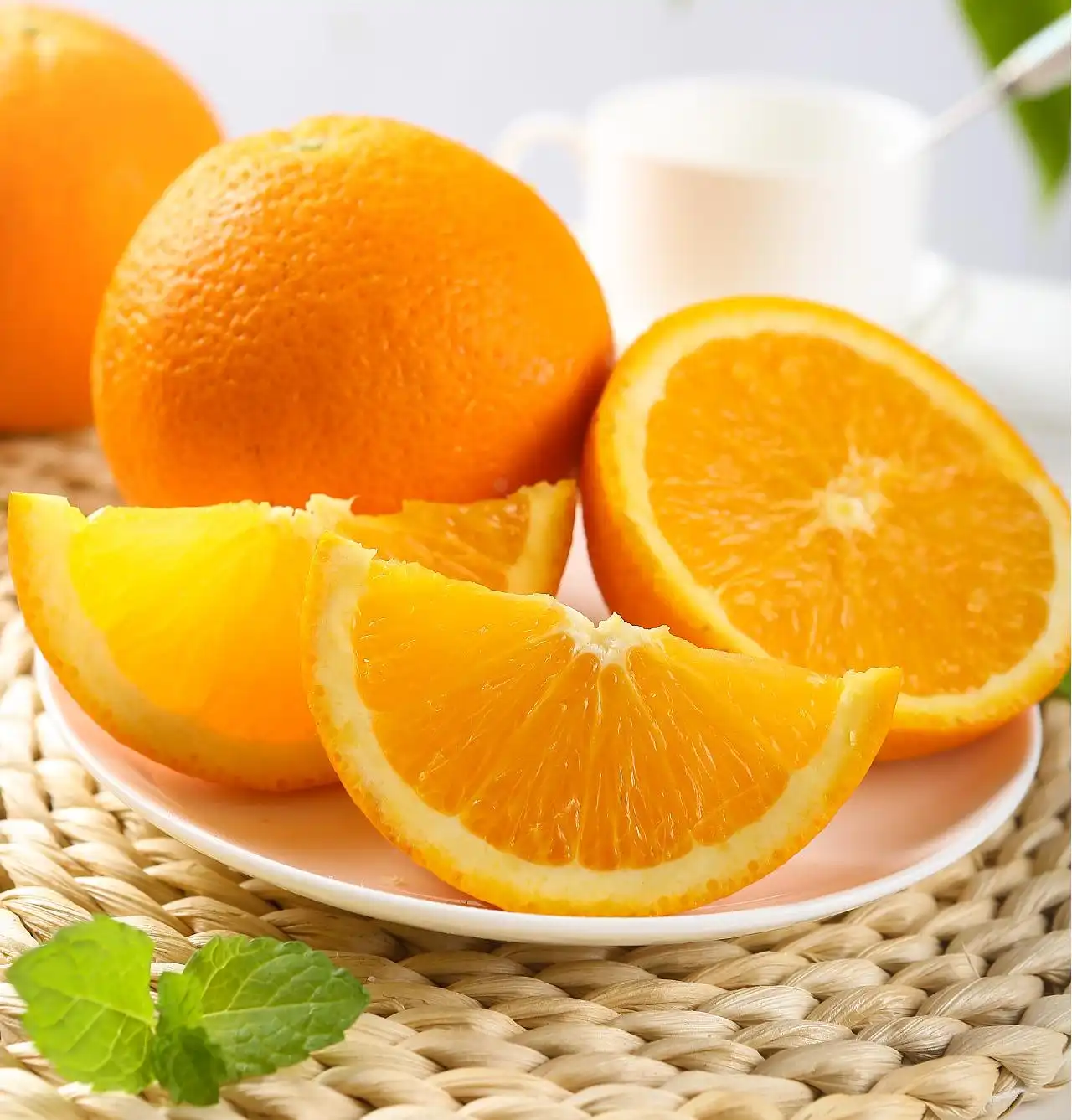
Understanding Sweet Orange Powder: Composition and Nutritional Profile
What Makes Sweet Orange Powder Different from Other Citrus Derivatives
Because it retains all of the nutrients in the orange, Sweet Orange Powder is different from orange peel, extract, and juice blends.
This powder is made by spray drying at controlled temperatures (inlet 150–220°C, exit 80–100°C), which keeps the bioactive chemicals and gets the moisture level below 5%. The process turns fresh juice into tiny droplets, and the droplets quickly dry out to protect heat-sensitive parts.
Instead of extracts that only contain certain chemicals or zest that only contains peel parts, Sweet Orange Powder keeps all the nutrition from the whole fruit, like soluble fiber, natural sugars, and all the flavonoids. Its particles are all the same size (100% to 80 mesh), which makes it easier to dissolve and spread out evenly in formulas.
Certification Standards Ensuring Safety and Market Access
Regulatory compliance is the basis of all good buying strategies. EU and USDA organic certificates for Sweet Orange Powder make sure that the raw materials can be tracked, that manmade pesticide residues are not allowed, and that the production process is checked by a third party throughout.
Heavy metal standards (≤10ppm total, with arsenic <2ppm, lead <2ppm, cadmium <1ppm, and mercury <0.1ppm) for food-grade compliance keep people safe and keep products from being rejected by regulators. Microbiological guidelines, such as a total plate count of less than 10,000 CFU/g and a yeast/mold count of less than 1,000 CFU/g, make sure that the product stays stable in wet environments like when tablets are compressed with Sweet Orange Powder or sachets are packed.
When it comes to cosmetic-grade standards, there are more purity requirements, especially when it comes to particle size accuracy and the lack of allergen cross-contamination. Certifications like HALAL, KOSHER, CGMP, and FSSC22000 help you reach more customers and retail outlets in certain demographics. HACCP procedures keep track of important control points during production. These certifications are more than just boxes that must be checked to show that a provider is committed to open, verifiable quality systems that lower the risk of recalls and safeguard a brand's image.
Key Benefits and Applications of Sweet Orange Powder
Health and Nutritional Benefits for Functional Food Development
There are measured health benefits to Sweet Orange Powder that can be turned into product claims. Vitamin C and orange flavonoids work together to improve immune system regulation in a number of ways. Ascorbic acid helps white blood cells do their job, and hesperidin strengthens blood vessels and lowers inflammatory markers. Studies on clinical nutrition show that regular intake of orange bioflavonoids is linked to lower levels of oxidative stress biomarkers. This makes this ingredient useful for making antioxidant supplements for older people.
Pectin, which is found in large amounts in the powder, feeds the good bacteria in your gut. This helps with digestive health. The natural acidity makes stomach enzymes release more, which could help the body absorb nutrients better when added to meal replacements or protein mixes.
Potassium helps the heart work well and helps makers make hydration items that meet electrolyte balance standards. Responsible formulators know that too much can cause mild stomach pain in sensitive individuals, which is why product labels need to include information about dose sizes.
Industrial and Culinary Versatility Across Sectors
The usefulness of Sweet Orange Powder goes far beyond its nutritional value. If you store it properly (cool, dry, and out of the light), it will last for more than 24 months. This means that a lot less product is wasted than with frozen extracts or fresh juice, which only lasts for a few weeks.
Freight savings lead to cost savings—one kilogram of powder can be mixed with water to make five to seven liters of juice. This cuts down on shipping costs and the carbon footprint. Storage that is simple gets rid of expensive cold storage equipment, which frees up warehouse room and lowers energy use. Manufacturers of drinks ensure that their products can be instantly rehydrated, which lets them make more without having to limit the size of each batch.
In bakery uses, heat stability is helpful because wet ingredients can change the way dough rheology works during mixing and baking. In candy making, the powder mixes smoothly into hard candy mixtures and chocolate emulsions without adding too much water, which would make the crystals form.
Supplement makers like powder because it can be dosed precisely. Unlike liquid extracts, which can have different concentrations, powder can be encapsulated and tableted to within milligrams.
Compared to lemon powder or grapefruit versions, Sweet Orange Powder has less acidity and is more likely to be accepted by consumers. This is especially true in goods for kids and seniors that are meant to improve their health, where taste is important for compliance. Its natural sweetness means that less extra sugar is needed in projects that aim for clean labels.
Comparing Sweet Orange Powder with Alternatives: Making Informed Procurement Decisions
Product Format Comparison: Powder vs. Extracts vs. Dried Peels
When choosing citrus products, procurement workers have to Sweet Orange Powder make important choices. Sweet Orange Powder is made from whole fruits and has a reasonable level of flavor strength. It can be used in everyday situations that need a natural taste without being too strong.
Orange extract focuses on certain chemicals, usually essential oils or flavonoids, that work in specific ways. It doesn't have the full range of nutrients and costs more per unit because it's harder to make.
Dried orange peel has fiber and vital oils, but it needs to be milled more, is hard to reconstitute, and may taste bitter because it contains pith.
Comparing powder's shelf stability shows that it is better: powder stays good for 24 months or more when properly packed, while extracts may lose volatile compounds within 12 to 18 months, and dried peels may lose surface oils.
Cost-effectiveness analyses always show that powder is better for large-scale uses—beverage companies say that powder costs 30–40% less than liquid mixes when they take into account all of their shipping and storage costs. Controlling the strength of a flavor is easier with powder because you can use exact mixing ratios. On the other hand, liquid extracts need dilution knowledge and extrapolation testing.
Application-Specific Selection Criteria
To choose the best Sweet Orange Powder, you need to make sure that the specs match the purpose. For example, beverage formulators want high solubility and natural haze that looks like fresh juice, while bread teams need heat stability and moisture content below 5% to keep ingredients from reacting too soon.
Supplement makers need pharmaceutical-grade standards, as well as proof of heavy metal tests and allergen control, to back up GMPs for food supplements. When used in cosmetics, the ingredients must be microbiologically pure, have small particles that stay suspended in emulsions, and not contain any chemical leftovers that could irritate the skin.
Cost-per-nutrient ratios and digestibility ratings for poultry, aquaculture, and pet animals are what the animal nutrition market is mostly interested in. Technical support is very important. Suppliers who offer formulation help, stable testing data, and application-specific sample kits can speed up product development and lower the risk of having to change the formula.
Global Procurement Guide for Sweet Orange Powder: Sourcing and Supplier Evaluation
Navigating the Wholesale Supply Chain
When purchasing managers enter the market for Sweet Orange Powder, they find a wide range of suppliers. China makes most of the citrus fruits because it has a lot of citrus trees and a spray drying system that is very modern. It also has competitive prices and scalable capacity. European providers put a lot of emphasis on organic certification and high-end processes for specialized uses. On the other hand, new markets in South America and Southeast Asia offer alternative sources to diversify the supply chain.
Buying in bulk generally follows a set process: first, there are inquiries and matching of specifications; then there are sample evaluations (usually 100–500g analytical samples); then there are pilot production trials; and finally, there are bulk sales.
Minimum order quantities (MOQ) are very different. For example, suppliers of specialty ingredients may accept orders of 1 kg for research and development, but traders in commodities usually need 500 kg to 1,000 kg as a minimum. Pricing is based on bulk commitments, and discounts of 20–40% are offered for contracts of more than one ton.
There are different rules about how to sample. Reliable sellers give away free samples along with specification sheets and certificates of analysis because they see this as an investment in long-term relationships rather than transactional costs.
Critical Supplier Evaluation Criteria
Assessing suppliers well lowers the risks of buying and ensures that quality is always the same. The first filter is certification proof. Get up-to-date copies of organic certificates, GMP registrations, and ISO 9001 quality management paperwork, and then check with the organizations that issued them on your own.
Transparency in the supply chain is very important. Ask a lot of questions about where the raw materials come from (contracted groves vs. spot market sales), where the processing facilities are located, and how co-manufacturing works. If a supplier offers farm-to-factory tracking, it shows that they care about quality control more than just following the rules.
The system for customer help shows how mature the business is. Professionalism is shown by quick responses (within 24 hours for technical questions), foreign support teams, and account managers who work only on your account.
Technical skills are what set commodity traders apart from real production partners. Look at their in-house R&D facilities, how they test for stability, and how ready they are to create custom specs.
The evaluation matrix is finished with payment terms, transportation planning, and claim settlement processes. Leading sellers offer a range of payment options, including L/C, T/T, and trade credit for long-term customers. They also work with trustworthy freight forwarders and have clear rules for handling quality complaints.
Private Label Opportunities and Custom Packaging Solutions
Private label skills are becoming more and more important for differentiating brands. OEM/ODM services let healthy food companies release their own recipes without having to spend a lot of money on building new factories. Custom package choices, such as 25 kg fiber drums in bulk for commercial users and consumer-ready pouches with logos, let you divide the market into different groups.
Co-manufacturing gives companies access to specialized tools such as nitrogen cleaning systems that make products last longer on the shelf or tableting lines that turn powder into finished supplements. A local company that makes drinks recently teamed up with a qualified source to create a special citrus blend. The blend includes Sweet Orange Powder and acerola cherry extract, which has more vitamin C. The provider helped with the recipe, tested the product's stability across a range of weather zones, and made sample batches in sachets with the customer's logo on them.
When compared to other ways of developing products in-house, this partnership cut time-to-market by four months. Within six months of launch, the product line had 12% of the market. These kinds of relationships show how choosing the right suppliers can go beyond just buying things and become a competitive edge.
Conclusion
Sweet Orange Powder, especially high-quality powder made with current spray drying techniques, is an important item in the food, supplement, cosmetic, and animal feed businesses today. Its concentrated nutrition, long shelf life, low cost, and ability to be made in a variety of ways all solve important problems that buying pros face. Understanding the subtleties of makeup, the needs of a specific application, and the criteria used to evaluate suppliers helps you make smart buying choices that balance quality, compliance, and business goals. There are many choices for suppliers around the world. Top companies offer more than just ingredients. They also offer full technical support, unique development, and a reliable logistics network. As more and more people want natural, traceable, and useful ingredients, brands can stay ahead of the competition and grow their markets by forming smart partnerships with approved providers.
FAQ
1. What is the expected shelf life of sweet orange powder?
Quality Sweet Orange Powder stays at its best for 24 months if it is kept in sealed fiber bins with LDPE inner bags and kept out of direct sunlight, wetness, and heat. Controlling humidity is very important—storage areas should keep the relative humidity below 60% to keep things from sticking together. When packages are opened, they should be resealed right away and used within six months to keep the taste and nutrients strong.
2. Are there any side effects or precautions for using sweet orange powder?
Most people agree that Sweet Orange Powder is safe to use in food and beauty products. People who are allergic to citrus fruits should stay away from goods that have this ingredient. When using natural fruit acids in cosmetics on the skin, it's best to do a small test first if you have sensitive skin. Dietary supplements should come with instructions on the right amount to take, since too much can make some people sick to their stomachs.
3. How can I verify organic certifications when sourcing sweet orange powder?
Ask sellers for up-to-date certification papers and write down the certificate numbers, accrediting bodies, and expiration dates. Check the information on the certificate against the records of the organizations that issued it (USDA Organic Integrity Database for U.S. licenses, EU OFIS for European organic status). Suppliers with a good reputation are happy to provide this paperwork and are open to checks. Be wary of claims that aren't backed up by proof or that don't want to share information about their license that can be checked.
Partner with Asianbios for Premium Sweet Orange Powder Supply
It is possible to buy pharmaceutical-grade Sweet Orange Powder from Asianbios. This powder has been certified as organic, halal, and kosher and follows all the rules of FSSC22000 and ISO9001. As a reliable provider of Sweet Orange Powder, we keep more than a ton of stock in standard sizes. This lets us ship within 10 days of receiving payment, and for urgent orders, we offer the "Green Channel" service, which guarantees delivery in 7–10 days. Our advanced spray drying technology keeps the most bioactivity while making sure that particles are all the same size and dissolve better. Our flexible MOQs start at just 1 kg for R&D samples, and we offer full OEM/ODM services. Our skilled technical team can also help with unique formulations. Working with DHL, FedEx, and SF Express ensures safe delivery around the world. Whether you need stock ingredients for making drinks, premixes that are specially mixed for supplements, or private-label packages for well-known brands, our team can help. Get free samples with full specifications by emailing plantex@asianbios.com right now. Find out how our natural citrus ingredients can improve your product formulas.
References
1. Gil-Izquierdo, A., Gil, M. I., Ferreres, F., & Tomás-Barberán, F. A. (2001). In vitro availability of flavonoids and other phenolics in orange juice. Journal of Agricultural and Food Chemistry, 49(2), 1035-1041.
2. Pereira, M. G., & Hamerski, F. (2020). Microencapsulation of orange essential oil: A review of spray drying techniques and applications. Food Research International, 138, 109765.
3. Ramful, D., Tarnus, E., Aruoma, O. I., Bourdon, E., & Bahorun, T. (2011). Polyphenol composition, vitamin C content, and antioxidant capacity of Mauritian citrus fruit pulps. Food Research International, 44(7), 2088-2099.
4. Sharma, K., Mahato, N., Cho, M. H., & Lee, Y. R. (2017). Converting citrus wastes into value-added products: Economic and environmentally friendly approaches. Nutrition, 34, 29-46.
5. Singh, B., Singh, J. P., Kaur, A., & Singh, N. (2020). Phenolic composition, antioxidant potential, and health benefits of citrus peel. Food Research International, 132, 109114.
6. Tripoli, E., La Guardia, M., Giammanco, S., Di Majo, D., & Giammanco, M. (2007). Citrus flavonoids: Molecular structure, biological activity, and nutritional properties. Food Chemistry, 104(2), 466-479.

Send Inquiry
Related Industry Knowledge
- Advanced Production Technology Of Ergothioneine Explained
- Your Guide To Choosing The Best Organic Grape Powder
- What is Sleep Aid Capsule? Complete Beginner Guide
- Benefits of Sleep Aid Brewing Powder for Relaxation
- What Is Glutathione Production Technology Explained?
- Uses of Sleep Aid Capsule for Insomnia Relief Routine
- Health Benefits and Uses of Kiwifruit Powder
- How to Incorporate Freeze Dried Kale Powder into Your Daily Meals for Optimal Health?
- Radish Freeze-Dried Powder: Benefits, Uses, and Nutritional Value Explained
- Best Grape Powder for Health: What Makes It So Powerful?