Supercritical CO2 Extraction Machine: Step-by-Step Guide
The Supercritical CO2 Extraction Machine is a high pressure device that removes carbon dioxide over its critical point, which is around 31.1° Celsius and 7.38 Megapascals. In this state CO2 acts as a gas, diffusing through plant materials, and as a liquid, dissolving target compounds. In the separator, the pressure is released and the CO2 becomes a gas again but the extract remains without any organic solvent. This manual walks procurement managers, process engineers, laboratories and OEM buyers through 10 realistic procedures from the preparation of the feedstock to the final purchase decision. Asianbios produces units ranging from 1L to 50L.
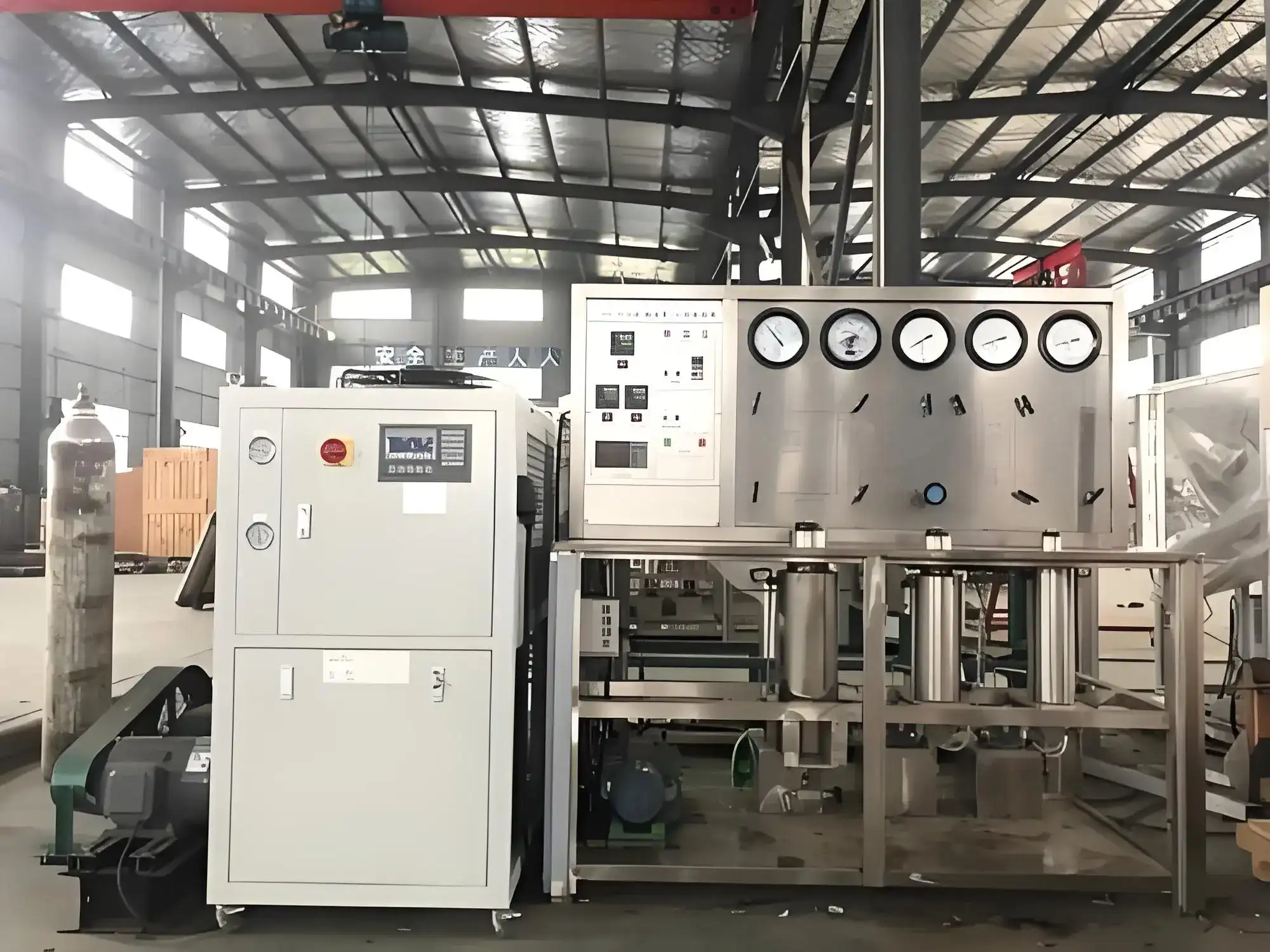
Steps 1–4: Prepare the Material and Learn How the Machine Works
These first four phases spell out everything you need to know before you ask for any fee.
Step 1: Prepare the Raw Material and Define the Extraction Objective
Having a definite purpose can save you time and money later. First, identify the feedstock, for example plant essential oils, pigments, lipid-soluble components, spices or other active constituents from natural commodities. Then remember the facts that affect extraction: moisture content, particle size, bulk density, batch weight, origin, expected yield. The results are consistent with controlled moisture content and homogenous particle size. Please indicate your purity aim and the amount you would want to manufacture from lab testing to commercial scale. Finally, decide whether you require fractionation, numerous separators, automated recipes, cooling or CO2 recovery. Each choice has some impact on pricing and configuration. So when you are looking for a quote for a supercritical CO2 extraction equipment , make sure you provide this information .
Step 2: Understand the Main Components of a Supercritical CO2 Extraction Machine
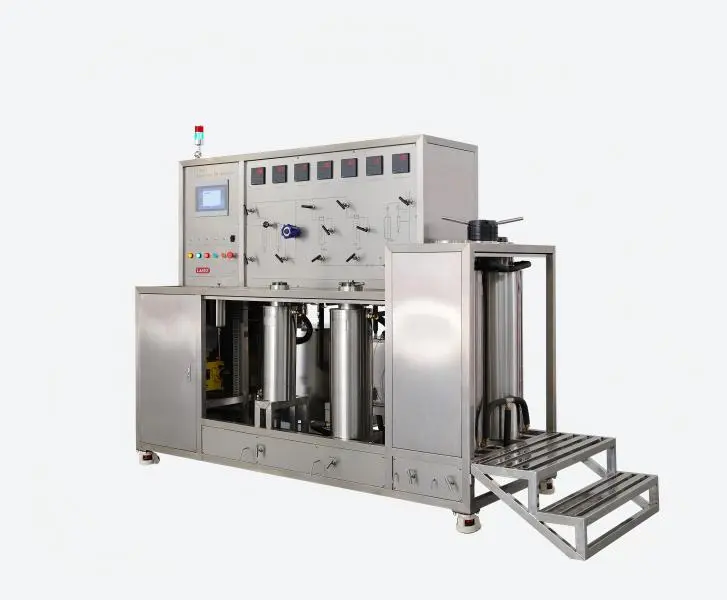
A supercritical CO2 extraction machine connects high pressure, temperature-control, separation, recovery and automation systems. The design of Asianbios is eight cores.
| Component | Job in the Process |
|---|---|
| CO2 storage | Holds a high-purity gas supply |
| Refrigeration and liquefaction | Turns CO2 into liquid for pumping |
| High-pressure pump | Delivers precise flow at pressures up to 45 MPa |
| Extraction vessel | Holds the feedstock for efficient mass transfer |
| Separation vessel | Releases extract as pressure falls |
| Heat exchange | Controls temperature through the process |
| Circulation recovery | Returns CO2 for reuse |
| PLC control system | Runs and monitors the whole cycle |
The main body is made of high-quality stainless steel. The SUS316L construction guaranties durability and contamination-free processing. We design and construct critical components to pressure vessel specifications.
Step 3: Follow the Extraction Process Step by Step
The supercritical CO2 extractor works sequentially in a cycle. The operator fills the extraction vessel with the prepared material and examines the seals, fittings and valves. The system subsequently cools the CO2 into a liquid and the high-pressure pump pushes it over the critical threshold. The supercritical fluid is passed through the feedstock at a specified velocity, pressure and temperature and the necessary compounds dissolve. The CO2 laden enters the separation vessels where a falling pressure allows the compounds to precipitate out for collection. The multi-stage separation makes it possible to collect different fractions. Clean CO2 is returned for storage and reuse. The operator then depressurizes the system and unloads the vessel after the run. The vessel is then cleaned and the data recorded for quality documentation.
Step 4: Understand the Operating Principles That Control Results
Four parameters of super-critical CO2 extraction machine are set, pressure, temperature, CO2 flow rate and residence time. Higher pressure increases the density and solvating power of CO2 Higher is not necessarily better. Volatility and selectivity are affected by temperature. Too much flow is wasteful of the CO2, and little advantage to recovery. Too little flow elongates the cycle, or leaves essential molecules behind. Low temperature operation preserves heat sensitive chemicals The Asianbios machine has a temperature control of ±0.5 °C. Check purity, aroma, color, moisture and batch uniformity. Separate overall yield from recovery of target chemical. Develop a repeatable recipe via executing product specific tests.
Steps 5–7: Compare Methods, Choose Capacity, and Match Your Industry
Learn how it works and determine whether it’s suitable for your product and budget.
Step 5: Compare Supercritical CO2 Extraction With Other Methods
The supercritical CO2 extraction machine is a solvent-reduced alternative to classic organic solvent extraction. CO2 was said to be nontoxic, nonflammable and easy to remove from the product in reviews published in Food Chemistry in 2006, which helps to lessen fears about residual-solvent. The trade-off is cost, since the technology requires more capital, high-pressure engineering and more complex controls. It operates at lower temperatures than steam distillation and may better protect heat-sensitive compounds, yet steam still works for certain big volume essential oil processes. Batch systems are more versatile and simpler to run. Continuous systems may provide better throughput, but need more logic. Select depending on product needs, regulatory restrictions, scalability and total cost of ownership."
Step 6: Select the Right Machine Capacity and Technical Configuration
When designing a supercritical CO2 extraction machine, size it on the basis of usable feedstock load, cycle length and annual production, not merely vessel capacity. Table shows common scales.
| Scale | Typical Size | Common Use |
|---|---|---|
| Laboratory and pilot | 1–10 L | Research, formula screening, process validation |
| Small to medium commercial | 20–50 L | Regular production batches |
| Industrial throughput | 100 L or multi-vessel | High-volume plants |
Asianbios provides units from 1L to 50L configuration, with design pressure up to 45MPa and temperature control accuracy up to ±0.5°C. Before you decide, look at the pump capacity, the separator volume, the chiller performance, the utility demand and the pressure-equipment papers. Modular architecture for future growth.
Step 7: Evaluate Applications and Industry-Specific Requirements
The paperwork and controls needed will vary by industry. Our supercritical CO2 extraction machine is used for extraction of plant extracts, traditional Chinese medicine, health supplements , food and spices and cosmetics. Low temperature operation, aroma preservation and rapid cleaning between batches are usually appreciated by essential oil manufacturers. In the U.S. supplement producers are regulated by the FDA’s 21 CFR Part 111 cGMP rules and are required to provide material certifications, cleaning methods and traceability records. Food and taste producers need sanitary construction and food contact materials. Processors that deal with hemp should verify federal and state and local licensing and testing restrictions before buying. Be sure the approach works for your feedstock and your market.
Steps 8–10: Check Safety, Evaluate Suppliers, and Make the Decision
The other three processes protect your investment once you’ve completed the deal.
Step 8: Assess Safety, Maintenance, and After-Sales Support
If you are looking to buy supercritical CO2 extraction equipment be prepared for high pressure and CO2 gas. Look for pressure-rated vessels and pipelines, relief devices, automatic overpressure protection, overtemperature shields, alarms, and safe depressurization controls. CO2 may displace oxygen in confined spaces hence ventilation and CO2 monitoring are recommended. OSHA has set an acceptable exposure threshold of 5,000 parts per million averaged over eight hours. 3. Perform routine maintenance on seals, filters, valves, sensors, pumps, chillers and recovery components. Asianbios Technicians do Installation, Calibration and Commissioning at your site. We also provide operator training, manuals, parts lists and maintenance plans. Remote support and a store of replacements keep downtime to a minimal.
Step 9: Build a Practical Procurement and Supplier Evaluation Checklist
Detailed project briefs lead to accurate quotations. Assess the price as the total cost of ownership including separators, recovery, installation, shipping, duties, training, energy, CO2 usage and replacement parts. Our equipment advice is thus not only based on machine construction but also on extraction operations. Asianbios has more than 10 years of manufacturing expertise and we manufacture plant extracts using supercritical CO2 technology. Check this criteria while comparing providers of supercritical CO2 extraction equipment.
| Checklist Item | What to Request |
|---|---|
| Project brief | Feedstock, annual volume, batch size, utilities, destination |
| Pressure documentation | The code that applies to your location, such as ASME Section VIII for U.S. vessels, plus material certificates |
| Export packaging | Packing method and shipping plan for heavy equipment |
| Service | Commissioning, training, manuals, spare parts, remote support |
| Site readiness | Floor loading, access, ventilation, power, cooling, drainage, lifting |
Ask every supplier to answer the same list so you can compare offers fairly.
Step 10: Make the Final Purchase Decision
Choose supercritical CO2 extraction equipment to suit your operating model. Labs need to be flexible, compact and accurate in measurements. Repeatable process control is necessary for pilot plants. Commercial producers are focused on throughput, recovery and service and labor. Distributors and OEM buyers may also request information on documentation, labeling and software language options. Develop a weighted selection matrix with scores for capacity, performance, CO2 recovery, safety, certification, energy use, price, warranty and support. Asianbios is ISO 9001, ISO 14001, ISO 45001, CE, HACCP, FCC, UL & CSA Certified. We recommend that you verify each document against your own market criteria before buying.
Common Mistakes to Avoid When Buying a Supercritical CO2 Extraction Machine
The majority of purchase difficulties arise from a myopic perspective of the equipment. Look out for these three.
Mistake 1: Treating Vessel Volume as Usable Capacity
Nominal vessel size is not the same as useable capacity. The bulk density, loading ratio, cycle duration and yearly output determine the actual processing capacity of a supercritical CO2 extraction machine. If your feedstock is airy and fluffy or thick and packed, two vessels of the same volume might yield quite varied batch weights. Ask the supplier to calculate estimated batch weight and cycles per day using your material data. Then compare that performance to your yearly goal.
Mistake 2: Comparing Only the Purchase Price
Missing pieces may be hidden with a low bid. The basic price may not include separators, CO2 recovery, automation, safety systems, installation and training. Operating expenses are particularly important since energy, CO2 usage, maintenance and replacement parts prices all pile up over the years. A circulation recovery system recovers CO2 for reuse, and the Asianbios supercritical CO2 extraction machine has recovery rates exceeding 90 per cent. Please include a documented scope of supply so that all bids are for the same things.
Mistake 3: Skipping Process Testing, Compliance, and Service Checks
Parameters for processing on a supercritical CO2 extraction machine might vary on the material and should not presume one recipe will work for every feedstock. Confirm with lab before signing off. Asianbios has the skilled people and laboratories to provide experimental verification and technical guidance. Confirm early that the facility will satisfy criteria and that the target nation will allow access. Finally, consider service quality: rare replacement parts, lack of documentation, or slow technical support might result in significant production delays even after the sale.
Conclusion
The supercritical CO2 extraction machine uses CO2 at more than 31.1°C and over 7.38 MPa to extract natural heat-sensitive compounds without leaving any organic solvent on the outcome. A smart acquisition starts with stated goals and objectives, moves through knowledge of components, process management and a truthful comparison to other approaches. The capacity should be based on the useful loads, cycle time and the annual output. Performance of the system in daily production is determined by industry standards, safety features, maintenance and service. Price comparisons should focus on the entire cost of ownership. Clear scope of supply, documentation and process testing reduces risk. Those buyers who don’t get caught up in only looking at vessel capacity or price tag are more likely to purchase the proper equipment for their product, location and market.
FAQ
1. What does a supercritical CO2 extraction machine do?
It pressurizes and cools CO2, passes it through prepared medium and releases the dissolved chemicals in separators. Then the CO2 is put back into storage, where the system may use it again.
2. What capacity range does the Asianbios supercritical CO2 extraction machine cover?
Asianbios custom build units 1L to 50L. Design pressure: 45 MPa. Temperature control accuracy: $\pm 0.5^\circ$C. PLC touch screen control process.
3. Does the extract contain organic solvent residue?
The process uses food-grade CO2 instead of organic solvents. Then the pressure is reduced in the separator and the CO2 returns to the gas phase and leaves the extract.
4. How does CO2 recovery lower costs?
A circulation recovery system returns CO2 to storage after separation . The Asianbios machine has recovery rates of over 90%, which over time minimizes the CO2 you purchase and replace.
5. What information do I need for a quotation?
Please include your feedstock type, target extract, batch size, yearly volume, utilities, automation demands and destination country. Our engineers utilize this information to propose a setup.
Request a Supercritical CO2 Extraction Machine Quotation from Asianbios
Ready to pair a supercritical CO2 extraction equipment with your project? As a supercritical CO2 extraction machine manufacturer, Asianbios provide 1L-50L customized supercritical CO2 extraction machine with PLC control, SUS316L construction and installation assistance. Send your feedstock, batch size and destination to plantex@asianbios.com and our engineers will generate a full technical proposal for you. For additional information, visit asianbios.com.
References
1. Brunner, G. Supercritical Fluids: Technology and Application to Food Processing. Journal of Food Engineering, 2005.
2. Herrero, M., Cifuentes, A., Ibañez, E. Sub- and Supercritical Fluid Extraction of Functional Ingredients from Different Natural Sources. Food Chemistry, 2006.
3. Pereira, C.G., Meireles, M.A.A. Supercritical Fluid Extraction of Bioactive Compounds: Fundamentals, Applications and Economic Perspectives. Food and Bioprocess Technology, 2010.
4. Reverchon, E., De Marco, I. Supercritical Fluid Extraction and Fractionation of Natural Matter. The Journal of Supercritical Fluids, 2006.
5. ASME Boiler and Pressure Vessel Code, Section VIII, Division 1: Rules for Construction of Pressure Vessels. American Society of Mechanical Engineers, 2023.
6. NIOSH Pocket Guide to Chemical Hazards: Carbon Dioxide. National Institute for Occupational Safety and Health, 2007.
About the Author

Asianbios
Our purpose is to forge a legacy of stewardship, advancing initiatives that honor and preserve the ecological integrity of our planet.

Send Inquiry

Related Industry Knowledge
- How Does Chicory Extract Powder Bulk Support Modern Formulas?
- Amylase Production by Fermentation: How to Scale Production
- How to Choose a Sleep Aid Brewing Powder Manufacturer
- From Strain Screening to Scale-Up With a Trial Fermentation Vessel
- anti-inflammatory peptides powder: A Gentle Peptide for Sensitive Skin Care
- What are the benefits of Polygonatum peptides?
- How to Choose the Best Sleep Aid Capsule for Adults
- Berberine Hydrochloride Extract 97%: Uses, Quality Standards & Supplier Guide
- Why is Ergothioneine Powder Good for Brain Health?
- Is Freeze Dried Kiwi Powder Rich in Vitamin C?