Why Use a Compressor-type Low-Temperature Evaporator System?
Why choose a compressor-type low-temperature evaporator system? It concentrates liquids at moderate temperatures and recycles the heat of its own vapor. Heat sensitive extracts retain their activity and energy consumption is minimal. A compressor type low temperature evaporator creates a vacuum, boils the liquid gently, compresses the vapor to increase its temperature and transfers that heat back to the feed. You also have less wastewater disposal and the stainless steel unit is PLC controlled. Asianbios units vaporize at 30–45°C. This guide explains how the system works, where it fits and what to verify before you purchase.
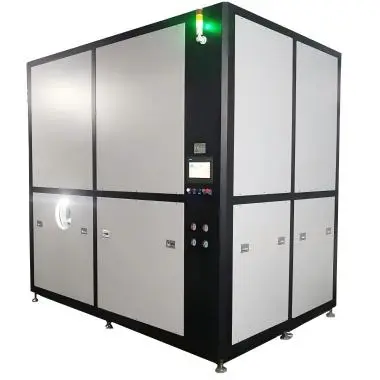

Understanding the Compressor-Type Low-Temperature Evaporator System
What Is a Compressor-Type Low-Temperature Evaporator System?
The low temperature evaporator of compressor type adopts vacuum condition and compressor-assisted vapor heat recover. It removes water or other volatile ingredients from solutions of plant extracts, fermentation broths, food slurries and waste water with high salt concentration. Water boils at 100 degrees C at sea-level pressure . This method boils it at significantly lower temperatures . The actual working temperature depends on the vacuum level, feed composition, viscosity and boiling point elevation. I normally urge individuals to test their own content first before you lock in on any equipment options since every feed responds a little differently.
How Does a Compressor-Type Low-Temperature Evaporator Work?
The feed liquid is initially introduced into an evaporation chamber at decreased pressure. Some of the liquid vaporizes without having to be heated to a high temperature, since the vacuum reduces the boiling point. The compressor increases the pressure and temperature of the vapor . A heat exchanger returns the recovered heat to the entering feed . Water at 100 °C contains around 2,260 kJ/kg of latent heat, which is easily thrown away in a standard condenser. This cycle makes that heat work again. Sensors and PLC controls are used to control temperature, vacuum, liquid level and compressor load. The condensed vapor is collected separately, allowing you to recover solvents as required.
Core Equipment Composition
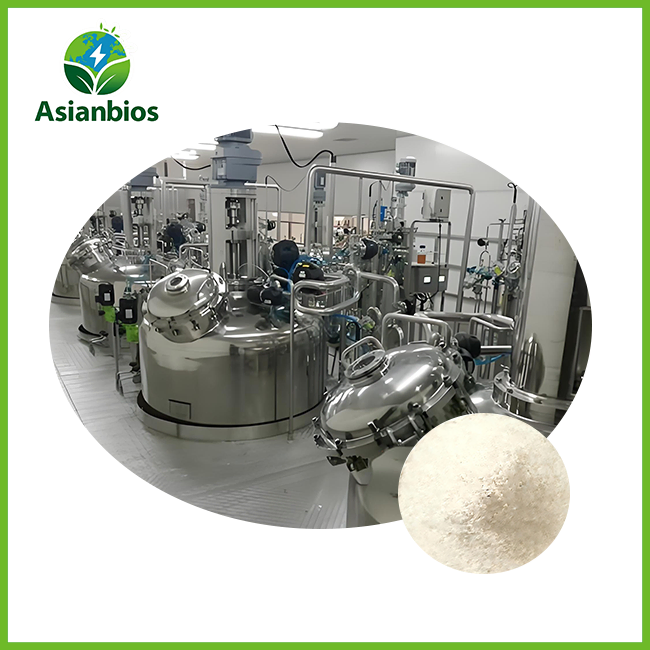
The unit consists of six basic pieces, including evaporation main body, compressor system, vacuum system, condensation system, pipelines with valves and automated control system. The main body contains the material , the compressor circulates the heat , the vacuum system maintains negative pressure and the condensation system collects the distillate . Instruments provide real time data to PLC which operates feeding, evaporation, concentration and discharge. The parameters of Asianbios compressor type low temperature evaporator are shown in Table 1.
Table 1. Specifications of Asianbios Compressor Type Low Temperature Evaporator
| Item | Specification |
|---|---|
| Processing capacity | 50–500 L/d (customizable) |
| Evaporation temperature | 30–45°C |
| Working vacuum | -0.08 to -0.098 MPa |
| Material construction | SUS316L stainless steel |
| Heat recovery | Up to 90% |
| Control | PLC + touch screen |
| Certifications | ISO9001, CE |
These numbers provide the engineer a basis for matching the unit to a trial run or small production line.
Why Use a Compressor-Type Low-Temperature Evaporator System? Core Benefits
Gentle Treatment for Heat-Sensitive Materials
Many plant actives, enzymes and fermentation products break down or oxidize when heated aggressively. In a low temperature evaporator of compressor type the liquid is kept at 30–45 °C and the material is thus exposed to far less thermal stress than in an atmospheric boiler. That preserves bioactivity, taste and color in plant extracts, Chinese medicine extracts and food slurries. The closed, continuous process and the stainless steel contact surfaces further minimize the risk of contamination. The first reason to look at the technology is if your product is losing potency at high temperatures.
Lower Energy Demand and Less Reliance on Steam
The economics of a concentration project are often driven by energy cost. This compressor-type low-temperature evaporator system uses very little external steam, thermal oil, or separate cooling for the condenser, since it recovers the latent heat inside its own vapor. Asianbios units are able to recover up to 90% of the heat using the heat pump cycle. Real savings still depend on feed concentration, fouling, ambient conditions and yearly running hours. I propose asking for a formal energy estimate based on your facts. A provider that cannot commit to numbers warrants more questioning.
Smaller Wastewater Volume, Safer Automated Operation
Evaporation in wastewater service decreases the amount of liquid prior to disposal, crystallization or water reuse. Combined with downstream equipment, it can also enable zero liquid discharge schemes. Automation can assist here too. Touch screen PLC control with parameters recording ensures concentration is constant from batch to batch. Safety interlocks include excessive temperature, over pressure, and low liquid level. Together these characteristics reduce operator burden and reduce the likelihood of dry-burn or vacuum upset during unattended operating.
Comparison and Applications
Compared with Other Evaporation Technologies
Often buyers want to know how this design compares with ones they are used to. Table 2 provides a brief comparison. A compressor type system is similar to a mechanical vapor recompression system, however vendors use various names for the compressor design and capacity range. High temperature evaporators may be cheaper up front for tough liquids, but might stress sensitive items. Compare full technical specs, not product names.
Table 2. Evaporation Technology Comparison
| Technology | Main heat source | Temperature level | Best fit |
|---|---|---|---|
| Atmospheric evaporator | Steam or fuel | Near 100°C | Robust liquids, low initial cost |
| Vacuum evaporator | External steam or hot water | Reduced | General concentration |
| Multi-effect evaporator | Steam, reused across stages | Reduced | Large steady capacity |
| Compressor-type low-temperature evaporator | Compressor heat pump | 30–45°C (Asianbios unit) | Heat-sensitive products, wastewater |
Applications Across Industries
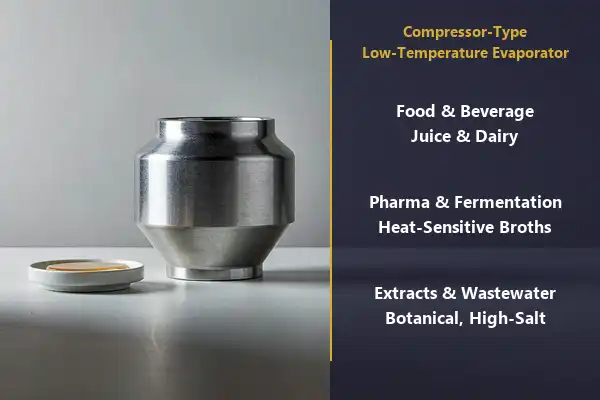
Our customers are using the equipment for food, pharmaceuticals, biological fermentation, plant extraction and environmental water treatment. Concentration of extracts of Chinese medicine and heat-sensitive compounds by pharmaceutical users. Plant extraction teams handle solutions including plant extracts and essential oil. Food processors concentrate fruit juices, dairy products and food slurries and retain the flavor. Processing of fermentation broths in biotechnological plants. High-salt wastewater slashed by environmental teams. The moderate concentration step is excellent for botanical extract extraction for U.S. nutritional supplement makers, and the beginning capacity of 50 L/d suits small trials.
Suitable Materials and Pretreatment Needs
Suitable feedstocks include plant extract solutions, fermentation solutions, Chinese medicine extracts, food slurries, high salt waste water and other heat sensitive solutions. But a low temperature may not remove all hazard. Aggressively scaling, oily, high particles, significantly foamy feeds may need oil separation or other preparation prior to filtration. Hygienic design, corrosion resistance and easy cleaning are the most significant characteristics for food processing and medicinal applications. SUS316L is superior to the lower grades in resisting assault from chlorides. This is useful if you are processing salty meals. If a lab test shows that your fluids needs a pretreatment step, then you are fasting.
Design, Efficiency, and Procurement
Key Design Considerations
Good design starts with feed data: flow rate, hours of operation, solids content, viscosity, pH, corrosiveness, scaling, foaming and heat sensitivity. Don't design the evaporation capacity on theoretical water evaporation size it on real operating conditions. Match construction materials with chloride levels and cleaning detergents. Then look at circulation velocity, foam control, CIP access, inspection access, vacuum protection and compressor safeguards. whether you have pressure vessels in your unit, find out early whether requirements apply where you are such as ASME so inspection and paperwork don’t delay installation.
How to Evaluate Efficiency and Total Cost
Quantify compressor-type low-temperature evaporator efficiency in terms of energy per kilogram of water evaporated, cooling water need, condensate quality, compressor performance. Then compare total cost of ownership including price, installation, cleaning, replacement parts, downtime, labor and disposal savings. A little price tag might be hiding high power use or frequent cleaning. Table 3: Testing for acceptance to validate predicted results
Table 3. Acceptance Test Checklist
| Check | What to verify |
|---|---|
| Capacity | Evaporation rate against contract |
| Concentration | Final solids or target level |
| Stability | Temperature and vacuum hold |
| Energy | Measured power consumption |
| Operation | Noise, vibration, continuous run |
Pilot tests also reveal scaling, foaming, and product-quality problems before you commit to a full-scale purchase.
Choosing a Compressor-Type Low-Temperature Evaporator Supplier
A good provider does more than just supply a conventional machine. Experience in evaporation process engineering, fabrication quality, electrical integration and export paperwork. Request process flow diagrams, P&ID’s, equipment data sheets, lists of utilities, manuals, advise on replacement parts, help for commissioning and operator training. Our specialists and labs at Asianbios can check your stuff before you buy. We also give advise on installation, operator training, preventative maintenance programs and remote monitoring support. Prepare your feed composition, flow rate, target concentration and utilities so that the quotation you get is specific to your process.
Limitations and Decision Making
Limitations and Potential Challenges
But there are issues with this strategy. In addition to a basic atmospheric evaporator there is an additional initial cost for compressors, heat exchangers, vacuum equipment and controls. However at low temperature scaling, fouling, corrosion and crystallization occurs. Therefore, feed analysis and pilot testing are needed. Compressor, pump, sensor, control panel need maintenance. Feeds with extreme scaling, very high suspended solids, highly caustic or dangerous solvents demand special engineering investigation. Before buying, verify if there are any replacement parts and technical assistance in your area.
A Practical Decision Process for Global Buyers
I propose five steps. Start with the application: reduction of water waste, product concentration, water recovery or heat sensitive processes. Secondly, identify criteria like capacity, ultimate concentration, temperature limit, energy consumption, footprint, materials and budget. Third, compare vacuum, multi-effect, MVR and compressor type systems against those requirements. Fourth, get a typical sample of the stream. 5. Price against service capabilities, compliance and long term operational worth. The order maintains the choices data-driven rather than the loudest sales pitch.
Why a Customized Compressor-Type Low-Temperature Evaporator Can Be the Better Choice
Industrial feed streams may vary in viscosity, salinity, solids content, scaling propensity, and foaming. Those qualities might better fit a low temperature evaporator for a certain compressor, than a generic equipment for clean water. Size of compressor. Heat transfer area. Materials. Circulation type. Connections. CIP setup and condensate control. All may be tailored. The capacities range from 50 to 500 L/d and are adjustable. Your current tanks, pumps, filters and pipelines may also be connected to you. You may start with a very small setup and build it up as your production increases.
Conclusion
The compressor-type low-temperature evaporator of the compressor type utilizes vacuum to concentrate liquids at moderate temperatures, recycling the heat of the compressed vapor to protect heat sensitive products and reduce steam use. The system is suited to plant extraction, food, pharmaceutical, fermentation and high salt wastewater operations. The results are comparable to those of PLC control. It becomes softer, and returning to its own heat. It has higher initial cost than atmospheric, vacuum and multi effect. Feeds that are prone to scaling, frothing or contain excessive solids will need to be pre-treated and pilot tested. For the purchasers, the most certain result is obtained by considering the total cost of ownership, checking the performance during acceptance testing, and adapting the materials and design to the actual feed.
FAQ
1. What is the minimum processing capacity for trials?
Our compressor type low temperature evaporator is available in sizes from 50 L/d, therefore it is suitable for pilot tests and modest production.
2. Can the evaporation temperature be adjusted?
Yes. It has 30–45°C temperature control for tuning settings for various heat-sensitive materials.
3. How much energy can I save?
The heat pump cycle may recover up to 90% of heat. Actual savings depend on your feed, fouling and running hours.
4. Can it recover solvents?
Yes. The condensation system gathers condensed vapors independently, enabling solvent reuse when your operation demands it.
Request a Compressor-Type Low-Temperature Evaporator Quote from Asianbios
Looking for compressor-type low-temperature evaporator manufacturer? Asianbios supplies SUS316L units in 50 to 500 L/d with PLC control, laboratory material testing and technical advice. Send your feed composition, goal concentration/ capacity to plantex@asianbios.com and our engineers will get back to you at the earliest. For further information go to asianbios.com
References
1. Perry's Chemical Engineers' Handbook, 9th Edition, 2018
2. Unit Operations of Chemical Engineering, 7th Edition, 2005
3. Handbook of Food Engineering, 2nd Edition, 2006
4. Wastewater Engineering: Treatment and Resource Recovery, 5th Edition, 2014
5. Food Process Engineering and Technology, 3rd Edition, 2018
6. Code of Federal Regulations Title 21 Part 111, 2007
About the Author

Asianbios
Our purpose is to forge a legacy of stewardship, advancing initiatives that honor and preserve the ecological integrity of our planet.

Send Inquiry
Related Industry Knowledge
- How to Choose a Sleep Aid Brewing Powder Manufacturer
- Anti-Wrinkle Peptide vs Retinol: Which Supports Youthful Skin?
- Echinacea Extract Powder For Customized Herbal Product Formulations
- Flash Dryer Device Applications in Food and Chemical Production
- Industrial Supercritical Extraction Machine for Plant Extract Production
- How to Choose the Best Sleep Aid Capsule for Adults
- Are Multi-effect eye peptides Effective for Under-Eye Bags?
- Where can i buy freeze dried strawberry powder?
- What is Sleep Aid Jelly? Guide to Natural Sleep Gummies
- Sleep Aid Tablets Guide: How They Improve Sleep Quality