Flash Dryer Device Applications in Food and Chemical Production
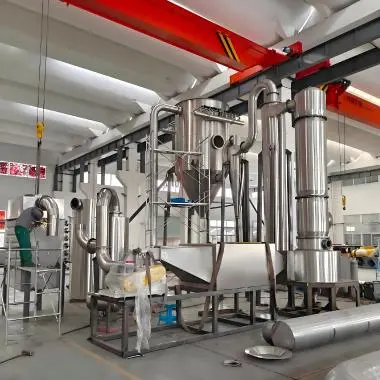
Today′s industrial environment requires drying technologies that can deal with difficult materials quickly without sacrificing product quality or operational efficiency. The Flash Dryer Device has become a new device that fits these requirements both in the food and chemical sectors, revolutionizing the processing of sticky, paste-like and filter cake materials. Compared to traditional drying techniques that are subject to agglomeration or need significant pre-treatment, the Flash Dryer Device can realize fast drying and dispersion using high-speed hot air and mechanical stirring. The Flash Dryer Device is a revolutionary technology that combines high-speed production cycles with consistent quality and uniformity. The Flash Dryer Device is an invaluable tool for the firms that want to improve their dryer operations.
Why the Flash Dryer Device is Transforming Industrial Drying
Solving the Limitations of Traditional Drying Methods
Traditional drying procedures frequently present serious problems when treating materials of high moisture content or sticky consistency, which tend to aggregate, adhere to equipment surfaces or dry unevenly. The problems are solved using the Flash Dryer Device which uses high-velocity hot air and mechanical agitation to break up the clumps and provide uniform contact with the drying medium. The double action mechanism of the Flash Dryer Device avoids the creation of clumps and guaranties uniform drying throughout the material, overcoming difficulties that might otherwise lead to lower efficiency, uneven product quality or equipment damage in traditional systems. The Flash Dryer Device′s capacity to handle materials originating from upstream operations without prior treatment makes it a very attractive option for companies working with complicated feedstocks.
The Science Behind Instantaneous Drying
The essence of the Flash Dryer Device is the creation of a turbulent environment in which the interaction of a high speed hot air (160–350°C at the intake) with tiny dispersed particles of material occurs. The fast heat transmission mechanism coupled with mechanical agitation allows for the near immediate evaporation of moisture with residence periods frequently in the seconds. This efficiency is achieved in the Flash Dryer Device. The Flash Dryer Device is based on a unique vortex drying mechanism, in which materials are crushed, dried and disseminated in one continuous operation. Through this novel procedure, The Flash Dryer Device can handle materials that would otherwise be troublesome for traditional drying technologies, such as filter cakes from fermentation or chemical processes that include anywhere from 30-80% moisture content.
Versatility Across Multiple Material Types
A significant aspect of the Flash Dryer Device is its impressive versatility with different feedstocks, offering a flexible solution for a wide range of industrial uses. The Flash Dryer Device may be used to dry materials that are difficult to dry in conventional drying equipment, such as fermentation filter cakes, starch slurries, inorganic salts and agricultural wastes. This adaptability is especially advantageous in facilities who create several goods or process different raw material qualities. The flexibility of the Flash Dryer Device to handle materials of varying viscosities, particle sizes and moisture levels without pre-treatment makes it a versatile and future-proof investment for developing enterprises.
Food Industry Applications: Enhancing Efficiency and Quality
Starch Processing and Powder Production
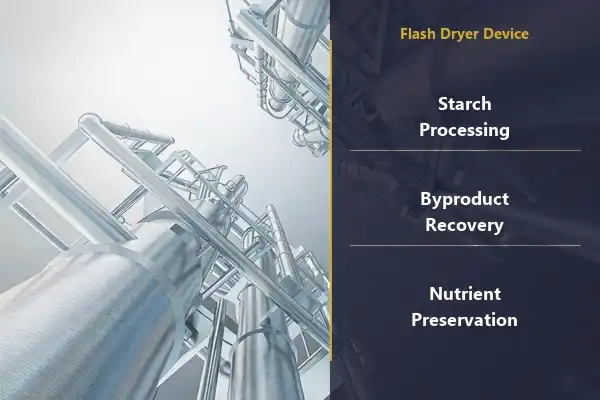
Wet starch slurries are viscous and sticky, making starch processing a particular difficulty in the food sector. The Flash Dryer Device is ideal for this purpose since the high speed hot air with the mechanical stirring breaks the sticky material and dries it to a fine free flowing powder. This guaranties uniformity in particle size and inhibits gelatinization, which is very important to retain functional characteristics of starch in culinary applications. The Flash Dryer Device can accept high moisture starch slurries straight from manufacturing lines eliminating the need for intermediary processing processes, which considerably improves efficiency and reduces operating costs for food makers.
Drying Fermentation Byproducts for Value Recovery
The food industry fermentation operations typically produce filter cakes as by-products that might be rich in useful nutrients or functional substances. The Flash Dryer Device is a way to efficiently dry these wastes, so producers may recover and reuse materials that would otherwise be wasted. With the Flash Dryer Device, food companies may turn fermentation leftovers into useful ingredients, enhancing sustainability and minimizing disposal costs. The Flash Dryer Device dries these byproducts so quickly that they preserve their nutritional and functional characteristics and may be fed back into industrial operations.
| Food Application | Material Processed | Key Benefits of Flash Dryer Device |
|---|---|---|
| Starch Production | Wet starch slurry | Rapid drying, uniform particle size, prevents gelatinization |
| Feed Additives | Fermentation residues | High throughput, preserves nutritional content, reduces waste |
| Enzyme Processing | Liquid enzyme concentrates | Maintains biological activity, prevents denaturation, consistent quality |
Preserving Nutritional and Functional Properties
Many dietary ingredients, including enzymes, vitamins and probiotics, are sensitive to heat and need to be handled carefully to retain their nutritional and functional characteristics. This need is met by the Flash Dryer Device with a precise temperature control, which permits gentle drying at output temperatures of 80-120°C. The regulated atmosphere prevents the sensitive substances from breaking down during the drying process. The limited resident time in the Flash Dryer Device also limits temperature exposure, making it perfect for protecting the integrity of high-value food additives and functional ingredients that are crucial to product quality and effectiveness.
Chemical Industry Innovations: Efficiency and Reliability
Inorganic Salt Drying for Pure, Free-Flowing Products
In the chemical industry inorganic salts are commonly manufactured as wet filter cakes which have to be dried to get free flowing pure products. The Flash Dryer Device is very useful for this application as it can effectively dry these materials without caking and agglomeration. The high-temperature air flow (160-350°C at the input) in the Flash Dryer Device assures the full evaporation of moisture, and the mechanical stirring avoids the generation of lumps. This leads to a consistent, dry product, which fulfills the high purity specification necessary in chemical production. Due to its corrosive nature, the Flash Dryer Device is excellent for drying different inorganic chemicals safely and efficiently.
Handling Corrosive and Hazardous Materials Safely
In chemical processing, there are many compounds that are caustic, toxic or otherwise difficult to handle. The Flash Dryer Device is made of high-grade stainless steel (SUS304/SUS316L) which has good corrosion and chemical resistance. The strong architecture of the Flash Dryer Device assures that it can handle many aggressive chemicals without affecting its structural integrity or operating efficiency. The sealed design and innovative dust removal system of the Flash Dryer Device also aid in containing and handling hazardous chemicals, guaranteeing a safe working environment for workers and compliance with industry laws.
| Chemical Application | Material Processed | Advantages of Flash Dryer Device |
|---|---|---|
| Inorganic Salt Production | Wet salt filter cakes | Prevents caking, maintains purity, high throughput |
| Catalyst Recovery | Spent catalyst slurries | Efficient moisture removal, preserves catalyst properties |
| Dye Manufacturing | Wet dye pigments | Uniform drying, maintains color consistency, prevents degradation |
Continuous Production for High-Volume Manufacturing
The Flash Dryer Device is built for continuous operation, enabling chemical firms to operate their operations without interruption. With this continuous processing capacity, moist material may be fed into the Flash Dryer Device and dry product retrieved at the same time, removing the batch processing downtime. This characteristic of the Flash Dryer Device also assures maximum efficiency, reduced labor cost, and consistency in output for a high-volume chemical operation, making it a crucial component in a contemporary chemical production facility. The versatility of the Flash Dryer Device to be integrated in upstream and downstream processes increases its use on continuous production lines.
Technical Advantages and Customization for Industry-Specific Needs
Energy Efficiency and Operational Cost Savings
One of the most convincing benefits of the Flash Dryer Device is the thermal efficiency, which may reach up to 90%. This efficiency is made possible by the improved design of the Flash Dryer Device, which allows for the maximum possible transmission of heat between the hot air and the material, while reducing heat loss. Lower energy needs of the Flash Dryer Device result in lower operating costs and hence make it an economically appealing solution for industrial drying applications. Additionally, the selection of heating techniques such as electric, steam, or gas enables facilities to choose the most economically viable energy source for their individual operating conditions, thereby improving the cost-effectiveness of the Flash Dryer Device.
Sanitary and Durable Design for Longevity
The Flash Dryer Device is made of high quality stainless steel (SUS304/SUS316L) and inner surface mirror polished (Ra ≤ 0.4 μm) for cleanliness and durability. Such design does away with corrosion and material build-up and allows for the complete cleaning of the Flash Dryer Equipment and is therefore particularly suitable for applications in the food and pharmaceutical industries where sanitary conditions are of utmost importance. The Flash Dryer Device is designed to stand the test of time in tough industrial settings, while its sealed structure and efficient dust extraction system contribute to a clean and safe working environment. The Flash Dryer Device is a trustworthy and robust option for enterprises demanding to meet strict hygiene requirements.
Customization Options to Match Your Requirements
The Flash Dryer Unit is very adaptable and may be customized to fit your facility′s demands. The processing capacity may be adapted from 100 to 5000 kg/h. The heating option can be set according to your utilities and energy choices. If you have special material properties or production objectives, Asianbios will give you professional guidance to help you establish the best Flash Dryer Device for your application. To get customized advice and assistance that meet your unique needs, please contact our technical team at plantex@asianbios.com to learn more about how a customized Flash Dryer Device may improve your operation.
Conclusion
The Flash Dryer Device has transformed the drying process in the food and chemical industry with its unequaled efficiency, adaptability and durability. Its capability of handling difficult materials such as paste-like compounds and filter cakes with quick drying and uniform dispersion is vital in current production. The Flash Dryer Device provides consistent, high-quality results for applications in starch processing, fermentation byproducts and chemical synthesis, while decreasing operating costs and increasing sustainability. This sophisticated drying technology is an investment that improves productivity and product integrity throughout a wide range of industrial applications.
FAQ
Q: What types of food products can be processed using a Flash Dryer Device?
A: The Flash Dryer Device is highly effective for processing a wide range of food products, including starch slurries, fermentation residues, enzymes, probiotics, and various food additives. Its precise temperature control and rapid drying capability make the Flash Dryer Device ideal for preserving the nutritional and functional properties of heat-sensitive food ingredients, ensuring high-quality end products that meet industry standards.
Q: How does the Flash Dryer Device handle corrosive chemical materials?
A: The Flash Dryer Device is constructed from high-grade stainless steel (SUS304/SUS316L), which provides excellent resistance to corrosion and chemical degradation. This robust construction allows the Flash Dryer Device to safely and effectively process corrosive materials, such as inorganic salts and chemical compounds, without compromising its structural integrity or operational performance, making it a reliable choice for chemical manufacturing.
Q: Can the Flash Dryer Device be customized for small-scale production?
A: Yes, the Flash Dryer Device is available in a range of capacities starting from 100 kg/h, making it suitable for small-scale production needs. Asianbios offers full customization of the Flash Dryer Device to match specific processing requirements, including heating methods, temperature ranges, and control systems, ensuring that even smaller facilities can benefit from its advanced drying capabilities.
Enhance Your Production with Asianbios Flash Dryer Solutions
Upgrade your drying operations with Asianbios' cutting-edge Flash Dryer Device technology, designed for efficiency, versatility, and reliability. Our advanced systems offer precise temperature control, robust stainless steel construction, and flexible configurations to meet your specific needs. With capacities from 100 to 5000 kg/h and multiple heating options, our Flash Dryer Devices deliver consistent, high-quality results across food and chemical industries. Contact our expert team at plantex@asianbios.com to discuss how our solutions can optimize your production processes and meet your operational goals.
References
1. Mujumdar, A. S. (2014). Handbook of Industrial Drying (4th ed.). CRC Press.
2. Nonhebel, G., & Moss, A. A. H. (1971). Drying of Solids in the Chemical Industry. Butterworths.
3. Keey, R. B. (1992). Drying of Loose and Particulate Materials. Hemisphere Publishing Corporation.
4. Pakowski, Z., Mujumdar, A. S., & Strumillo, C. (1991). Drying '89: Proceedings of the International Drying Symposium. Hemisphere Publishing Corporation.
5. Baker, C. G. J. (1997). Industrial Drying: Equipment and Costs. Marcel Dekker, Inc.
6. Strumillo, C., & Kudra, T. (1986). Drying: Principles, Applications and Design. Gordon and Breach Science Publishers.
About the Author

Asianbios
Our purpose is to forge a legacy of stewardship, advancing initiatives that honor and preserve the ecological integrity of our planet.

Send Inquiry

Related Industry Knowledge
- Pomegranate Peel Extract Powder: Benefits for Antioxidant Support
- How Lifting Peptide Works to Improve Skin Elasticity
- Brightening peptide powder for Skin and Tissue Research: Key Applications
- How Trehalose Production Technology Works: Industrial Process Guide
- Eggshell Membrane Peptide: waht is it and how it works
- Freeze Dried Kale Best Recipes & Guides from Experts
- Where can I buy bulk stevia extract powder online?
- Production Technology Of Hyaluronic Acid for Medical Grade Use
- Freeze Dried Kiwi Powder Guide 2026: Nutrition, Applications & Buying Tips
- Sleep Aid Brewing Powder Guide for Better Sleep Ritual