Compound Amino Acids Supplement: Benefits and Applications Explained
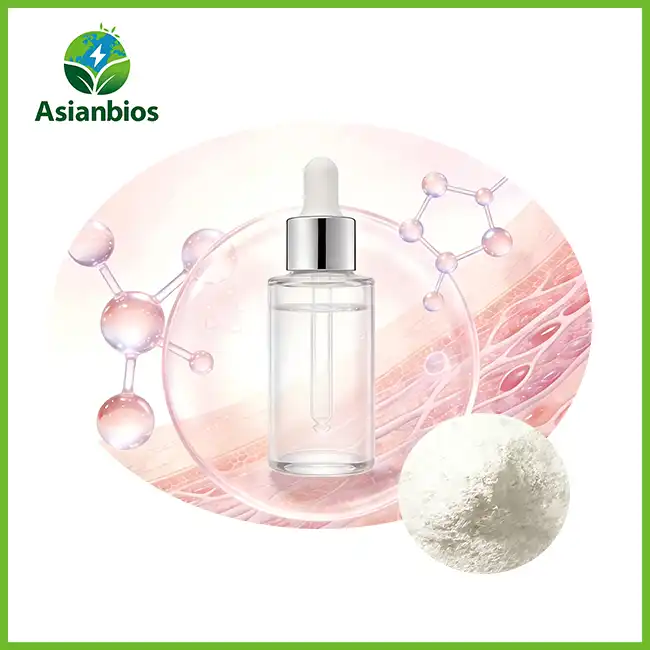
There's a good reason why compound amino acids are one of the most talked-about useful ingredients in the beauty and health industries. In contrast to single amino acid isolates, a compound amino acid blend provides a group of building blocks—most notably glycine, proline, and hydroxyproline—that work together to support the production of collagen, the metabolism of cellular energy, and overall health. This food-grade material is made using advanced spray-drying technology to make sure it dissolves well and is bioavailable. You can get it from Asianbios in the form of a fine white powder that is 98% HPLC pure. This article will talk about what compound amino acids are, how they help the skin and body, how they are used in different fields, and what buyers should look for when they are buying bulk material for their recipes.


Understanding Compound Amino Acids and Their Composition
What Are Compound Amino Acids?
A compound amino acid is a scientifically created mix of two or more free-form amino acids that are mixed in exact amounts to have a certain physiological effect. Instead of depending on a single protein, the complex method uses amino acids together, which is how the body truly works. The formula for Asianbios compound amino acids is based on glycine, proline, and hydroxyproline, which are the three residues that make up the collagen triple helix. Since these amino acids are given in their free state, they don't have to go through as much intestinal breakdown as whole proteins do. This means they get into the bloodstream quickly and effectively.
The Role of Glycine, Proline and Hydroxyproline
In the amino acids complex combination , each amino acid has a distinct role in the structure. Glycine, the smallest amino acid, fits well within the collagen coil, and makes up roughly a third of all collagen residues. Proline stabilises the helix turn. When vitamin C combines with proline it becomes hydroxyproline, which stabilises the strands via hydrogen bonds . These three residues, when combined as compound amino acids, provide fibroblasts with just what they need to produce collagen fibres. That’s why the cocktail performs better than testing of individual components.
Technical Specifications at a Glance
Before placing an order, buyers who are looking at synthetic amino acids for commercial use need to see clear, reliable specs. The following table lists the most important technical details of the Asianbios material. It will help formulators quickly find this information when they are comparing suppliers or writing internal documents.
| Parameter | Specification |
|---|---|
| Active ingredient | Compound amino acids (glycine, proline, hydroxyproline) |
| Assay | 98% HPLC |
| Appearance | White powder |
| Grade | Food grade |
| Production process | Spray drying |
| Packaging | 25 kg fiber drum with LDPE liner |
| Minimum order quantity | 1 kg (samples available) |
| Shelf life | Over 12 months |
These numbers are confirmed by testing each batch in-house, and every shipment of compound amino acids that leaves the facility comes with a full certificate of analysis.
Key Benefits of a Compound Amino Acids Supplement
Enhanced Cellular Energy Metabolism
One of the best things about compound amino acids is that they can improve the performance of mitochondria. Glycine helps make glutathione and creatine, two chemicals that are important for managing energy in cells and keeping the balance of oxidative stress. When mitochondrial activity in skin fibroblasts gets better, those cells make more ATP and can keep up the work of protein production, which uses a lot of energy. Formulators who use compound amino acids often say that finished products make skin look and feel healthier and more radiant. These effects are caused by an increase in cellular energy production, not just by conditioning the skin's surface.
Superior Collagen Support and Skin Firmness
After the mid-20s, collagen naturally decreases by about 1% per year, and the loss speeds up a lot after menopause. Adding complex amino acids gives fibroblasts a concentrated source of the exact building blocks they need to repair that matrix. The material supports both the amount of collagen made and the quality of fiber organization because the ratio of glycine to proline to hydroxyproline is adjusted instead of being chosen at random. When fibers are denser and better aligned, the skin is firmer, more elastic, and has a stronger dermal support structure that doesn't sag over time.
Anti-Aging and High Bioavailability
Free-form amino acid supplements have been shown in clinical studies to improve skin elasticity, reduce fine lines, and make the skin look smoother overall. In Asianbios, compound amino acids powder is made using advanced fermentation and extraction methods, followed by controlled spray drying. This creates a particle size distribution that is uniform and dissolves quickly in water. It is very important that the ingredient is bioavailable; an ingredient that can't be taken in can't work. Free amino acids don't need to be cut up by enzymes, so they are much better at being absorbed than complete protein sources. This means that lower inclusion rates are needed to get useful effects.
Comparing Benefits Across Delivery Formats
The versatility of compound amino acids means the same raw material can serve very different product concepts. The following comparison helps brand owners decide which format best matches their market positioning.
| Format | Typical Dosage | Primary Benefit Highlighted | Consumer Appeal |
|---|---|---|---|
| Oral powder/sachet | 3-5 g daily | Systemic collagen support | Convenience, fast onset |
| Capsules & tablets | 1-2 g daily | Precise, travel-friendly dosing | Supplement shoppers |
| Gummies | 1-2 g daily | Pleasant taste and compliance | Younger demographics |
| Topical serum/cream | 0.5-3% inclusion | Localized firming and hydration | Premium skincare buyers |
Applications of Compound Amino Acids Across Industries
Premium Skincare and Cosmetic Formulations
Compound amino acids work as both humectants and active precursors when applied to the skin. Small molecules can only partly reach the upper layers of the skin where they support the natural moisturising factor and maintain the barrier moisturised. Compound amino acids are included in many high-end anti-aging serums, night creams, sheet masks and essence emulsions. This is particularly true of treatments designed to prevent collagen loss, sagging skin and other visible indications of ageing. In water, the white, odourless powder is soluble and stable in pH throughout most of the cosmetic range. This makes it simple to blend into the water stages without affecting the texture or aroma.
Oral Beauty Supplements and Functional Foods
The “beauty from within” space continues to develop rapidly throughout North America, Europe and Asia. This trend is perfect for compound amino acids since they are food safe, tasteless and dissolve well in water. This implies that they may be combined into collagen drinks, jelly sticks, fizzing tablets and functional beverages without affecting the way they taste or feel. Manufacturers may also combine complicated amino acids with vitamin C, hyaluronic acid or plant extracts to create unique, multi-active offerings that may fetch higher pricing on the market but still have simple, easy-to-read ingredient listings.
Professional Beauty and Post-Procedure Care
Medical spas and clinics are seeking additional active substances to support skin healing following microneedling, laser resurfacing and chemical peels. Compound amino acids are perfect in this capacity since they offer the skin the building blocks it needs in the healing process without adding anything that might be irritating or obstructing. Post-surgery repair gels, professional masks and in-clinic ampoules produced with compound amino acids enable customers experience less downtime and obtain the long-lasting remodelling advantages they paid for.

Sourcing, Manufacturing and Quality Assurance
Advanced Spray-Drying Production Process
Three-phase spray drying is used in a very controlled way to make the compound amino acids that Asianbios sells. First, toxins are taken out using a screen and concentration. The powder is then mixed with the right carriers to improve the flow and density. High-pressure atomization is used in the core drying stage. The temperature going in is 150–220°C, and the temperature going out is 80–100°C. This means that the water can evaporate right away without hurting the amino acids. Before the food is packed in materials that don't absorb light or moisture and keep the humidity in check, it goes through post-processing steps like separating gases and solids, quickly cooling, and fine sieving.
Certifications and Quality Control
People who import goods and own brands need regulators to trust them. Compound amino acids are made in a way that meets the standards for cGMP, FSSC22000, ISO9001, and HACCP. There are also different production standards, such as HALAL, KOSHER, and organic, to meet the needs of different regions. From checking the raw materials to releasing the finished products, full-chain tracking does it all. The labs inside the company check every package for heavy metals, signs of bacteria, moisture levels, and the distribution of particle sizes before that package is sealed.
Logistics, Customization and Lead Times
Usually, how useful the stock is determines whether two people will buy from each other. Standards for compound amino acids ship within ten days of payment because the inventory is kept in good shape. On the other hand, customized formulas normally take twenty business days. People who need to send small items quickly can use the Green Channel service. It can do so in as little as seven to ten days. The package could be sent by DHL, FedEx, SF Express, air freight, or sea freight, depending on its size and needs.
| Service Element | Standard Offering |
|---|---|
| Stock shipment | Within 10 days of payment |
| Customized production | Approx. 20 working days |
| Green Channel (urgent) | 7–10 days |
| OEM/ODM formats | Powder, capsules, tablets, gummies |
| Logistics partners | DHL, FedEx, SF Express, air & sea |
| Technical support | Formula design, lab validation, production line technology |
Conclusion
Compound amino acids are one of the few things that can be trusted by scientists and used in a wide range of ways. They help make collagen, energy processing in mitochondria, and anti-aging effects that can be seen in both oral and external uses by providing glycine, proline, and hydroxyproline in the best amounts and with 98% HPLC purity. This ingredient gives brands a reliable base for high-quality beauty and health goods in a global market that is very competitive. It is made in a factory that is cGMP-, FSSC22000-, and ISO9001-approved, delivers quickly, and can do OEM/ODM work from just 1 kg.
FAQ
Q1: What is the purity and appearance of your compound amino acids?
A: Our compound amino acids are supplied as a food-grade white powder with 98% purity verified by HPLC, produced via spray drying and packed in 25 kg fiber drums with LDPE liners.
Q2: Can I order a small trial quantity before committing to bulk?
A: Yes. The minimum order quantity is just 1 kg, and free samples are available so your R&D team can validate compound amino acids in your own formulation before scaling up.
Q3: Which applications suit this ingredient best?
A: Compound amino acids work well in anti-aging serums and creams, oral beauty supplements, functional beverages, gummies, capsules, and professional post-procedure repair products.
Partner with Asianbios for Premium Amino Solutions
Ready to elevate your next beauty or wellness launch? Asianbios supplies high-purity compound amino acids backed by rigorous testing, flexible OEM/ODM services, and fast global shipping through trusted logistics partners. Whether you need a 1 kg trial sample, a fully customized gummy formulation, or complete production line technology, our technical team is ready to support you from concept to shelf. Send your specifications, target markets, and volume requirements to plantex@asianbios.com today, and receive a detailed quotation, certificate of analysis, and formulation guidance—usually within a few hours of your enquiry.
References
1. Li, P., & Wu, G. (2018). Roles of dietary glycine, proline, and hydroxyproline in collagen synthesis and animal growth. Amino Acids, 49(9), 1463–1478.
2. de Paz-Lugo, P., Lupiáñez, J. A., & Meléndez-Hevia, E. (2018). High glycine concentration increases collagen synthesis by articular chondrocytes in vitro. Amino Acids, 50(10), 1357–1365.
3. Wu, G. (2013). Amino Acids: Biochemistry and Nutrition. CRC Press, Boca Raton.
4. Shigemura, Y., et al. (2011). Effect of prolyl-hydroxyproline on skin fibroblast proliferation. Journal of Agricultural and Food Chemistry, 59(9), 5138–5143.
5. Choi, F. D., Sung, C. T., Juhasz, M. L., & Mesinkovska, N. A. (2019). Oral collagen supplementation: A systematic review of dermatological applications. Journal of Drugs in Dermatology, 18(1), 9–16.
6. Masuda, K. (2015). Spray Drying Handbook: Principles and Applications in Food and Pharmaceutical Powders. Elsevier, Amsterdam.
About the Author

Asianbios
Our purpose is to forge a legacy of stewardship, advancing initiatives that honor and preserve the ecological integrity of our planet.

Send Inquiry
Related Industry Knowledge
- Eggshell Membrane Peptide: waht is it and how it works
- Pure Glucose Powder: Complete Buyer’s Guide for Food Industry
- Freeze Dried Kale Best Recipes & Guides from Experts
- Benefits of Fermentation Production Technology Of Hyaluronic Acid
- How to use hyaluronic acid powder for skin hydration
- Sea Buckthorn Powder Benefits, Nutrition & Wellness Uses
- What Is Grape Powder? Benefits, Uses
- Your Guide To Choosing The Best Organic Grape Powder
- What are the benefits of apple powder?
- Benefits of Glutathione Production Technology in Industry