How Lysine Production Technology Works in Fermentation
Lysine production technology is now one of the most important parts of making amino acids today. It helps the food, feed, and drug industries all over the world. L-lysine is an essential amino acid that neither humans nor animals can make on their own. It needs to come from outside sources, and these days, most industrial lysine is made by microbes fermenting chemicals. This change comes from years of improving the process, from strain engineering to downstream cleaning. The end result is a system that works well, lasts a long time, and can be used on a large scale. Buyers, manufacturers, and investors can better understand why it's important to choose a lysine production technology supplier with a track record in the science behind it by understanding how this fermentation-based system works.

Understanding the Fermentation Process Behind Lysine Production Technology
Selecting the Right Carbon and Nitrogen Sources
Choosing the right raw materials is the first step in any good brewing. Hydrolyzed sugar from corn or wheat starch is still the most common carbon source because it is stable and cheap. Cane syrup is another green choice. Most of the time, ammonia, liquid ammonia, or ammonium sulfate are used to provide nitrogen. These waste products from farming keep the supply chain stable and low-cost. This is one reason why lysine production technology keeps being able to work in a variety of conditions and areas.
Controlling Biotin and Cell Membrane Permeability
Controlling the amounts of trace biotin during growth is a small but important step. Biotin changes the permeability of cell membranes directly, and accurate dosing makes the bacteria release lysine more efficiently into the surrounding medium. Without this fine-tuned control, yields go down by a lot. To make sure the fermentation broth grows consistently, experienced engineers keep an eye on the biotin concentration along with other nutrients. This is often what sets a good lysine production technology supplier apart from a bad one.
Maintaining Optimal pH and Dissolved Oxygen Levels
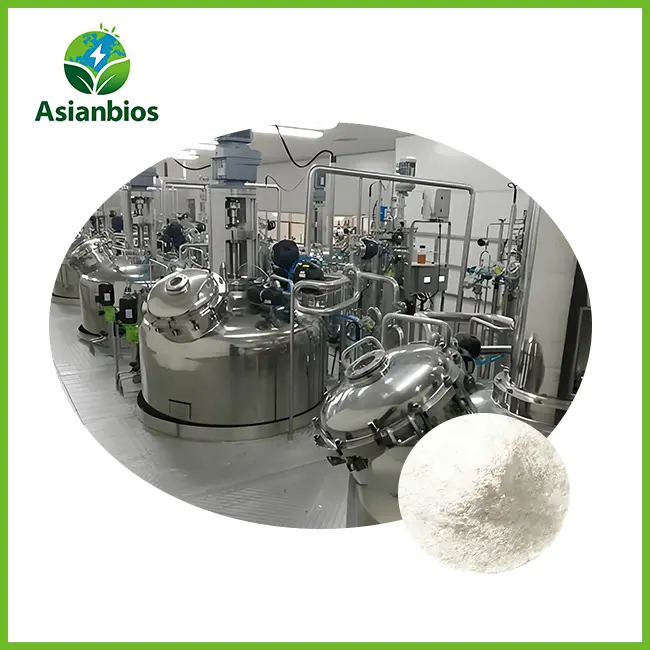
Aerobic fermentation for lysine requires strict pH control, generally between 6.8 and 7.2, along with high dissolved oxygen levels sustained over 48 to 60 hours. Modern facilities rely on online monitoring systems that track dissolved oxygen, pH, and tail gas composition in real time, paired with intelligent feeding mechanisms. This automation allows fermentation broth concentrations to reach 200–240 g/L, considered an industry benchmark for efficient lysine production technology.
| Parameter | Typical Range | Purpose |
|---|---|---|
| pH | 6.8 – 7.2 | Maintains microbial activity |
| Fermentation Duration | 48 – 60 hours | Balances yield and cost |
| Broth Concentration | 200 – 240 g/L | Benchmark for efficiency |
| Dissolved Oxygen | High, continuously monitored | Supports aerobic metabolism |
From Fermentation Broth to Finished Product: Extraction and Purification
Bacteria Separation and Ion Exchange
Once fermentation is complete, the broth must be separated from bacterial cells before purification begins. This is typically achieved through centrifugation or filtration, followed by ion exchange resin adsorption that selectively captures lysine molecules while allowing impurities to pass through. This step is essential to producing a clean, concentrated intermediate suitable for further processing, and it represents a core stage in any reliable lysine production technology workflow.
Elution, Concentration, and Crystallization
After adsorption, liquid ammonia elution releases the lysine from the resin, and the resulting solution undergoes concentration before conversion into hydrochloride form. Controlled crystallization then produces the familiar white powder recognized in commercial lysine hydrochloride. Each step demands careful temperature and timing control to avoid degradation or yield loss, reinforcing why standardized, well-documented lysine production technology delivers more consistent results than improvised small-batch methods.
Quality Standards for Finished Lysine Products
The finished product, whether feed-grade lysine hydrochloride or sulfate form, must meet strict purity and safety benchmarks before distribution. Feed-grade material typically requires a minimum purity of 98.5%, alongside compliance with heavy metal and microbial limits set by FAMI-QS and USP standards. These specifications ensure the product performs reliably across different downstream applications, from livestock feed to pharmaceutical-grade infusions.
| Product Grade | Purity Requirement | Common Standards |
|---|---|---|
| Feed-Grade Lysine HCl | ≥98.5% | FAMI-QS |
| Pharmaceutical-Grade | Higher purity, stricter controls | USP |
| Food-Grade Fortifier | Meets national food safety codes | ISO, FDA |
Why Fermentation-Based Lysine Production Technology Outperforms Alternatives?
Economic and Raw Material Advantages
Fermentation is a better way to turn sugar into acid than chemical synthesis or extraction-based methods because it uses waste products from farming as its main raw material. Since corn and wheat substitutes are easy to find in major producing countries, this keeps input costs fixed and supply lines stable. This economic benefit is often the deciding factor for manufacturers looking to keep costs down in the long term when choosing lysine production technology over older synthetic routes.
Industrial Maturity and Process Standardization
Lysine production through fermentation has gotten to the point where standardized processes control most of the world's output. Many of the world's production capacity is concentrated in facilities that have been running smoothly for more than fifteen years. This track record shows that huge production lines that can hold 100,000 tons are not experiments but tried and true methods. Companies that want to build new facilities or improve their processes should email plantex@asianbios.com to talk about technology packages that are made to fit their output goals and the needs of the area.
Resource Recycling and Sustainability
One benefit of fermentation that is often ignored is that it can be used to reuse resources in a closed loop. Bacterial waste that is left over after extraction can be turned into organic fertilizer or feed protein. This completes a cycle that starts with corn and gives nutrients back to farming. This circle method cuts down on waste and makes the environmental case for fermentation-based lysine production technology stronger than methods that make leftovers that are harder to handle.
Choosing a Reliable Lysine Production Technology Supplier
Quality Certifications and Compliance
Before committing to a supplier, buyers should verify certifications such as CGMP, FSSC22000, ISO9001, HALAL, KOSHER, Organic, and HACCP. These credentials confirm that production facilities meet internationally recognized safety and quality benchmarks. A trustworthy lysine production technology supplier will readily share documentation and testing data, giving customers confidence that products meet CE, FDA, and ISO requirements across different markets.
Customization and OEM/ODM Capabilities
Whether they want powders, pills, tablets, or chews, different buyers need different forms. A good provider should be able to handle both ODM and OEM production without lowering quality. Flexible manufacturing also means being able to change to meet the needs of different countries and brands. This lets companies get customized products on the market more quickly. This freedom is especially helpful for businesses that are going into new markets where rules affect how products look and what they say on the package.
Delivery Speed and Logistics Support
Delivery times often affect how reliable a supply is. Standard products with enough stock can usually be shipped within ten days of payment. Customized goods, on the other hand, take about twenty working days to make and send. Small orders that need to be filled quickly can go through faster routes and can be finished in as little as seven to ten days. Partnerships with big shipping companies help make sure that items get there on time and in good shape.
| Order Type | Typical Timeline |
|---|---|
| Standard Specification | Ships within 10 days |
| Customized Product | ~20 working days |
| Urgent Small Batch | 7–10 days |
Technical Support and Production Line Solutions
Beyond simply supplying finished lysine, a knowledgeable partner should offer formula guidance, experimental validation, and technical consultation for companies considering their own production lines. This level of support transforms a transactional relationship into a long-term collaboration, particularly valuable for businesses building manufacturing capacity in emerging markets where local technical expertise may still be developing.
Application Scenarios of Lysine Production Technology Across Industries
Feed Industry Applications
Feed grade lysine is one of the most extensively utilized supplements in poultry, animal and aquaculture nutrition. It enhances protein consumption efficiency, promotes healthy growth rates, increases immunological response and reduces the total cost of feeding by enabling lower protein diets to provide similar nutritional benefits. Today, it lies at the heart of contemporary animal husbandry globally – the technique for producing lysine.
Food and Nutritional Fortification
Lysine is a fortifier in food processing, added to flour, drinks and health food items to cure deficits of amino acids typical in cereal-based diets. Lysine fortification also benefits meat products, enhancing overall nutritional profiles without major changes to flavor or texture, supporting larger public health objectives in places with low dietary protein variety.
Pharmaceutical and Clinical Uses
Pharmaceuticals include amino acid infusions, nutritional injections, and supportive care for patients recuperating from surgery or sickness. These applications need higher purity requirements than feed or food applications. This is another reason why pharmaceutical-grade lysine manufacturing technique demands stronger quality control throughout the fermentation and purification phases.

Conclusion
Lysine production technology represents a mature, sustainable, and economically sound approach to meeting global demand for this essential amino acid. From precise fermentation control to efficient purification and diverse downstream applications, the process reflects decades of refinement across feed, food, and pharmaceutical sectors. Choosing an experienced lysine production technology supplier ensures consistent quality, regulatory compliance, and technical support throughout production. As industries continue prioritizing sustainability and cost efficiency, fermentation-based lysine will likely remain the preferred manufacturing route for years to come.
FAQ
1. What raw materials are commonly used in lysine production technology?
Corn or wheat starch hydrolyzed sugar serves as the primary carbon source, while ammonia or ammonium sulfate typically provides nitrogen, supporting a stable and cost-effective fermentation process.
2. How is lysine purified after fermentation?
The broth undergoes bacteria separation, ion exchange adsorption, liquid ammonia elution, concentration, and crystallization before becoming finished lysine hydrochloride or sulfate powder.
3. What should buyers look for when selecting a lysine production technology supplier?
Buyers should verify certifications like ISO9001 and FSSC22000, confirm OEM/ODM flexibility, and evaluate delivery timelines and technical support capabilities before committing to a long-term partnership.
Partner with Asianbios for Trusted Lysine Solutions
Businesses seeking a dependable partner for fermentation-based amino acid manufacturing are welcome to explore collaboration opportunities built on proven lysine production technology, flexible customization, and responsive technical guidance. Whether you need finished product supply, formulation support, or complete production line consultation, reaching out early allows for smoother planning and faster turnaround. Connect with the team at plantex@asianbios.com to discuss specifications, request samples, or begin a customized project tailored to your market needs.
References
1. Pfefferle, W., Möckel, B., Bathe, B., & Marx, A. "Biotechnological Manufacture of Lysine." Advances in Biochemical Engineering/Biotechnology.
2. Eggeling, L., & Bott, M. Handbook of Corynebacterium glutamicum. CRC Press.
3. Ikeda, M. "Amino Acid Production Processes." Advances in Biochemical Engineering/Biotechnology.
4. Leuchtenberger, W., Huthmacher, K., & Drauz, K. "Biotechnological Production of Amino Acids and Derivatives: Current Status and Prospects." Applied Microbiology and Biotechnology.
5. Kelle, R., Hermann, T., & Bathe, B. "L-Lysine Production." Handbook of Corynebacterium glutamicum.
6. Food and Agriculture Organization of the United Nations. "Amino Acids in Animal Nutrition: Technical Report."
About the Author

Asianbios
Our purpose is to forge a legacy of stewardship, advancing initiatives that honor and preserve the ecological integrity of our planet.

Send Inquiry
Related Industry Knowledge
- How Valine Production Technology Improves Amino Acid Yields
- Why Microbial Fermentation Matters in Production Technology Of Ergothioneine
- How Does a Compressor-type Low-Temperature Evaporator Work?
- Compound Amino Acids Supplement: Benefits and Applications Explained
- Kiwi Powder vs. Fresh Kiwi: Which is Better?
- Trehalose Production Technology: exploiting novel approaches
- Supercritical CO2 Extraction Machine: Leading Innovation
- Benefits of Freeze Dried Kiwi Fruit Powder
- What is Sleep Aid Capsule? Complete Beginner Guide
- Uses of Threonine Production Technology in Agriculture