How Tangerine Peel Extract Supports Digestive Health
Most people are acquainted with that sensation after a big meal – the bloating, the heaviness, the pain that sits in your stomach and refuses to go. They either take an over-the-counter antacid or wait it out. But for generations, the practitioners of traditional Chinese medicine have been turning to something much simpler: dried lemon peel. Chen pi, aged tangerine peel, is an ancient ingredient in digestive health formulas in the Chinese pharmacopeia, dating back more than a thousand years. Modern science is now catching up to that history, and hesperidin and other flavonoids have been identified as the primary bioactive ingredients responsible for the peel’s digestive effects.Tangerine peel extract standardized to fifty percent hesperidin by HPLC brings this historic constituent into the current nutraceutical environment in a form that is consistent, quantitative and simple to add into functional meals, nutritional supplements and traditional herbal remedies. In this article we will discuss how tangerine peel extract helps digestive function, why the aging and extraction process is crucial to quality, and what to look for in a tangerine peel extract source.
What Makes Tangerine Peel Extract a Distinctive Botanical?
The Tradition of Aged Citrus Peel
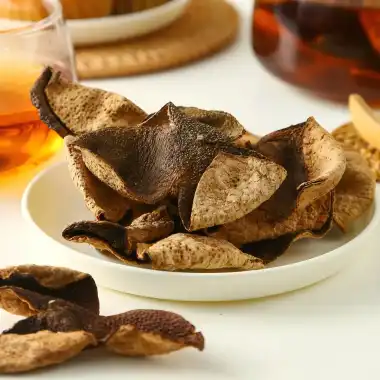
In Chinese medicine, fresh citrus peel and old citrus peel are treated as two completely separate substances, having differing medicinal uses. We utilize fresh tangerine peel mainly for its fragrant and qi-moving qualities. Peel that has been aged for three years or more has undergone chemical changes that push its profile toward deeper digestive and respiratory support. This aging process is not only a cultural custom, there is a biological foundation. As the moisture level falls, flavonoid chemicals like hesperidin become more concentrated, while volatile oils slowly oxidize and polymerize during storage. The outcome is a peel with a more complex and richer bioactive profile than fresh material. Asianbios receives their tangerine peel extract from Xinhui, Guangdong, which is said to be the best producing area for aged citrus peel, with peels aged for at least three years. This source of raw material guarantees that the extract procedure produces a raw material with the high flavonoid content and stable volatile oil profile characteristic of premium-grade chen pi.
Hesperidin as the Primary Active Marker
Hesperidin is a flavanone glycoside widely present in citrus peels and is designated as the standardization marker for tangerine peel extract with a specification of fifty percent by HPLC. The study revealed that hesperidin was the key contributor to the extract’s digestive advantages, such as modulation of gastrointestinal motility, support of mucosal integrity, and anti-inflammatory actions on the gut lining (Manthey et al., 2001). Published research has shown that hesperidin possesses vascular protective and antioxidant effects, as well as digestive benefits, making tangerine peel extract a multi-functional substance with applications in the cardiovascular and metabolic health categories. With digestive health formulas, however, the fifty-percent hesperidin standardization gives a concentrated, consistent dosage of the chemical most closely related with the extract’s gastrointestinal benefits. The most significant single quality control when assessing a tangerine peel extract provider is to validate hesperidin concentration by HPLC documentation.
Beyond Hesperidin — The Full Phytochemical Profile
Hesperidin was used as the major marker for standardization; nevertheless, tangerine peel extract has a wider array of bioactive chemicals that contribute to the total effectiveness. Hesperidin is also found in significant amounts, as well as nobiletin, a polymethoxylated flavone that is known to affect lipid metabolism and anti-inflammatory pathways. Synephrine is a naturally occurring alkaloid that has modest prokinetic actions to enhance gastrointestinal motility. Volatile oils, particularly limonene, the main terpene in citrus peel, contribute to the fragrant flavor of traditional chen pi treatments and may aid in digestive comfort via their effects on stomach function. All these various substances synergize to generate a profile that cannot be achieved by a single molecule element. This is why whole-plant tangerine peel extract from a reputable provider is preferable over isolated hesperidin for formulations aiming for traditional digestive assistance with current quality requirements.
| Compound | Class | Primary Role in Digestive Health |
|---|---|---|
| Hesperidin | Flavanone glycoside | Mucosal support, anti-inflammatory |
| Nobiletin | Polymethoxylated flavone | Lipid modulation, gut inflammation |
| Synephrine | Alkaloid | Mild prokinetic, motility support |
| Limonene | Monoterpene | Aromatic quality, gastric comfort |
How Tangerine Peel Extract Supports Digestive Function
Stimulating Digestive Enzyme Secretion
One of the most well-documented ways tangerine peel extract helps digestion is by stimulating the production of digestive enzymes from the stomach and pancreas. For a long time, weak appetite and sluggish digestion have been treated with traditional formulations using old citrus peel, and current pharmacological research has identified flavonoids, especially hesperidin and nobiletin, as the molecules behind this action. These flavonoids interact with gastrointestinal epithelial cells and induce release of enzymes such as pepsin, lipase and amylase that break down proteins, lipids and carbs accordingly. The practical effect is more effective digestion of meals, less post-prandial heaviness and greater absorption of nutrients over time. For gut health supplement manufacturers, tangerine peel extract offers a mechanism of action backed by traditional usage and modern-day research, providing the end product a legitimate basis for consumer-facing claims related to healthy digestion support.
Promoting Healthy Gastrointestinal Motility
A common cause of customer complaints when gastrointestinal motility, the coordinated muscle contractions that propel food through the digestive system, is excessively rapid (producing discomfort and urgency) # Digestive Health with Tangerine Peel Extract The peel you throw into the compost bin after eating a mandarin orange is more biologically active than most people believe. For almost 700 years, dried citrus peel (chen pi) has been the first-line treatment for bloating, slow digestion, and phlegm buildup in traditional Chinese medicine. Modern analytical chemistry has started to explain why. The peel of Citrus reticulata especially when aged for many years, concentrates the flavonoids and volatile oils that interact with the gastrointestinal system in detectable ways.Tangerine peel extract is a standardized botanical ingredient prepared by spray drying old Xinhui Guangdong peels that provides these bioactives in a consistent food-grade powder form suited for use in nutritional supplements, functional drinks and traditional herbal formulations. This article covers the digestive effects of tangerine peel extract, how the quality of manufacturing impacts the strength of the extract, and what to look for in a tangerine peel extract provider when developing a gut-health product line.
The Ancient Digestive Remedy Hiding in Your Fruit Bowl
Why Citrus Peel Has Earned Its Place in Digestive Wellness?
Go inside any traditional Chinese medicine pharmacy, and you’ll find old tangerine peel piled high beside ginseng and goji berries. Its presence in traditional formulations is not only ornamental. chen pi has been utilized for generations by practitioners to explicitly treat symptoms that correspond to current diagnoses: functional dyspepsia, bloating after meals, impaired stomach motility, and excess mucus in the respiratory and digestive systems. Now, however, we can identify the molecules responsible. Tangerine peel extract standardized to fifty percent hesperidin by HPLC concentrates the major flavonoid glycoside that researchers have associated with digestive enzyme activation and gastrointestinal smooth muscle regulation (Garg et al., 2001). When a customer opens a pill or stirs a sachet of functional food with this extract, they are getting the same class of chemicals that traditional practitioners recommended as dried peel decoctions, but at a calibrated, repeatable amount that the decoction format could never provide. It’s this bridge between ancient knowledge and contemporary standards that makes tangerine peel extract so enticing for businesses manufacturing digestive health products.
The Gap between Fresh Peel and Standardized Extract
Fresh tangerine peel includes hesperidin, nobiletin, tangeretin, limonene and dozens of additional volatile and non-volatile chemicals. But the concentration varies greatly depending on fruit type, maturity at harvest, growing circumstances and post-harvest management. A fresh peel eaten at the table gives an unmeasured dosage of these chemicals, whereas a standardized tangerine peel extract gives a proven amount. Asianbios uses entirely raw material from Xinhui, Guangdong, China’s most famous citrus growing area, using peels aged at least three years. This is not a random aging process. Enzymatic and oxidative changes occurring during long-term storage have been shown to boost flavonoid content and stabilize volatile chemicals that would otherwise disintegrate during extraction (Li et al., 2019). The outcome is a raw material with a larger and more constant bioactive content than fresh peel, the basis for a standardized extract that works consistently from batch to batch. This raw-material quality pipeline is the first and most important step for any firm that is considering a tangerine peel extract provider.
What Happens Inside Your Gut When You Take Tangerine Peel Extract?
Hesperidin and Digestive Enzyme Activation
Tangerine peel extract mostly helps digestion by increasing the release of digestive enzymes. The main flavonoid in citrus peel is hesperidin which has been shown in preclinical tests to boost the activities of lipase and amylase in the gastrointestinal lumen therefore assisting the breakdown of dietary fats and carbohydrates into absorbable units (Wilmsen et al., 2005). This enzyme-boosting action gets to a fundamental problem – not just covering up symptoms – for those who feel weighed down after eating or have slow digestion. Asianbios’ tangerine peel extract is 50% hesperidin specification, which means that each gram of powder has 500 mg of this important flavonoid. That’s a lot more than you’d get from a casual serving of citrus fruit or fresh peel. This level of uniformity enables the formulator to accurately compute the exact levels of hesperidin per serving that satisfy product effectiveness claims and label accuracy standards in numerous regulatory countries.
Gastrointestinal Motility and Bloating Relief
Beyond enzyme stimulation, tangerine peel extract has also been examined for its impact on gastrointestinal motility — the coordinated muscle contractions that propel food through the digestive system. Bloating, a prevalent symptom leading consumers to buy digestive health supplements, impacts an estimated 15–30% of individuals in the West, with delayed gastric emptying and diminished intestinal motility being the most prevalent causes (Talley & Ford, 2015). Hesperidin and the polymethoxyflavones nobiletin and tangeretin in tangerine peel have shown prokinetic effects in animal models, enhancing gastric emptying and decreasing gas build-up in the intestinal system. Though human clinical data on the isolated extract are scarce, the confluence of traditional usage, preclinical research, and mechanistic plausibility position tangerine peel extract as a well-placed constituent for digestive comfort formulations. The historic usage of chen pi in TCM remedies particularly for bloating and food stagnation lends centuries of empirical backing to the developing scientific facts.
Respiratory and Mucosal Connections to Digestive Wellness
An often-overlooked dimension of tangerine peel extract's traditional use profile involves the respiratory system. In classical Chinese medicine, chen pi is classified as an herb that "regulates qi and dries dampness," addressing both digestive sluggishness and excessive mucus production in the lungs and airways. Modern research has partially explained this dual action through the observation that hesperidin and other citrus flavonoids modulate mucin secretion across multiple mucosal surfaces, including the gastrointestinal and respiratory tracts (Lee et al., 2010). For brands developing holistic wellness products that address both gut and respiratory comfort, tangerine peel extract offers a single botanical that serves both functions. This versatility broadens the potential product applications beyond purely digestive formulations, supporting inclusion in immune wellness blends, seasonal comfort supplements, and comprehensive daily health products.
| Digestive Mechanism | Key Compound | Observed Effect |
|---|---|---|
| Enzyme stimulation | Hesperidin | Enhanced lipase and amylase activity |
| Motility support | Nobiletin, tangeretin | Accelerated gastric emptying |
| Mucosal regulation | Hesperidin, limonene | Balanced mucin secretion |
| Antioxidant protection | Total flavonoid complex | Reduced oxidative stress in GI tissue |
Understanding the science behind tangerine peel extract is the foundation, but translating that ingredient knowledge into a market-ready product requires a supplier who delivers consistent quality at every stage of production. For sample availability, technical data sheets, or customized formulation support, the team at plantex@asianbios.com is ready to assist.
Not All Peels Are Equal — How Production Determines Potency
The Three-Year Aging Process and Why It Matters
The single most distinctive feature of Asianbios's tangerine peel extract is the raw material: peels from Xinhui, Guangdong, aged for a minimum of three years before extraction. This aging period is deeply rooted in traditional practice—chen pi literally means "aged peel"—and it has a biochemical basis. During prolonged storage, enzymatic oxidation and slow chemical reactions transform the flavonoid profile of the peel. Hesperidin concentrations increase. Volatile oils stabilize. Bitter compounds mellow. The result is a raw material with a richer, more concentrated bioactive profile than fresh peel, and one that traditional practitioners have long considered therapeutically superior. For a tangerine peel extract supplier, committing to three-year aged raw material means accepting higher raw material costs and longer inventory cycles. It also means delivering an extract with a potency story that competitors using fresh or one-year-old peels cannot match. This sourcing decision reflects a quality philosophy that prioritizes ingredient performance over cost minimization.
Spray-Drying Technology and Bioactive Preservation
The extraction and drying method determines how much of the aged peel's bioactive content survives into the final powder. Asianbios employs a controlled spray-drying process that begins with careful preprocessing—filtration and concentration of the raw material to remove impurities while preserving dynamic compounds. During the core drying phase, high-pressure atomization creates microscopic droplets that contact heated air at 150–220°C, achieving instantaneous moisture evaporation that forms stable powder particles while protecting heat-sensitive flavonoids and volatile oils. Post-processing includes rapid cooling to prevent agglomeration, precision sieving for uniform particle size (100% through 80 mesh), and comprehensive quality testing. The finished product is a light yellow to yellow-brown powder with a bulk density of 35–50 g/100 ml, excellent water solubility, and a shelf life of twenty-four months under recommended storage conditions. When evaluating a tangerine peel extract supplier, the specific drying technology and its process parameters are direct indicators of how much bioactive content reaches the consumer.
Quality Testing and Batch Verification
Every batch of tangerine peel extract must pass a multi-parameter quality assessment before release. The primary specification—fifty percent hesperidin by HPLC—is verified through high-performance liquid chromatography using validated methods. Beyond hesperidin, the quality profile includes heavy metals testing (total below 10 ppm, arsenic below 2 ppm, lead below 2 ppm, cadmium below 1 ppm, mercury below 0.1 ppm), microbiological analysis (total plate count below 10,000 cfu/g, yeast and mold below 1,000 cfu/g), and moisture content verification. Asianbios provides a complete Certificate of Analysis with every shipment, documenting specific measured values for each parameter. This batch-level documentation is essential for brands selling into regulated markets and provides the evidentiary foundation for any efficacy claims built around the extract's hesperidin content.
Matching Tangerine Peel Extract to Your Product Category
Dietary Supplements and Capsules
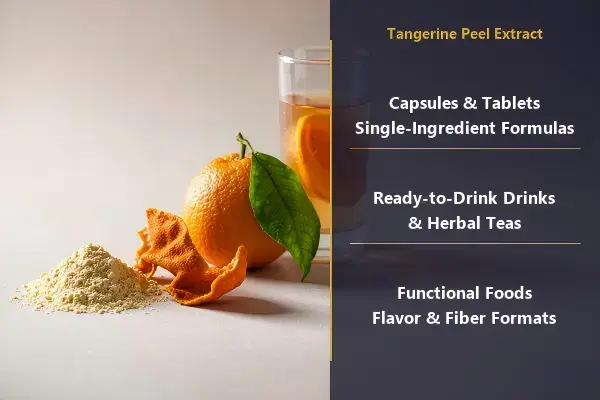
For brands entering the digestive health supplement space, tangerine peel extract in capsule or tablet form offers a clean-label, single-ingredient option with a clear active marker for label claims. The standardized fifty-percent hesperidin content allows precise dosing per capsule, and the powder's excellent flowability and compressibility make it compatible with both encapsulation and tablet compression equipment. Asianbios supports OEM/ODM production in these formats with minimum orders starting at one kilogram, enabling brands to evaluate the ingredient in their target dosage form before committing to larger production runs. Custom specifications—adjusted hesperidin concentrations, modified particle sizes, or blended formulations with complementary botanicals like ginger or licorice—follow a production cycle of twenty to thirty working days.
Functional Beverages and Herbal Teas
The growing consumer preference for "beauty from within" and "gut health in a cup" trends has created strong demand for soluble botanical ingredients in ready-to-drink and instant beverage formats. Tangerine peel extract's water solubility makes it straightforward to incorporate into functional beverage concentrates, instant tea blends, and effervescent formulations. The light, citrusy character of the extract complements other botanical flavors without requiring heavy masking agents. For tea companies, tangerine peel extract adds both flavor complexity and a measurable hesperidin content that can be highlighted on the packaging—a functional claim that distinguishes a product from conventional herbal teas that rely solely on tradition for their appeal.
Functional Foods and Flavor-Forward Applications
Beyond capsules and beverages, tangerine peel extract can be integrated into functional foods including health bars, confectionery, yogurt inclusions, and savory sauces where its citrus notes enhance flavor while its hesperidin content delivers a digestive health benefit. The food-grade classification of the extract, combined with its clean heavy-metal and microbiological profile, makes it suitable for incorporation into products that must meet the strictest food safety standards. A reliable tangerine peel extract supplier who can provide flexible packaging formats—from one-kilogram sample bags to twenty-five-kilogram fiber drums—accommodates the varied production scales that functional food manufacturers require.
| Application | Format | Key Advantage |
|---|---|---|
| Dietary supplement | Capsule, tablet | Precise hesperidin dosing per unit |
| Functional beverage | Instant powder, concentrate | Water solubility, citrus flavor |
| Herbal tea blend | Loose leaf, tea bag | Traditional familiarity, functional claim |
| Functional food | Bar, confectionery, sauce | Flavor enhancement plus digestive benefit |

Conclusion
Tangerine peel extract, standardized to fifty percent hesperidin and sourced from three-year aged Xinhui Guangdong peels, supports digestive health through enzyme stimulation, gastrointestinal motility enhancement, and mucosal regulation. Its water solubility, clean-label profile, and versatile flavor make it suitable for supplements, beverages, teas, and functional foods. Choosing a tangerine peel extract supplier with authentic sourcing, controlled spray-drying technology, and comprehensive batch documentation ensures consistent potency and regulatory compliance across product lines and global markets.
FAQ
1. What hesperidin level should I expect from a quality tangerine peel extract?
Standardized tangerine peel extract should contain fifty percent hesperidin as verified by HPLC analysis. This specification ensures consistent bioactive content across batches and supports reliable label claims in dietary supplement and functional food products. Always request a Certificate of Analysis with each shipment.
2. How does the three-year aging process affect the extract's quality?
Aging concentrates hesperidin, stabilizes volatile oils, and mellows bitter compounds in the peel, producing a raw material with a richer bioactive profile than fresh peel. This traditional practice has a biochemical basis and contributes to the superior potency of the finished tangerine peel extract.
3. What certifications should a tangerine peel extract supplier hold?
Essential certifications include cGMP, FSSC 22000, ISO 9001, and HACCP for manufacturing quality, with HALAL, KOSHER, and Organic certifications expanding market access. Asianbios holds all of these certifications and provides documentation with every shipment.
Partner with Asianbios for Premium Tangerine Peel Extract
Ready to build a digestive health product line around a proven botanical ingredient? Asianbios delivers food-grade tangerine peel extract standardized to fifty percent hesperidin, sourced from three-year aged Xinhui Guangdong peels and manufactured under cGMP, FSSC 22000, ISO 9001, HACCP, HALAL, KOSHER, and Organic certified conditions. With minimum orders from one kilogram, stock delivery within ten days, and full OEM/ODM support for supplements, beverages, teas, and functional foods, we provide the ingredient quality and technical partnership your brand needs. Contact us at plantex@asianbios.com to request samples, discuss customized specifications, or explore how our tangerine peel extract can strengthen your next product launch.
References
1. Garg, A., Garg, S., Zaneveld, L. J. D., & Singla, A. K. (2001). "Chemistry and Pharmacology of the Citrus Bioflavonoid Hesperidin." Phytotherapy Research, 15(8), 655–669.
2. Li, X., Gao, W., Huang, L., & Zhang, J. (2019). "Chemical Profile and Biological Activities of Citrus Peel during Aging." Food Chemistry, 286, 338–346.
3. Wilmsen, P. K., Spada, D. S., & Salvador, M. (2005). "Antioxidant Activity of the Flavonoid Hesperidin." Journal of Agricultural and Food Chemistry, 53(12), 4757–4761.
4. Talley, N. J., & Ford, A. C. (2015). "Functional Dyspepsia." New England Journal of Medicine, 373(19), 1853–1863.
5. Lee, J. H., Lee, S. H., Kim, Y. S., & Jeong, C. S. (2010). "Protective Effects of Neohesperidin and Poncirin on Gastric Mucosa in Rats." Biomolecules and Therapeutics, 18(4), 414–420.
6. Lv, X., Zhao, S., Ning, Z., Zeng, H., Shu, Y., Tao, O., & Liu, Y. (2015). "Citrus Fruits as a Treasure Trove of Active Natural Metabolites That Potentially Provide Benefits for Human Health." Chemistry Central Journal, 9(1), 68.
About the Author

Asianbios
Our purpose is to forge a legacy of stewardship, advancing initiatives that honor and preserve the ecological integrity of our planet.

Send Inquiry
You may like