How to Optimize the Erythritol Production Process for Scale
To improve the erythritol production process for scale, start by mapping every stage from glucose preparation to packing, then fix the weakest stage first. Most plants lose yield in fermentation, so strain stability, oxygen transfer, and osmotic stress need early attention. Next, match purification, crystallization, and drying capacity to the broth volume, and prove each step in pilot runs before adding tank volume. Finally, track yield, recovery, energy use, and quality for every batch. I wrote this guide for plant leaders, technical directors, and buyers who want a stable, cost-controlled line. At Asianbios, we support that work with fermentation-based technology and samples.
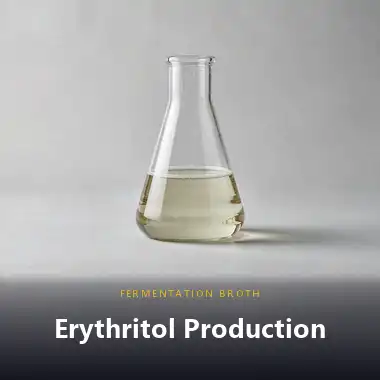
Map and Stabilize the Erythritol Production Process Before Scaling
Scale-up problems usually start upstream. I suggest fixing flow, strain, and fermentation control before sizing any downstream equipment.
Draw the Full Process Flow First
The erythritol manufacturing process runs from glucose preparation through fermentation, clarification, purification, concentration, crystallization, drying, milling, and packing. Each stage feeds the next, so one change shifts the load on every other stage. I recommend drawing a flow diagram with input specifications, operating ranges, quality checkpoints, and a material balance for each step. The drawing exposes hidden limits, such as an evaporator that cannot keep pace with a larger fermenter. It also gives engineering and finance teams one document for investment decisions. Table 1 shows what to define at each stage.
| Stage | What to define | What to check |
|---|---|---|
| Glucose preparation | Sugar profile, moisture, ash, traceability | Incoming test for every lot |
| Fermentation | pH, temperature, dissolved oxygen, feed rate, endpoint | Titer, conversion, contamination |
| Purification | Cell removal, decolorization, ion exchange, membranes | Recovery, color, residual sugar |
| Crystallization and drying | Supersaturation, cooling rate, seeding, moisture | Purity, particle size, moisture |
| Packing | Moisture-barrier liner, lot coding | Seal integrity, label match |
With this table in hand, every team measures the same things, and the erythritol production process becomes easier to audit later.
Find Fermentation Bottlenecks Early
In any erythritol production process, fermentation sets the pace for the whole plant. Producers use osmophilic yeasts, such as Moniliella pollinis and engineered Yarrowia lipolytica, which convert glucose to erythritol under high sugar concentrations. Reviews, including one in Applied Microbiology and Biotechnology (2010), cover these yeasts and their fermentation conditions. Glycerol, ribitol, and arabitol appear as common by-products. Substrate-to-product conversion typically falls near 40–50%, and strong strains can reach 150–200 g/L with productivity of 1.5–2.5 g/L/h. Laboratory flasks hide problems that large tanks expose, including weak oxygen transfer, heat buildup, foam, and osmotic shock. I advise testing strain stability over repeated transfers and tracking dissolved oxygen, pH, and feed rate in real time.
Plan Localization Alongside the Process
At Asianbios, we describe successful technology application as 30% process and 70% localization. A well-run erythritol production process also needs strong local execution: construction that follows legal codes, a trained operating team, a steady supply of starch-derived glucose, and a sales team ready for sugar-free markets. This technology fits regions with plentiful, low-cost starch, mature fermentation infrastructure, and strong separation and purification industries, such as China and the United States. We provide standardized technical packages with continuous support, plus OEM/ODM options. When I review a project, I ask who will run the plant on day 100, so training and management capacity belong in the schedule from the start.
Improve the Downstream Steps of the Erythritol Production Process
After a stable fermentation, purification and crystallization decide final purity and cost.
Purify and Concentrate the Broth
This stage of the production technology of erythritol starts with cell removal. Then we polish the broth with filtration, decolorization, ion exchange, and membrane steps, depending on solids loading and target grade. Some plants add simulated moving bed chromatography to separate erythritol from polyol by-products. Too much treatment adds resin or membrane cost and product loss. Too little leaves color, off-taste, or impurities that disturb crystallization. Evaporation needs tight control of temperature, vacuum, residence time, and viscosity to prevent scaling on heating surfaces. I track recovery rate, residual sugar, filtration throughput, energy use, and wastewater volume together, because a gain in one number can hide a loss in another.
Control Crystallization and Drying
Within the erythritol production process, crystallization sets final purity, particle size, and solubility. Erythritol crystallizes quickly, so uncontrolled cooling can cause sudden nucleation, fines, and fouling on heat-exchange surfaces. Multi-stage cooling crystallizers with controlled seeding and inline refractometer readings reduce that risk. Centrifuge washing should remove mother liquor without dissolving crystals, since dissolved crystals lower recovery. Drying, milling, and sieving then fix moisture, caking, and dust behavior. Commercial targets often include purity above 99.5% and moisture below 0.2%. The finished white powder goes into 25 kg barrels, and moisture-barrier packing protects it during humid sea freight.
Build Quality Control Into Every Stage
Quality control belongs in every part of the erythritol production process, not only at final release. We test incoming glucose, broth, concentrate, crystals, and packed powder, and we keep lot traceability from start to finish. HACCP principles cover contamination, foreign material, and sanitation. Standards such as the Food Chemicals Codex, JECFA, and GB 26404 guide the specifications. Table 2 lists common checks and typical targets.
| Parameter | Typical target | Common method |
|---|---|---|
| Assay purity | Above 99.5% | HPLC with RI detector |
| Moisture | Below 0.2% | Karl Fischer titration |
| Glycerol, ribitol, arabitol | Typically below 0.1% | HPLC with RI detector |
| Yeast, mold, plate count | Below 10 CFU/g | USP <61> and <62> |
| Particle size | Set by customer grade | Laser diffraction or sieve test |
These checks give buyers a clear release standard for every batch.
Reduce Cost and Scale the Erythritol Production Process Step by Step
With the line stable, cost and capacity come next.
Cut Cost per Kilogram Through Yield and Energy
Within the erythritol production process, glucose is only one line on the cost sheet. Nutrients, steam, power, water, wastewater treatment, filter media, drying, packaging, testing, maintenance, and depreciation all add to cost per kilogram. Higher fermentation yield reduces the volume that purification and evaporation handle, and better crystal separation lowers drying demand. Heat recovery, multi-effect evaporation, efficient vacuum systems, insulation, and water reuse cut utility use without changing quality. I recommend measuring glucose conversion, titer, recovery, cycle time, and energy per kilogram before buying new equipment, because those numbers show where each dollar returns the most.
Move From Pilot Plant to Commercial Output
A controlled scale-up moves from laboratory trials to pilot fermentation, demonstration batches, and repeated commercial runs. At each step, confirm mixing, oxygen transfer, heat removal, foam behavior, filtration capacity, evaporation, crystallization, and drying. Never add fermenter volume before you check downstream throughput and storage. Set acceptance criteria for yield, purity, moisture, color, particle size, microbiology, recovery, energy use, and cycle time. Electronic batch records and statistical process control catch drift early. If you plan a self-built line, ask any technology provider for P&IDs, plant layout, energy tables, consumption quotas, and training plans, so the transfer of the erythritol production process does not rely on guesswork.
Compare Production Methods and Pick a Model
Choose the route for your erythritol production process before you size equipment. Chemical synthesis from dialdehyde starch proved inefficient and hazardous, which is why industry moved to microbial fermentation of glucose from starch hydrolysate. Fermentation offers a clear pathway and good selectivity. Xylitol is different, as the producer hydrogenates xylose, while stevia is from extraction and purification of the plant, so the raw materials, purification steps, and sensory profiles are different . Buyers also segregate fermentation-derived, non-GMO and organic products, and each claim requires documentation. Erythritol has about 0.2 kcal/g calories and a cooling effect due to its negative heat of solution, which makes it a good candidate for sugar-free beverages, candy and baked goods. Don’t just compare unit price – compare total cost and pilot results.
Source, Sustain, and Measure the Erythritol Production Process
Good results continue after startup. Supplier choices, supply planning, and KPIs keep them steady.
Evaluate Bulk Suppliers and Technology Partners
Before asking for quotes, define grade, purity, moisture, particle size, packaging, yearly volume, destination and certifications. Then compare suppliers on their in-house control of erythritol production, capacity, back-up plans, traceability, audit readiness and complaint handling. Also review incoterms, freight, lead time and payment terms. Erythritol is FDA GRAS in the US, E 968 in the EU and it is permitted in candy and beverages in China (GB 2760). Research since 2023, including Nature Medicine (2023), has linked blood erythritol to cardiovascular events. The science is still developing, so exporters should keep labels and customer notices current.
Build Sustainable Supply Resilience
A resilient erythritol production process depends on steady inputs and low waste. Qualify more than one glucose source, test incoming lots, and audit suppliers. Track energy, water, wastewater load, solid waste, and product loss per kilogram of finished powder. Heat recovery, higher fermentation yield, and lower drying demand give measurable savings. Add capacity in stages, such as fermenters, crystallizers, dryers, and packing lines, as demand forecasts firm up. Finished product ships in 25 kg barrels by express, air, or sea, so match the mode to urgency and cost, and keep safety stock near your customers.
Track KPIs That Prove Improvement
Choose a short KPI list for the erythritol production process and review it every batch. Trends across batches point to root causes and show whether a change lasts. Table 3 groups the metrics I use most.
| Area | KPI | What it shows |
|---|---|---|
| Fermentation | Titer, productivity, cycle time, contamination rate | Strain and control health |
| Downstream | Filtration throughput, recovery, crystallization yield | Product loss |
| Quality | Purity, moisture, first-pass batch acceptance | Release readiness |
| Commercial | Cost per kilogram, on-time delivery, complaint rate | Customer impact |
| Resources | Water use, wastewater load, energy per kilogram | Utility control |
Small, steady gains in these numbers add up faster than one large equipment purchase.

Conclusion
Scaling the erythritol production process depends on matching every stage to the next. A mapped flow sheet, a stable high-sugar fermentation, and downstream steps sized for broth volume form the foundation. Purification must balance recovery against cost, while controlled seeding and cooling protect purity and particle size, and testing at each stage supports targets such as 99.5% purity and moisture below 0.2%. Cost falls when higher yield reduces downstream load and heat recovery cuts utility use. Pilot and demonstration batches with clear acceptance criteria confirm readiness before capacity grows. Supplier review, supply planning, and KPIs then keep results steady. Local execution carries as much weight as process design, which the 30% process and 70% localization view reflects.
FAQ
1. What yield should I expect from the erythritol production process?
Published reviews report glucose-to-erythritol conversion of about 40–50%, and strong strains often reach 150–200 g/L in fed-batch runs. Your own numbers depend on strain stability, oxygen transfer, and control of osmotic stress. I recommend confirming yield in pilot trials before you set commercial targets, because flask results rarely carry over to large tanks.
2. Why does erythritol crystallization cause fouling?
Erythritol crystallizes fast. Poor temperature gradients can lead to fouling and excess fines from sudden nucleation on heat-exchange surfaces. Risk is mitigated by multi-stage cooling crystallizers, controlled seeding, and inline refractometer readings of supersaturation.Keep wash steps gentle, so crystals do not dissolve and lower recovery.
3. Which tests should I request from a bulk erythritol supplier?
Request assay purity by HPLC with an RI detector, moisture by Karl Fischer titration, total plate count, and yeast and mold counts under USP <61> and <62>. Ask for particle size data, certificates of analysis, technical data sheets, and HACCP documentation. Match the specification to your application before you compare quotes.
Request an Erythritol Production Process Consultation From Asianbios
Asianbios supports plant owners who want a stable erythritol production process, from sample testing to standardized technical packages and ongoing support. We offer OEM/ODM service, samples from 1 kg, and 25 kg barrel packing. Our certificates include CGMP, FSSC 22000, ISO 9001, HALAL, KOSHER, Organic, and HACCP. If you are comparing an erythritol production process supplier, email plantex@asianbios.com with your target capacity and grade. For details, please refer to the website: asianbios.com.
References
- Applied Microbiology and Biotechnology (2010), Biotechnological production of erythritol and its applications.
- Applied Microbiology and Biotechnology (2018), Erythritol as sweetener—wherefrom and whereto?
- Critical Reviews in Biotechnology (2018), Recent advances in biological production of erythritol.
- Current Opinion in Biotechnology (2016), Recent advances in biological production of sugar alcohols.
- Nature Medicine (2023), The artificial sweetener erythritol and cardiovascular event risk.
- Nutrients (2023), Erythritol: An In-Depth Discussion of Its Potential to Be a Beneficial Dietary Component.
About the Author

Asianbios
Our purpose is to forge a legacy of stewardship, advancing initiatives that honor and preserve the ecological integrity of our planet.

Send Inquiry
Related Industry Knowledge
- How to Use anti-inflammatory peptides powder in Soothing Skincare
- Elastic Peptide: How It Supports Skin Elasticity and Firmness
- The Power of Natural Blueberry Extract in Cosmetics
- Protease Production Technology Process: Complete Manufacturing Guide
- Do Sleep Aid Jelly Work? 5 Things to Know
- Understanding Amylases: The Essential Enzymes Transforming Industries
- The difference between air-dried and freeze-dried kale powders
- Best Sleep Aid Jelly for Adults in 2026
- Best Tart Cherry Powder: A Complete Guide to Nutrition, Benefits, and Uses
- Uses of Sleep Aid Capsule for Insomnia Relief Routine