Protease Production Technology Process: Complete Manufacturing Guide
The global market for proteases, a type of enzyme that breaks down proteins into peptides and amino acids, is worth more than $2 billion and is growing at a CAGR of over 6%. They are one of the most important biocatalysts used in modern industry. This huge growth is due to the fact that proteases are being used more and more in many fields, such as medicines, food processing, soaps, and leather production. Advanced protease production technology is key to meeting this growing demand because it lets manufacturers make enzymes that are consistently active, very pure, and cost-effective at large scales. This detailed guide goes over the whole process of making state-of-the-art protease production technology, from creating the first strain to formulating the final product. It gives professionals in the field the important information they need to set up or improve their own enzyme production systems.

Understanding the Biological and Industrial Foundations
The Science Behind Protease Enzymes
Proteases, which are also called peptidases or proteinases, are hydrolytic enzymes that break down peptide bonds in proteins and peptides. They are very important in many biological and economic processes. These enzymes are released outside of cells in microbial systems, which makes them perfect for fermentation-based large-scale production. Asianbios created a way to make proteases that uses carefully chosen and genetically improved microbe strains that have been modified to make enzymes with specific qualities that can be used in a number of different industries. The biological basis for our protease production technology makes sure that the enzymes it makes can work well in a lot of different situations, from the alkaline ones found in laundry detergents to the acidic ones found in digestive supplements.
Industrial Significance and Market Applications
In many different businesses, proteases are very important because they make up about 60% of the enzyme market worldwide and are used in many different ways. Advanced protease production technology makes proteases that are used in the food industry to make cheese, bake, soften meat, and break down proteins. These proteases improve the quality and speed of food processing processes. A lot of detergents use alkaline proteases to get rid of protein-based stains, and the leather industry does the same thing for dehairing and bating. In the pharmaceutical industry, proteases are used to make digestive enzymes, help wounds heal, and make peptide drugs. Because it can be used in so many situations, protease production technology is now an important part of both biotechnology and commercial enzyme production.
Key Considerations in Implementation
There are a few important things that need to be carefully thought through when using protease production technology to get the best results and make the business work. It is very important to choose the right microbe types because different organisms make proteases that are unstable at different pH levels, can handle different temperatures, and only work on certain substrates. Temperature, pH, aeration rates, and the types of nutrients used during fermentation all have a big effect on the yield and quality of enzymes. Which downstream processing methods to use depend on how pure and what shape the finished output should have. Scalability of protease production technology is also important for moving from small-scale growth in the lab to full-scale production in industry, making sure that the process can meet market demand effectively.
Upstream Processing: Building the Foundation for Success
Strain Selection and Genetic Optimization
Carefully choosing and improving high-yield bacteria types is the first step in making protease production technology work. Through years of research and development, Asianbios has built up a large library of protease-producing strains, with a focus on organisms that can produce enzymes that work very well. To get our microbes to make more proteases, our scientists use cutting-edge genetic engineering methods like directed evolution, metabolic pathway engineering, and gene knockout tactics. To make alkaline protease, we have improved Bacillus subtilis strains so that they can consistently produce enzyme activities above 250,000 U/mL. Our strains of Aspergillus niger make enzymes that are more than 200,000 U/mL active for acidic proteases. This strain tuning is a key part of what makes our protease production technology unique. It lets us give enzymes with better performance traits that meet the strictest industry needs.
Seed Culture Development and Scale-Up
The seed culture preparation is an important part of the protease production process that has a direct effect on how well the fermentation process goes next. Asianbios uses a multi-stage seed culture growth method to make sure that the quality and stability of our inoculum are the best they can be. The process starts with activating the chosen strain from our master cell bank. This is followed by transfers through culture amounts that get bigger and bigger. In our protease production technology, we carefully check each step of this seed's growth for cell density, survival, and the ability to make protease. This careful method makes sure that the seed culture is in its best physiological state when it is added to the output fermentor. This results in high-yield fermentation runs that are uniform and have little variation between batches.
Medium Formulation and Sterilization Protocols
The fermentation medium is an important part of protease production technology because it gives microbes all the nutrients they need to grow well and make as many enzymes as possible. Asianbios has created special medium mixes that use inexpensive, easily accessible agricultural waste like soybean meal, corn steep liquor, and bran. There is a lot of carbon, nitrogen, vitamins, and minerals in these complex media, which helps microbes grow and gives you a lot of protease. Before fermentation, the medium is sterilized by heat treatment to get rid of any germs that might be fighting with the chosen strain. This makes a perfect setting for the strain to grow. This medium optimization is a key part of our protease production technology that helps us get the highest enzyme activities in the industry while keeping product costs low.
Table 1: Key Microbial Strains in Asianbios' Protease Production Technology
| Protease Type | Microbial Source | Optimal pH Range | Key Industrial Applications | Typical Activity Level |
|---|---|---|---|---|
| Alkaline Protease | Bacillus subtilis | 6.5-8.5 | Detergents, leather processing | >250,000 U/mL |
| Acidic Protease | Aspergillus niger | 3.5-5.0 | Digestive aids, pharmaceuticals | >200,000 U/mL |
| Neutral Protease | Bacillus licheniformis | 6.0-7.5 | Food processing, baking | >200,000 U/mL |
Fermentation: The Core of Protease Production Technology
Large-Scale Fermentation Systems
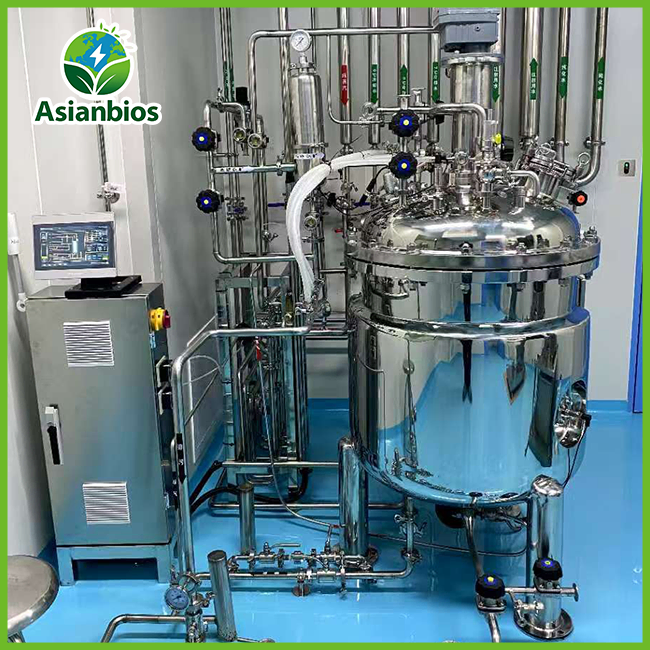
The fermentation process is the most important part of protease production technology. This is where the chosen microbial strain makes proteases in large bioreactors under very strict controls. Asianbios uses cutting-edge fermentation systems with working quantities ranging from 50L for test projects to 100,000L for large-scale production. Temperature, pH, dissolved oxygen levels, and foam control are just a few of the important factors that these systems can track and control. When we build our fermentation systems for protease production technology, we make sure that they mix, aerate, and move heat in the best way possible. This is because these are all important for getting the most enzymes and keeping the culture alive during the fermentation cycle.
Precision Parameter Control and Monitoring
To make sure that enzyme production is at its best, advanced real-time tracking and careful control of all fermentation factors are needed for protease production technology to work. Asianbios uses a full computer control system that keeps an eye on important parameters like temperature, dissolved oxygen levels, pH levels, biomass concentration, and enzyme activity all the time. High-tech sensors and tools take exact readings, and our own control programs make small changes to keep conditions at their best during the fermentation process. With this much control over our protease production technology, we can quickly fix any problems that happen when set points aren't met. This makes sure that the production and quality of enzymes are the same across all batches and production sizes.
Strategic Nutrient Feeding for Maximum Yield
Our protease production technology uses complex feeding plans for nutrients that are carefully tailored to each strain and product in order to get the most enzymes out of them. Asianbios uses a fed-batch feeding method, in which concentrated nutrient solutions are added to the fermentation soup at set times and amounts based on real-time tracking of the nutritional state of the culture. This method stops nutrient limitation and prevents the buildup of harmful byproducts that can happen when there are a lot of nutrients at first. In protease production technology, our feeding strategies take into account the unique nutrient needs and growing habits of each microbe. This makes enzyme outputs much higher than with standard batch fermentation methods.
Downstream Processing: From Fermentation Broth to Final Product
Advanced Solid-Liquid Separation Techniques
Next, separate the enzyme-containing broth from microbial cells and insoluble materials after fermentation in the protease manufacturing method. Asianbios uses innovative solid-liquid separation methods to recover crude enzyme solution while maximizing enzyme activity. High-speed continuous centrifugation is our main separating technique for big fermentation broth volumes. We use microfiltration and ultrafiltration for finer separation or sensitive enzymes. Our protease manufacturing system uses separation techniques to enhance enzyme recovery rates, minimize processing time, and maintain enzyme stability.
Multi-Stage Purification Processes
Our enzyme manufacturing process excels in creating high-quality products throughout the purification step. Asianbios' multi-stage purification process comprises clarifying, concentration, and polishing. We remove cellular debris and particle matter using depth filtering or high-speed centrifugation during clarification. To boost enzyme concentration and remove low-molecular-weight contaminants and salts, ultrafiltration membranes are typically used. To achieve purity, final polishing may include ion exchange, gel filtration, or affinity chromatography. We use a thorough purification process to guarantee the enzyme product fulfills high-quality standards for industrial applications.
Final Formulation and Comprehensive Quality Testing
Our protease manufacture involves pure enzyme synthesis and quality testing to fulfill requirements. For convenient handling, Asianbios provides liquid concentrates with preservatives, spray-dried powders with stabilizers, and granulated products. Every formulation is designed to keep enzymes stable and active throughout storage. Our protease production process quality testing comprises enzyme activity, protein content, purity, microbial contamination, and accelerated stability. Due to rigorous quality control, our enzyme products are always dependable and effective. Asianbios suggests protease manufacturing process setup and improvement. Our protease production technology specialists assist with process design, equipment selection, commissioning, training, and optimization for success. To explore how our advanced solutions can benefit your operations or to discuss your specific requirements, we invite you to contact our technical specialists at plantex@asianbios.com for personalized consultation and support.
Technical Advantages and Industry Applications
Industry-Leading Enzyme Activity Levels
A benefit of Asianbios' protease manufacturing process is its persistently high enzyme activity, surpassing industry standards. We have unique production techniques that reach 250,000 U/mL for alkaline proteases and 200,000 U/mL for acidic proteases after years of study, strain creation, and process optimization. Superior protease production technology leads to more efficient processes for clients, since increased enzyme activities enable fewer dosages to accomplish the same outcomes, decreasing costs and increasing process economics across applications.
Flexible Strain Portfolio for Diverse Applications
Asianbios' protease manufacturing process is versatile, as shown by our diverse range of customized microbial strains for industrial applications. Our Bacillus subtilis strains are developed for various temperature ranges, pH stability, and substrate specificities to fulfill the diversified needs of detergent, leather, and textile sectors for alkaline protease production. We use several Aspergillus niger strains to manufacture acidic proteases with unique features for digestive aids, pharmaceuticals, and food processing. For certain industrial uses, we have produced neutral and specialized proteases. Our diverse protease manufacturing technique enables us to provide customized solutions that meet our clients' needs.
Cost-Effective and Scalable Production Solutions
Asianbios' protease manufacturing technique offers cost-effectiveness and scalability, making high-quality enzymes accessible to all producers. We save on raw material costs without sacrificing quality by using locally accessible and economical agricultural byproducts, including soybean meal, corn steep liquor, and bran. Our system is intended for smooth scale-up from lab-scale research to pilot-scale testing to industrial production. Scalability in protease production technology enables economic advantages from sophisticated procedures at any production volume, from small-scale niche applications to large-scale industrial manufacture.
Table 2: Industry Applications of Proteases Produced by Asianbios' Technology
| Industry Sector | Key Applications | Protease Type | Market Share |
|---|---|---|---|
| Food Processing | Meat tenderization, cheese making, baking | Alkaline, Neutral | 40% |
| Detergents | Protein stain removal, cleaning enhancement | Alkaline | 35% |
| Leather | Dehairing, bating, softening | Alkaline | 10% |
| Pharmaceuticals | Digestive aids, wound healing, peptide synthesis | Acidic, Neutral | 8% |
| Textile | Silk degumming, wool processing | Alkaline | 5% |
| Feed Industry | Protein digestibility enhancement | Alkaline, Acidic | 2% |
Table 3: Technical Support Services for Protease Production Technology Implementation
| Service Category | Specific Offerings | Customer Benefit |
|---|---|---|
| Process Development | Formula development, process design | Optimized production parameters |
| Scale-Up Services | Pilot to production-scale trials | Smooth transition to industrial production |
| Equipment Support | Commissioning, operation training | Proper equipment utilization |
| Technical Consultation | Project planning, production line design | Customized production solutions |
| After-Sales Service | Maintenance, fault handling, process upgrades | Long-term operational reliability |

Conclusion
Protease production technique revolutionizes industrial biotechnology by allowing large-scale enzyme manufacturing that drives innovation across different sectors. Asianbios' unique enzyme manufacturing technique integrates strain research, fermentation management, and downstream processing for superior quality and performance. To address worldwide demand for high-performance protease enzymes, producers may use this technology to improve enzyme activity, affordability, and scalability.
FAQ
Q1: What enzyme activities can be achieved with Asianbios' protease production technology?
A1: Our advanced protease production technology consistently achieves enzyme activities exceeding 250,000 U/mL for alkaline proteases and 200,000 U/mL for acidic proteases, setting new industry benchmarks for enzyme potency and efficiency across various applications.
Q2: What microbial strains are used in Asianbios' protease production technology?
A2: Our protease production technology employs optimized strains of Bacillus subtilis for alkaline protease production (effective at pH 6.5-8.5) and Aspergillus niger for acidic protease production (effective at pH 3.5-5.0), both developed for high enzyme yields and stability.
Q3: What technical support does Asianbios provide for implementing protease production technology?
A3: Asianbios offers comprehensive support for protease production technology implementation, including process development, scale-up services, equipment support, technical consultation, and after-sales service to ensure stable, long-term production operations.
Elevate Your Enzyme Production with Asianbios
Transform your manufacturing capabilities with Asianbios' state-of-the-art protease production technology, delivering industry-leading enzyme activities and cost-effective solutions. Our proven systems combine advanced strain development with precise fermentation control and sophisticated downstream processing. With comprehensive technical support and flexible strain options, we empower manufacturers to produce high-quality proteases for diverse applications. Contact our expert team today at plantex@asianbios.com to discover how our advanced protease production technology can revolutionize your enzyme manufacturing and drive your business forward.
References
1. Rao, M. B., Tanksale, A. M., Ghatge, M. S., & Deshpande, V. V. (1998). Molecular and biotechnological aspects of microbial proteases. Microbiology and Molecular Biology Reviews, 62(3), 597-635.
2. Gupta, R., Beg, Q. K., & Lorenz, P. (2002). Bacterial alkaline proteases: molecular approaches and industrial applications. Applied Microbiology and Biotechnology, 59(1), 15-32.
3. Anwar, A., & Saleemuddin, M. (2000). Production and characterization of an alkaline protease from Bacillus subtilis. Process Biochemistry, 35(7), 703-708.
4. Kumar, C. G., & Takagi, H. (1999). Microbial alkaline proteases: from a new perspective. Biotechnology Advances, 17(7), 561-594.
5. Sumantha, A., Larroche, C., & Pandey, A. (2006). Microbial proteases: from production to application. Critical Reviews in Biotechnology, 26(1), 1-16.
6. Beg, Q. K., & Gupta, R. (2003). Purification and characterization of an extracellular alkaline protease from Bacillus sp. Protein Expression and Purification, 27(1), 1-8.
About the Author


Asianbios
Our purpose is to forge a legacy of stewardship, advancing initiatives that honor and preserve the ecological integrity of our planet.

Send Inquiry
Related Industry Knowledge
- What are the Benefits of Blueberry Extract Powder?
- What is glutathione? Benefits for your health and body
- The Potential Benefits of Berberine Hydrochloride Extract You Should Know About
- How to use dried kale powder?
- Hyaluronic Acid Formulations for Skin and Hair Hydration
- What Is Modern Valine Production Technology?
- Freeze Dried Strawberry Powder: How to Make, Benefits and Uses
- Benefits of Sleep Aid Capsule for Deep Sleep Support
- Benefits of Threonine Production Technology in Feed Additives
- What is orange powder used for?