The difference between air-dried and freeze-dried kale powders
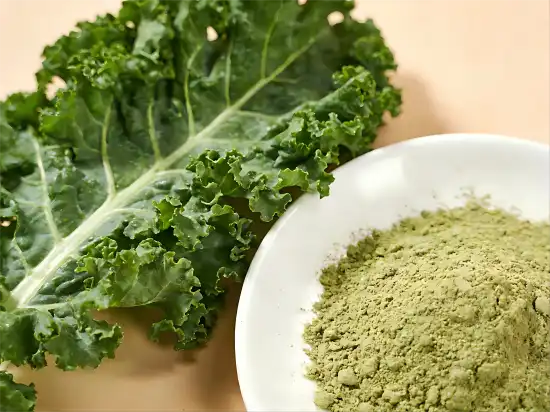
Kale powder is a common addition in smoothies, supplements, baked products and functional meals. But not all kale powders are made equal. The manufacturing process and drying technique have a great influence on the nutritional profile, colour, flavour, solubility and shelf life of the finished product. This book reviews the major distinctions between air-dried and freeze-dried kale powders to assist customers and product makers to make better decisions. We are especially interested in freeze dried kale powder, which has obvious benefits in nutritional retention and sensory quality.
How Processing Methods Affect Nutritional Value
Heat-Sensitive Vitamin Retention in Freeze-Dried Kale
The major differences in drying processes are in their treatment of heat-sensitive nutrients. Air drying usually involves many hours at extreme temperatures of 50°C to 80°C, which may destroy vitamins including vitamin C, vitamin K, and some B vitamins. On the other hand, freeze dried kale powder is made via vacuum freeze-drying technology, which dehydrates fresh kale at very low temperature and vacuum conditions. In this mild procedure, the highest potential nutritional activity is captured, protecting heat-sensitive vitamins, minerals, antioxidant components such as lutein and beta-carotene and physiologically active enzymes. This creates a powder that preserves a much higher percentage of the natural nutritious richness of kale.
Concentration of Nutrients Through Water Removal
Air drying and freeze drying both dehydrate fresh kale, concentrating the nutrients that are left. However, the extent of nutrient retention ranges rather considerably between the two techniques.Freeze dried kale powder has more of its natural vitamins and antioxidants preserved since the low temperature technique minimises chemical breakdown. The freeze drying procedure also is helpful in preserving the original dark green colour and fresh vegetable flavour customers expect from top grade kale products. For product makers touting nutritional density and clean-label appeal, freeze-dried powder is a no-brainer compared to typically air-dried options that may seem less vibrant and nutrient-dense.
| Nutrient Retention Factor | Air-Dried Kale Powder | Freeze-Dried Kale Powder |
|---|---|---|
| Vitamin C | Significant loss due to heat | Well preserved |
| Vitamin K | Moderate loss | Well preserved |
| Lutein & Beta-Carotene | Some degradation | Largely intact |
| Natural Green Color | Often dull or brownish | Bright green retained |
| Enzymatic Activity | Mostly inactivated | Partially preserved |
Sensory Differences: Color, Flavor, and Texture
Visual Appeal and Color Stability
Consumers usually see colour first as a sign of quality when they look at green powders. The heat treatment of extended duration is often associated with the breakdown of chlorophyll, which imparts a dull olive green or brownish colour to the air-dried kale powder .However, the freeze dried kale powder keeps the bright, natural dark green colour of fresh kale, since the low-temperature vacuum procedure does not break down chlorophyll. This visual difference is particularly relevant for items where appearance is a consideration, such as green smoothie mixes, supplement capsules in transparent packaging, or baked goods where the green colour should seem natural and appetising, not oxidised and unpleasant.
Flavor Profile and Solubility Characteristics
You can definitely tell the difference between the two processing processes in flavour and texture. Air-dried kale powder typically has a somewhat cooked flavour, occasionally harsh or grassy, owing to heat-induced chemical changes.freeze dried kale powder has a fresher, more delicate vegetable taste that mixes in more smoothly with smoothies, soups, and baked foods. Furthermore, freeze-dried powder is often more soluble in cold and warm liquids because the freeze-drying process produces a more porous structure that rehydrates quicker. The particle size that passes entirely through 80 mesh provides smooth integration without grit, making it suited for applications where texture consistency is important.
Functional Applications and Product Development
Smoothies, Beverages, and Instant Mixes
The kind of kale powder, either air-dried or freeze-dried, used in beverage applications significantly influences the product quality and acceptance by consumers.Freeze dried kale powder is easy to dissolve in water, milk, juice or plant-based alternatives to create a smooth, consistent beverage that won’t settle or become gritty and unpleasant. Fresh flavour character means it may be paired with fruits such as banana, mango, pineapple and apple without the need of strong flavour masking. On the other hand, air-dried kale powder may have a little cooked aftertaste and may be more difficult to completely dissolve, sometimes needing extra processing aids or stronger flavourings to reach acceptable sensory outcomes. For firms who want to appeal to health-conscious customers who prefer pure, natural ingredients, freeze-dried powder means simpler, more transparent formulas.
Baked Goods, Snacks, and Supplement Formats
The processing technique influences performance and customer perception in solid food applications.Add freeze dried kale powder to muffin batter, bread dough, cracker recipes, energy balls, and protein bars and it will keep its vibrant green colour and mild flavour. The powder is especially well suited for supplement forms such as capsules, pills, and gummies, where consistent potency and natural look are vital. Air-dried kale powder may undergo excessive colour darkening when baked, with a harsher and less palatable vegetable flavour, therefore limiting its applicability. Product creators have better flexibility in formulation and improved end-product quality for attractive, healthy baked items or supplements when using freeze-dried powder.
| Application | Air-Dried Kale Powder | Freeze-Dried Kale Powder |
|---|---|---|
| Smoothies | Possible, may need flavor masking | Excellent, dissolves smoothly |
| Baked Goods | Color darkens, stronger taste | Color stays green, milder flavor |
| Supplements (Capsules) | Acceptable | Preferred for potency |
| Instant Soup Mixes | Moderate performance | Better rehydration |
| Gummies | Limited color stability | Brighter, more appealing |
Quality Standards and Production Considerations
Certifications and International Compliance
For commercial kale powder customers, quality assurance and regulatory compliance are key considerations. Kale powders may be air-dried or freeze-dried under authorised settings although freeze-dried goods have better requirements most of the time because of the sophisticated technology involved.freeze dried kale powder is created in an ISO9001, FSSC22000, CGMP, HALAL, KOSHER, Organic and HACCP certified factory. These certificates provide quality control from the screening of raw materials to the delivery of final products. Heavy metals are rigorously restricted with limitations of NMT 10ppm total, arsenic NMT 2ppm, lead NMT 2ppm, cadmium NMT 1ppm and mercury NMT 0.1ppm. Microbiological testing shows Total Plate Count < 10,000 cfu/g and Yeast and Mould < 1,000 cfu/g.
Shelf Life, Packaging, and Storage Requirements
The two drying processes show different storage stability owing to residual moisture content and nutrient sensitivity.The residual moisture content of freeze dried kale powder is usually lower than that of air dried powder and the shelf life is extended up to two years, if stored correctly in sealed fibre drums with LDPE inner bags away from moisture, high heat and direct sunshine. Air dried kale powder, with slightly greater moisture content, might have a shorter ideal shelf life and be more vulnerable to oxidation and colour changes over time. The stability and uniformity of freeze-dried powder across the supply chain may also benefit firms shipping goods across foreign markets with variable storage conditions.
| Quality Parameter | Specification for Freeze-Dried Kale Powder |
|---|---|
| Purity | 100% HPLC |
| Particle Size | 100% through 80 Mesh |
| Heavy Metals | NMT 10ppm |
| Total Plate Count | <10,000 cfu/g |
| Shelf Life | 2 years sealed, stored properly |
| Certifications | CGMP, FSSC22000, ISO9001, HALAL, KOSHER, Organic, HACCP |
Supply Chain Flexibility and Customization Options
OEM/ODM Services for Diverse Product Formats
Brands seeking to diversify their product lines benefit from suppliers that provide flexible production alternatives.OEM and ODM services are available for the addition of freeze dried kale powder to candies, pills, capsules, powders and functional food mixes. Product development from idea to commercial launch with professional formula solutions, experimental verification and technical direction. New companies may test freeze-dried kale powder formulations with minimal minimum order quantities from 1kg and sample availability before committing to bigger production levels.
Delivery Speed, Logistics, and Global Distribution
Speed and dependability in supply chain management is a key success element for businesses in competitive marketplaces. Typical freeze dried kale powder specs are over a tonne of inventory held and ready to ship within 10 days after payment. Custom manufacturing and delivery processes often take 20 working days or so. Urgent small batch orders may use a “Green Channel” service, with a minimum delivery period of 7-10 days. Trusted logistics partners like DHL, SF Express and FedEx to deliver globally with reliability and efficiency. We give continuous assistance to our customers, at any level of development, with professional specialists and labs, via experimental verification, product solutions and technical consultation.
Conclusion
Whether you choose air-dried or freeze-dried kale powder depends on your priorities.Freeze dried kale powder has increased nutrient retention, brighter colour, fresher flavour, increased solubility and longer shelf life making it the ideal option for premium smoothies, supplements, baked products and functional meals. While air dried powder might be more inexpensive, freeze dried powder offers a superior quality that translates into cleaner labelling, better customer experience and stronger brand positioning in competitive health and wellness sectors.
FAQ
Q1: Is freeze-dried kale powder nutritionally superior to air-dried kale powder?
A: Yes.Freeze dried kale powder maintains much more of the heat-sensitive vitamins like vitamin C and vitamin K, as well as antioxidants such as lutein and beta-carotene, since the low-temperature vacuum method leads to less nutritional degradation compared to the heat used in air drying.
Q2: Does freeze-dried kale powder taste better than air-dried kale powder?
A: Yes, generally.Because this delicate drying technique eliminates the cooked or harsh taste that might occur with air drying, freeze dried kale powder has a fresher, gentler vegetable flavour. This makes it more flexible for smoothies, baked goods and other recipes.
Q3: What is the minimum order quantity for freeze-dried kale powder?
A: Samples are available for review, minimum order quantity is 1kg. The low MOQ also gives supplement firms, food producers and product developers the chance to test freeze dried kale powder combinations before ramping up production.
Source Premium Freeze-Dried Kale Powder for Your Brand
Ready to elevate your product line with high-quality freeze-dried kale powder? As a freeze dried kale powder supplier, our team (Asianbios) supplies food-grade powder with verified purity, international certifications, and flexible OEM/ODM support for gummies, tablets, capsules, powders, and more. With low MOQ starting at 1kg, sample availability, fast shipping within 10 days, and responsive technical guidance, we help brands move from concept to market efficiently. Contact us today at plantex@asianbios.com to request specifications, samples, pricing, and customized formulation support.
References
1. Yadav, D. N., et al. "Effect of freeze drying and hot air drying on quality attributes of leafy vegetables." Journal of Food Science and Technology, 2014.
2. Korus, A., and Lisiewska, Z. "Effect of preliminary processing and preservation method on antioxidative compounds in kale." Food Chemistry, 2011.
3. Šamec, D., et al. "Kale as a source of bioactive compounds with health benefits." Food Chemistry, 2019.
4. Ninfali, P., and Bacchiocca, M. "Polyphenols and antioxidant capacity of vegetables under fresh and frozen conditions." Journal of Agricultural and Food Chemistry, 2003.
5. Ayaz, F. A., et al. "Nutrient composition of kale (Brassica oleracea L. var. acephala DC.)." Food Chemistry, 2006.
6. Sikora, E., et al. "The content of selected bioactive compounds in kale (Brassica oleracea L. var. acephala)." Journal of Elementology, 2012.

Send Inquiry
Related Industry Knowledge
- Berberine Hydrochloride Extract - The Supplement for Blood Sugar and Weight Management
- Freeze Dried Kale Best Recipes & Guides from Experts
- Is stevia extract good or bad for you?
- How Production Technology Of Ergothioneine Improves Purity
- Berberine Hydrochloride Extract and Weight Loss: What You Need To Know
- Top Glutathione Production Technology Methods
- Benefits of Glutathione Production Technology in Industry
- Best Grape Powder in 2026: Expert Reviews, Health Benefits & Buying Guide
- Uses of Threonine Production Technology in Agriculture
- Is kiwi powder good for you?