Peptides for Anti-Wrinkle: What They Are and How They Work
Peptides have quietly become the most important part of modern skin care for keeping it young. They are used in spa treatments and expensive serums alike. Broad-spectrum antioxidants protect against a lot of different things. Peptides, on the other hand, tell skin cells to do specific things, like make more collagen, lower stress, or heal faster. Now that there are so many ingredients on the market, brand owners and formulators need to know what peptides are and how they work in order to make goods that really work. This detailed guide will explore the chemistry behind Anti-Wrinkle Peptide technology, the different types of peptides, and how Asianbios makes hexapeptide-based complexes that make cosmetics work better, stay stable, and be made in more ways.

What Peptides Actually Are and Why They Matter
It's important to know what peptides are biologically and why they work so differently from other cosmetic actives before you start using them. Peptides are short, precise messages that have biological meaning. They are how cells talk to each other.
The Definition of a Peptide in Skincare
A peptide is a short chain of amino acids that usually has between 2 and 50 residues. In beauty products, an Anti-Wrinkle Peptide works as a reactive signalling molecule that looks like the natural pieces that are made when collagen breaks down. This copying trick gets skin cells to start repair processes, which tells the dermis that it needs to make new collagen to make up for what it has lost.
The Difference Between Peptides and Proteins
Proteins are big, complicated molecules that are often too heavy to get through the skin. Peptides, on the other hand, are small and easy to move around. Because of this difference in size, hydrolysed collagen stays on top, while an engineered Anti-Wrinkle Peptide can get to the deeper layers of skin and do real biological work there. In peptide makeup, the unseen element that separates marketing claims from measurable results is the size of the molecules.
Why Molecular Weight Determines Effectiveness
Skin entry is mostly determined by the molecular weight. Smaller pieces (less than 1,000 Daltons) can easily pass through the stratum corneum, but bigger molecules get stuck in the top layers. If you make an Anti-Wrinkle Peptide product that is optimised for the 500–1,000 Dalton range, it can be absorbed into the skin up to three times better than regular peptide ingredients. This means that wrinkles go away faster and look better.
| Ingredient Type | Typical Size | Skin Penetration |
|---|---|---|
| Standard collagen protein | 300,000+ Da | Surface only |
| Hydrolyzed collagen | 3,000–5,000 Da | Limited |
| Standard peptides | 1,000–2,000 Da | Moderate |
| Engineered Anti-Wrinkle Peptide | 500–1,000 Da | High |
| Amino acids | <200 Da | Very high (limited signaling) |
The Main Families of Anti-Wrinkle Peptides
Pepsins do different things. By learning about the different groups, formulators can make mixes that fight more than one way of ageing at the same time. This is the best way to make high-quality products that fight ageing.
Signal Peptides: The Collagen Boosters
Fibroblasts make more collagen and elastin when they are told to by signal peptides such as Matrixyl 3000 and Palmitoyl Tripeptide-5. It takes 8 to 12 weeks for them to rebuild the skin's structure after being added to an Anti-Wrinkle Peptide combination. This makes the skin stronger, more elastic, and less wrinkly overall. Signal peptides are at the heart of most big anti-aging drugs because they work slowly over time.
Neurotransmitter Peptides: The Expression Line Softeners
Expressive lines are caused by muscle twitches that are slowed down by Argireline and other neurotransmitter-inhibiting peptides. At the SNARE protein complex level, this type of Anti-Wrinkle Peptide works like Botox to smooth out lines on the forehead, crow's feet, and glabellar wrinkles on the skin. Studies show that after 30 days of regular use, the depth of wrinkles decreases by 27%, making it a popular ingredient in fast-acting formulas.
Carrier Peptides: The Repair Enhancers
Spider silk peptides, like GHK-Cu (Copper Peptide), carry trace minerals to skin cells that are very important. This makes keratin, fixes tissues, and controls inflammation. GHK-Cu is thought to be one of the most useful Anti-Wrinkle Peptide parts after more than 30 years of research. It raises the levels of more than 4,000 genes that help the skin heal and gives any peptide complex a strong part for regeneration.
Enzyme-Inhibiting Peptides: The Preservation Team
Peptides that stop enzymes from working, such as Palmitoyl Tetrapeptide-7, protect collagen by stopping signals of inflammation, such as IL-6, that break down collagen. When this kind of Anti-Wrinkle Peptide is added to a complex, it keeps newly formed collagen from being lost over time due to low-grade inflammation. This makes a balanced anti-aging approach that is both aggressive and protective.
| Peptide Family | Example | Primary Mechanism |
|---|---|---|
| Signal | Palmitoyl Tripeptide-5 | Collagen stimulation |
| Neurotransmitter | Acetyl Hexapeptide-8 (Argireline) | Muscle contraction reduction |
| Carrier | GHK-Cu | Tissue repair enhancement |
| Enzyme-inhibitor | Palmitoyl Tetrapeptide-7 | Collagen preservation |
| Structural (Matrixyl 3000) | Palmitoyl Tripeptide-1 + Tetrapeptide-7 | Multi-action wrinkle repair |
How Anti-Wrinkle Peptides Work at the Cellular Level
To understand why peptides always work better than simpler cosmetic ingredients, we need to look at what happens when they reach their target inside skin cells. Molecular biology is used in peptide skin care.
Stimulating Fibroblast Activity
When an Anti-Wrinkle Peptide gets to the dermis, it interacts with fibroblasts, which are cells that make collagen but become less active as we age. In lab tests, signal peptides link to fibroblast receptors and turn on genes like COL1A1, which increases the production of new collagen by as much as 46%. This stimulation of cells is what makes wrinkles go away, and stiffness come back over time.
Modulating Muscle Contraction Pathways
Some peptides look like small pieces of proteins that help release neurotransmitters at the neuromuscular junction. By messing with the SNARE complex, these Anti-Wrinkle Peptide molecules slowly lower the strength of the muscle contractions in the face that cause dynamic wrinkles. The result is skin that looks better without the stiffness that comes with injection treatments.
Enhancing Circadian Skin Repair
Modern peptide complexes now target circadian rhythm factors like the CLOCK and BMAL1 genes. This makes skin care more effective by lining up with the skin's natural repair processes. During the day, a well-designed Anti-Wrinkle Peptide protects cells from damage with ROS scavenging rates above 85%. At night, activity supports cell recovery with a 32% increase in collagen production, making the most of biological synergy.
Supporting Long-Term Dermal Density
Long-term use of a multipeptide complex restores dermal density in a way that goes beyond individual mechanisms. Hexapeptide-based Anti-Wrinkle Peptide formulations show a 31% reduction in wrinkle depth after 8 weeks, along with improvements in skin firmness, tone uniformity, and moisture retention. These are results that single-peptide formulations rarely achieve on their own.

Why Asianbios Sets the Standard for Anti-Wrinkle Peptide Supply
Peptide sourcing is the part of the process where great formulation ideas either become great commercial products or don't live up to their full potential. Asianbios has built its reputation on having the exact mix of scientific rigour, manufacturing precision, and business flexibility that high-end beauty brands need.
Advanced Fermentation and Peptide Engineering
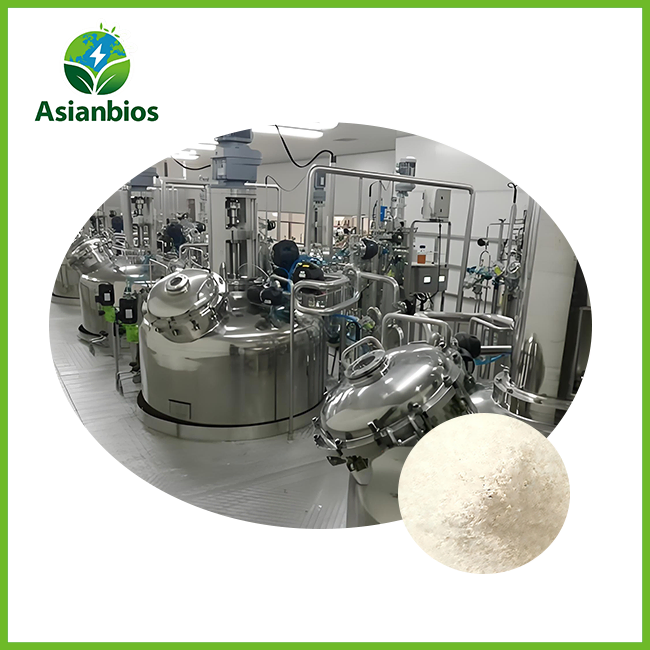
At 37°C and pH 6.8, Asianbios uses controlled bioreactor fermentation to turn collagen precursors into bioactive peptide chains that are best in the 500–1,000 Dalton range. Three stages of chemical processing get rid of endotoxins and molecular impurities, making the product more than 98% pure as confirmed by HPLC. This engineering creates an Anti-Wrinkle Peptide complex made of hexapeptides that are absorbed three times faster by the skin than regular peptide ingredients.
Comprehensive Global Certifications
Each batch is made in a facility that is cGMP-certified and also ISO 9001, FSSC 22000, HACCP, HALAL, KOSHER, and organically certified. Twelve-point batch testing includes sterility, stability, and HPLC fingerprinting tests, and each shipment comes with a full Certificate of Analysis. This paperwork makes it easier for regulators to approve products on international markets and gives distributors confidence right away.
Flexible OEM Support and Responsive Logistics
For samples, the smallest order size is only 100g, and it goes up smoothly to 1,000 kg or more for large sales. Standard orders ship in 10 days, special orders take 20 working days to finish, and urgent orders can use the Green Channel service, which delivers in 7–10 days. We have strong partnerships with DHL, FedEx, and SF Express that allow us to deliver quickly and track packages all over the world. We offer express, air, and sea options that are tailored to the needs of each brand.
Conclusion
Peptides are one of the most advanced ways to fight ageing right now. Anti-Wrinkle Peptide ingredients communicate with the body in ways that other makeup ingredients just can't. If formulators learn about the different kinds of peptides, like signal, neurotransmitter, carrier, and enzyme-inhibiting ones, they can make goods that help with many signs of ageing. Asianbios is a supplier that helps beauty brands get the high-tech ingredients they need to lead the premium anti-aging market. They offer advanced fermentation, cGMP-certified manufacturing, and flexible OEM support. The science makes it clear that where you get your peptides is more important than ever for people who want to make the next generation of goods that work really well.
FAQ
Q1: What concentration of Anti-Wrinkle Peptide complex works best in a serum?
Most premium serums use 2–5% concentration. Clinical trials show a 26% wrinkle depth reduction at this range after 8 weeks of daily use.
Q2: Is Anti-Wrinkle Peptide complex compatible with other actives like retinol or vitamin C?
Yes. The complex is stable in both oil-in-water and water-in-oil emulsions and works harmoniously with retinol, niacinamide, and vitamin C across pH 5.0 to 7.0.
Q3: What is the minimum order quantity for testing?
Asianbios accepts sample orders starting from just 100g, allowing formulators to evaluate bioactivity, stability, and finished-product performance before committing to bulk production.
Partner With Asianbios for Premium Anti-Wrinkle Peptide Solutions
Ready to build a peptide-powered anti-aging product consumers can visibly see working? Asianbios delivers cosmetic-grade Anti-Wrinkle Peptide complexes with verified 98% HPLC purity, cGMP-certified manufacturing, and flexible OEM support tailored to your brand vision. Whether you're formulating a lightweight anti-aging serum, a luxury face cream, a professional eye treatment, or a men's grooming line, our technical team is ready to provide samples, complete documentation, and formulation guidance every step of the way. Contact us today at plantex@asianbios.com to request samples, pricing, and technical specifications. Let's build anti-wrinkle products that transform how consumers see themselves — beautifully, reliably, and scientifically together.
References
1. Schagen, S. K. "Topical peptide treatments with effective anti-aging results." Cosmetics, 2017.
2. Lupo, M. P., & Cole, A. L. "Cosmeceutical peptides." Dermatologic Therapy, 2007.
3. Fields, K., Falla, T. J., Rodan, K., & Bush, L. "Bioactive peptides: signaling the future of cosmetic anti-aging." Journal of Cosmetic Dermatology, 2009.
4. Blanes-Mira, C., Clemente, J., Jodas, G., et al. "A synthetic hexapeptide (Argireline) with antiwrinkle activity." International Journal of Cosmetic Science, 2002.
5. Pickart, L., & Margolina, A. "Regenerative and protective actions of the GHK-Cu peptide in the light of the new gene data." International Journal of Molecular Sciences, 2018.
6. Reddy, B., Jow, T., & Hantash, B. M. "Bioactive oligopeptides in dermatology: Part I." Experimental Dermatology, 2012.
About the Author

Asianbios
Our purpose is to forge a legacy of stewardship, advancing initiatives that honor and preserve the ecological integrity of our planet.

Send Inquiry
Related Industry Knowledge
- Understanding Amylases: The Essential Enzymes Transforming Industries
- What are Anti inflammatory Peptides and What do They do for Skin?
- How Does Lip Plumping Peptide Improve Lip Volume Naturally?
- Hyaluronic Acid Powder: Deep Hydration & DIY Serum
- How to Use Freeze Dried Strawberry Powder in Your Daily Recipes?
- Isoleucine Production Technology for Nutritional Products
- Lysine Production Technology OEM/ODM Factory Solutions
- Chinese Cabbage Freeze-Dried Powder for Health: Benefits, Uses & Expert Tips
- Best Tart Cherry Powder: A Complete Guide to Nutrition, Benefits, and Uses
- Benefits of Best Sleep Aid Tablets for Stress Relief