The Broad Spectrum of L-Glutamine Benefits
L-glutamine offers a broad spectrum of benefits for gut support, post exercise recovery, immune-cell energy and flexibility in sports nutrition, functional foods and therapeutic goods.L-Glutamine is a semi-essential amino-acid. It is produced by the body, but more may be needed after heavy activity, illness or physical stress. Each advantage is carefully presented since research findings are study-style, health status and dose dependent. This article will look at how L-glutamine works, where it fits into formulations, how to dose it, and how to assess a powder before you buy it.

What Is L-Glutamine and How Does It Work?
L-Glutamine vs. Glutamic Acid: Understanding the Difference
Buyers often ask the question, “What is L-glutamine and how is it different from glutamic acid?” Both are amino acids although they are distinct in structure. L-glutamine (C5H10N2O3, CAS 56-85-9) contains an extra amide group such that each molecule has two nitrogen atoms. Glutamic acid (C5H9NO4) has one nitrogen atom and an acid side chain. One is converted to the other by enzymes in the body yet they behave differently in a formula. Glutamic acid has a savoury taste while L-glutamine is mild. And the distinction matters on paper as well. An incorrectly labelled batch will change flavour, function and regulatory status. The correct chemical must be stated in the specification and certificates of analysis.
How L-Glutamine Functions in the Body
L-glutamine is the most prevalent free amino acid in human blood and skeletal muscle. It transports the nitrogen from tissue to tissue. The second nitrogen atom helps amino acid metabolism. It feeds fast-dividing cells such as the cells that coat our intestines and immune cells such as lymphocytes. Heavy exertion, stress or illness may drain the body’s glutamine levels faster than they can be restored. That pattern is where the word “conditionally essential” comes from. That’s not to say a supplement is a cure-all. This means the amino acid has a recognised role in normal cell function and researchers are still looking at whether increasing intake might be beneficial.
Why L-Glutamine Is Widely Used in Supplement Formulas
There are good reasons why formulators choose L-glutamine. The powder tastes good, dissolves in water at room temperature and blends with other amino acids, electrolytes and protein powders. Portion sizes remain flexible, from a small serving of functional food to a multi-gram scoop of sports nutrition. It is sugar free, which is beneficial for sugar-free and diabetes-friendly lines, but companies need to confirm the glycaemic response in their own finished products. From a technological perspective, a significant point for beverage manufacturers is the fact that L-glutamine degrades over time in liquids. Dry formats, such as sachets, tubs and bars, are frequently more stable than ready-to-drink bottles, so trial your own formulation before you commit.
L-Glutamine Benefits for Gut, Muscle, and Immune Support
L-Glutamine for Gut Health and Intestinal Support
The interest in L-glutamine for gut health is mainly because intestinal cells prefer glutamine as a fuel. Cell and animal studies show it helps keep tight junctions that underlie the intestinal barrier intact. The results are more mixed for people, and many of the tests used hospital patients or those under physical stress rather than healthy adults. L-glutamine is a chemical that supports the proper function of the gut lining. It is not a cure for digestive diseases. If you sell digestive wellness products, you should stick to structure-and-function claims and utilise clinical jargon only for products that meet the medical food requirements.
L-Glutamine, Muscle Recovery, and Athletes
Does L-glutamine speed up muscle repair? Ask any athlete. The reality is complex. Muscle contains a large supply of glutamine and hard activity may decrease the amount of glutamine in the blood for a period of time. However, exercise research evaluations demonstrate varying performance, pain, and strength effects and results are reliant on dose and training load. It is still used in sports companies’ recovery powders because it is what the consumers want and because it blends well with BCAAs, electrolytes and carbohydrates. The BCAAs are leucine, which signals muscle protein synthesis, and L-glutamine, which is a nitrogen transporter and cell fuel. Collagen is a protein. L-glutamine is a single, free amino acid.
Immune Support and Natural Sources of L-Glutamine
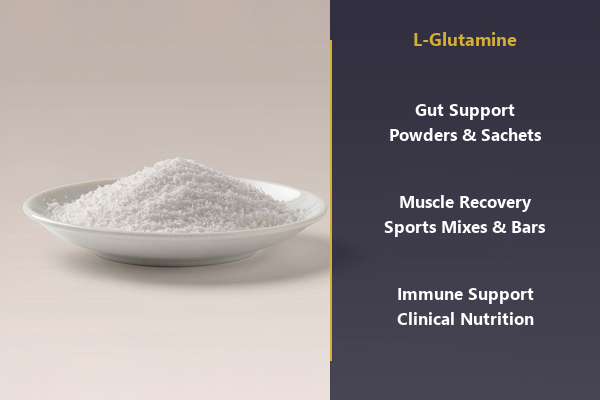
Lymphocytes and macrophages have significant rates of glutamine utilisation. Clinical nutrition teams are investigating glutamine for severely stressed patients. For healthy adults the evidence is less robust thus we don’t make any immunity claims. Food is another source of L-glutamine. It is found in beef, eggs, dairy, tofu, cabbage and legumes and a regular diet supplies a few grams per day. The major regions of utilisation are compared in Table 1.
| Use area | Evidence picture | Common format |
|---|---|---|
| Gut support | Strong biological rationale, mixed human results | Powder, sachet |
| Muscle recovery | Inconsistent in exercise trials | Sports mix, bar |
| Immune support | Mostly studied in clinical stress settings | Clinical nutrition |
This pattern allows you to link each claim with the evidence behind it.
How to Use L-Glutamine: Dosage, Timing, and Safety
L-Glutamine Dosage for Adults and Athletes
The serving size is not set, since it is governed by the product format, the intended user and the local legislation. Studies in healthy people often use 5 to 10 grams a day, frequently in split dosages. A 2008 risk study published in Regulatory Toxicology and Pharmacology found an observed safe amount of 14 grams per day for healthy adults. Athletes frequently take similar amounts around training, but research has not discovered a single precise sports dose. Brands selling in the U.S. need to be careful with label standards and present a clear warning. They should also verify with their regulatory team on 21 CFR 172.320 on the use of amino acids as nutrients.
The Best Time to Take L-Glutamine and How to Mix It
There is no time frame with good evidence; hence the clock is less significant than consistency. It is used by many individuals as part of their daily routine after exercise, between meals or before going to bed. You may blend the powder with cold or room-temperature water, or add it to a shake or smoothie. Avoid mixing it with very hot drinks, as heat may accelerate degradation in liquid formulations. Spray drying produces a powder of fine particles that dissolve in water without lumps. Fine powders absorb moisture, so be sure to re-seal the container after each scoop. Moisture control is particularly critical in final blends with reducing sugars since the Maillard reaction may lead to discolouration of the product.
Is L-Glutamine Safe? Side Effects and Precautions
In typical dosages L-glutamine is generally well tolerated. Reported side effects are mild, such as bloating, nausea, stomach discomfort, or changes in bowel patterns. Unfavourable effects tend to be more frequent at higher doses. L-glutamine is not a known allergen; nonetheless, mixes may include flavours, proteins or excipients that may induce allergies. Brands need to declare all ingredients, and control cross-contact. If you have liver disease, kidney disease or a seizure condition, or are taking anticonvulsants or chemotherapy, see your doctor first. The same advice applies to long-term use at big dosages. Brands should avoid claims such as “risk free” and keep appropriate warnings on the label.
Choosing L-Glutamine Powder for Your Market
Comparing Powder, Capsules, and Blends
When comparing product formats, buyers should consider convenience, production requirements and the costs of modifying a formula. The common alternatives are shown in Table 2.
| Format | Strength | Trade-off |
|---|---|---|
| Pure powder | Flexible servings, low cost per gram | Needs a scoop and mixing |
| Capsules or tablets | Portable, fixed dose | Gram-level doses need many capsules |
| Blends with BCAAs or electrolytes | Full recovery positioning | Less L-glutamine per scoop, more labeling work |
Pure powders are for firms that seek clarity in their labelling and dosage control. Capsules don’t seem to accommodate L-glutamine as well as powder and sachets.
Fermented, Micronized, and Regular L-Glutamine Grades
The particle size, production source and physical form can affect product performance. Fermented L-glutamine, which is produced by microbial fermentation (usually using a maize or glucose substrate), may be marketed as vegan provided documentation is available from vendors. Synthetic production routes also exist. If claims about the production route are important to a product, obtain written confirmation from the supplier. Our powder is the result of fermentation and is spray-dried. Micronised material is smaller in particle size and is more easily dissolved in cold liquids but will lump if it becomes moist. Scoops and mixers are suitable for regular particle size. Don’t accept marketing statements at face value — ask for test methodology, particle size data and microbiological results from each supplier.
Verifying Certifications and Specifications
Start with the certificate of analysis on each batch and compare assay, appearance, moisture and microbiological results to your own standard. Then look at the quality system. Our factory is certified cGMP, FSSC22000, ISO9001, HACCP, HALAL, KOSHER and Organic. Get updated copies from each supplier and compare them to the manufacturing locations on your documentation to be sure the scope covers the items you buy. Your regulatory team should also verify intended use, label claims and importer requirements for sales in the U.S. Before you go bulk shopping, do a test batch using your real recipe. When mixed with other ingredients, the powder may affect the formula's solubility, smell and colour.
Working With an L-Glutamine Manufacturer
Asianbios Pure L-Glutamine Powder at a Glance
Here are the core specifications of our pure L-glutamine powder.
| Item | Detail |
|---|---|
| Active ingredient | L-glutamine, CAS 56-85-9 |
| Specification | 98% HPLC, food grade |
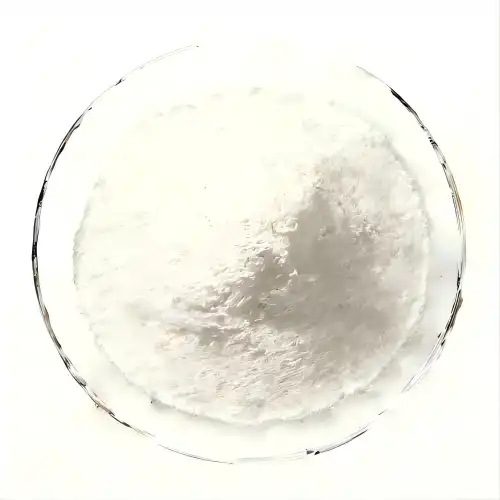
| Appearance | White powder |
| Process | Spray drying |
| Packaging | 25 kg fiber drum with LDPE liner; foil bags; nitrogen-filled option |
| Shelf life | 2 years below 25°C, humidity under 60% |
| Order size | 1 kg minimum, samples available |
| Transport | Express, air, sea |
These details let your formulator and regulatory team check fit before a sample ships.
OEM, ODM, and Private-Label Support
Several brands start with a sample, conduct a small bench trial and then sign a supply arrangement. We provide OEM and ODM projects for powders, capsules, pills, gummies and sachets, customised to each nation, brand and product form. Our professionals and laboratories offer technical support, experimental verification and recipe ideas. The factory responds quickly when market input requires a design change, material substitution or order adjustment, and we welcome modest trial orders with low minimum quantities. Customers may also request technical support for manufacturing-line development. Written specifications, change control, and forecast assessments help to ensure reliable long-term supply.
Delivery, Logistics, and Common Buying Mistakes
More than 1 tonne of standard specifications is reserved in stock for delivery within 10 days after payment. Custom orders require around 20 working days, while our Green Channel service may support urgent small-volume orders in 7 to 10 days. We ship via DHL, SF Express and FedEx. We also provide air and sea freight. If a supplier says a product is “in stock,” ask for the batch numbers and release dates to verify availability. The majority of delays are caused by three errors: assuming all L-glutamine products are the same, when purity and particle size may differ; choosing based only on price while ignoring the total cost; and making disease-treatment or guaranteed-performance claims that regulatory agencies would reject. Store below 25°C, sealed and dry.
Conclusion
L-glutamine is a conditionally necessary amino acid. It provides fuel for intestinal and immune cells and carries nitrogen across tissues. It is added to sports, gastrointestinal and therapeutic nutrition products. The strongest evidence relates to its biological functions, while data on muscle rehabilitation in healthy persons are mixed; therefore, claims should remain cautious. Typical adult servings are in the low gram range, with a 2008 study suggesting 14 grams per day as an observed safe dose. The most prevalent negative effect is mild stomach distress. For the formulator, the performance of a powder in the end product is a function of the format, source, particle size, moisture and reported purity. The most reliable results come from specifications that match the application, a pilot batch that has been tested and claims that remain within the available evidence.
FAQ
1. What does L-glutamine do?
It feeds intestinal and immunological cells, transports nitrogen across organs and contributes to maintaining appropriate muscle metabolism. Supplement effects depend on diet, dosage and health state.
2. Is L-glutamine safe to take every day?
Typical doses are usually well tolerated in healthy persons. A 2008 evaluation indicated an observed safe amount of 14 grams per day. See a doctor before using it for a long time, particularly if you have a medical condition or are on medicine.
3. Is L-glutamine better as powder or capsules?
With powder you may do adjustable dosages at a lesser cost per gram. Capsules are great for mobility, but gram amounts need too many capsules, thus powder is best for most formulations.
4. How can I find a bulk L-glutamine supplier?
Ask for a batch-specific certificate of analysis, current certifications, a product sample and clearly stated lead times. Asianbios offers food-grade L-glutamine powder with a 98% HPLC specification, a minimum order quantity of 1 kilogram and samples for evaluation.
Request L-Glutamine Samples and Pricing from Asianbios
Looking for an L-glutamine producer with rapid shipment and OEM projects? Asianbios sells food quality 98% HPLC L-glutamine powder from stock. Minimum order 1 kilogram, samples available, express, air or sea delivery. Our professionals may have a look at your formula. Email plantex@asianbios.com with your specification, volume and destination or visit www.asianbios.com for more.
References
1. Regulatory Toxicology and Pharmacology (2008): Risk assessment for the amino acids taurine, L-glutamine and L-arginine.
2. Journal of Nutrition (2008): Dosing and efficacy of glutamine supplementation in human exercise and sport training.
3. Nutrients (2018): Glutamine: Metabolism and Immune Function, Supplementation and Clinical Translation.
4. Amino Acids (2015): Glutamine and intestinal barrier function.
5. Journal of Nutrition (2001): Why is L-glutamine metabolism important to cells of the immune system in health, postinjury, surgery or infection?
6. Journal of Nutrition (2008): Clinical use of glutamine supplementation.
About the Author

Asianbios
Our purpose is to forge a legacy of stewardship, advancing initiatives that honor and preserve the ecological integrity of our planet.

Send Inquiry

Related Industry Knowledge
- Which Factors Raise Threonine Production Plant Cost Most?
- Angelica Sinensis Extract Powder for Beginners
- How Production Technology Of Hyaluronic Acid Works
- Best Sleep Aid Tablets for Deep Sleep and Nighttime Relaxation
- Do Sleep Aid Jelly Work? 5 Things to Know
- Bitter Melon Powder vs. Extract: Choosing the Right Ingredient
- A Guide to Hyaluronic Acid – Uses and Benefits
- What Is Grape Powder? Benefits, Uses
- Benefits of Threonine Production Technology in Feed Additives
- Sleep Aid Brewing Powder Uses in Nighttime Routine