A Guide to Hyaluronic Acid – Uses and Benefits
Hyaluronic acid used to be a specialty chemical, but now it's an important part of many businesses. The ability to understand hyaluronic acid powder bulk is important for the success of your business, whether you're making advanced skin care serums, joint health supplements, or new drink goods. This naturally occurring glycosaminoglycan is very good at holding water—up to 1,000 times its own weight in moisture. This makes it very useful for makers who want to make products that keep tissues hydrated and strong. As demand rises in the pharmaceutical, nutritional, and cosmetics industries, finding high-quality bulk powder makes production more cost-effective while keeping the purity of the product and its performance.


Understanding Hyaluronic Acid Powder Bulk: Properties and Production
What Makes Hyaluronic Acid Powder Unique?
Hyaluronic acid, which is sometimes called sodium hyaluronate when it is a salt, is a long polysaccharide made up of repeating units of D-glucuronic acid and N-acetyl-D-glucosamine. When hyaluronic acid powder bulk is made, it goes through a lot of complicated steps to make a stable, concentrated form that is perfect for mass production. The white, highly hygroscopic powder is very soluble and bioactive, so it can be easily added to a wide range of preparation systems.
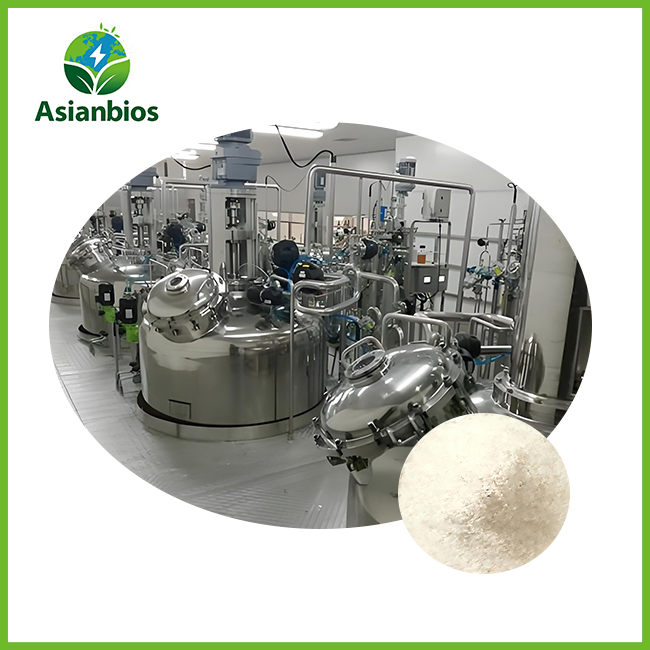
Streptococcus zooepidemicus types are used in microbial fermentation technology for most modern outputs. This has replaced older extraction methods from animal sources like rooster combs. This biotechnological method ensures uniform quality from batch to batch, gets rid of worries about biological instability, and gives makers raw materials that are safe for vegans. Asianbios uses cutting-edge spray-drying technology to make cosmetic-grade powder that is 98% pure, as shown by HPLC testing. This meets pharmaceutical-level quality standards for tough uses.
Production Process and Quality Specifications
The spray-drying method turns liquid fermentation broth into a fine powder while keeping the biological activity and molecular structure. This method makes particles that can easily go through 80-mesh screens, which means they will dissolve well in a wide range of fluid systems. When factories follow the cGMP, FSSC22000, and ISO9001 standards, they keep strict environmental controls all the way through production, from screening the raw materials to packing them.
Key quality indicators for premium hyaluronic acid powder bulk are a glucuronic acid content of at least 44.0%, a sodium hyaluronate test of between 95.0 and 105.0% when dried, and a loss on drying of no more than 10.0%. These requirements are the same as Ph. Eur., USP, and FCC standards. This gives producers peace of mind that they will follow the rules in all foreign markets. Full testing for heavy metals, bacterial contaminants, and endotoxin levels makes sure that both skin and oral use are safe.
Molecular Weight Variations and Their Impact
The most important property that affects how well hyaluronic acid works is its molecular weight. Oligomeric forms smaller than 10 kDa get deep into the skin, activating cellular signals and encouraging dermal repair. Low molecular weight types (10–1,000 kDa) help support structure and fix tissue, which makes them perfect for use as joint health supplements and to heal wounds. High molecular weight versions that are greater than 1,000 kDa make safe surface films and provide better viscosity for dermal fillers and eye drops that lubricate.
Manufacturers can change the molecular weight spread to fit the needs of a certain product. A mixture of different molecular sizes in a multi-weight recipe gives a wide range of benefits. High molecular weight fractions moisturize the surface, medium molecular weight fractions support the tissue in the middle, and low molecular weight fractions go deep into the tissue. This advanced method explains why many high-end makeup brands ask for mixed molecular weight profiles when they buy sodium hyaluronate powder.
Benefits and Applications of Hyaluronic Acid Powder Bulk
Skin Hydration and Anti-Aging Benefits
Hyaluronic acid is highly valued in the cosmetics business because it is the best at keeping skin moist. When put on the skin, it creates a matrix that keeps wetness in while smaller molecules go deeper into the skin to fill up the dermal layers. This two-in-one system reduces fine lines, smooths out the skin, and gives it a young, fresh look that people actively seek in high-end skin care products.
Clinical tests show that regular use raises the amount of wetness in the skin by 15–30% within two weeks, and the effects last longer if the product is used regularly. Antioxidants protect against free radical damage caused by UV light and pollution in the surroundings, which slows down the aging process. Hyaluronic acid powder bulk is added by formulators to serums, creams, sheet masks, and treatment products that address age-related issues. The concentrations range from 0.1% to 2.0%, based on the molecular weight and the effects that are wanted.
Joint Health and Wound Healing Applications
Hyaluronic acid powder bulk plays important roles in medicinal and nutraceutical purposes in addition to its beauty uses. The substance is found naturally in synovial fluid and helps joints work properly by supporting and lubricating them. Oral intake with low- to medium-molecular-weight types helps keep the cartilage matrix intact and may ease the pain of osteoarthritis. Most people take between 80 and 200 mg per day in the form of capsules or tablets.
Another useful application is healing wounds. Hyaluronic acid controls inflammation reactions, encourages blood vessel growth, and speeds up the healing process. Medical-grade versions are used in wound care systems, burn treatments, and items used to care for people who have recently had surgery. The powder form makes it possible to use exact amounts in topical gels, spray solutions, and dressings that are meant to be used in clinical situations.
Formulation Versatility and Product Integration
Manufacturers like that hyaluronic acid powder bulk can be used in a variety of product formulations. It works well in water-based serums, emulsion creams, gel masks, and even systems that don't contain water if they are dissolved properly. The powder dissolves easily in water or mixes of water and glycerin. At amounts above 1%, it forms thick solutions. A pH range of 4.0 to 8.0 is good for most makeup product needs without breaking down.
Food-grade sodium hyaluronate powder is added to healthy drinks, beauty-from-within items, and protein shakes by beverage companies. People who care about their health will like the hydrating benefits, and the neutral taste won't mess up flavor systems. Usually, 50 to 200 mg per serving is enough to see a difference in skin wetness levels when taken every day for 6 to 12 weeks.
How to Select the Best Hyaluronic Acid Powder Bulk for Your Business
Critical Quality Indicators and Certifications
To choose a reliable hyaluronic acid powder bulk, you need to look at a number of quality factors. Specifications for purity are the basis. For example, beauty uses need at least 95% sodium hyaluronate, and medicinal uses need at least 98% purity with strict endotoxin control. The results of HPLC tests, which show molecular weight distribution data along with quality certificates of analysis, are the only way to be sure of the purity.
Certifications show that a company is good at making things and following the rules. If the goods you need to make medicines have cGMP certification, then look for sellers with FSSC22000 or ISO22000 certification for food uses, and ISO9001 certification for quality control systems. Halal and Kosher certifications help brands get into more markets, and organic certifications are popular with brands that make natural products. Asianbios has many certifications, such as HACCP routines, which show that they are committed to meeting world quality standards in all of their production processes.
Evaluating Supplier Credibility and Transparency
Manufacturer review includes more than just product specs; it also looks at how well the company runs and how it does business. Site checks show how much can be produced, how quality control is set up, and how to keep contamination from happening. There are modern spray-drying machines, fermentation rooms, and analytical labs with HPLC, spectrophotometry, and microbiological testing tools in well-established facilities.
Some signs of transparency are being willing to share thorough CoA paperwork, test results from a third party, and records of production batches. Reliable sellers give samples for you to try, usually at least 1 kg, so you can test the formula before you commit to bigger orders. Response time is very important. Professional makers answer technical questions within 24 hours and quickly send regulatory paperwork to help customers meet their compliance requirements.
Domestic vs. International Sourcing Considerations
Cost, quality, transportation, and regulations all play a role in geographic sourcing choices. Due to economies of scale and well-established fermentation infrastructure, international providers, especially those from China, can often offer reasonable prices. China makes about 80% of the world's hyaluronic acid. Their production skills are well-developed, and the quality is solid if they buy from certified facilities. When you import something, you need to think about things like customs paperwork, tax rates, and shipping times (15–30 days for ocean freight).
For goods sold in the United States, domestic suppliers make it easier to communicate, cut down on wait times, and make sure that regulations are followed. However, because of restricted domestic production, prices are often 30–50% higher than those from foreign sources. Many effective buying plans mix foreign sourcing for standard grades with domestic partnerships for unique needs or urgent orders that need to be filled quickly.

Procurement Process and Best Practices for Bulk Buyers
Navigating Wholesale Platforms and Direct Channels
Finding solid buying outlets is the first step to successful procurement. B2B sites like Alibaba, Made-in-China, and Global Sources bring together foreign producers and make it easy to compare prices and protect transactions. These markets are good for finding new suppliers and getting samples, but for ongoing supply, it's usually better to work directly with manufacturers because they can offer better prices and service.
By working directly with manufacturers, you can form strategic relationships that help your business grow over the long run. Companies like Asianbios have sales teams whose only job is to help customers with technical questions and come up with unique solutions. Direct routes get rid of markups on intermediaries, which are usually between 15% and 25%. They also give you access to coordinated production planning, priority placement when supplies are low, and chances to work together on product development.
Understanding MOQ and Pricing Structures
Different suppliers and product types have very different minimum order amounts. Hyaluronic acid powder bulk typically has a 25 kg minimum order quantity that fits into a single drum. Specialized types with certain molecular weights or higher purity may need 100–500 kg pledges because they need to be made in large batches. Sample sizes as little as 1 kg make it possible to test before committing to a larger scale.
The way prices are set is based on the economics of numbers. Prices per unit are higher for small amounts (1–25 kg), but sales of 100 kg or more usually lower costs by 10–15%. For plans that cover more than 1,000 kg per year, you can get prices directly from the maker, which can save you 25–40% compared to buying on the spot. Payment terms usually require a 30-50% deposit with the balance before shipment, though established relationships may arrange net-30 or net-60 terms after proven payment history.
Regulatory Compliance and Documentation
Hyaluronic acid powder bulk international trade necessitates paying close attention to import rules and paperwork. Under the Federal Food, Drug, and Cosmetic Act, the FDA is in charge of cosmetic-grade materials that come into the United States. These materials must include accurate ingredient lists and follow Good Manufacturing Practices. Supplements that use food-grade sodium hyaluronate must either meet FDA Generally Recognized as Safe (GRAS) standards or follow the rules for notifying new dietary ingredients.
Material Safety Data Sheets (MSDS), business bills, packing lists, certificates of analysis, and certificates of origin are some of the most important pieces of paperwork that you need to keep. Phytosanitary licenses may be needed for materials made from plants that are brought in from China. Customs agents who specialize in chemical imports speed up the clearance process by taking care of tariff classification under HTS code 3913.90.50 (hyaluronic acid salts) and making sure that the right amount of duty is paid.
Storage Infrastructure and Handling Protocols
When you receive large amounts, you need the right storage facilities. Keeping the temperature below 25°C and the humidity below 60% RH in a climate-controlled warehouse area stops degradation and moisture uptake. Sealed containers should not be opened until they are needed, and jars that have been opened should be resealed as soon as the right amount has been dispensed.
Material handling training keeps workers safe and protects the quality of the products they make. Although handling hyaluronic acid powder poses little risk to health, fine particles can irritate the lungs. Dust masks, safety glasses, and gloves are all examples of the right personal protection equipment. Airborne particles are kept under control in designated serving areas with local exit ventilation, and cross-contamination with incompatible materials is avoided in clearly labeled storage areas.
Conclusion
In the cosmetics, nutraceutical, and pharmaceutical manufacturing industries, knowing how to source hyaluronic acid powder bulk offers significant competitive benefits. Understanding molecular weight specifications, production quality indicators, and supplier evaluation criteria helps you make smart purchasing decisions that improve both product performance and cost-effectiveness. The hyaluronic acid powder bulk format is highly versatile, allowing for customized formulations that help brands stand out in competitive markets while delivering proven benefits such as hydration, anti-aging support, and joint health.
Strategic supplier relationships are more than simple transactions. They include technical collaboration, formulation support, and reliable supply chain management. Professional manufacturers who prioritize their customers' long-term success can be identified through recognized certifications, transparent quality documentation, and responsive technical service. By selecting reputable hyaluronic acid powder bulk suppliers, procurement teams can better protect product investments, maintain consistent quality across production cycles, and ensure compliance with relevant regulatory requirements.
FAQ
1. What differentiates hyaluronic acid powder bulk from liquid forms?
When compared to pre-dissolved liquid solutions, powder form is more stable, has a longer shelf life, and costs a lot less to ship. The concentrated powder gives makers exact control over end concentrations and formulation factors, and it doesn't need any preservatives like liquid forms do. To reconstitute, powder only needs to be dissolved in clean water or the right liquids. This makes powder the best choice for medium- to large-scale production.
2. How can I verify molecular weight specifications?
Reliable providers provide gel permeation chromatography (GPC) analysis on Certificates of Analysis, which accurately measures the spread of molecular weight. Independent lab testing at third-party facilities backs up what the seller says, and services are available from specialized analysis labs. Ask for retention samples from every production batch. This will allow for ongoing checks that keep quality consistent across all source relationships.
3. Are there stability concerns with long-term bulk storage?
When handled properly, hyaluronic acid powder bulk stays stable for at least 24 months as long as it is protected, cool, and dry. Moisture contact is the main risk of degradation, which can lower molecular weight and raise the risk of microbial poisoning. Using first-in, first-out inventory movement and temperature-humidity loggers to keep an eye on storage conditions will keep materials in good shape for as long as they are on the shelf.
Partner with Asianbios for Premium Hyaluronic Acid Powder Bulk Supply
Asianbios connects you with reliable hyaluronic acid powder bulk suppliers. They offer cosmetic-grade material that is 98% pure as confirmed by HPLC testing and advanced spray-drying technology. Our network of suppliers keeps a lot of different certificates, like cGMP, FSSC22000, ISO9001, HALAL, KOSHER, and HACCP, to make sure they follow all the rules in foreign markets. With enough stock to allow for 10-day shipping, a flexible minimum order quantity of 1 kg for samples, and full OEM/ODM capabilities, we help businesses from the beginning of product creation all the way through large-scale commercial production.
Our technical team can help you with skilled recipe advice, stability testing, and setting up your production line so that it works best for your needs. Whether you're making high-end anti-aging serums, joint health supplements, or new functional drinks, Asianbios can help. They offer competitive prices, reliable logistics through partnerships with DHL, FedEx, and SF Express, and quick communication that speeds up the product development process. Get in touch with our sales team at plantex@asianbios.com right away to ask about our certified hyaluronic acid powder bulk supplier network's full specs, reasonable bulk price, or sample availability.
References
1. Papakonstantinou, E., Roth, M., & Karakiulakis, G. (2012). "Hyaluronic acid: A key molecule in skin aging." Dermato-Endocrinology, 4(3), 253-258.
2. Kaviani, A., Bahramian, B., & Khalighinejad, N. (2016). "Evaluation of different molecular weights of hyaluronic acid in topical formulations." International Journal of Cosmetic Science, 38(6), 563-568.
3. Necas, J., Bartosikova, L., Brauner, P., & Kolar, J. (2008). "Hyaluronic acid: Basic science and clinical applications." Biomedical Papers of the Medical Faculty of Palacky University, 152(2), 225-236.
4. Becker, L.C., Bergfeld, W.F., Belsito, D.V., et al. (2009). "Final report of the safety assessment of hyaluronic acid." International Journal of Toxicology, 28(4 Suppl), 5-67.
5. Kogan, G., Šoltés, L., Stern, R., & Gemeiner, P. (2007). "Hyaluronic acid: A natural biopolymer with diverse applications." Biotechnology Letters, 29(1), 17-25.
6. Liu, L., Liu, Y., Li, J., Du, G., & Chen, J. (2011). "Microbial production of hyaluronic acid: Current state, challenges, and perspectives." Microbial Cell Factories, 10(1), 99.

Send Inquiry
Related Industry Knowledge
- A Guide to Hyaluronic Acid – Uses and Benefits
- How to use hyaluronic acid powder for skin hydration
- Where can I buy high-quality ergothioneine powder online?
- What Is Production Technology Of Ergothioneine Used For?
- Advanced Production Technology Of Ergothioneine Explained
- What Is Modern Valine Production Technology?
- Is grape powder good for you?
- Uses of Sleep Aid Jelly for Daily Sleep Routine
- What is Sleep Aid Brewing Powder? Sleep Drink Guide
- Best Grape Powder in 2026: Expert Reviews, Health Benefits & Buying Guide