What Is Low Temperature Evaporator?
A low-temperature evaporator is specialized processing equipment that removes moisture from liquid materials through vacuum-assisted evaporation, allowing water to boil off at temperatures as low as 30°C instead of the 100°C required under normal atmospheric conditions. This technology serves industries handling heat-sensitive materials, from pharmaceutical extracts to fruit juices, where preserving active compounds during concentration matters as much as achieving the desired moisture reduction. This article explains the fundamental technology, breaks down its core components, walks through the operational process, and explores why this equipment has become essential across pharmaceutical, food, and biotechnology manufacturing.


Defining the Core Technology and Operating Principle
To understand this equipment, one must first understand the essential physical concept that allows for gentle, low temperature concentration.
The Vacuum-Assisted Evaporation Concept
The system is based on a low temperature evaporator that uses the link between pressure and boiling point to lower the temperature at which water evaporates by applying vacuum conditions. The moisture is evaporated at 30-50°C, at a negative pressure of -0.08 to -0.098 MPa, rather than at 100°C under normal atmospheric pressure. This basic idea is the basis of the whole value proposition of the technology allowing concentrating techniques that would destroy sensitive materials by exposing them to too high temperatures.
Why Gentle Processing Matters
Many important chemicals in plant extracts, medicinal solutions and fermentation liquids start deteriorating at temperatures much below typical boiling points. Techniques with high heat concentration denature enzymes, decompose vitamins and volatilise aromatic molecules away. This is where a low-temperature evaporator comes in, as it protects the biological and chemical integrity of materials throughout the moisture-removal process, so preserving more of the product’s original value and performance.
Distinguishing Features from Standard Evaporation Equipment
This equipment is not like the traditional atmospheric evaporators that evaporate moisture by heat input only. This equipment combines controlled heating with vacuum technology and closed loop condensation systems. The sealed working environment also avoids oxidation and contamination that may occur during prolonged exposure to open air, further differentiating it from simpler open-vessel concentration processes currently used in certain lower-value industrial applications.
| Core Feature | Function |
|---|---|
| Vacuum System | Reduces pressure to lower boiling point |
| Controlled Heating | Provides gentle thermal input at 30–50°C |
| Sealed Chamber | Prevents contamination and oxidation |
| Condensation System | Recovers evaporated vapor as liquid |
Breaking Down the Essential Equipment Components
All low temperature evaporators are many integrated systems operating in concert to provide consistent regulated concentration results.
The Evaporation Chamber and Heat Exchange Surfaces
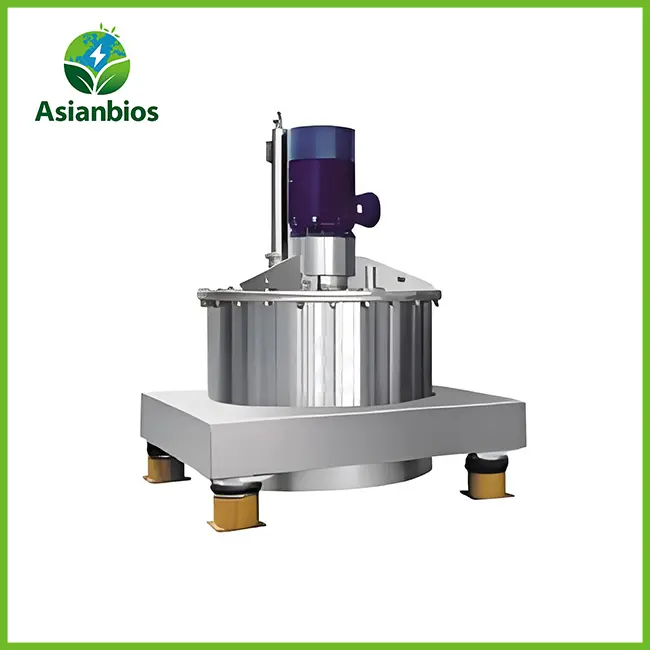
The main body for real moisture removal is in stainless steel with precisely engineered heat exchange surfaces allowing for uniform temperature dispersion throughout the material. Internal circulation patterns guarantee that the heat is evenly distributed to all areas of the liquid and avoids hot spots that may otherwise lead to uneven deterioration even under an overall moderate processing environment.
Vacuum System and Pressure Regulation
High-performance vacuum pumps are used to maintain the negative pressure conditions needed for low temperature boiling and run constantly to offset pressure rises as vapour builds up during active evaporation. Small changes in pressure may alter the effective evaporation temperature sufficiently to impact the stability of sensitive compounds over long processing cycles, therefore the pressure is maintained within tight tolerances using precision vacuum gauges and automated controllers.
Heating and Condensation Networks
Controlled thermal input of evaporation is achieved by multi-stage heat exchangers. This is often in the form of steam or hot water as the heating medium, providing mild, controllable warmth. At the same time, the condensation system recovers the vapour that has been evaporated and converts it back to liquid form, which is a function that is especially relevant for wastewater treatment applications in which the recovery of clean water is a secondary process goal after the concentration of the target material.
PLC Control Interface for Process Management
The modern equipment is equipped with PLC based automation to control temperature, vacuum level, liquid level and discharge time concurrently decreasing the need for continual human monitoring. Operators can see all process parameters in real time on touch-screen interfaces and may make rapid modifications when material qualities or production needs change from one processing batch to another.
Walking Through the Complete Concentration Process
Knowing the practical process gives an insight on how the several components work together to convert dilute liquid to concentrated product.
Initial Material Loading and Preparation
The feed liquid is introduced into the evaporation chamber by automated valves. The level sensors guaranty that the fill volume is correct for effective operation . Such a regulated introduction minimises overloading which may influence the heat distribution or evaporation efficiency and sets a uniform process state for the rest of the concentration cycle in the low temperature evaporator.
Establishing Vacuum Conditions
After material loading is complete, the vacuum system is initiated to gradually drop chamber pressure and provide the negative pressure condition that allows for low-temperature boiling. This phase must be carried out before thermal input becomes considerable. It is important that the decreased boiling point be determined when thermal input is commenced and that moisture removal is carried out gradually from the initial stages of processing.
Controlled Heating and Active Evaporation
When the vacuum is produced, the steam or hot water heating slowly increases the temperature of the material to the desired evaporation temperature, often in the range of 30 to 50°C depending on the sensitivity of the material. As the moisture evaporates, vapour is sent to the condensation system, where cooling causes it to revert to a liquid state, leaving the concentrated material in the evaporation chamber and growing in density as the procedure proceeds.
Final Concentration and Discharge
Processing continues until the material achieves goal density and at this stage, automatic discharge mechanisms release the concentrated product out of the chamber. In contrast, clean-in-place capabilities prepare the equipment for the next batch, preserving the hygienic conditions that pharmaceutical and food-grade applications need, without the need for lengthy human disassembly between production cycles.
If you're trying to determine whether this technology suits your specific material or production volume, our technical team can walk through your requirements and suggest appropriate configurations; feel free to reach out at plantex@asianbios.com for personalized guidance on capacity and processing parameters.
Industries and Materials Suited to This Technology
The delicate nature of the processing of this equipment makes it useful in many applications where the integrity of the compound is a high importance.
Pharmaceutical and Traditional Medicine Applications
The complex bioactive chemicals, which are often found in extracts of traditional Chinese medicine and pharmaceutical solutions, are very vulnerable to temperature destruction. Manufacturers can focus these solutions with a low-temperature evaporator, therefore preserving the therapeutic alkaloids and flavonoids that determine product efficacy and meeting quality standards that increasingly require verifiable compound integrity throughout the manufacturing process.
Food and Beverage Concentration Needs
Producers of fruit and vegetable juice and processors of dairy products utilise this technique to lower the volume of the product for storage and shipping, while maintaining the flavour, colour and nutritional properties that characterise the quality the customer sees. Gentle processing allows concentrated juices to better retain the characteristics of fresh-pressed goods than other processes, which include higher-heat, typical evaporation procedures.
Biotechnology and Fermentation Processing
In particular, fermentation liquids, enzyme solutions and probiotic cultures need careful temperature regulation. Too much heat might kill off useful bacteria or denature functioning proteins altogether. The equipment is highly adapted to biotechnological applications where the preservation of biological activity has a direct impact on the value of the final concentrated product. This is due to its capacity to maintain low temperatures continuously throughout concentration.
Industrial Wastewater Treatment Applications
This method, besides concentrating products, may be also used for environmental applications by lowering the amount of wastewater and perhaps recovering valuable chemicals contained in industrial discharge streams. This dual role, addressing both waste reduction and resource recovery, has made the technology more important for enterprises looking to increase both environmental compliance and material economy.
| Industry Sector | Primary Material Processed | Key Preservation Priority |
|---|---|---|
| Pharmaceutical/TCM | Herbal extracts, active ingredients | Bioactive compound integrity |
| Food & Beverage | Fruit juice, dairy products | Flavor, color, nutritional content |
| Biotechnology | Fermentation broths, enzymes, probiotics | Biological/enzymatic activity |
| Environmental Treatment | Industrial wastewater | Volume reduction, compound recovery |

Key Advantages That Define Modern Evaporator Technology
In addition to fundamental functioning, manufacturers are increasingly opting for this technology over traditional concentration methods due to many distinct benefits.
Energy Efficiency Through Advanced Heat Recovery
Modern systems generally include heat pump technology and optimised heat exchange architecture to dramatically minimise energy usage when compared to older evaporation processes. This efficiency is achieved by the recovery of thermal energy from the condensation process and its reapplication to the incoming material, thus decreasing the total external energy input necessary to reach target concentration levels during prolonged production cycle
Compact Construction and Space Efficiency
Depending on the setup, it can handle from 50 to 5000 L/h of processing, however it usually has a relatively small footprint compared to prior concentration methods. Stainless steel design provides the strength of the structure with the corrosion resistance needed to enable businesses to add high-capacity processing capabilities without taking up too much valuable floor space that might be used for other production equipment.
Automation Supporting Consistent Quality
The PLC driven automation of the concentration guarantees that the parameters are kept the same for multiple operators, shifts and production batches, thereby eliminating the variability in quality that may be caused by human operation. This constancy of particular value to regulated sectors such as pharmaceuticals, where repeatability from batch to batch is a basic need for compliance with quality control requirements.
Conclusion
A low-temperature evaporator is vacuum-assisted concentration equipment that removes moisture at 30-50°C, protecting heat-sensitive compounds that conventional high-temperature evaporation would degrade. From pharmaceutical extracts to fruit juices and fermentation liquids, this technology combines gentle processing with energy-efficient, PLC-automated operation, making it an essential tool for industries prioritizing product quality alongside efficient, compliant concentration processes.
FAQ
Q: How does this equipment achieve evaporation at such low temperatures?
A: It uses vacuum conditions, typically -0.08 to -0.098 MPa, which significantly lowers water's boiling point, allowing moisture removal at 30-50°C instead of the 100°C required under normal atmospheric pressure.
Q: What types of materials benefit most from this technology?
A: Heat-sensitive materials like traditional medicine extracts, fruit juices, fermentation liquids, and enzyme solutions benefit most, since these materials would otherwise degrade under conventional high-temperature concentration methods.
Q: Is this equipment suitable for both small-scale and large-scale production?
A: Yes, processing capacity typically ranges from 50 to 5000 L/h, allowing configurations suited to both small trial production runs and large-scale continuous industrial operations.
Partner with Asianbios for Gentle Concentration Technology
Looking for reliable equipment to concentrate heat-sensitive materials without compromising quality? Our low-temperature evaporator solutions combine vacuum-assisted processing with PLC automation to protect active compounds across pharmaceutical, food, and biotechnology applications. With customizable capacity, energy-efficient design, and comprehensive installation support, we help you achieve consistent, high-quality concentration results. Contact our team at plantex@asianbios.com today to discuss your specific material requirements and receive a tailored equipment recommendation.
References
1. Geankoplis, C. J. (2003). Transport Processes and Separation Process Principles. Prentice Hall.
2. Perry, R. H., & Green, D. W. (2008). Perry's Chemical Engineers' Handbook. McGraw-Hill.
3. Minz, P. S., Saini, C. S., & Kumar, A. (2019). "Vacuum Evaporation in Food Processing." Journal of Food Science and Technology.
4. Fellows, P. J. (2017). Food Processing Technology: Principles and Practice. Woodhead Publishing.
5. Niazi, S. K. (2019). Handbook of Pharmaceutical Manufacturing Formulations. CRC Press.
6. Bhatia, S. (2018). Introduction to Pharmaceutical Biotechnology: Concepts and Techniques. IOP Publishing.
About the Author

Asianbios
Our purpose is to forge a legacy of stewardship, advancing initiatives that honor and preserve the ecological integrity of our planet.

Send Inquiry
Related Industry Knowledge
- Compound Amino Acids Benefits for Skin and Nutritional Support
- Prepare for a Good Night’s Rest with These Sweet Sleep Aid Jelly
- Where can I buy high-quality ergothioneine powder online?
- Benefits And Usage Of Dried Kale Powder
- How to use freeze dried strawberry powder?
- Is powdered kale good for you?
- Sea Buckthorn Freeze-Dried Powder Guide 2026: Skin, Health Benefits & How to Use It
- What is apple green powder?
- Benefits of Best Sleep Aid Tablets for Stress Relief
- Is kiwi powder good for you?