Best Sea Buckthorn Freeze-Dried Powder: Buying Tips, Applications, and Key Advantages
The bioactivity of fresh sea buckthorn berries is preserved in concentrated, nutrient-dense freeze-dried powder. This plant component is top-notch for industrial recipes. This lyophilized powder retains vitamin C, flavonoids, and omega fatty acids due to low-temperature processing. It's ideal for supplement, cosmetic, and functional food firms. Business-to-business purchasers may ensure product quality and supply chain stability by understanding how Sea Buckthorn Freeze-Dried Powder is created, utilized, and purchased.

What Makes Freeze-Dried Sea Buckthorn Powder Unique
In a controlled vacuum, vacuum lyophilization removes water from fresh berries at -25°C to -40°C to make Sea Buckthorn Freeze-Dried Powder. This process converts whole sea buckthorn fruits into a stable, fine orange powder that preserves heat-sensitive compounds. By preventing vitamin C degradation, freeze-drying preserves nutritional value. Some varieties contain over 1500mg per 100g.
Core Nutritional Profile and Bioactive Components
Many clinically essential compounds make the powder valuable in the market. They contain ten times more vitamin C than citrus fruits and a potent antioxidant flavonoid compound of quercetin and isorhamnetin. Omega-7 palmitoleic acid and beta-carotene, which support epithelial health, remain active. Due to its high vitamin density, the powder can be utilized in concentrated plant-based recipes without adding artificial substances to strengthen them.
Quality Specifications for Industrial Buyers
Lyophilized Sea Buckthorn Freeze-Dried Powder satisfies high technical criteria for business-to-business purchasing. A fine, loose powder that passes through 100% of 80-mesh sieves ensures good dispersibility in aqueous and oil-based systems. Stability during storage and processing is achieved by keeping moisture below 5%. Its 35–50g per 100ml bulk density allows automatic manufacturing line dosing accuracy, and its water solubility makes it easy to incorporate into drinks and supplements. Plate counts must be below 10,000 CFU/g and yeast-mold levels below 1,000. The microbiological safety limits match international food safety regulations. Lead cannot exceed 2ppm in heavy metal profiles, and arsenic must be controlled. These specifications demonstrate FDA, ISO, and HACCP approval, giving procurement managers confidence for downstream applications.
Comparing Sea Buckthorn Freeze-Dried Powder With Alternatives
Freeze-Dried Powder vs. Fresh Berries and Juice Concentrates
Know the workplace benefits of Sea Buckthorn Freeze-Dried Powder goods before choosing one. Because they're short-lived and seasonal, fresh berries provide the best taste and nutrition but are hard to find. They're heavy and need to be kept cold, making shipping expensive. Because they are liquid, juice extracts are convenient, but thermal processing lowers their vitamin C content by 30 to 60% and makes them more susceptible to oxidize during storage. Because it lasts two years and can be stored, freeze-dried powder solves these issues. Due to its condensed shape, it ships 90% lighter than fresh fruit and is available year-round. Rehydration helps formulators return the consistency to pulp, and the stable powder format lets them measure correctly. Research shows that freeze-dried material retains essential antioxidants above 95% better than thermally processed equivalents.
Organic Certification and Its Commercial Implications
Choosing organic or regular Sea Buckthorn Freeze-Dried Powder affects market positioning and price. Organic clearance increases raw material costs by 25–40%, but it opens up premium North American and Western European market areas with significant development trajectories. Organic powder must be grown, harvested, and processed according to USDA or EU Organic standards, which restrict synthetic pesticides and require traceability. Organic-certified raw materials help manufacturers serving natural health merchants, luxury beauty brands, and certified organic finished products preserve supply chain integrity. Feed additives and food colorants use conventional powder for cost-sensitive applications without organic claims. Both versions need third-party contamination testing and batch-to-batch performance.
Evaluating Supplier Credentials and Certifications
Trustworthy suppliers have transparent quality documentation and international certifications. Look for GMP, FSSC 22000, and ISO 9001 facilities. HALAL and KOSHER certifications increase finished product market reach for specific customer segments. USDA and Ecocert organic certifications verify sustainable sourcing. Assess suppliers' production capacity, testing capability, and willingness to supply batch-specific CoAs beyond certifications. Suppliers with HPLC testing equipment can validate active chemical quantities, while those with microbiological and heavy metal reports demonstrate quality control. You can learn about reliability and service quality from established clients in your desired industry.
Buying Tips for Sea Buckthorn Freeze-Dried Powder in Bulk
Defining Your Application Requirements
You must know how Sea Buckthorn Freeze-Dried Powder will work in your recipe before buying it. For vitamin C-focused nutraceuticals, producers may need to guarantee minimum concentrations and uniformity. To determine antioxidant activity, cosmetic producers should request total flavonoid content and ORAC values. Beverage developers must test solubility, flavor intensity, and color stability at different pH levels. Target markets' regulatory requirements vary greatly. For specific purposes, European markets require Novel Food authorization, while US products must meet FDA dietary supplement or food additive regulations. Understanding these regulations before hiring suppliers avoids costly reformulation or certification delays. Clarify your compliance needs during initial negotiations to ensure providers deliver adequate documentation.
Strategic Supplier Evaluation Criteria
Potential vendors are evaluated on more than pricing. If a provider has a minimum one-ton inventory of standard specs, they can fulfill requests within 10 days. Product development cycles should match bespoke formulation lead times, with 20 working days industry typical for personalized specifications. Trial phases and inventory management are greatly affected by MOQ. Low MOQs and 1kg samples allow extensive testing before committing to big numbers, lowering product development financial risk. One-day responses and transparent order tracking from suppliers improve operations in time-sensitive scenarios. Evaluate their technical support, especially if you need formulation or application advice. Supply chain resilience improves with flexible logistics. Partnering with DHL, FedEx, and regional freight forwarders allows for pricing and delivery flexibility. Sea freight optimises prices for established products with stable demand, whereas air freight meets urgent needs. Knowing the supplier's export documentation skills saves port customs delays.
Negotiating Terms for Long-Term Value
Bulk purchases should save money immediately and maintain the relationship. Volume-based pricing encourages larger commitments but requires demand forecasting to prevent inventory carrying costs. Request raw material, processing, quality testing, and logistical pricing breakdowns to find bargaining opportunities. 30-day net or letter of credit payment periods effect working capital management differently across business models. Quality guarantee clauses set acceptance criteria and remedial mechanisms to prevent batch discrepancies. Establish analytical parameters, non-conforming shipment dispute procedures, and replacement or refund policies. Rights-to-audit provide supplier quality system verification, boosting confidence. To eliminate single-source risk, exclusive supply agreements may offer better pricing but require careful supplier financial and production evaluation.
Applications and Integration of Sea Buckthorn Freeze-Dried Powder in B2B Industries
Cosmetic and Personal Care Formulations
Carotenoids, vitamins, and vital fatty acids in Sea Buckthorn Freeze-Dried Powder improve the skin, thus the cosmetics industry adores it. The powder's antioxidant combination fights free radicals that accelerate aging, while vitamin E repairs lipid barriers in anti-aging serums. Especially for dry or injured skin, moisturizers and skin restoration solutions use palmitoleic acid's epithelial tissue regeneration properties. The powder's brilliant orange color allows businesses to use clean-label natural colorants instead of synthetic dyes. Fine particles and water solubility allow grittiness-free dispersion in emulsions, gels, and aqueous creams. Formulators should consider the powder's acidic taste and scent when making leave-on products, which usually compliment natural and organic positioning. Use 0.5% to 3% depending on color intensity and functional claims.
Nutraceutical and Dietary Supplement Integration
Supplement manufacturers like that the powder can be delivered in multiple ways. Low moisture in powder minimizes clumping and maintains flowability during automated encapsulation, benefiting capsule formulations. Tablet pressing uses the powder as an active ingredient and natural colorant, although its compressibility may require excipient blending to reach required hardness. Soft gel makers can use sea buckthorn powder in oil-based fillings to highlight its omega fatty acids. Functional food is a fast-growing application. This powder dissolves well in smoothie bases, protein powders, and meal replacement beverages, adding color and a hint of tartness. The substance is used in energy bars and snacks for antioxidants and visual appeal. Sea buckthorn's immunological and cardiovascular advantages are supported by clinical research and freeze-dried minerals' high bioavailability.
The powder's light sensitivity and oxidation potential must be monitored during formulation. To prolong shelf life, use opaque packaging and natural preservatives such mixed tocopherols. Rapid stability testing confirms the formulation's efficacy throughout its shelf life.
Food and Beverage Innovation Opportunities
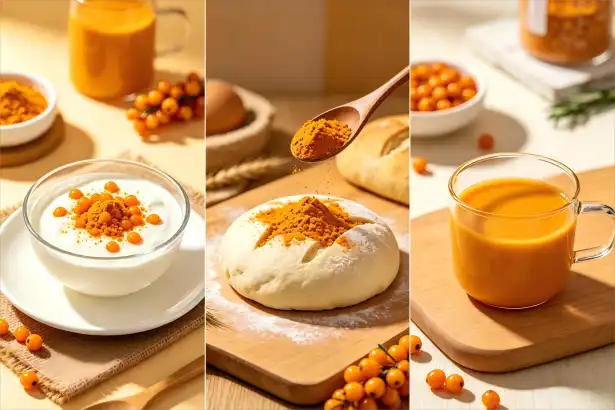
The powder's quick dispersibility helps beverage formulators differentiate functional drinks. Wellness shots, vitamin-enriched waters, and natural energy beverages can be made without hot processing that degrades nutrients due to cold-water solubility. The real berry flavor adds unique flavor and clean-label positioning, especially in markets where customers want citrus alternatives. Bakeries utilize the powder to enrich healthy bread, muffins, and nutrition bars. Heat stability at baking temperatures preserves many useful chemicals, but vitamin C concentration may decrease. Plant-based yogurts include nutritional benefits and natural coloration. Formula tweaking is needed to balance flavor and functional microorganisms due to the powder's acidity. Animal health advantages of sea buckthorn are becoming recognized by pet food and feed makers. Omega fatty acids keep companion animals' coats and skin healthy, while antioxidants boost immunity. Joint support and vitality are in equine nutrition supplements. Palatability and cost-effectiveness at relevant inclusion rates are needed for feed applications.
OEM and Private Label Customization
Brands can use specialist production expertise without investing in processing equipment through contract manufacturing. Rapid market entrance is possible with complete formulation development and packaging from experienced OEM partners. Using one raw material to make tablets, capsules, powders, and gummies simplifies product line development and supplier complexity. Premium organic brands and value-oriented mass market products offer private label options. Formulation, packaging, dose forms, and organic, vegan, or allergen-free certification support are all customizable. Private label capsule manufacture typically requires 5,000–10,000 units. Brand owners should verify that OEM partners have target market certifications and can offer regulatory compliance paperwork.
How to Ensure Product Quality and Long-Term Supplier Partnership
Critical Quality Control Measures
A strong incoming material inspection strategy safeguards your manufacturing from poor raw materials. Sea Buckthorn Freeze-Dried Powder should ship with a current Certificate of Analysis (CoA) indicating moisture content, microbiological safety, heavy metal levels, and active compound concentrations. Before producing material, check these values against your standards. Independent laboratories randomly test supplier data to detect quality drift. Visual and physical inspections can uncover store or handling concerns such off-color appearance, strange odor, or poor flowability in addition to analytical testing. Orange-colored, tart-smelling powder should be consistently fine. Browning indicates oxidation or heat exposure during production or shipping. For applications needing powder reconstitution, rehydration tests swiftly determine quality. Commercial formulas depend on ingredient performance, therefore batch-to-batch uniformity is crucial. Set essential attribute SPC settings and track trends across shipments. Significant variation indicates supplier raw material sourcing or processing issues. Regular supplier audits, whether internal or by external parties, ensure quality processes remain strong and improve.
Building Strategic Supplier Relationships
Problem-solving and creativity in long-term collaborations add value beyond commerce. Suppliers may predict future needs and assign production capacity with transparent product roadmap communication. Shared market information and customer trends allow providers to invest in new certifications or processing methods that benefit both sides. Quality indicators, delivery reliability, and service responsiveness are discussed in quarterly or biannual performance reviews. Discuss triumphs and areas for improvement to retain accountability and recognize good performance. Technology and competitiveness are strengthened by joint development projects including optimizing extraction parameters for specific applications or researching sustainability enhancements. Maintaining consistency and investing in the connection builds trust. Honoring payment terms and volume commitments shows your reliability as a customer, frequently resulting in preferential treatment amid supply limitations or access to rare premium commodities. Strategic accounts receive improved support during challenges and early access to innovations or attractive pricing on new products.
Conclusion
A versatile, nutrient-dense ingredient, Sea Buckthorn Freeze-Dried Powder is used in nutraceuticals, cosmetics, and functional meals. Its low-temperature processing, extended shelf stability, and concentrated format solve B2B procurement and product formulation issues. To source successfully, evaluate suppliers on quality certifications, production capabilities, and communication responsiveness and negotiate terms that balance cost efficiency and supply chain reliability. Knowing the powder's technical specs and application requirements helps producers maximize its functional benefits in completed products.
Frequently Asked Questions
1. Why does freeze-dried sea buckthorn powder outperform other forms?
Lyophilized food retains heat-sensitive vitamins and antioxidants at close to their natural condition, keeping over 95% of vitamin C compared to 40-70% in spray-dried or thermally processed equivalents. The porous structure formed during ice crystal sublimation improves bioavailability and formulation flexibility by rehydrating and dissolving. Logistics costs and inventory management are simplified by two-year shelf life and condensed structure.
2. What safety considerations apply to commercial use?
Most jurisdictions recognize food-grade sea buckthorn powder as GRAS (Generally Recognized As Safe) with no common allergies. Applications vary, but finished products typically contain 0.5–5%. Vitamin K should be discussed with blood-thinning patients. Maintaining quality during storage requires guarding from moisture, light, and heat.
3. How can buyers verify authenticity and quality?
Request a thorough CoA with HPLC verification of active chemicals, microbiological testing, and heavy metal screening. ISO, GMP, and organic certifier certifications enable independent validation. Small sample orders let you test color, scent, solubility, and performance in your recipe before buying bulk.
Partner with Asianbios for Premium Sea Buckthorn Freeze-Dried Powder
Asianbios provides worldwide manufacturers with superior quality, technological expertise, and customer service. Our CE, FDA, and ISO-compliant Sea Buckthorn Freeze-Dried Powder enhances nutrient retention and safety and stability utilizing modern processing technologies. With DHL, FedEx, and SF Express agreements for reliable global logistics, we stock over one ton of inventory for 10-day shipping. We offer flexible minimum order quantities starting at 1kg for sampling and OEM/ODM capabilities for tablets, capsules, powders, and gummies as an experienced sea buckthorn freeze-dried powder supplier. The CGMP, FSSC22000, HALAL, KOSHER, and Organic certifications ensure conformity in varied regulatory markets. Beyond product supply, technical support includes formulation and laboratory verification. Contact us at plantex@asianbios.com to discuss how Asianbios can improve your supply chain with quality and responsiveness.
References
1. Beveridge, T., Li, T. S., Oomah, B. D., & Smith, A. (2002). "Sea Buckthorn Products: Manufacture and Composition." Journal of Agricultural and Food Chemistry, 50(26), 3495-3501.
2. Kallio, H., Yang, B., & Peippo, P. (2002). "Effects of Different Origins and Harvesting Time on Vitamin C, Tocopherols, and Tocotrienols in Sea Buckthorn Berries." Journal of Agricultural and Food Chemistry, 50(21), 6136-6142.
3. Ruan, C., Li, D., & Chen, J. (2007). "Advances in Processing Technologies for Sea Buckthorn." Food Science and Technology International, 13(4), 267-275.
4. Upadhyay, N. K., Kumar, M. S., & Gupta, A. (2010). "Mechanism of Wound-Healing Activity of Hippophae rhamnoides L. Leaf Extract in Experimental Burns." Evidence-Based Complementary and Alternative Medicine, 7(3), 337-345.
5. Yang, B., & Kallio, H. P. (2001). "Fatty Acid Composition of Lipids in Sea Buckthorn Berries of Different Origins." Journal of Agricultural and Food Chemistry, 49(4), 1939-1947.
6. Zeb, A. (2004). "Chemical and Nutritional Constituents of Sea Buckthorn Juice." Pakistan Journal of Nutrition, 3(2), 99-106.

Send Inquiry
Related Industry Knowledge
- How Tryptophan Production Technology Improves Yield
- Is sea buckthorn powder good for you?
- Uses of Glutathione Production Technology in Pharma
- Lysine Production Technology Price Factors Explained
- What is Sleep Aid Brewing Powder? Sleep Drink Guide
- Freeze Dried Strawberry Powder: How to Make, Benefits and Uses
- Uses of Threonine Production Technology in Agriculture
- Sea Buckthorn Powder: How to Use in Your Diet
- How to Incorporate Freeze Dried Kale Powder into Your Daily Meals for Optimal Health?
- Future Trends in Freeze Dried Strawberry Powder