Erythritol Production Process: How Crystallization Affects Yield
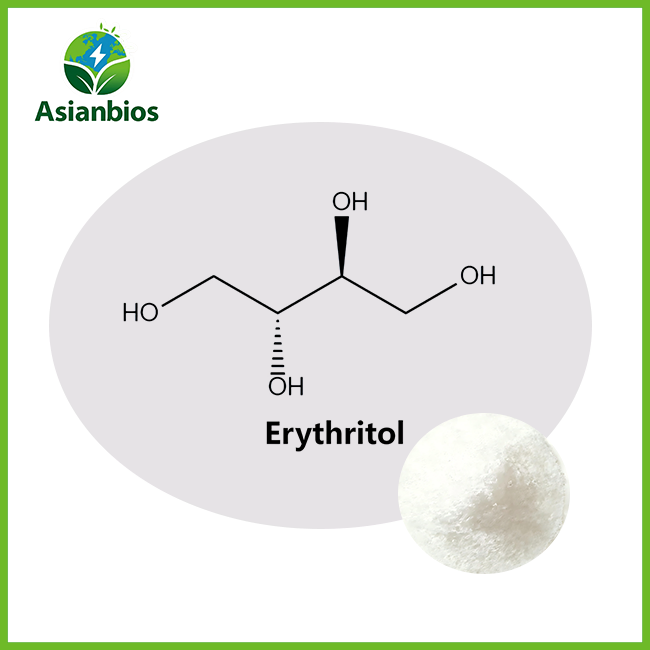
Erythritol is produced by fermentation of glucose from starch, followed by purification, crystallization, and drying and packaging as a white crystalline powder. A common way of determining the amount of material dissolved that is to be transformed into a salable powder is crystallization in the erythritol production process. Control of supersaturation, chilling and seeding helps produce large and uniform crystals. The crystals separate quickly, leaving less erythritol in the mother liquor. If these conditions are not properly controlled, the process can produce fines, soggy cake and excessive recycling. This manual is intended for plant owners, chief engineers and buyers who want to find out where yield is gained or lost.


Erythritol Production Process: From Raw Materials to Finished Powder
Raw Materials and Microorganisms
In commercial plants the starch (mostly maize starch in the US and China) is hydrolysed to glucose syrup. The quality of the glucose is very important. Ash, colour and residual protein all get into the broth and ultimately affect crystal formation. The glucose is subsequently fermented by osmophilic yeast or fungus. The most often reported species resistant to high concentrations of sugar in the literature are Moniliella pollinis, Yarrowia lipolytica and Trichosporonoides megachiliensis . Strain is more important than titer. A strain which produces less glycerol, ribitol and arabitol, provides a cleaner solution to the crystalliser and higher recovery. But I'd usually get a whole erythritol manufacturing process bundle and ask about strain licensing and stability across several batches.
Fermentation Conditions and Glucose Conversion
The yeasts divert glucose into the pentose phosphate pathway and accumulate erythritol as an osmoprotectant under high osmotic pressure. Fermentation is mostly aerobic and its performance is affected by dissolved oxygen and agitation. Industrial medium contain 250 g/L glucose or more and osmotic stress is controlled by fed-batch feeding. Reported yields from glucose are 40 to 50%. Reported titers are 150 to 200 g/L. However, a large number of fermentation batches does not guarantee high final output. It is lowered by cell removal and filtering, and by crystallisation and losses in the mother liquid. I suggest to teams to think about fermentation yield, crystallisation yield, recovery yield and overall yield as four separate measures.
Erythritol Production Process Flow Chart
The yield risk for each step of the erythritol manufacturing process is shown in the table below.
| Stage | Main task | Yield risk |
|---|---|---|
| Glucose preparation | Hydrolyze starch into clean syrup | Impurities carry forward |
| Fermentation | Convert glucose into erythritol | By-products, low titer |
| Clarification and purification | Remove cells, color, and ions | Fouling, dark color |
| Concentration | Raise solids content | Heat color, high viscosity |
| Crystallization | Form crystals from solution | Fines, mother liquor loss |
| Separation and washing | Split crystals from liquor | Dissolved product loss |
| Drying and packing | Reach moisture and size targets | Caking, fines |
Every stage adds value, but in crystallization the little mistakes of control become the major evident losses.
Broth Purification Before Crystallization
Solid-Liquid Separation and Cell Removal
After fermentation, liquid broth includes yeast cells, proteins and suspended particles. They are removed via plate-and-frame filters, centrifuges, or micro- and ultrafiltration membranes. Incomplete removal will dirty the resin beds and evaporator surfaces, increase the number of filtering cycles and darken the solution. Membranes provide excellent permeate but need strict cleaning techniques. Centrifuges can pass microscopic particles , yet can manage large masses . It would be helpful to monitor the turbidity and the filtrate flow rate after each batch. Sometimes a continuous descent means that something went wrong in the crystalliser days ago. Clear broth means the process of making erythritol may be done batch after batch again and again.
Decolorization and Ion Exchange
During fermentation and heating colour compounds are formed and eliminated using activated carbon. Then the salts and organic acids and other charged impurities are removed using cation and anion exchange resins. Both processes directly influence crystallisation. Dissolved impurities increase the viscosity and retard crystal formation, and may be present on the crystal surface or in the mother fluid. Some industries utilise chromatographic separation to extract polyols such as glycerol and ribitol, adding to capital and operating expenditure. I keep an eye on the carbon dosage, the frequency of resin regeneration and the output conductivity. Clean, low conductivity feed results in predictable crystal formation rates and a larger percentage of erythritol as powder.
Concentration Before Crystallization
Multi-effect or falling-film evaporators boost the solids concentration, thus the solution is supersaturated on cooling. The goal requires balance. An excessively dilute feed results in little powder every cycle. High feed concentration increases viscosity, decreases heat transmission, and may lead to uncontrolled nucleation. So evaporator residence time counts, since long heat exposure darkens the syrup. Since erythritol solubility increases with temperature, the theoretical recovery is defined by the combination of the hot feed and the cooled slurry. Inline refractometers allow the operator to maintain the feed at a predetermined Brix. A stable feed concentration is a necessary requirement for any reliable production technology of erythritol.
Erythritol Crystallization Process: The Main Driver of Product Yield
Why Crystallization Affects Erythritol Recovery
Crystallization separates erythritol from the sugars, polyols, salts and color that remain dissolved. The maximum possible recovery is obtained by subtracting the solubility at the final temperature from the initial concentration. Real yield goes below that ceiling when crystals remain tiny, when cake contains moist mother liquor, or when sluggish development cuts the batch short. Supersaturation is the driving force for nucleation and growth, and every strategy is based on regulating it, as Mullin’s classic work on crystallization explains. That can send a significant amount of erythritol back to recycling or waste when one percentage point of crystallization recovery is lost. This is why the erythritol synthesis process lives or dies at this phase.
Supersaturation, Nucleation, and Cooling Rate
Two boundaries bound the supersaturation. If it is too low, crystals are sluggish to develop. If it is too high, fines erupt as nuclei. A slow, programmed cooling curve maintains the solution in the metastable region, so the existing crystals absorb the erythritol in solution. In many plants the cooling is gradual at first and then rapid as the crystal surface area increases with time.
| Condition | Typical effect |
|---|---|
| Rapid cooling, high supersaturation | Burst nucleation, many fines, slow filtration, wet cake |
| Gradual, controlled cooling | Growth on existing crystals, larger and more uniform size |
| Too little supersaturation | Slow growth, low recovery, long cycle |
I utilize this comparison when I teach teams on the erythritol manufacturing process, since the cooling curve is the simplest variable to change and check.
Seeding, Agitation, and Residence Time
Seeding consists of adding a regulated quantity of tiny erythritol crystals at a specified temperature. The seeds provide a site for growth to occur and limit random nucleation. The ultimate crystal size distribution is determined by seed number, size and addition point. Agitation should maintain slurry homogeneous without crystal breakage. Excess speed and local supersaturation generate secondary nucleation and fines, whereas inadequate mixing leads to agglomeration. Residence time must be sufficient for the completion of growth, and the crystallizer design—jacketed batch tank or continuous unit—will dictate how successfully these conditions are maintained. I would suggest that we record the seed load and seeding temperature on each batch record so that the engineers may subsequently correlate particle size to yield in the erythritol manufacturing process.
Crystal Separation, Drying, and Common Crystallization Problems
Separating and Washing Erythritol Crystals
Basket or pusher centrifuges, vacuum or pressure filters are usually used to separate the crystals from the mother liquid. Big, even crystals drain more quickly and retain less water. Fines get caught in the cloth or screens and hold the liquor, which takes contaminants into the dry powder. The water wash eliminates surface liquor and increases purity, but also dissolves some erythritol, and the wash stream should be treated or recycled. I look at wash volume per ton, cake moisture and erythritol concentration of filtrate all together so a purity increase never masks a yield loss. The erythritol manufacturing method balances purity, water usage and loss via sound washing practices.
Drying, Milling, and Packaging
Wet crystals are conveyed to fluid-bed or other dryers until moisture is within specification. Loss on drying specifications for typical food-grade monographs such as the Food Chemicals Codex are around 0.2 percent or less. Over-drying consumes energy and may generate fines, while under-drying creates caking in storage. Then plants screen and grind as required and mix to meet particle-size goals. Asianbios provides white erythritol powder in 25kg drums, supplied by express, air or sea, with OEM/ODM manufacture available. The batch traceability goes back to the crystallization and drying records for each barrel, which is helpful if a client has a query about a lot.
Troubleshooting Common Problems
Most crystallization issues are due to a small set of factors. First, check the process data and then do controlled correction trials, instead of making multiple adjustments at once.
| Problem | Likely cause | First check |
|---|---|---|
| Low yield | Weak feed concentration, poor seed, high impurities, warm end temperature | Mother liquor assay, end temperature |
| Excess fines | Rapid cooling, high agitation, secondary nucleation | Cooling curve, stirrer speed |
| Agglomeration | Uneven mixing, local supersaturation, long residence | Mixing pattern, residence time |
| Discoloration | Weak clarification or decolorization upstream | Broth color, carbon, resin condition |
Discoloration often originates upstream, therefore correcting the crystallizer alone seldom cures the problem.
How to Improve Crystallization Yield and Judge a Technology Package
Start With a Mass Balance
Check the mass balance before changing parameters. Record feed concentration, erythritol content of mother liquor, crystal recovery, particle size distribution, separation time and cake moisture. These statistics tell us what happened to the erythritol. If mother liquor is still a large percentage, concentrate on the supersaturation window, end temperature and seeding. If the recovery is excellent but the separation is slow, then it is a matter of particle size. The mother liquor may be treated again or recycled, but each loop adds impurities, so watch the color, conductivity and by-products. This method turns the production technology of erythritol into measured engineering instead of a guessing game.
Validate Changes at Pilot Scale
A tweak that seems good on paper might be a failure in a full tank. Pilot or small-scale trials prior to any plant-wide change are recommended to compare recovery, purity, energy use, water use, cycle time and rework. Principal engineers often ramp up from small-scale trials to pilot to commercial size in phases, and each step should yield data from at least three consecutive batches. A stable process is shown by several consistent runs of the same process, while a single excellent run only demonstrates that the process is doable. Asianbios provides professionals and labs to provide experimental verification, product solutions and technical support.
Evaluate the Technology Package and Supplier
Effective use of technology is 30 percent method and 70 percent local implementation, says Asianbios. I agree with that distinction, thus I seek beyond the description of the technique. Obtain equipment list, operating parameters, energy and consumption figures, strain licensing conditions and training/commissioning plans. For US sales, check erythritol’s FDA GRAS status, labeling requirements and supplier paperwork including certificates of analysis, HACCP, ISO 9001 and FSSC 22000 and Halal or Kosher if applicable. A 2023 Nature Medicine study identified an association between elevated blood erythritol and cardiovascular events in observational data, and research is continuing, so keep client communications up-to-date. Ask for samples from different batches.

Conclusion
The quantity of erythritol that exits the fermentor and ends up as powder on the drum is controlled by crystallization. The erythritol production process starts with pure glucose and a stable high-yield strain; however, the final yield is not exclusively dictated by the fermentation titer. Clarification, decolorization, ion exchange, and concentration produce a feed that promotes uniform crystal formation. By managing supersaturation, cooling slowly, seeding uniformly, agitating appropriately and giving a suitable residence time, large crystals are produced that can be separated, washed and dried with little loss. Data from mass balances and pilot trials indicate where recovery is lost. A technology package should be evaluated as much for documentation, training and sample consistency as for process promises.
FAQ
1. What raw materials does the erythritol production process use?
The process typically uses corn or another starch source that is converted into glucose, together with nutrients and a selected yeast or fungal strain capable of producing erythritol under high-osmotic conditions. The quality of the glucose and the characteristics of the microorganism both affect fermentation performance and downstream recovery.
2. Why does crystallization affect erythritol yield?
Crystallization determines how much erythritol is recovered from the solution. Poor supersaturation, chilling or seeding will leave product in the mother liquor or generate fines that do not separate well.
3. How can manufacturers improve crystallization yield?
Begin with a mass balance and then change feed concentration, cooling curve, seeding and agitation. Validate each modification using pilot data prior to full-scale usage.
4. What should buyers ask before a bulk order?
Request specifications, certificates of analysis, certifications, multi-batch consistency data, packaging information, lead times, minimum order quantity and OEM or private-label assistance.
Request an Erythritol Production Process Consultation from Asianbios
Asianbios provides a technological approach for plants and brands who require a defined erythritol production process. We provide samples from 1kg, OEM/ODM manufacturing, standardized technical packaging and continued support. Just email us at plantex@asianbios.com with your desired grade, yearly volume, packaging requirements and destination market, and our specialists will get back to you with a strategy. For information visit asianbios.com.
References
-
Nature Medicine, 2023. "The artificial sweetener erythritol and cardiovascular event risk."
-
Applied Microbiology and Biotechnology, 2010. "Biotechnological production of erythritol and its applications."
-
Critical Reviews in Biotechnology, 2018. "Recent advances in biological production of erythritol."
-
Yeast, 2018. "Erythritol production by yeasts: a snapshot of current knowledge."
-
Crystallization (J. W. Mullin, Butterworth-Heinemann), 2001.
-
Regulation (EC) No 1333/2008 on food additives, 2008.
About the Author

Asianbios
Our purpose is to forge a legacy of stewardship, advancing initiatives that honor and preserve the ecological integrity of our planet.

Send Inquiry
Related Industry Knowledge
- Erythritol Production Process: How Crystallization Affects Yield
- How Pure Saffron Extract Powder Supports Natural Wellness
- Multi-effect Evaporator machine: How It Works and Where It Is Used
- Protease Production Technology Process: Complete Manufacturing Guide
- American Ginseng Extract Powder Benefits for Energy and Wellness Support
- What Does Ergothioneine Powder Do For Skin?
- Hyaluronic Acid: What It Is and How to Use It
- How Production Technology Of Hyaluronic Acid Controls MW
- Is kiwi powder good for you?
- Dried Kale Powder for Supplements: A Complete Guide