How to Choose the Right Trial Fermentation Vessel for Your Lab
Choosing the correct Trial Fermentation Vessel is a critical choice for any lab involved in microbial research, bioprocess development or advanced biotechnological applications. The specialized equipment provides a controlled, small-scale environment that replicates commercial fermentation settings, enabling investigators to screen strains, refine procedures and produce novel products with accuracy. The Trial Fermentation Vessel is intended for laboratory use, not for large-scale fermentors, and allows the flexibility of running several trials with very little material loss. Its capacity to maintain sterile conditions and precisely manage essential parameters makes it a vital tool for furthering scientific discoveries and industrial applications equally.

Understanding the Fundamentals of Trial Fermentation Vessels
The Core Purpose of a Trial Fermentation Vessel
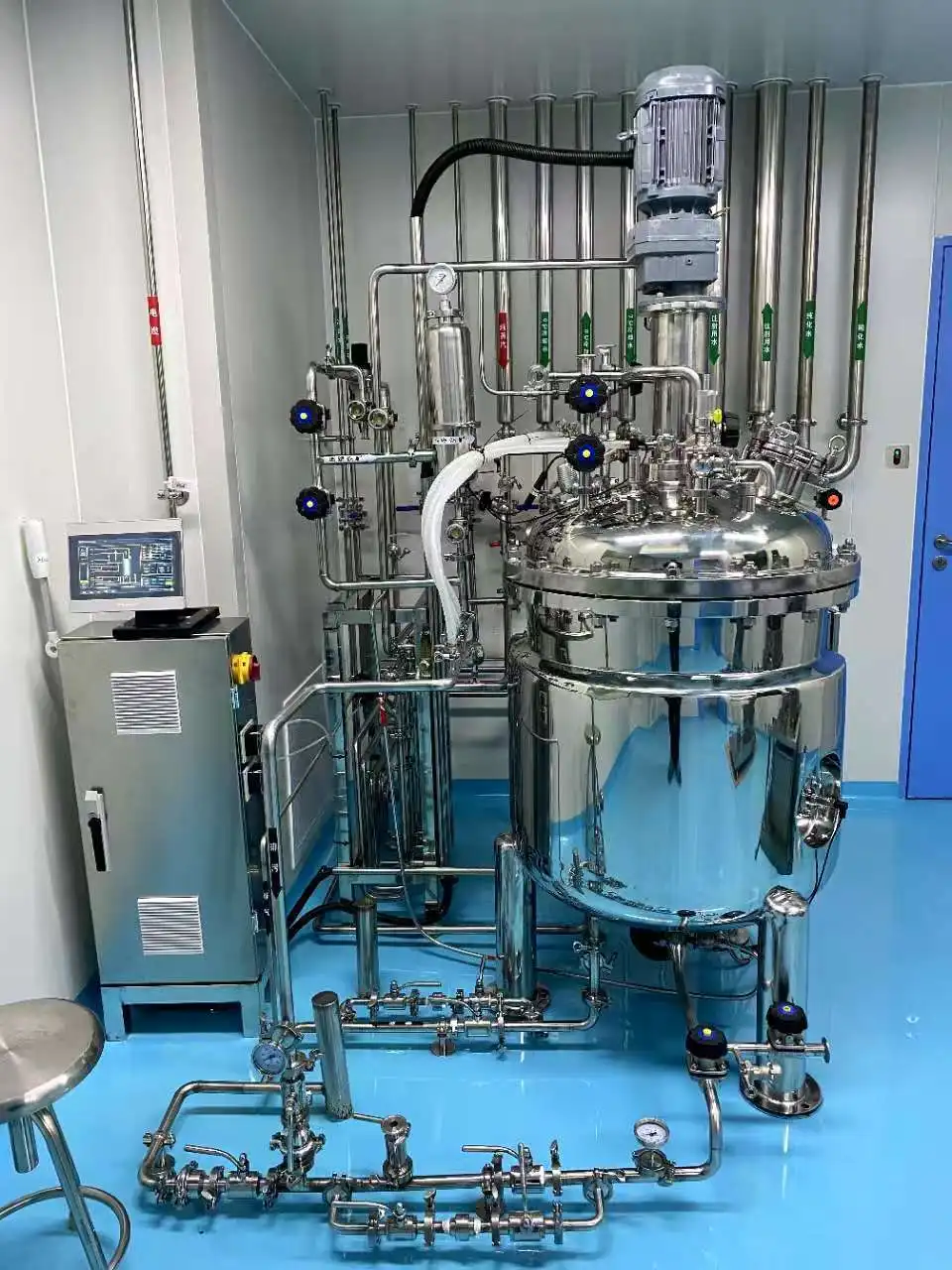
A Trial Fermentation Vessel is a small bioreactor that allows investigators to imitate and examine fermentation processes under controlled circumstances. The equipment is especially developed for small scale trials, often in the range of 10 to 1000 liters, which is appropriate for strain screening, process optimization and initial product development. “The Trial Fermentation Vessel allows scientists to bring industrial conditions down to a laboratory scale and gain valuable knowledge before scaling-up. The small design and excellent control systems enable researchers to get repeatable findings, which are crucial to the validation of novel processes or the improvement of current processes . Using a Trial Fermentation Vessel, laboratories may save money, limit their exposure to risk and speed up the creation of novel biotechnological products.
How Trial Fermentation Vessels Operate
The functioning of a Trial Fermentation Vessel is based on the creation of an appropriate environment for microbial growth and product synthesis. The system usually comprises of a closed tank with a stirring system to guarantee a homogenous mixture, a ventilation system to deliver oxygen, and several sensors to monitor key parameters like temperature, pH, and dissolved oxygen. The Trial Fermentation Vessel maintains these conditions via the use of heating, cooling and precision control mechanisms, enabling investigators to model diverse fermentation situations. The ability to build efficient methods that can be scaled up with certainty is critical for understanding how microorganisms behave in a particular habitat inside this controlled environment.
Why Labs Need Dedicated Fermentation Equipment
Laboratories looking to bridge the gap between initial research and large-scale manufacturing might consider investing in specialist fermentation equipment, such as a Trial Fermentation Vessel. In academic circles, these containers provide students and researchers a realistic platform to explore the fundamentals of fermentation and gain hands-on knowledge. The Trial Fermentation Vessel is a crucial process development tool for industry R&D, enabling scientists to evaluate and optimize fermentation conditions prior to expensive pilot or commercial-scale trials. This intermediate stage is essential to diagnosing any problems, establishing ideal settings, and making sure processes will function as anticipated when scaled up, eventually saving time and costs.
Key Selection Criteria for Your Trial Fermentation Vessel
Determining the Optimal Volume Capacity
One of the first questions to ask when choosing a Trial Fermentation Vessel is the volume capacity needed for your study. The usual range from 10 to 1000 liters provides a lot of versatility, but the appropriate size will depend on the scale of your studies. Smaller vessels (10-50L) are ideally suited for initial strain screening and small-scale experiments, whereas bigger units (500-1000L) are more appropriate for process optimization and pilot research. It is necessary to think about both your present experimental demands as well as your future experimental needs. You may enable your lab to enhance its research capacity without immediately upgrading equipment with a little bigger Trial Fermentation Vessel providing space to develop.
| Volume Range | Typical Applications | Ideal For |
|---|---|---|
| 10-50L | Strain screening, small-scale tests | Academic research, initial R&D |
| 50-200L | Process development, medium experiments | Pilot studies, process optimization |
| 200-1000L | Pilot production, scale-up validation | Pre-commercial testing, larger R&D |
Material Construction and Hygiene Standards
The material used to build your Trial Fermentation Vessel is a key aspect that has a direct influence on its performance, durability and adherence to industry norms. Good grade stainless steel like SUS304 or SUS316L is favored because to its superior corrosion resistance, durability and simplicity of cleaning. For applications with higher purity criteria SUS316L is usually used and provides better resistance to pitting and crevice corrosion. Equally critical for avoiding microbiological contamination and thorough cleaning is the mirror polishing (Ra ≤0.4 μm) of the interior surface finish of the Trial Fermentation Vessel. Using only the best quality materials in your Trial Fermentation Vessel will assure you of a longer life for your equipment and dependable, contaminant free tests.
Control System Capabilities and Automation
Modern Trial Fermentation Vessels are fitted with sophisticated control systems which are critical in controlling accurate fermentation conditions. The PLC (Programmable Logic Controller) with touchscreen interface enables investigators to program, monitor and alter settings with outstanding precision. This management is especially crucial in fermentation operations where the right balance is critical, and tiny changes in temperature or pH may have a large effect. Another important characteristic of a Trial Fermentation Vessel is its capacity to capture and trace data, which enables investigators to document their operations for regulatory compliance and process improvement. A primary factor while considering possibilities should be the sophistication and user-friendliness of the control system.
Technical Specifications That Define Performance
Temperature Control: Precision for Optimal Growth
One of the most important aspects in fermentation is temperature control and the capacity of the Trial Fermentation Vessel to maintain accurate temperatures may considerably affect the result of experiments. These devices provide the precise temperature environment needed for optimum microbial growth and product generation with a control precision of ±0.1 °C. Different microorganisms demand different temperatures, therefore to get repeatable results it is important to be able to keep the temperature constant. The Trial Fermentation Vessel usually is jacketed, with circulating water or electric heating, so that it may be heated or cooled as required during the fermentation process.
pH and Dissolved Oxygen: Critical for Metabolic Balance
Trial Fermentation Vessel is excellent for monitoring and regulating pH and dissolved oxygen levels, which are crucial to successful fermentation. The pH control precision of ±0.02 and the dissolved oxygen monitoring with an accuracy of ±1% enable researchers to maintain the exact conditions needed for the particular bacteria. pH influences the metabolism of the microorganisms and the synthesis of the products. Dissolved oxygen is important for aerobic fermentation processes. The real time monitoring and automated adjustment capabilities of the Trial Fermentation Vessel guarantees that the appropriate conditions are maintained throughout the fermentation cycle, resulting to more consistent and repeatable outcomes.
| Parameter | Control Range | Accuracy | Importance |
|---|---|---|---|
| Temperature | 10–60°C | ±0.1°C | Critical for microbial growth rates |
| pH | 2.00–12.00 | ±0.02 | Affects metabolism and product formation |
| Dissolved Oxygen | 0–100% | ±1% | Essential for aerobic processes |
| Stirring Speed | 50–600 rpm | Stepless | Ensures homogeneous mixing |
Mixing and Aeration: Ensuring Homogeneous Conditions
A Trial Fermentation Vessel is equipped with mixing and aeration systems providing the optimum conditions for microbial growth and product generation. The agitation speed may be varied according to the various microorganisms and process demands using the variable frequency mixing and the usual range is 50 to 600 rpm. The agitation system, in combination with ventilation levels of 0.1–1.5 vvm, provides for adequate mixing and oxygen transfer, which are required for homogenous fermentation and for avoiding dead zones in the vessel. The ability of the Trial Fermentation Vessel to accurately manage these parameters helps investigators to improve their methods for optimal yield and efficiency.
Application-Specific Considerations for Your Lab
Pharmaceutical and Biopharmaceutical Research
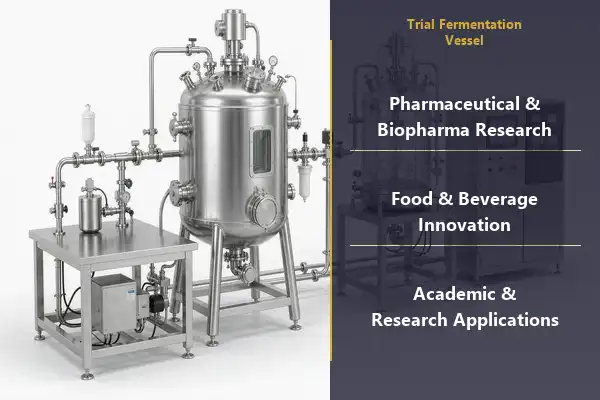
The Trial Fermentation Vessel is a critical component in pharmaceutical and biopharmaceutical research for the discovery of drugs and manufacture of bioactive chemicals. Under exact control these systems enable researchers to optimize conditions for the production of therapeutic proteins, vaccines or other biopharmaceuticals. In this highly regulated business, it is especially crucial to maintain sterile conditions and accurately manage factors like temperature and pH. The Trial Fermentation Vessel offers a controlled environment for pharmaceutical businesses to explore and enhance their processes before scaling up to bigger production systems, assuring consistent quality and compliance with stringent regulatory standards.
Food and Beverage Innovation
Trial Fermentation Vessels are used in the food and beverage sector for many purposes, including as the development of novel probiotic strains and the optimization of classic fermentation processes. In probiotic manufacturing, the vessel’s capacity to maintain exact conditions is crucial for guaranteeing the survival and efficacy of helpful microbes. The Trial Fermentation Vessel enables for the small-scale development and optimization of recipes and procedures for classic fermentation activities such as brewing or dairy production. This allows food producers to develop and enhance their goods, while yet preserving the consistency and quality that are essential to customer pleasure and brand image.
| Industry | Primary Applications | Key Benefits |
|---|---|---|
| Pharmaceutical | Drug development, biopharmaceuticals | Regulatory compliance, product purity |
| Food & Beverage | Probiotic development, process optimization | Product consistency, innovation |
| Academic | Education, research | Hands-on training, reproducible results |
Academic and Research Applications
Trial Fermentation Vessels are used for educational and advanced scientific research by academic institutions and research centers. In education, these containers may be used to provide students real experience in bioprocessing, to learn the fundamentals of fermentation and process control in a hands-on environment. The Trial Fermentation Vessel is a platform for the investigation of new microbial strains, the development of novel bioprocesses and the optimization of existing ones for research purposes. The data recording and traceability features of these systems are especially useful for academic research, since these features allow researchers to document their discoveries and provide repeatable results to the scientific community.
Maintenance, Support, and Long-Term Value
Cleaning and Sterilization Protocols
Proper maintenance of your Trial Fermentation Vessel will be important for the life of the vessel as well as the dependability of your experimental findings. Regular cleaning using the Clean-In-Place (CIP) system prevents the build-up of residues that may contain pollutants or influence subsequent experiments. Between batches, Steam-In-Place (SIP) sterilization should be done to maintain sterile conditions and it may reach 121 °C. And another important aspect is constant calibration of sensors and control systems to ensure that the measurements are accurate. To maintain your Trial Fermentation Vessel in good condition and to guarantee consistent performance over time, a detailed maintenance program is essential.
Technical Support and Training
Trial Fermentation Vessel technical assistance and training supplied by the manufacturer is an essential factor to consider when purchasing a Trial Fermentation Vessel. Operator training makes sure your team is using the equipment properly and safely, getting the most out of it and avoiding mistakes. Asianbios can provide complete consultancy services if you are looking for professional help to choose and run the ideal Trial Fermentation Vessel. Our tech staff can help you explore the specs and discover the right fit for your research requirements. Please contact us at producttech@asianbios.com to discuss your needs and learn more about our selection of customisable solutions designed for your unique applications.
Future-Proofing Your Investment
If you want your investment in a Trial Fermentation Vessel to be future proof, you need to think about not only what you need now, but what you could need in the future. But if you have a system with a little more capacity, you have space to develop, without having to upgrade right away. Similarly, a vessel with modern control systems and data recording skills may make the process scale-up and technology transfer simpler. Many Trial Fermentation Vessels have a modular design that means they may be upgraded and modified as your research requirements change, ensuring your equipment stays relevant and useful for years to come.
Conclusion
A well designed Trial Fermentation Vessel may take your lab’s fermentation to the next level, with control, repeatability and scalability for your study. Just take into account the volume capacity, material construction, technological specs, and application requirements and you will find the system that is ideal for you. The right Trial Fermentation Vessel is the key to effective fermentation operations and real scientific progress, whether it for academic research, pharmaceutical development, or food innovation.
FAQ
Q: What volume range is available for Trial Fermentation Vessels?
A: Trial Fermentation Vessels typically range from 10 to 1000 liters, with customizable options available to suit specific research needs. This range allows labs to select the appropriate size based on their experimental requirements, from small-scale strain screening to larger pilot studies. The flexibility in volume ensures that researchers can find a Trial Fermentation Vessel that matches their current needs while allowing for potential future expansion.
Q: How important is temperature control accuracy in a Trial Fermentation Vessel?
A: Temperature control accuracy is critical in a Trial Fermentation Vessel, as even slight variations can significantly impact microbial growth and product formation. With precision of ±0.1°C, these systems ensure that optimal thermal conditions are maintained throughout the fermentation process. This level of control is essential for achieving reproducible results and for developing processes that can be reliably scaled up to larger production systems.
Q: What maintenance is required for a Trial Fermentation Vessel?
A: Regular maintenance for a Trial Fermentation Vessel includes Clean-In-Place (CIP) procedures between batches, Steam-In-Place (SIP) sterilization, and periodic calibration of sensors. These routines ensure the vessel remains clean, sterile, and accurate. Additionally, regular inspection of seals, gaskets, and mechanical components helps prevent wear and tear, extending the equipment's lifespan and maintaining consistent performance.
Advance Your Research with Asianbios
Elevate your laboratory's fermentation capabilities with Asianbios' premium Trial Fermentation Vessels. Our state-of-the-art systems offer precise control, exceptional reliability, and unmatched versatility for all your research needs. Whether you're in pharmaceutical development, food innovation, or academic research, our customizable solutions are designed to deliver consistent, high-quality results. Contact our expert team at producttech@asianbios.com to discuss how our Trial Fermentation Vessels can support your specific applications and help you achieve your research goals with confidence.
References
1. Shuler, M. L., & Kargi, F. (2016). Bioprocess Engineering: Basic Concepts. Prentice Hall.
2. Doran, P. M. (2013). Bioprocess Engineering Principles. Academic Press.
3. Bailey, J. E., & Ollis, D. F. (1986). Biochemical Engineering Fundamentals. McGraw-Hill.
4. Stanbury, P. F., Whitaker, A., & Hall, S. J. (2017). Principles of Fermentation Technology. Butterworth-Heinemann.
5. Madigan, M. T., et al. (2018). Brock Biology of Microorganisms. Pearson.
6. Flickinger, M. C., & Drew, S. W. (1999). Encyclopedia of Bioprocess Technology: Fermentation, Biocatalysis, and Bioseparation. Wiley.
About the Author

Asianbios
Our purpose is to forge a legacy of stewardship, advancing initiatives that honor and preserve the ecological integrity of our planet.

Send Inquiry






Related Industry Knowledge
- How a Centrifugal Discharge Machine Works in Industry
- Bovine Bone Collagen Explained - Benefits, Safety, and What Makes It Different
- How Does a Disc Centrifuge Machine Separate Fine Solids?
- Why Pure Glucose Powder Is Essential for Instant Energy Supply
- Natural Sleep Aid Brewing Powder: Ingredients for Better Sleep Support
- The Best Natural Sleep Aid Brewing Powder to Help You Fall Asleep Faster
- Berberine Hydrochloride Extract - The Supplement for Blood Sugar and Weight Management
- The Sweet Talk on Stevia Extract: Is It Safe to Consume?
- What is Sleep Aid Capsule? Complete Beginner Guide
- Health Benefits and Uses of Kiwifruit Powder