Low-Temperature Evaporator: How to Choose it?
To choose a low-temperature evaporator, begin with your feed, not the machine. Decide what you want to concentrate, how much water you want to eliminate every hour and how much heat the product can withstand. Then cross reference those data with the vacuum range, wetted materials, heat source, and controls. Finally, confirm the match with a feed test and clear scope of supply. I use this order with customers because it eliminates the two most expensive mistakes: an undersized unit and a unit manufactured out of the incorrect material. Here are sections for each stage with particular numbers.
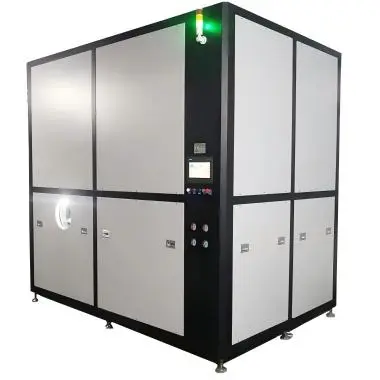
How a Low-Temperature Evaporator Works
Why Vacuum Lowers the Boiling Point
Water boils at 100°C at sea-level pressure, but its boiling point decreases with a decrease in pressure. Standard steam tables say water boils at 30C at about 4.2 kPa absolute. A low temperature evaporator creates a vacuum on the chamber so that moisture exits the liquid at a mild temperature while the dissolved particles are left behind. Heat sensitive chemicals such as plant polyphenols, enzymes and tastes are subjected to reduced thermal stress. Asianbios low temperature evaporator is designed with evaporation temperature 30-50°C, vacuum degree -0.08 to -0.098Mpa. The vapor condenses to create distillate . The liquid remaining in the chamber is concentrate .
Core Components of the System
A comprehensive system contains five major components. The body of the evaporator contains the product and the heat exchange surface. The vacuum system is under negative pressure. The heating system provides the energy for evaporation and in the Asianbios design it is steam. The condensation system takes off heat and changes vapor to liquid. Liquid level and temperature controls maintain the process within its prescribed parameters. I always tell purchasers to make sure that everything is on the quote since a low temp evaporator without a condenser and vacuum pump is not a functional system. Asianbios adds PLC automated control and touch screen for real-time monitoring.
The Five-Step Workflow
The technique works in 5 phases. Automated valves allow liquid feed to enter the chamber, while level sensors regulate the filling process. Then the vacuum system reduces the pressure. The liquid is then steam-heated to the desired temperature. The vapor goes to the condenser and becomes liquid again. The concentrate finally comes out automatically at the desired density and a clean-in-place technology maintains the unit hygienic between batches. This knowledge sequence allows you to appraise a supplier’s design. There should be a sensor, a control action and an alert for each step. If a proposal doesn't indicate them, ask for the control description before you sign.
Check Whether Your Process Is a Good Fit
Heat-Sensitive Extracts and Food Slurries
Mild concentration is suitable for liquids which lose value by overheating. Suitable feeds include Chinese medicine extract solutions, plant extracts, food slurries, fruit and vegetable juices, dairy streams and natural flavor extracts, according to Asianbios. Boiling at air pressure may cause active chemicals to deteriorate, darken color, and drive off scent. In a low temperature evaporator the product is kept at ~30-50°C to preserve activity and taste. This is normally a stage in a plant extraction line between extraction and drying. Constant concentration density also allows the dryer to maintain a more uniform cycle.
Fermentation Liquids and Industrial Wastewater
Also fermentation broths, enzyme solutions and probiotic cultures suit, since the same low temperature preserves biological activity. Another usage is for industrial waste water. In this case the purpose is to reduce volume: water exits as distillate and a smaller concentration remains for disposal or recovery. Wastewater poses dangers such as foaming, oils, sediments and caustic salts. Thermal concentration is referred to be a routine step for high-salinity streams in reviews of zero liquid discharge practice, including Tong and Elimelech (2016). Low temperature evaporator can work with these feeds if the design is compatible with the chemistry thus test your real stream first.
Pre-Treatment and Feed Testing
Screening, filtering, oil separation and pH correction could be necessary for raw feeds before evaporation in a low-temperature evaporator. These processes keep the heat transfer surfaces intact. I also advise customers to do a lab or pilot test with actual feed, since water-only trials mask foaming, scaling and viscosity concerns. Organize your exam questions using the table below.
| Feed Concern | What It Affects | What to Ask For |
|---|---|---|
| Foaming | Vacuum stability, product carryover | Defoaming method, separator size |
| Suspended solids | Fouling, pump wear | Filtration step, discharge design |
| Viscosity at final density | Heat transfer, discharge | Test at the target concentration |
| Corrosive salts | Material life | Steel grade review |
Share these results with your supplier before any quote.
Core Selection Criteria for a Low-Temperature Evaporator
Capacity and Operating Window
Size is for peak flow, not typical flow. The Asianbios may be tailored to the project and has a capacity of 50-5000 L/h and a design temperature range of -20 to 100°C. Evaporation duty . Calculate . Feed flow Starting solids Target concentration Operating hours F T Then add a little more for seasonal fluctuations or subsequent growth. An oversized low temperature evaporator is a waste of cash and might be unstable under low load. Also choose whether to run in batch or continuous mode, since this may affect tank sizes, controls and cleaning schedules. Temperature is only one of the parameters that determine the working window, the other two being vacuum level and feed rate.
Materials and Hygienic Design
The wetted portions determine the purity of the product and the service life. SUS304 is suited for various clean food and extract streams. SUS316L offers superior resistance to chlorides and cleaning agents than 304. Asianbios manufactures their equipment completely in stainless steel for corrosion resistance and simple cleaning, with a compact construction and a tiny footprint. Very aggressive brines may need the use of duplex steel or titanium, therefore check with any supplier for availability. For US facilities, inquire how the design supports your cGMP program (e.g. FDA 21 CFR Part 117 for food or Part 211 for medicines). Request mill certs and surface finish data for product contact locations.
Heating Source, Technology Type, and Controls
Vacuum is as important as source of heat Asianbios employs steam heating, thus please ensure your plant steam pressure, cooling water supply and electrical capacity early. Reusing vapor heat using heat pumps cuts energy usage but adds electrical load and equipment expense.
| Design | Best For | Watch For |
|---|---|---|
| Falling film | Clean, low-viscosity feeds | Solids and scaling |
| Forced circulation | Scaling or solids-laden streams | Higher pumping energy |
| Heat pump or vapor compression | Sites with high energy cost | Electrical demand, capital cost |
The Asianbios unit has safety protection for overtemperature, overpressure and overload. The PLC control automatically controls the process.
Compare Cost, Suppliers, and Delivery Scope
Build a Mass Balance and a Cost Model
Begin with a mass balance. Feed in = distillate + concentrate out. 750 kg/h water is removed from a 1000 kg/h input stream reducing particulates to 5–20%. The cost is energy . Evaporating water at 100*C costs around 2260 kJ/kg , a little more at lower temperatures . The capital cost comprises low temperature evaporator, vacuum system, condenser, controls, pretreatment, freight and installation. The operating cost includes steam, electricity, cooling water, cleaning chemicals, personnel, maintenance and concentrate disposal. Compare estimates using a total cost model and looking out 5-10 years, not just purchase price.
Supplier Documents and Specifications
Ask for the P&ID, layout, utility list, materials list, control description, spare parts list and maintenance plan for the low-temperature evaporator. Check the ISO 9001 certification and CE marking which Asianbios offers for this item. US customers should additionally inquire what code the vessels fall under, for example, ASME Section VIII, and if the electrical parts are UL or CSA marked. Compare each quote to a straight spec sheet, such the Asianbios values below.
| Parameter | Asianbios Specification |
|---|---|
| Processing capacity | 50–5000 L/h, customizable |
| Evaporation temperature | 30–50°C |
| Vacuum degree | -0.08 to -0.098 MPa |
| Main material | SUS304 / SUS316L |
| Heating method | Steam |
| Control system | PLC automation |
| Safety features | Overtemperature, overpressure, overload protection |
Delivery, Installation, and Support
Safety features Over temperature, over pressure, overload protection Delivery, Installation and Support Scope is what decides whether a project is done on time. Its staff also provides documentation, operator and maintenance training, remote monitoring, and a spare parts inventory to reduce downtime. When considering any low temperature evaporator supplier, agree on acceptance testing before delivery. What’s the unit’s packaging for sea freight? Who orders? What response time applies post-start-up? So, be sure to include these points in the contract so that everyone is on the same page.
Avoid Mistakes and Follow a Decision Path
Common Selection Mistakes
I watch the same errors being made again and over. Buyers choose the lowest price and pay later for energy, maintenance and downtime. Some employ simply water trials that disguise froth and scale. Some assume the lowest possible temperature is always best. The deeper vacuum demands larger condensers and vacuum pumps and hence that adds cost. Teams also don’t include concentrate removal and pre-treatment in the original budget. Maintenance is also ignored. A strategy is needed for the frequency you clean in place, service your vacuum pump, replace gaskets, calibrate sensors, and the spare parts to support it, for a low temperature evaporator.
A Practical Selection Checklist
Utilize a checklist to do an apples-to-apples comparison of quotes. Feed: composition, flow, solids, oils, corrosivity and heat sensivity. Performance: capacity, temperature, vacuum range, target concentration, quality of distillate. Construction: materials, automation, cleaning process and foam control. Commercial: scope, warranty, delivery time, spare parts, training and references. Weight each category such that engineering and finance can agree on a single grade. Feed compatibility and cost of lifetime must be given utmost weightage since mismatch in either is hard to fix after installation.
The Decision Path I Recommend
Take 5 steps. Decide what you want. Product concentration, volume reduction or product recovery. Second, submit a sample feed to us for testing. Third, depending on the findings, pick batch or continuous operation, heating technique, and standard or bespoke design. Fourth, compare estimates with the same coverage and warranty conditions. Fifth, check utilities, layout, installation, training and acceptance tests The low temperature evaporator used is matched to the process and is easy to commission and maintain.

Conclusion
The choice of low-temperature evaporator is based on the feed. Vacuum lowers the boiling point of water and permits heat sensitive extracts, fermentation liquids, food slurries and industrial wastewaters to be concentrated at moderate temperatures. Then a proper selection depends on the peak flow that determines the capacity, the quality of stainless steel, the heat source, safety controls and PLC automation. Feed testing reveals early foaming, scaling and viscosity problems, while a mass balance and total cost model displays the exact evaporation duty and operational cost. The test is completed with supplier documents, credentials, scope of installation and training. Buyers using a systematic procedure and not judging just on price reduce technical risk and choose equipment that suits the process, site utilities and maintenance plan.
FAQ
1. What temperature does a low-temperature evaporator use?
The Asianbios units are evaporated at 30-50°C under a vacuum of -0.08 to -0.098 MPa. The precise location depends on your product and goal concentration.
2. Can it treat industrial wastewater?
Yeah. It evaporates water to distillate thereby reducing the amount of waste water. Foaming , oils , solids and salts may need pre-treatment thus would suggest a feed test first.
3. What data should I send for a quote?
Feed composition, flow rate, start and goal concentration, maximum allowable temperature, available steam and cooling water, and site circumstances. Send. We can adapt capacities from 50 to 5000 L/h to meet your project’s requirements.
Request a Low-Temperature Evaporator Quote from Asianbios
Looking for a manufacturer of low-temperature evaporator? Asianbios provides SUS304/316L stainless steel, PLC control, 50-5000 L/h capacity and installation assistance. Send your feed data, goal concentration and utility information to plantex@asianbios.com and our engineers will assess the project and provide a design. For more, please see the website: asianbios.com.
References
1. Perry's Chemical Engineers' Handbook, 2018
2. Unit Operations of Chemical Engineering (McCabe, Smith, and Harriott), 2005
3. Handbook of Food Engineering (Heldman and Lund), 2006
4. The Global Rise of Zero Liquid Discharge for Wastewater Management: Drivers, Technologies, and Future Directions, Environmental Science & Technology, 2016
5. ASME Boiler and Pressure Vessel Code, Section VIII, 2023
6. Current Good Manufacturing Practice, Hazard Analysis, and Risk-Based Preventive Controls for Human Food (21 CFR Part 117), U.S. Food and Drug Administration, 2015
About the Author

Asianbios
Our purpose is to forge a legacy of stewardship, advancing initiatives that honor and preserve the ecological integrity of our planet.

Send Inquiry
Related Industry Knowledge
- What Makes a Low-Cost Erythritol Production Process?
- Erythritol Production Process: How Crystallization Affects Yield
- What Should You Check Before Starting a Multiple Effect Evaporator?
- Why Is Fermentation Key to the Erythritol Production Process?
- Papaya Leaf Extract Powder: What Do Studies Really Show?
- Sleep Aid Brewing Powder Benefits for Modern Sleep Support
- Compressor-type Low-Temperature Evaporator: Key Applications
- Production Technology Of Hyaluronic Acid for Medical Grade Use
- Best Tart Cherry Powder for Sleep, Recovery, and Overall Health
- Vitamin C Production Technology Uses in Food & Pharma