Why Is Fermentation Key to the Erythritol Production Process?
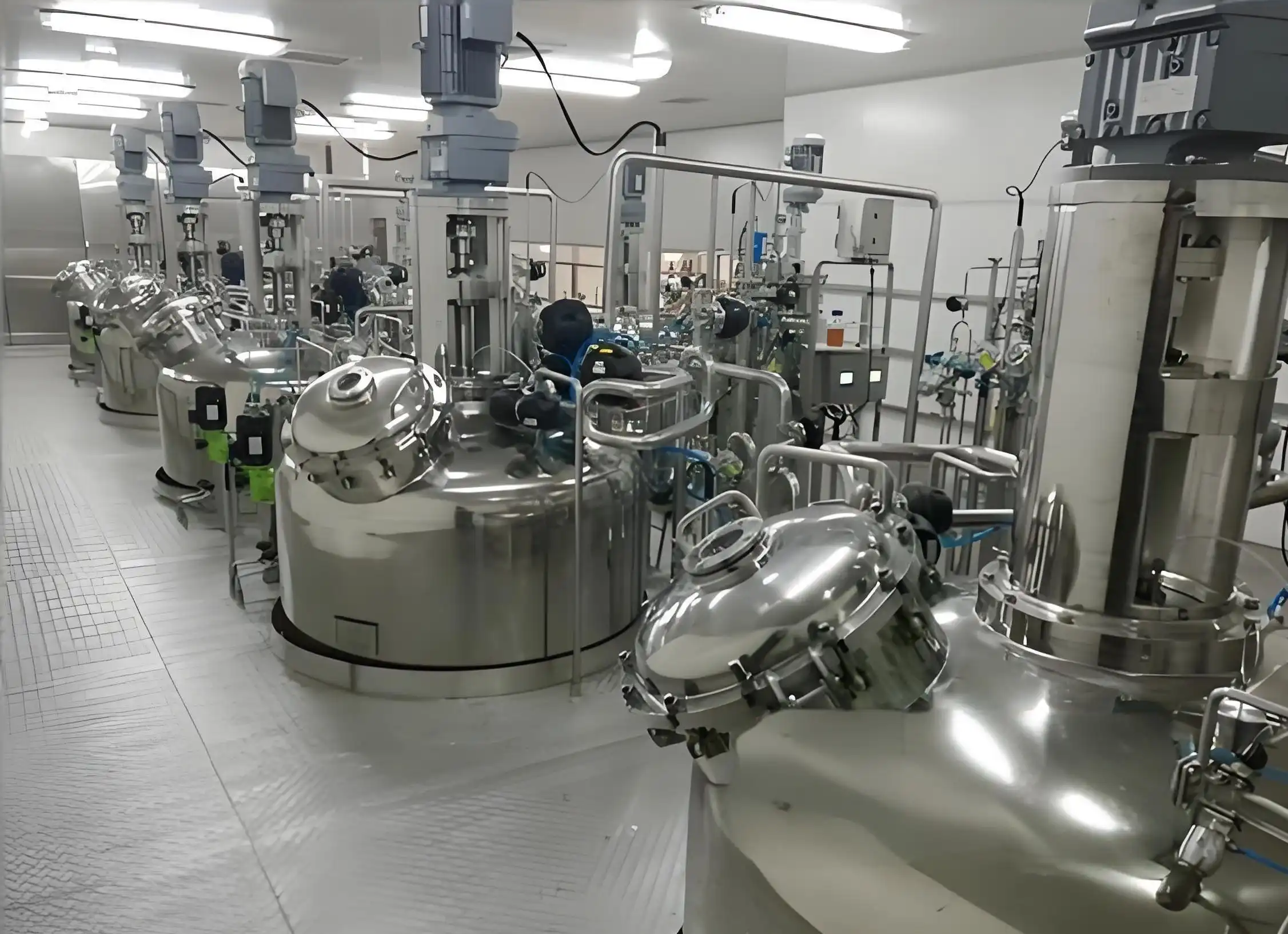
Fermentation is the main step of the erythritol production process because live yeast cells can convert glucose to erythritol with great selectivity under moderate circumstances. Chemical approaches need strong reactions and produce lower yields that are difficult to clean. Fermentation is also suitable for food-grade requirements, since it eliminates toxic catalysts and high pressure reactors. The performance of the fermentor determines the yield, purity and the cost. This handbook is for plant managers, chief engineers, and purchasers who wish to know about the erythritol manufacturing process before investing. Here’s how it works, what to control and how to pick a partner.


Why Fermentation Drives the Erythritol Production Process
Selective Conversion of Glucose to Erythritol
Erythritol is a four-carbon polyol with around 0.2 kcal/g and about 60-70% the sweetness of sucrose. It is found in pears, melons and grapes, but fruit contains much too little to be commercially useful. So it is produced by fermentation in factories. At high sugar levels, osmophilic yeasts, such as Moniliella pollinis and Yarrowia lipolytica, take in glucose and release erythritol into the broth. Reported substrate to product yields are in the order of 40–50%. Since the cells execute the chemistry in one vessel, the erythritol synthesis method does not need metal catalysts or high-pressure reactors.
Fermentation Versus Chemical Synthesis
Chemical approaches starting from dialdehyde starch were found to be inefficient and harmful at an early stage. Modern manufacturing is nearly completely based on fermentation. The major changes are summarized in table below.
| Factor | Fermentation | Chemical synthesis |
|---|---|---|
| Starting material | Glucose or starch hydrolysate | Dialdehyde starch |
| Conditions | Mild temperature and pressure | Harsher, with catalysts |
| Selectivity | High; main by-products are glycerol, ribitol, and arabitol | Lower; heavier clean-up |
| Industrial status | Standard for food-grade supply | Historically inefficient and hazardous |
The fewer by-products the better . Selectivity is key for food-grade work , as every by-product is a purifying step .
How Fermentation Sets Total Cost
Fermentation sets yield, cycle time and raw material use. It also determines the load on each step thereafter. A cheap sugar saves little if the cells are poor converters. A weak conversion leaves more residual sugar and by-products in the broth, which means that purification takes more resin, more membrane surface and more evaporation steam. Longer cycles tie up fermentors, decreasing yearly production. I urge purchasers to watch cost per ton of finished crystal, not cost per ton of sugar. That one figure provides the general manager, chief engineer and finance team with a common approach to evaluate the erythritol manufacturing process.
Strains, Substrates, and Control in the Erythritol Production Process
Choosing Glucose or Corn Starch
In certain plants, pure glucose or dextrose may be injected straight into the fermentor. Others start with corn starch and do liquefaction and saccharification to get glucose syrup. The front end makes direct glucose simpler. Wherever maize is accessible, e.g. China and the United States, starch may lower the cost of the raw material, but its usage adds enzyme steps and a clarifying step. Selection should be based on pricing, impurity profile, certification criteria and plant design. If your US customers demand non-GMO products, ask suppliers for identity preserved corn papers and keep records of each batch.
Microbial Strains and Licensing
In the erythritol production process, the microbial strain directly affects yield, sugar tolerance, by-product formation, and fermentation stability. The production strains are chosen for their capacity to convert large amounts of glucose into erythritol, and their constant performance across repeated batches. Buyers should check strain stability, fermentation performance and predicted impurity profile before progressing from lab trials to commercial production. When a strain is private or produced expressly for industrial usage, licensing is equally vital. Determine who owns the strain, if the agreement allows commercial production and what rights apply to future scale-up or knowledge transfer. It is also helpful to enquire whether the strain is wild-type or enhanced via evolution. These characteristics need to be recorded prior to equipment purchase since altering the production strain after the plant is designed might impact fermentation conditions, downstream equipment and total project cost.
Process Control Inside the Fermenter
Erythritol controls yeast under osmotic stress. The reported high-performance strains can withstand glucose concentrations over 300 g/L, reach erythritol concentrations in the range of 150-200 g/L and exhibit productivities between 1.5 and 2.5 g/L/h. To get there, operators monitor temperature, pH, dissolved oxygen, aeration, agitation and osmotic pressure. Cascade control of dissolved oxygen and fed batch feeding avoids yield delays due to oxygen deficit or osmotic stress. Production vessel to seed fermentor to lab culture. train seeds. 2. No contamination in CIP and SIP procedure. Operators also evaluate residual glucose, biomass, by-products and viscosity in an effort to find the end point.
From Broth to White Powder in the Erythritol Production Process
Upstream Preparation and Fermentation
All methods used to make erythritol start with controlled raw ingredients. Teams analyze incoming glucose or starch for microbiological condition, traceability and purity. Then, whereas direct-glucose plants skip part of this process, starch plants have liquefaction, saccharification and glucose clarity. Seed is next injected into the main fermentor and sterile medium is added. The operators terminate the fermentation when the glucose and erythritol concentrations are low enough and not at a certain period. The fermentation continues for days. Often a bad batch may exhibit warning indications in the data well before harvest, thus solid records will make it easier to correct later on.
Downstream Purification
Then the cells and solids are removed by centrifugation or membrane filtering. Ion exchange and decolorization remove color and salts. Some plants separate erythritol from glycerol, ribitol and arabitol using simulated moving bed (SMB) chromatography to obtain >99.5% purity. The clear liquid is then concentrated by multiple-effect evaporation to conserve steam. Sometimes these purification costs might be as much as the fermentors. I would suggest that they look at the quantities of resin, membrane areas and evaporator responsibilities as the purchasers look at the fermentor list at the same meeting. In this case, when you make erythritol you gain or lose the margin a lot of times.
Crystallization, Drying, and Packaging
Erythritol has a steep solubility curve and crystallizes soon. Bad temperature gradients may lead to abrupt nucleation and filthy heat exchangers. Plants employ multi-stage cooling crystallizers with seeding control and in-line refractometers to monitor supersaturation. Crystals are separated and washed by centrifuges. The moisture is reduced to 0.2% by dryers. Screens determine particle size, e.g. 20-60 mesh or 100 mesh. The final white powder is packed under sanitary conditions, in 25 kilogram barrels usually. Wet powder cakes during humid shipment. Tight moisture control is important.
Quality Control and Compliance in the Erythritol Production Process
Finished-Product Specifications
Buyers will evaluate the final powder to monograph limitations including Food Chemicals Codex, JECFA and GB 26404. The following values are common industry objectives.
| Parameter | Typical target |
|---|---|
| Erythritol assay (HPLC) | Above 99.5% |
| Moisture (Karl Fischer) | Below 0.2% |
| Heavy metals | Below 0.5 ppm |
| Glycerol, ribitol, arabitol | Typically below 0.1% |
| Yeast and mold (USP <61>, <62>) | Below 10 CFU/g |
Every number traces back to decisions on fermentation and purification, therefore I do them simultaneously.
In-Process Checks
The price is too high to wait for the final test. The glucose solution, broth, clarified liquor, concentrated syrup, crystals and dried product are tested by the teams. At-line HPLC allows operators to see by-product increase early. The color and conductivity following ion exchange tell you when to regenerate the resin. A moisture check at the dryer output safeguards the final standard. Batch records, certificates of analysis, and stability data also help develop confidence among auditors and consumers. In my experience a plant that retains these outcomes by lot recovers more quickly when a variation occurs.
US Regulation, Certifications, and Safety Updates
US customers often need to have FDA GRAS status proven for erythritol, and also GMP, HACCP and FSSC 22000 or comparable systems. Kosher, Halal or organic papers are important if your consumers request them. Beware of “natural” promises; they vary by market in terms of labeling. The study should also be followed by anybody conducting an erythritol manufacturing process for US clients. Higher levels of erythritol in the blood were associated with increased risk for cardiovascular events, a 2023 research in Nature Medicine found. It was an association, not a confirmed causation. The work goes on. Enhance your customer communications with fresh data.
Choosing Equipment and a Partner for Your Erythritol Production Process
Core Equipment for an Industrial Line
The whole erythritol manufacturing process line normally comprises raw material silos, slurry tanks, liquefaction and saccharification units, seed and production fermentors, filtering systems, ion exchange columns, evaporators, crystallizers, centrifuges, dryers, screens and packaging machines. Good design should include hygienic stainless steel design, CIP/SIP, foam control and PLC or SCADA automation. Ask for P&IDs , plant layout , energy tables and consumption limitations . These papers reveal whether a procedure is ready for commercial usage or simply for the lab.
Evaluating a Technology Supplier
Ignore the cost of equipment. You may want to ask about proven capacity, yield, recovery, utility consumption, pollution control, scope of installation, operator training and commissioning schedule. Ask for pilot or demonstration data, particularly for a novel strain or raw material, since oxygen transport might be affected by the move from pilot to commercial tanks. Add in lifespan costs: chemicals, consumables, energy, maintenance and replacement parts. Ask for references and measurable performance data. A tiered approach of lab test, pilot, contract, construction and commissioning allows you to detect issues while they are still affordable to correct when applying the production technology of erythritol.
Measuring Fermentation Efficiency
Establish a baseline to enhance the erythritol manufacturing process. Track yield, volumetric productivity, recovery, purity, energy and water usage, chemical use, batch rejection rate for a number of batches. Then, modify one variable at a time, such as inoculum activity, sugar level, oxygen transfer, temperature, pH, or endpoint timing, and compare results. Watch for moved bottlenecks. A quicker fermentation might overwhelm filtration or the crystallizer thus measure the full line not simply the tank.
What Asianbios Offers
Asianbios provides Biological Fermentation Erythritol Production Technology. This is the basic product information.
| Item | Detail |
|---|---|
| Production process | Biological fermentation |
| Active ingredient | Erythritol |
| Appearance | White powder |
| Package | 25 kg per barrel |
| Transport | Express, air, or sea |
| OEM/ODM | Available |
| Minimum order | 1 kg; samples available |
| Implementation model | 30% process, 70% localization |
The 30/70 approach suggests that the process is just half of success. The remainder is legal construction, supply chain, sales team formation and managerial abilities. Asianbios offers standardized technical packages and ongoing assistance as well as bespoke process design, new plant building and upgrades for existing lines. We have facilities and professionals to provide experimental verification and technical advice. The technique is suitable for cheap starch, established fermentation infrastructure and good separation industries, such as China and the United States. Our fermentation products are based on Chinese-engineered-strain technology. Asianbios is certified with CGMP, FSSC22000, ISO9001, HALAL, KOSHER, Organic and HACCP.
Conclusion
The yeast transforms the glucose to erythritol with excellent selectivity under moderate circumstances. This is the key to the erythritol production process replacing the wasteful chemical approach. Yield depends on the quality of the strain, the choice of substrate and precise control of oxygen, pH, temperature and osmotic pressure. Purification, crystallization and drying then determine the purity and moisture. Quality tests from arriving sugar to packed powder, GRAS paperwork and knowledge of cardiovascular studies facilitate usage in the US market. The equipment lists, pilot data and lifespan expenses are more important than pricing alone. Fermentation, downstream processes and local implementation are all one system and success is dependent on all three combined.
FAQ
1. How is erythritol made on an industrial scale?
Plants ferment glucose (or glucose syrup from maize starch) using osmophilic yeast. They next filter, purify, concentrate, crystallize, dry and pack the product. It is the recommended method since it is selective and used under moderate circumstances.
2. Can corn starch replace glucose in the erythritol production process?
Yes. Liquefaction and saccharification convert starch to fermentable glucose. The path should be decided by local costs, certification requirements and plant design.
3. What yield should I expect from fermentation?
Published work shows substrate-to-product yields of ~40-50% and strong runs approach 150-200 g/L erythritol. It varies with the strain, control quality and scale therefore pilot testing provides the best response.
4. What should I check before buying a production technology?
Strain ownership and license, Pilot data, Document completeness, Utility usage, Training scope, Commissioning support.
Talk to Asianbios About Your Erythritol Production Process Project
You may test your strategy before you commit funds if you are comparing an erythritol production process provider, Asianbios can assist you. We have standard technical packages and OEM/ODM services and samples from 1kg supported by CGMP, FSSC22000, ISO9001, HALAL, KOSHER, Organic and HACCP certifications. For more information, please contact plantex@asianbios.com or visit asianbios.com. I look forward to seeing your project.
References
1. Nature Medicine, 2023: "The Artificial Sweetener Erythritol and Cardiovascular Event Risk"
2. Applied Microbiology and Biotechnology, 2010: "Biotechnological Production of Erythritol and Its Applications"
3. Critical Reviews in Biotechnology, 2018: "Recent Advances in Biological Production of Erythritol"
4. Applied Microbiology and Biotechnology, 2018: "Erythritol as Sweetener—Wherefrom and Whereto?"
5. Current Opinion in Biotechnology, 2016: "Recent Advances in Biological Production of Sugar Alcohols"
6. Food Chemicals Codex, 13th Edition, 2022: Erythritol Monograph
About the Author

Asianbios
Our purpose is to forge a legacy of stewardship, advancing initiatives that honor and preserve the ecological integrity of our planet.

Send Inquiry



Related Industry Knowledge
- How Does Multi-effect Evaporator Machine Work? Step by Step Guide
- Sleep Aid Jelly: What You Need to Know
- Elastic Peptide: How It Supports Skin Elasticity and Firmness
- Lip Plumping Peptide: How It Creates Fuller-Looking Lips
- What Is Low Temperature Evaporator?
- What Is Brightening peptide powder and Why Is It Popular in Beauty?
- Discover the Power of Sour Jujube Seed for Better Sleep
- Where can i buy freeze dried strawberry powder?
- Uses of Glutathione Production Technology in Pharma
- Freeze Dried Strawberry Powder: How to Make, Benefits and Uses