Protease Enzyme Production for Food Processing: A Buyer’s Guide
The protease enzyme production of protease enzymes for food processing starts with the identification of a suitable micro-organism, continues with controlled fermentation and ends with a purified and standardized enzyme, meeting food grade criteria. Buyers are better off comparing more than simply price per kilogram. I would suggest to check: - source of strain - activity units - pH and temperature range - batch consistency - documentation - delivery terms. The study examines the distinctions between bacterial and fungal systems, the many ways fermentation may be done, and the quality parameters that matter to US food manufacturers and to plant owners who want to start their own line. I also illustrate how Asianbios may aid at each stage.
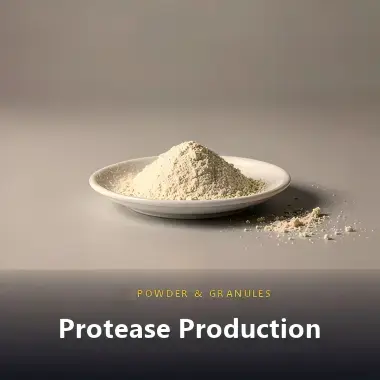
What Is Protease Enzyme Production?
The manufacturing of protease enzyme provides a steady food ingredient to a live production system. Buyers are able to evaluate the offer of a supplier in three aspects.
From Microorganism Selection to Commercial Food-Grade Enzyme
Every batch starts with strain selection. Bacteria and fungi like Bacillus and Aspergillus secrete proteases in the broth, therefore it is simpler to recover than extracting enzymes from the plant or animal tissue. Most mature microbial protease enzyme production is supported by published assessments. Proteases dominate the world enzyme market (~60% of global enzyme market). But activity alone does not make a food grade enzyme. It needs a little of strain, controlled ingredients, documented tests and a standardized framework. Plant proteases like papain and enzymes from animal sources perform certain activities, while microbial techniques provide clients steady supply and better batch control.
How Are Protease Enzymes Produced for Food Applications?
In practice it is composed of seven steps: strain selection, seed culture, medium preparation, fermentation, separation, concentration and drying with standardization. Asianbios classifies them under three eras. Upstream involves strain selection, sterile seed preparation, medium sterilization and raw material analysis. Midstream fermentation is controlled by online monitoring of temperature, pH, and oxygen. Feeding in fed-batch. Continuous activity tracking. Downstream involves cell removal, multistage purification by ultrafiltration and chromatography, concentration, drying and final formulation. "There are release checks at every stage, so a buyer can track a result back to a step."
Why the Production Route Matters to Your Plant
If you wish to build your own line instead of buying enzyme, the route influences your capital cost and your ramp-up risk. A request for a process package should be submitted by the chief engineer. The package shall include equipment list, process parameters, P&ID drawings, layout, energy tables and operator training. Pilot data is key. What matters is that yield may be lost in a huge tank by variations in oxygen transfer and heat removal, in a formula that works in a shaking flask. When you’re ready to buy a protease enzyme manufacturing line, ask to see pilot-to-production results. And put in writing the commissioning and ramp-up milestones you both agree on.
Choosing the Best Microorganism for Protease Production
No single organism is the best at producing protease enzymes in all situations. The best solution is dependent on your food matrix, pH and temperature.
Bacterial Protease Production: High Productivity and Process Control
Bacillus species are fast growing, secrete enzymes externally and respond well to tight fermentation control. Asianbios uses Bacillus subtilis as the source of alkaline protease and the technical data sheet indicates that the application range is pH 6.5–8.5. Shorter cycles mean a plant may replace tanks faster and the broth filters cleanly. But buyers still need to evaluate the strain in question, its safety record and whether the enzyme preparation has a recognized food use in the concerned market. It does not mean a strain is food quality simply because it has a large yield. Protease production technology plays an important role in this process.
Fungal Protease Production: Broad Enzyme Profiles and Solid-State Potential
Aspergillus species are often acid active proteases. Try other substrates. Asianbios employs Acid Protease from Aspergillus niger. Application range pH 3.5-5.0. This range is true for acidic matrices such as various drinks and fermented foods. Solid-state culture is also beneficial for the generation of fungal protease enzyme, although moisture, aeration and contamination should be well controlled. Fungal broths may have side activities therefore if your application is sensitive to flavor e.g. brewing or soy hydrolysis inquire for a side activity profile.
Bacterial vs. Fungal Protease Production
This table outlines the key changes as follows. Use it to narrow down a platform before you request for samples.
| Factor | Bacterial (Bacillus subtilis) | Fungal (Aspergillus niger) |
|---|---|---|
| Asianbios application range | pH 6.5–8.5 | pH 3.5–5.0 |
| Typical fermentation speed | Faster | Slower |
| Common method | Submerged | Submerged or solid-state |
| Main watch point | Strain safety records | Side activities, moisture control |
Those differences soon restrict the choices. Try both on your own substrate and compare hydrolysis, taste and color.
Commercial Protease Fermentation Methods
The choice of fermentation technology impacts the cost, labor and consistency of protease enzyme production. There are two major approaches.
Submerged Fermentation for Protease Production
In submerged fermentation the microorganism is grown in a stirred and aerated vessel in liquid media. The operators will monitor temperature, pH, dissolved oxygen, agitation and foam. Fertilizers may be applied in fed batch mode. This procedure is automatable and hence suitable for big volume production of protease enzymes. Asianbios discovered an alkaline protease with activity of over 250,000 U/mL and an acid protease with activity of over 200,000 U/mL. The technique employs local substrates such as corn-based material, bran and soybean meal. This helps keep the cost of the raw material low. Activity levels vary according on the strain and the testing technique used thus ask for the test protocol when comparing prices.
Solid-State Fermentation for Protease Production
Fungi are cultivated on a moist solid substrate such as wheat bran. Reviews of the method reveal simple media and lower water use. They also present challenges such as heat build-up within the bed and moisture levels varying on the substrate and getting the enzyme out of the solid is an extra process. When scaled up, these issues are amplified and solid-state production of protease enzymes needs careful engineering. If a provider proposes this technology, get pilot data on batch to batch variability and extraction yield.
Submerged Fermentation vs. Solid-State Fermentation
Submerged fermentation is generally suitable for processes that require automation, continuous monitoring, and large-scale production. In contrast, solid-state fermentation may be a better option when the fungal strain performs better on a solid substrate and the production team can manage a more hands-on process. When comparing the two methods, evaluate key factors such as capital cost, operating cost, process consistency, environmental impact, and downstream recovery requirements. Submerged systems can also provide continuous process data that supports batch records, process monitoring, and audits. Regardless of the method selected, verify that the equipment provider or production partner has successfully operated the chosen fermentation process at a scale comparable to the size you plan to install or develop.
Food-Grade Protease Quality and Compliance Requirements
Quality requirements are more essential than activity numbers for protease enzyme production. US buyers have certain documentation requirements.
Food-Grade vs. Industrial-Grade Protease
Food grade protease is made to specifications for raw materials, contaminant limits and microbiological parameters under controlled settings for use in food. industrial material might be exempt from such requirements. In the US, food enzymes are usually introduced to the market via either GRAS determination or food additive approval, both of which are controlled by the FDA. Also many buyers want to comply with the Food Chemicals Codex and JECFA criteria. The status depends on the manufacturing organism and intended use. Ask the supplier which route covers the exact strain and enzyme.
Essential Quality Specifications for Buyers
Ask for the following elements with every estimate, so you may compare provider on equal terms.
| Item | What to request |
|---|---|
| Activity | Units, assay method, and tolerance range |
| Stability | pH and temperature profile, shelf life, storage conditions |
| Safety | Heavy metal and microbiological limits; mycotoxin screening for fungal products |
| Allergens | Statement on medium components such as soybean meal, plus carriers |
| Traceability | Batch number and certificate of analysis (COA) |
A supplier that responds in writing for each row typically has a disciplined manufacturing system.
Supplier Documentation and Regulatory Support
A reliable provider delivers a certificate of analysis (COA) with each lot, a technical data sheet, a safety data sheet, and a statement on the manufacturing strain and carriers. Asianbios is an ISO 9001, HACCP, FSSC 22000, cGMP, Halal and Kosher certified company. Ask about the scope that covers your particular specific item before you depend on them. US purchasers should additionally seek allergy declarations, non-GMO certification when appropriate and assistance with their own FDA and customer audits.
Buying Protease Enzyme for Industrial Food Production
Define Your Procurement Requirements Before Contacting Suppliers
Then write a one-page specification. Food matrix, kind of enzyme, range of activity, format of the product, yearly volume, packaging, destination, documentation of compliance, goal cost, schedule of tests. This way suppliers may bid for the same request and you can evaluate quotes on a fair basis. If you are building a line provide goal output, available utilities, site architecture and the ramp up window you may tolerate. A concise brief speeds up qualifying and prevents repeat rounds of samples for protease production technology.
Questions to Ask a Protease Enzyme Manufacturer
Good inquiries expose holes early. The chart shows the ones I ask first.
| Question | Why it matters |
|---|---|
| Which strain and platform do you use? | Safety and regulatory status |
| How do you test activity? | Comparable quotes |
| What are your MOQ and lead time? | Trial and supply planning |
| Can you show pilot-to-production data? | Proof the process holds at scale |
| What happens if a batch fails spec? | Complaint handling and change control |
Clear, documented responses to these five points provide you more than a pricing list. Asianbios also accepts small volume trial orders, so you may try before you buy in bulk.
How to Evaluate a Global Protease Supplier
Consider capacity, export experience, traceability, quickness of reaction and logistics. Asianbios uses DHL, SF Express and FedEx for shipping. Technical staff and Labs for experiment verification. It offers line builders technical consultancy in project planning, manufacturing line design and process concepts. Process research encompasses formula formulation, pilot-to-production testing and parameter modification to increase efficiency and reduce cost. The steady starting is supported by commissioning, operator training and on-site supervision, the after-sales service includes maintenance, fault management and process upgrading. Asianbios also boasts over 10 years of manufacturing experience and a workforce that is 60% R&D. The operating guideline is 30% process and 70% local implementation, and hence training and site assistance are planned as carefully as the recipe itself.
Conclusion
The protease enzyme production of protease enzymes for food application includes strain selection and finishes with a recorded, standardized enzyme. Others bacteria strains (Bacillus subtilis, etc.) fit in the neutral to alkaline ranges, whereas others (Aspergillus niger, etc.) fit in acid circumstances. Not every instance is a winner. Submerged fermentation allows a closer monitoring and automation. Solid state fermentation reduces water use but makes it more difficult to manage heat, moisture and extraction. The food-grade status is based on the production strain, the controls used in manufacturing, the restrictions on contaminants, and the paperwork—including a COA, an allergy declaration, and regulatory documentation. Buyers that specify clearly, assess cost per performance, verify at pilot size and ensure technical assistance before committing to volume have better results.
FAQ
1. What is the most common method for commercial protease enzyme production?
Controlled submerged fermentations in aerated stirred fermentors. It gives automation, careful monitoring and consistent batches.
2. Which microorganism is best for protease enzyme production?
No one animal is right for all occasions. Bacillus subtilis prefers pH 6.5-8.5 whereas Aspergillus niger prefers pH 3.5-5.0. Find the optimum strain for your food matrix and then verify with trials.
3. What should I check before buying food-grade protease in bulk?
Before buying food-grade protease in bulk, check the assay procedure and activity units, temperature and pH profile, storage life, contaminant limits, allergen statements, MOQ, COA, lead time and available technical assistance.
4. Does Asianbios support customers who want their own line?
Yes. Asianbios provides project planning, line design, process schemes, commissioning, operator training, on-site monitoring and after sale maintenance.
Request a Food-Grade Protease Solution for Your Process
Asianbios can find a protease fit to your process, carry out lab verification and provide you an estimate on protease enzyme production supply or a whole production line package. Looking for a producer of protease enzymes? Send us your food matrix, pH, temperature, desired activity, yearly volume and target market at plantex@asianbios.com. More information may be found at asianbios.com. Our technical staff will respond with product suggestions, sample alternatives and a commercial quotation.
References
-
Microbiology and Molecular Biology Reviews, 1998. “Molecular and Biotechnological Aspects of Microbial Proteases.”
-
Frontiers in Bioengineering and Biotechnology, 2019. “Microbial Proteases Applications.”
-
Food Technology and Biotechnology, 2018. “Applications of Microbial Enzymes in Food Industry.”
-
Biochemical Engineering Journal, 2009. “Recent Advances in Solid-State Fermentation.”
-
Food Chemicals Codex, United States Pharmacopeial Convention, 2022.
-
Code of Federal Regulations, Title 21, Part 170 (Food Additives and GRAS), U.S. Food and Drug Administration, 2023.
About the Author

Asianbios
Our purpose is to forge a legacy of stewardship, advancing initiatives that honor and preserve the ecological integrity of our planet.

Send Inquiry

Related Industry Knowledge
- Protease Enzyme Production for Food Processing: A Buyer’s Guide
- Threonine Production Plant Cost: Equipment or Process First?
- Centrifugal Discharge Machine Applications in Food Manufacturing
- How Pure Saffron Extract Powder Supports Natural Wellness
- Do Elastic Peptides Help Aging Skin? A Detailed Review
- What Does Ergothioneine Powder Do For Skin?
- Hyaluronic Acid Powder: Its Uses, Benefits and Side Effects
- What is sea buckthorn powder good for?
- Freeze Dried Strawberry Powder: How to Make, Benefits and Uses
- Uses of Sleep Aid Capsule for Insomnia Relief Routine