Protease Production Technology: Fermentation Cost Factors
The biological fermentation technique for protease synthesis lays the framework for any realistic budget, and protease manufacturing plant cost variables for fermentation drive most of the cost of the protease manufacturing plant. Key drivers include enzyme yield, batch time, culture media, utilities, contamination losses, downstream recovery and end product format. Prices for equipment are important, but just half the story. This tutorial walks you through the process processes, the capital and operating cost blocks, capacity planning and supplier verification. It can be used by plant managers, chief engineers and finance teams to construct a credible case for a self-built enzyme line.
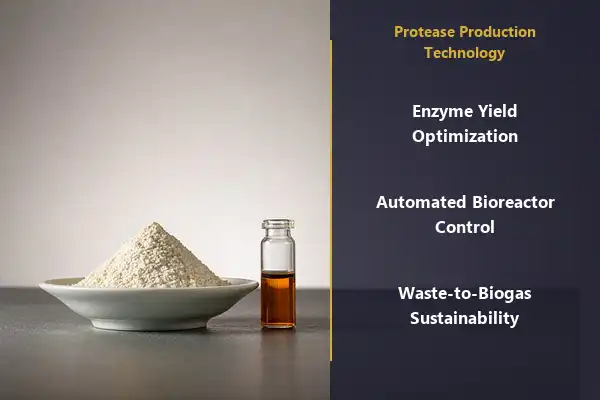
Protease Production Process and Its Main Cost Drivers
From Strain Preservation to Finished Enzyme
Each stage in the process costs the protease production plant. The procedure begins with the selection and preservation of strains. Next, the seed development is performed under sterile circumstances, followed by medium preparation and sterilisation, and then the production fermentation, in which the temperature, pH and dissolved oxygen are monitored in real-time. The facility next filters out solids from liquid downstream, eliminates cells, concentrates the enzyme via ultrafiltration, then dries or formulates it. Asianbios breaks this down into upstream preparation, midstream fermentation with fed-batch feeding and downstream processing with quality testing. In case anyone questions about the cost of equipment, I would suggest drafting a process-flow diagram and a preliminary mass balance.
Submerged and Solid-State Fermentation Compared
In submerged fermentation the microorganism is grown in liquid in a stirred and aerated vessel. It has strict control of temperature, pH and oxygen, which is ideal for standardised industrial production. In solid state fermentation the organism is grown on moist solid substrate such as bran. It can hold some organisms and smaller plants, but achieving batch consistency takes more effort. Commercially, alkaline proteases are mostly obtained from Bacillus species. A large part of the electricity load is attributable to oxygen transfer in submerged tanks. Asianbios’s protease production process is based on biological fermentation with selected microbial strains rather than standard extraction, hence the fermentation pathway impacts the pricing model from day one.
Yield Data That Shape Cost per Kilogram
Yield relates process to cost. Asianbios reports fermentation activity of alkaline protease over 250,000 U/mL and acidic protease over 200,000 U/mL. More activity equals more enzyme per m3 of broth. The same fermenter, steam supply and downstream line can then be used for additional output, reducing the cost per kilogram in the protease producing factory. We employ Bacillus subtilis for alkaline protease and Aspergillus niger for acidic protease which operates at pH 3.5-5.0. I recommend customers enquire for pilot-scale yield statistics, not only flask findings, as only pilot runs reveal how a strain behaves at bigger volume.
Please share your desired capacity, enzyme activity, product format and location data at plantex@asianbios.com and our engineers will provide a process based estimate. See asianbios.com for further information.
Protease Manufacturing Plant Cost Breakdown and Equipment List
Capital Cost Categories
A good cost model for a protease manufacturing plant breaks capital spending into distinct categories and equipment is just one of them. Here is my budget breakdown.
| Cost block | What it covers |
|---|---|
| Facility | Production hall, warehouse, laboratory, controlled rooms, drainage, ventilation, fire protection |
| Process equipment | Fermenters, sterilizers, filtration units, dryers, formulation tanks, packaging lines |
| Utilities | Steam, purified water, compressed air, cooling, CIP/SIP, wastewater treatment, backup power |
| Engineering and installation | Piping, instrumentation, automation, transport, installation |
| Commissioning and training | Performance tests, operator training, trial batches |
| Working capital and contingency | Raw materials, packaging, spare parts, certification, design-change allowance |
Keeping these blocks apart shows finance teams which numbers come from firm quotes and which are estimates.
Equipment Configuration from Upstream to Packaging
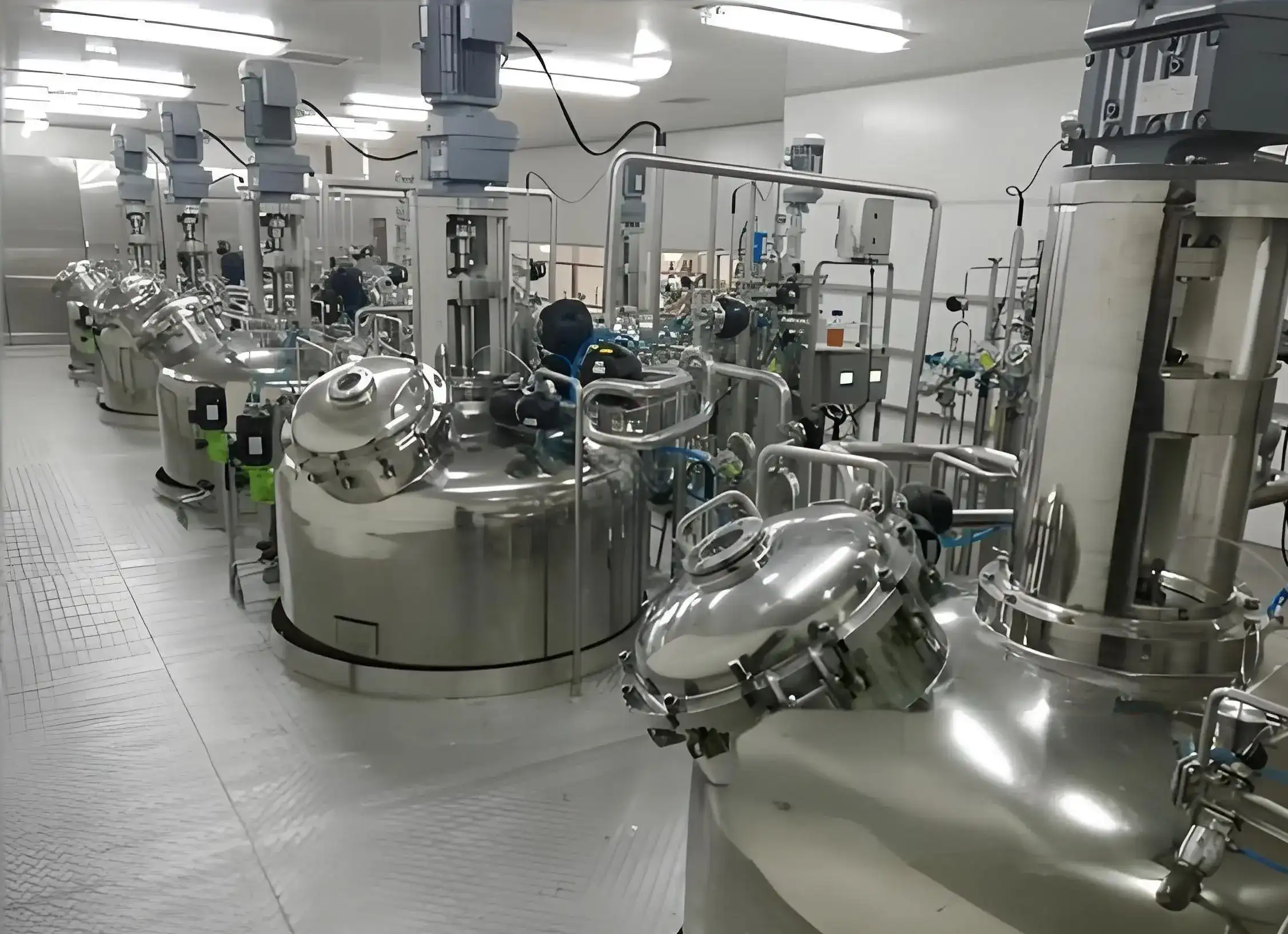
Upstream needs for a protease line include strain storage, inoculation systems, medium tanks, seed fermenters, production fermenters, sterilisers, spargers and sensors for pH, temperature, dissolved oxygen, pressure and foam. Downstream Plan for solid-liquid separation, microfiltration, ultrafiltration, concentration, stabilisation, spray drying, blending and sieving. Utilities must supply clean water, steam, compressed air, and refrigeration. A quality-control laboratory completes the line for activity testing and microbiological checks. Asianbios supports this effort with manufacturing line design and process strategies so that the equipment list follows the process and not a generic catalogue, helping assess protease manufacturing plant cost.
Documents a Chief Engineer Should Request
Building your own line is only half of the buy in equipment. The process package shall comprise P&ID drawings, plant layout, mass balance, energy and utility table and consumption quotas per batch. These documents help your engineers to check the plant against the procedure prior to the fabrication start. They also fix underlying assumptions of protease producing facility cost like steam per batch or filter area. Ask for documented strain approval, too, because if you have a dispute over strain rights, it can stop a plant dead in its tracks after it’s built. First filter for any supplier, I think, is document completeness.
Fermentation Cost Factors in Protease Production
Culture Media and Raw Materials
Culture medium is usually the largest operating expense. Published assessments of microbial enzyme synthesis frequently report media to be approximately 30–40 percent of production cost, however the amount varies by procedure. Agricultural by-products can serve as a supply of carbon and nitrogen. We employ local substrates like soybean meal, corn-based materials and bran in our method, which keeps the raw-material expenses low. Still, cheaper inputs require a consistent composition. Variable lots vary yields and make quality control tricky. I recommend checking each new lot against a reference batch in pilot tanks and including incoming material inspections into the protease plant cost model.
Utilities, Labor, and Contamination Risk
Electricity powers agitators, pumps, compressors, chillers and dryers. Steam sterilises and cleans. The water purification and wastewater treatment capacity must meet the load. Maintenance and labour are fixed expenditures. Long cleaning times between batches restrict the number of batches per year. Contamination is the largest hidden risk; one infected batch wastes the media, work and time previously invested. The table lists the primary causes and how to control them.
| Cost factor | Why it matters | Practical control |
|---|---|---|
| Culture medium | Sets raw-material cost and yield consistency | Qualify local substrates; check incoming lots |
| Steam and electricity | Drives sterilization, aeration, and drying | Track consumption per batch |
| Batch time | Longer cycles cut annual output | Confirm cycle time in pilot runs |
| Contamination | Can ruin a whole batch | Validated sterilization, automated controls |
| Recovery efficiency | Enzyme lost downstream wastes media and energy | Test activity at each separation step |
Even if these increase the initial purchase price, validated sterilisation, automated critical controls and qualified operators reduce protease manufacturing plant cost per kilogram over the unit's life.
Capacity Planning and Protease Manufacturing Plant Cost
Size the plant based on salable annual output, not fermenter volume. Define annual demand, enzyme activity, batch yield, cycle time, operating days, maintenance downtime and a margin for rejected batches. Test the line for bottlenecks in sterilisation, air supply, centrifugation, membrane filtering, drying and packaging. Having a huge fermenter doesn’t do much help if the drier is the bottleneck limiting throughput. Small factories are good for market testing and speciality items, but have greater unit cost and more downtime. Modular expansion means a plant can be built small and grow capacity if the demand is proven. For this computation the figures are taken from pilot scale trials.
Comparing Technologies, ROI, and Payback Period
Fermentation, Extraction, and Investment Models
Different production and sourcing models have their own tradeoffs with protease manufacturing plant cost. Fermentation gives regular, regulated production. Extraction can operate if there are suitable raw materials nearby, but it is contingent upon that supply. Batch systems are used for a number of products and simple changeovers, while continuous or semi-continuous systems can increase equipment use but require stricter control and validation. New equipment usually has greater hygiene, better traceability and better support. Used equipment might save initial cost but may bring compatibility, corrosion and spare parts problems. Outsourcing lets you get to market faster, whereas in-house production is attractive when demand and formulation control are obvious.
Building an ROI Model
A reliable ROI model incorporates capacity, plant loading, selling price, yield, raw materials, utilities, labour, maintenance, packaging, logistics, quality control, financing, depreciation, working capital. Production cost per kilogram = total yearly operating cost ÷ annual salable output. Calculate each separately for the fermentation broth, the concentrated enzyme and the completed formulated product, as each has a different protease producing facility cost profile and a different pricing. Estimate the payback period under cautious, base-case, and optimistic scenarios to assess how different operating and market conditions affect investment recovery. Our process research service may provide pilot data for yield, cycle time and consumption inputs to keep the model aligned to measured outcomes.
Sensitivity Testing Before You Commit
Sensitivity analyses illustrate how sensitive a payback estimate is to changes in key assumptions. Change one input at a time and record the result. The following table shows how different operating and market scenarios may affect project economics and investment risk.
| Scenario | Change to test | What it reveals |
|---|---|---|
| Lower plant loading | Fewer batches per year | Break-even output |
| Higher energy price | Steam and power cost more | Operating cost exposure |
| Reduced yield | Activity below pilot results | Margin of safety |
| Delayed launch | Sales start later | Working capital need |
| Added compliance cost | Extra testing or certification | Contingency size |
If repayment survives the top three rows, the plan has real margin. If it fails, think twice about the design or scope before signing a cost commitment for a protease manufacturing facility.
Please share your desired capacity, enzyme activity, product format and location data at plantex@asianbios.com and our engineers will provide a process based estimate. See asianbios.com for further information.
Supplier Selection and Project Planning with Asianbios
How to Judge a Turnkey Supplier
Don’t judge suppliers by the lowest equipment cost, but on how well they integrate processes and execute projects. Check experience with enzyme fermentation, upstream and downstream design, sanitary materials, automation and similar scale. Request evidence of pilot to production “scale-up”. The quotation should specify what is included and what is excluded. It should include installation, commissioning, validation, training, warranty, documentation and spare parts. The RFQ should specify capacity assumptions, fermentation time, enzyme yield, utility consumption, contamination controls and performance assurances. A qualified supplier should also be able to offer factory and site acceptance testing. These checks permit the quotes to be compared and keep the protease production facility cost figures honest.
Asianbios Technical Services
Asianbios covers the complete project cycle. We provide process research services in formula creation, process design, pilot-to-production trials and parameter refinement to enhance efficiency and reduce cost. Production assistance includes commissioning of equipment, training in operation and on-site guidance. Technical consultancy, project planning, production line design and process concepts. The after-sales service includes maintenance, trouble shooting and process upgrading of equipment. Certificates: CGMP, FSSC22000, ISO9001, HALAL, KOSHER, Organic, HACCP. We have a basic formula for every project. 30% process and 70% local execution. A good procedure nevertheless requires qualified operators and disciplined site work.
A Practical Planning Sequence
Define the application, product activity, format, packaging and yearly demand and expected increase. Then change the production organism, fermentation method, process flow, mass balance, batch size, and cycle time. Then break the budget into civil works, equipment, utilities, automation, laboratory, installation, commissioning, contingency and working capital. So protease manufacturing plant cost remains evident each block. Pilot studies on fermentation performance, downstream recovery and formulation stability. Detailed engineering, factory acceptance testing, installation, operator training & trial runs. Many fermentation projects estimate 60 to 180 days for commissioning and ramp-up, so have that number in paper for your line.
Conclusion
The cost of a protease producing factory depends on the entire production chain, not only the price of fermenters and dryers. Yield is driven by biological fermentation with specified strains of Bacillus subtilis and Aspergillus niger and yield determines how much enzyme each batch, steam cycle and downstream pass supply. Operating costs consist of culture media, utilities, labour, cleaning time and risk of contamination, whereas capital costs include facilities, equipment, utilities, engineering, commissioning and working capital. Capacity should be based on salable production and the slowest downstream step. ROI and payback still stand up if one does sensitivity tests for lower yield, lower plant loading, greater energy prices and launch delays. Supplier quality is reflected in the process package, pilot evidence and commissioning support. These factors determine protease manufacturing plant cost.
FAQ
1. What drives protease manufacturing plant cost the most?
It is driven by capacity, enzyme activity, product format, automation, utilities, waste water treatment and local construction needs. These are the largest equipment centers: fermenters, sterilisation, separation, drying and utilities.
2. Is fermentation better than extraction for protease production?
Fermentation is generally suitable for controlled protease production because it uses selected microbial strains and allows manufacturers to manage cultivation conditions and enzyme yields. Extraction, by contrast, depends on the availability and consistency of suitable raw materials. Asianbios uses biological fermentation as its production approach.
3. Should I buy new or used equipment?
The new equipment improves hygiene, traceability and support. Used equipment will reduce initial expenditure but may have risks of compatibility, corrosion and replacement parts.
4. What should I send to request a quotation?
To request a quotation, send the target production capacity, desired product format and enzyme activity, site location, available utilities, automation preferences, and installation requirements. These details will help the supplier assess the proposed production line and prepare a relevant quotation.
Request a Protease Manufacturing Plant Cost Estimate from Asianbios
Want to pricing out your own line? Asianbios provides technology of protease manufacturing, including formula development, pilot trials, commissioning, training and after-sales support. Think of us as a cost supplier to a protease production factory based on your process data, providing a protease manufacturing plant cost estimate. Please share your desired capacity, enzyme activity, product format and location data at plantex@asianbios.com and our engineers will provide a process based estimate. See asianbios.com for further information.
References
-
Frontiers in Bioengineering and Biotechnology, 2019. "Microbial Proteases Applications."
-
3 Biotech, 2016. "Microbial Enzymes: Industrial Progress in 21st Century."
-
Applied Microbiology and Biotechnology, 2002. "Bacterial Alkaline Proteases: Molecular Approaches and Industrial Applications."
-
Computational and Structural Biotechnology Journal, 2012. "Technology Prospecting on Enzymes: Application, Marketing and Engineering."
-
Bioprocess Engineering Principles (Academic Press), 2013.
-
Plant Design and Economics for Chemical Engineers (McGraw-Hill), 2003.
About the Author

Asianbios
Our purpose is to forge a legacy of stewardship, advancing initiatives that honor and preserve the ecological integrity of our planet.

Send Inquiry
Related Industry Knowledge
- Papaya Leaf Extract Powder: What Do Studies Really Show?
- Choosing the Right Supercritical Extraction Machine for Industry
- What Is a Multi-effect Evaporator Machine and How Does It Work?
- Flash Dryer Device Applications in Food and Chemical Production
- An Essential Guide to Sour Jujube Seed: History, Benefits & Uses
- How to Properly Use Sour Jujube Seed Powder
- What is glutathione? Benefits for your health and body
- Supercritical CO2 Extraction Machine: A Complete Guide to the Best Extraction Method
- A Guide to Hyaluronic Acid – Uses and Benefits
- Benefits of Sleep Aid Brewing Powder for Relaxation