Protease Production Technology: Process Optimization Strategies
Protease production technology refers to the full set of biological manufacturing methods used to synthesize proteolytic enzymes at industrial scale. It spans upstream strain engineering, midstream submerged or solid-state fermentation, and downstream purification. For factory decision-makers planning a self-built enzyme production line, understanding how to apply and optimize protease production technology directly determines whether your line achieves target yield within 60–180 days of commissioning—or spends months troubleshooting avoidable process failures.
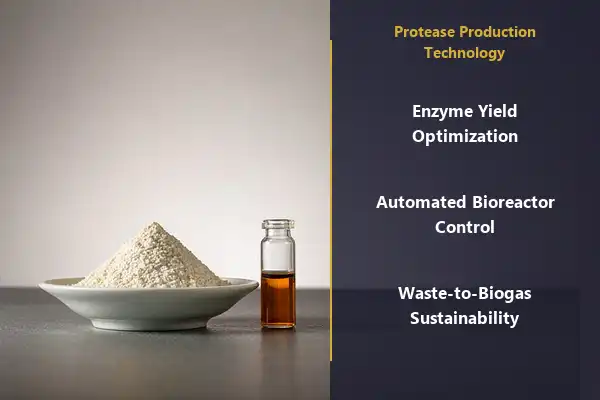
Understanding Protease Production Technologies
Industrial protease is made through two main types of fermentation. It's important to pick the right one because they have different technology profiles. It can change everything from the cost of cash to the cost of running the business every day.
Solid-State Fermentation vs. Submerged Fermentation
In solid-state fermentation (SSF), materials with low water content are used, such as wheat bran and soybean meal. If you use less water, it costs less to treat wastewater and works well for mushrooms like Aspergillus niger. Temperature, dissolved oxygen, pH, and dissolved solids are all measured in real time during submerged fermentation (SmF). This makes it easy to make sure that each batch is the right size and balance. It is best for alkaline protease to work at pH levels between 6.5 and 8.5. Bacillus subtilis strains that have been optimized in SmF regularly get enzyme activity above 250,000 U/mL.
Microbial vs. Plant-Derived Proteases
Most of the proteases used in industry come from microbes because they are simple to change genetically, can be made quickly, and can be managed in terms of fermentation output. Papain, bromelain, and other plant-based enzymes naturally have a narrow substrate specificity, but the time of year affects when you can get them. There is a better supply all year with microbial protease production technology if you have your own production line. It also costs less per unit of action.
Extraction and Purification Methods
The next steps in processing affect the end quality and activity of enzymes after fermentation. Usually, this is how it's done to get rid of cells: first, ultrafiltration to concentrate, then spray-drying or granulation. It is possible to get recovery rates below 85% with automated membrane filtration cascades. FCC, JECFA, and ISO 9001 all have rules that the finished things must follow. As part of these rules, heavy metals (Pb < 5 mg/kg) are limited, and Salmonella and E. coli are not allowed.
Process Optimization Strategies for Protease Production
Media Formulation and Parameter Control
How many carbon and nitrogen sources are present has a direct affect on how many proteases are made. Systems based on Bacillus work best in SmF when the ratio of carbon to nitrogen is between 10:1 and 15:1. It stays at 37°C and the pH stays between 7.0 and 8.0 for bacterium strains while they are secreting. There can't be metabolic bottlenecks when the amount of liquid oxygen is above 20%. Some fed-batch feeding methods let you slowly add glucose or corn steep liquor. This makes the fermentation window longer and the bulk enzyme activity 20–40% higher than in batch mode.
Strain Improvement and Genetic Engineering
These days, recombinant DNA techniques are often used to make more copies of genes, add stronger regulators, or get rid of competing protease isoforms. Testing for mutations and high-throughput activity can find variants that are two to three times more specific than the parent strain. For industrial lines, the strain must stay the same for at least 20 generations. When strains aren't steady, activity levels vary from batch to batch. This makes quality control harder and costs more to fix.
Scale-Up from Pilot to Production
It's important to keep the volumetric mass transfer (kLa) and dissolved oxygen cascade profiles the same when moving from a 50 L trial bioreactor to a 200 m³ commercial tank. Since kLa doesn't change, it is possible for fermentation titers on a large scale to match test results. When facilities try to make the process bigger, the output often goes down. This keeps it from happening here. It depends on the tools used, especially the type of stirrer and the rate of aeration, whether scale-up works in 60 days or takes more than 180 days.
Comparing Different Protease Production Methods for Procurement Decisions
Procurement teams evaluating protease production technology suppliers need a clear comparison framework before committing capital.
| Criterion | Solid-State Fermentation | Submerged Fermentation |
|---|---|---|
| Equipment cost | Lower initial investment | Higher bioreactor cost |
| Process control | Difficult to automate | Precise real-time control |
| Enzyme activity yield | Moderate | High (>250,000 U/mL achievable) |
| Scale-up reliability | Challenging above ton-scale | Proven at 200 m³ scale |
| Wastewater volume | Low | Higher, requires treatment |
Cost Efficiency and Scalability
SmF is the preferred platform for lines targeting consistent high-activity alkaline or acid protease at commercial scale. Its higher equipment cost is offset by tighter process control, lower labor intensity per unit output, and compatibility with automated fed-batch systems. SSF remains competitive for lower-activity, lower-purity enzyme grades where capital minimization is the priority.
Evaluating Technology Providers
When assessing a protease production technology supplier, three criteria carry the most weight. First, the provider must demonstrate completed ton-scale pilot-to-commercial transitions—not just laboratory data. Second, the process package documentation should include P&ID drawings, equipment lists, energy consumption tables, and defined production quotas. Third, the strain authorization must be clean: licensed engineering strains with documented stability data across 20+ generations, free of third-party IP encumbrances.
Quality Standards and Compliance
All commercial protease variants must pass enzyme activity assays (Anson or Folin-Ciocalteu spectrophotometric methods), accelerated shelf-life testing showing >85% activity retention after 6–12 months, and microbiological testing confirming aerobic plate counts below 50,000 CFU/g. Granulated powder formats must also pass Heubach dust testing to protect workers from occupational inhalation risk.
Procurement Guide for Industrial Protease Production
The investment includes getting licenses for the strain, buying process packages, making equipment, setting it up, and teaching people how to use it. You won't go over budget or cause the job to be held up if you know how much something will cost ahead of time.
Evaluating Turnkey Solutions
As part of a full process kit, you should be able to make formulations, create processes, test on small scales up to large ones, and find the best settings for each parameter. The main things that a reliable package company should offer are these:
- Process package documentation: Full P&ID, floor layout, energy consumption tables, and production quotas, so the engineering team can review the design before manufacturing begins.
- Equipment commissioning and operator training: On-site technical guidance during startup reduces the time to stable production and prevents first-batch failures from becoming costly write-offs.
- After-sales maintenance and process upgrades: Long-term technical support covering fault handling and process iteration keeps the line competitive as market specifications change.
- Scale-up and industrialization services: Proven pilot-scale to commercial-scale transition methodology, with defined milestones for reaching target yield within the agreed commissioning period.
It can take anywhere from 60 days to 180 days of fixing problems for a production line to hit steady-state output. All four of these things affect the time it takes. If your provider does all four, your execution risk is much lower.
A useful rule to remember is that any process package will only work if it is 30% well designed and 70% well carried out locally. After commissioning, most of the differences in output can be traced back to the technical team that is there, how well the operators do their jobs, and how well the equipment is taken care of. It is just as important to choose a supplier that spends money on training and on-site help as it is to know what is in the process package.
Raw Material Sourcing Strategy
There is a cheap way to make protease that uses carbon and nitrogen substrates that are easy to find. A lot of the time, soybean meal, corn steep liquor, and wheat bran are used in bacterial protease fermentation. Raw materials cost 15–25% less when bought in bulk from local sources than when bought individually. By setting up backup suppliers for each input, you can avoid supply problems that could stop fermentation schedules in their tracks. Raw ingredients (carbon and nitrogen sources) make up 35–45% of the total cost of production. Energy (aeration, stirring, and cleaning) makes up 20–30%. Labor and maintenance make up 15–20%. Depreciation and funding make up 10–15% with protease production technology.
| Cost Category | Typical Share of Total Production Cost |
|---|---|
| Raw materials (carbon/nitrogen sources) | 35–45% |
| Energy (aeration, agitation, sterilization) | 20–30% |
| Labor and maintenance | 15–20% |
| Depreciation and financing | 10–15% |
Case Studies & Future Trends in Protease Production Optimization
Industrial Optimization Results
When the feed-grade acid protease line with Aspergillus niger in SSF was moved to a bran medium with added nitrogen and fermented for an extra 48 hours, it had 38% more enzyme activity per kilogram of substrate. With the help of pH and dissolved oxygen monitors, another alkaline protease facility using Bacillus subtilis in SmF was able to cut the number of failed runs from 12% to less than 2%.
Automation and Bioreactor Design
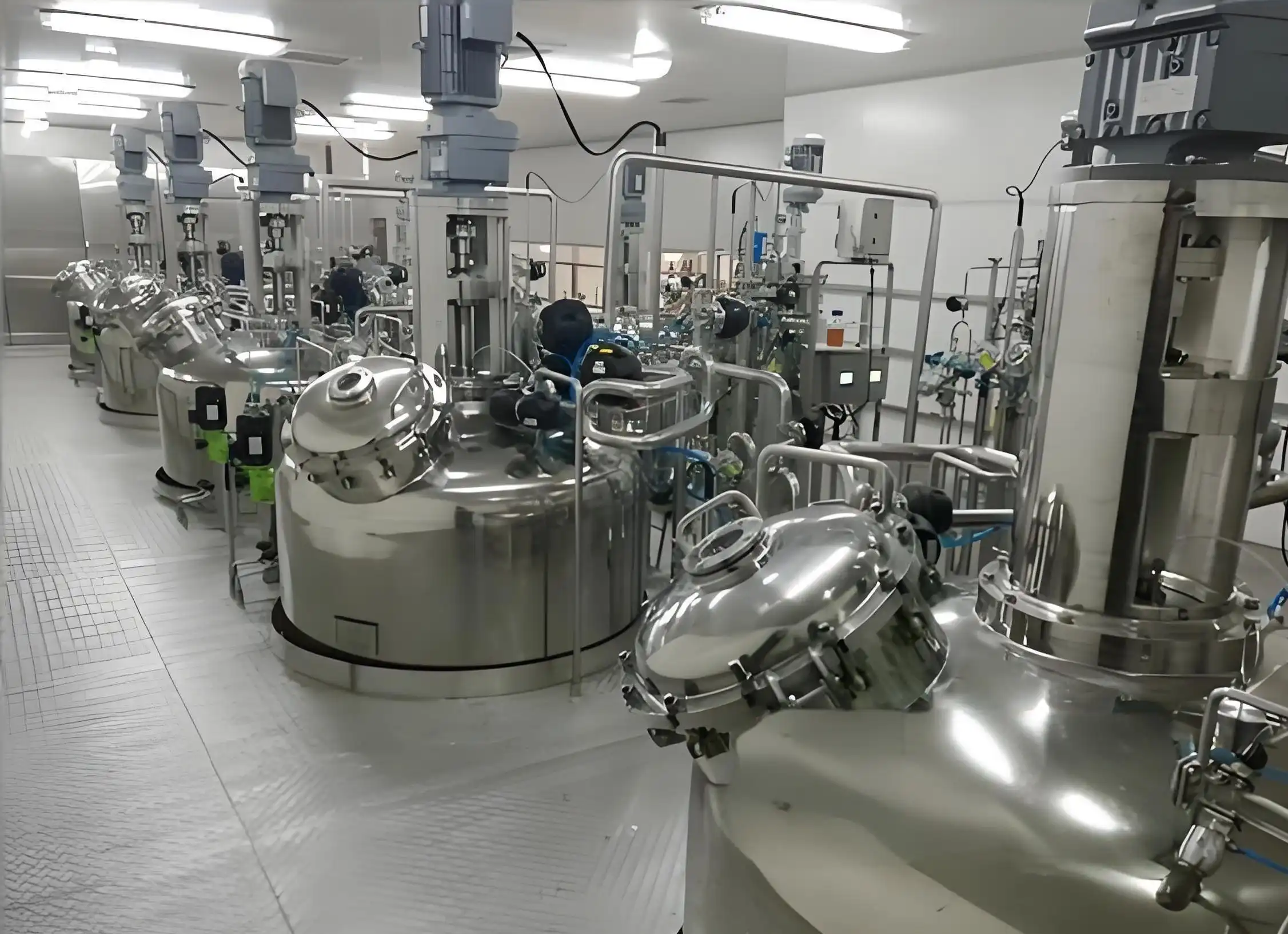
These days, bioreactors are made with feeding programs that do everything for you and measure metabolic flux in real time. As CO2 changes in real time, these systems change how fast nutrients are added based on that information. This makes sure that the settings for growing are perfect without any help from a person. As long as the lines that make more than one kind of enzyme (for example, protease, amylase, glucoamylase, and cellulase) use the same infrastructure, they can load parameter profiles that are unique to each batch of enzyme.
Sustainability Directions
SmF wastewater still has a lot of nitrogen and organic matter in it. Biogas is made from brewing waste that is broken down without oxygen. This can cut energy costs by up to 20% in fully integrated plants.
| Technology Trend | Expected Impact |
|---|---|
| Inline sensor automation | Reduces batch failure rate by 30–50% |
| Extremophile-derived thermostable strains | Extends operating temperature range to 85°C |
| Fluid-bed granulation for powder protease | Passes Heubach dust test, improves worker safety |
| Anaerobic digestion of fermentation waste | Cuts energy costs up to 20% |
Conclusion
Protease production technology is well-known but highly challenging. A company's success rests on how well the process parameters are set and how well the local performance is. It is always better for facilities to spend money on defined process packages, tried-and-true strain systems, and organized commissioning support than to try to scale up by trial and error. It's not whether or not the fermentation science works that general managers and chief engineers want to know about a self-built enzyme line. What they really want to know is if your technology source can safely move it to your site, equipment, and team within the time frame you set.
FAQ
1.What is the main difference between solid-state and submerged fermentation for protease production?
Solid-state fermentation uses low-moisture solid substrates and suits fungi well, with lower water consumption. Submerged fermentation operates in liquid media, allowing precise real-time control of pH, temperature, and dissolved oxygen. SmF is generally preferred for high-activity alkaline protease production at commercial scale because it scales more reliably and supports automated process control.
2.How does strain engineering affect enzyme yield in protease production technology?
Recombinant strain engineering can increase specific activity by 2–3× over parent strains by amplifying gene copy number or inserting stronger promoters. Strain stability across 20+ generations is equally important: unstable strains introduce batch-to-batch activity variance that compromises quality control and increases rework costs at commercial scale.
3.What documents should a process package include?
A complete process package for a protease production line must include P&ID drawings, equipment lists with specifications, floor layout plans, energy consumption tables, production quota definitions, fermentation parameter sheets, and a commissioning and training plan. Missing any of these documents increases engineering risk during construction and startup.
4.What certifications should a protease production technology supplier hold?
Key certifications include ISO 9001, CGMP, FSSC 22000, HACCP, and HALAL/KOSHER where applicable. Enzyme products must also comply with FCC and JECFA specifications covering enzyme activity, heavy metal limits, and microbiological safety standards.
Partner With Asianbios for Proven Protease Production Technology
Asianbios puts companies in touch with trusted providers of protease production technology. It has full process kits that include everything from formula creation to commissioning at the site. It is easy for manufacturers in our network to go from a ton-scale test project to a commercial one. They also have clean strain authorizations and full P&ID paperwork. Get in touch with us right away if you need to buy protease production technology for a new enzyme line or if you want to know how to make a process bigger. You can email plantex@asianbios.com or visit asianbios.com to talk to our team about your project.
References
1. Rao, M. B., Tanksale, A. M., Ghatge, M. S., & Deshpande, V. V. (1998). Molecular and biotechnological aspects of microbial proteases. Microbiology and Molecular Biology Reviews.
2. Gupta, R., Beg, Q. K., & Lorenz, P. (2002). Bacterial alkaline proteases: molecular approaches and industrial applications. Applied Microbiology and Biotechnology.
3. Sandhya, C., Sumantha, A., Szakacs, G., & Pandey, A. (2005). Comparative evaluation of neutral protease production by Aspergillus oryzae in submerged and solid-state fermentation. Process Biochemistry.
4. Souza, P. M., & de Oliveira Magalhães, P. (2010). Application of microbial α-amylase in industry — a review. Brazilian Journal of Microbiology.
5. Li, Q., Yi, L., Marek, P., & Bhanu, B. (2013). Commercial proteases: Present and future. FEBS Letters.
6. Anbu, P., Gopinath, S. C. B., Chaulagain, B. P., Tang, T. H., & Citartan, M. (2015). Developments in enzymatic and structural studies of aspartic protease. Biologia.
About the Author

Asianbios
Our purpose is to forge a legacy of stewardship, advancing initiatives that honor and preserve the ecological integrity of our planet.

Send Inquiry

Related Industry Knowledge
- Trehalose Production Technology for High Purity Food Grade Applications
- Everything You Need to Know About Fermentation Tanks
- anti-inflammatory peptides powder: A Gentle Peptide for Sensitive Skin Care
- Top Benefits of Deep lifting peptide powder in Age-Defying Cosmetics
- What are the health benefits of L-glutamine
- Health Benefits of Polygonatum Peptide and How to Identify the Quality
- Sea Buckthorn Freeze-Dried Powder: Benefits, Uses, and Nutritional Value Explained
- Best Tryptophan Production Technology for Feed Industry
- Freeze Dried Kiwi Powder Guide 2026: Nutrition, Applications & Buying Tips
- What is Sleep Aid Brewing Powder? Sleep Drink Guide