Everything You Need to Know About Fermentation Tanks
Fermentation tanks are among the most important industrial equipment driving contemporary biotechnology, pharmaceutical, food, and agricultural production.Fermentation tanks are essential equipment in the discipline of biotechnology with applications in biopharmaceuticals, food industry, environmental engineering, among others. They provide a controlled environment that allows microorganisms to grow, reproduce and metabolize under specific conditions to produce the desired products. If you are scaling up probiotic production, making antibiotics or producing bioactive chemicals, it is important to understand how fermentation tanks function, what they are composed of and how to choose the proper one. This book covers everything from basic functioning principles and structural components to industrial applications, crucial requirements and what to look for in a reliable manufacturer.
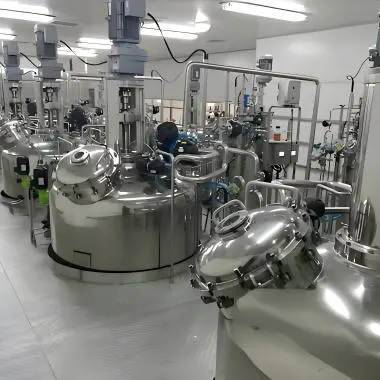

What Is a Fermentation Tank and How Does It Work?
It is helpful to grasp the theory and mechanics of these systems before you invest in fermenting equipment. The fermentation tank is not just a vessel but a habitat, intended to provide the right conditions to sustain microbial life.
The Core Working Principle
The basic premise of fermentation tank is to create the appropriate environment for the development of microorganisms, so that they may carry out certain metabolic processes, to generate the compounds we need. Inside the tank, temperature, pH, dissolved oxygen and nutrient concentration are all closely controlled at all times to foster microbial development.All submerged fermentation bioreactor design is controlled by liquid mixing, gas mass transfer and heat transfer. When these three elements are correctly balanced, microbial cultures will grow well and consistently generate high quality products.
Temperature and pH Regulation
The development and metabolism of microorganisms are strongly influenced by temperature. There are many optimum temperature ranges for the development of various microorganisms, for example, the optimum temperature for yeast fermentation for the production of alcohol is normally between 25°C and 30°C.Fermentation tanks are provided with temperature control systems with such features as jackets or internal coils. The system may control the temperature in the tank by cycling a heating or cooling medium through these structures to ensure that the temperature stays within the appropriate range for microbial growth. pH management is also critical – even small variations might inhibit the desired metabolic pathways and limit the product output.
Fermentation Modes: Batch, Fed-Batch, and Continuous
Each process -- batch, fed-batch and continuous fermentation -- has its own specific strengths and limitations, making it ideal for different industrial applications. Batch fermentation is simple, easy to verify and so is used in pharmaceutical manufacture. Fed-batch fermentation permits nutrient additions throughout the run, boosting output for complicated biomolecules.Operational techniques for bioreactors include fed-batch, continuous, semi-continuous and perfusion cultures, providing producers with the option to choose the mode of operation that best suits their production goals and the nature of their organism.
Key Structural Components of a Fermentation Tank
Knowing what’s in a fermentation tank may help operators make better judgments about maintenance, and assist purchasers assess the quality of equipment before purchasing. The final product consistency is from each key subsystem.
Tank Body and Material Selection
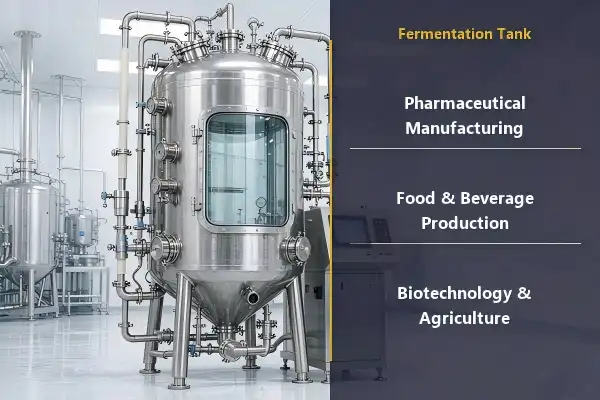
The hull of the tank is the basis of the whole system. Stainless steel, either SUS304 or SUS316L, is the main material for industrial fermentation tanks, due to its corrosion resistance, mechanical strength and compliance with steam sterilization cycles.Stainless steel vessels are utilized by large scale enterprises because of their ability to withstand pressure and corrosion. High grade tanks have mirror-polished inside surfaces with a roughness of Ra < 0.4 μm, which decreases dead zones and guarantees proper cleaning.The inside wall of the biological fermentation tank should be polished to reduce dead corners and facilitate the complete sterilizing.
Stirring and Aeration Systems
The stirring device and ventilation mechanism of the biological fermentor should have the ability to disperse bubbles, and the gas and liquid should be thoroughly mixed to guarantee the dissolution of oxygen and enhance the utilization rate of oxygen . Variable speed impellers in the industrial size fermentation tanks handle varying culture viscosities and shear sensitivity.The impellers are used for uniform suspension of microbial cells in different nutrient mediums. The impellers are made of impeller blades attached to a motor on the lid. The impeller blades play an important role in reducing the size of air bubbles and in distributing them uniformly into the fermentation media. Sterile air filtration systems guarantee that the oxygen supplied to the culture remains uncontaminated.
Sterilization: CIP and SIP Systems
One of the distinguishing properties of a well-engineered fermentation tank is that it can be sterilized. Fermentation tanks are sealed structure, using steam sterilization and other ways to fully disinfect the tank, piping and internal components before fermentation, so as to ensure the purity of the fermentation environment. Modern tanks are fitted with CIP (Clean In Place) and SIP (Steam In Place) systems, automatic cycles that eradicate microbiological contamination without the need for disassembly. This minimizes the downtime between production lots and greatly eliminates the possibility of cross-contamination, a major benefit for pharmaceutical and probiotic manufacture.
Table 1: Core Components of an Industrial Fermentation Tank
| Component | Material / Technology | Key Function |
|---|---|---|
| Tank Body | SUS304 / SUS316L stainless steel | Structural integrity, corrosion resistance |
| Stirring System | Variable-speed multi-impeller drive | Uniform mixing, oxygen distribution |
| Temperature Control | Jacket / coil + heating/cooling medium | Maintain optimal microbial growth temperature |
| Aeration System | Sterile sparger + 0.01 μm filtration | Controlled oxygen supply |
| Sterilization | Automated SIP (Steam In Place) | Eliminate contamination between batches |
| Cleaning System | CIP (Clean In Place) | Rapid, thorough tank cleaning |
| Control System | PLC + touch screen interface | Real-time monitoring and automation |
Technical Specifications That Matter Most
When you look at any fermentation tank, the specs tell a narrative. They define what items you can create, how closely you can regulate the process and how long the equipment will endure. Here’s a rundown of the most significant technical specifications.
Volume Range and Pressure Design
Commercial-scale fermentation tanks usually have a total capacity between 50 m³ and 500 m³ but may be completely customized to meet the needs of pilot-scale research and large-volume industrial production. The design pressure is often specified at 0.1 to 0.3 MPa (gauge) and the vessel should be able to endure steam sterilization temperatures up to 121°C.The fermentor must be capable of withstanding a particular pressure. During disinfection and operation, there are specific pressure and temperature in the tank, thus the different portions of the tank body should have a particular strength and endure a given pressure.
Mixing Power and Aeration Rate
The mixing power in industrial fermentation tanks is in the range of 30 to 300 kW . Stepless speed adjustment from 50 to 200 rpm is possible using frequency adjustable motors. Such adaptability is necessary to accommodate diverse kinds of microorganisms.1The homogeneous mixing, oxygen supply and temperature control provided by stirred tank reactors is advantageous for the constant growth and product production of microorganisms. Aeration is carried out at a rate of 0.1 to 1.2 vvm and the air is sterilized by filtering via a 0.01 μm filter to ensure that only pure oxygen without any contaminants enters the culture.
Precision Control Parameters
Fermentation tanks are designed to monitor and maintain critical factors like temperature, pH levels and oxygenation during fermentation. This control guaranties the repeatability and effectiveness of microbial or enzymatic activity, which is vital for businesses ranging from medicine to agriculture. In a high performance fermentation tank, the temperature accuracy is ±0.1°C and the pH control is within ±0.02 pH units – levels of accuracy that have a direct influence on the uniformity and repeatability of product from batch to batch.
Table 2: Key Technical Specifications of Industrial Fermentation Tanks
| Parameter | Specification |
|---|---|
| Total Volume | 50 m³ – 500 m³ (customizable) |
| Tank Material | SUS304 / SUS316L stainless steel |
| Surface Finish | Ra ≤ 0.4 μm (mirror polished) |
| Design Pressure | 0.1 – 0.3 MPa (gauge) |
| Sterilization Temperature | 121°C (SIP capable) |
| Mixing Power | 30 – 300 kW (frequency adjustable) |
| Stirring Speed | 50 – 200 rpm (stepless) |
| Temperature Control | 10 – 60°C, ±0.1°C accuracy |
| pH Control Range | 2.0 – 12.0, ±0.02 accuracy |
| Aeration Rate | 0.1 – 1.2 vvm |
| Control System | PLC + touch screen |
Industry Applications of Fermentation Tanks
You may be shocked to know the number of industries that use industrial fermentation tanks. These gigantic containers are the beating heart of many manufacturing lines – from brewing beer to creating insulin, fermentation tanks are working hard behind the scenes. There are more uses than most people would think.
Pharmaceutical and Biomedical Manufacturing
A fermentation tank is the starting point for many antibiotics, vaccines and enzymes. Pharmaceutical applications have a very high need for sterility and accuracy. The fermentation tanks used in this industry are required to fulfill tight regulatory criteria, avoid contamination throughout multi-day production cycles and provide constant product titers. Applications include the synthesis of antibiotics, generation of therapeutic proteins and culture of vaccine antigens, all of which need careful control of dissolved oxygen, nutrition supply and pH.
Food, Beverage, and Probiotic Production
equipment is vital in the food and beverage business (e.g., yogurt and beer manufacturing), animal health, environmental protection, plant protection, intestinal health, cosmetic raw materials, and biopharmaceutical sectors. In food and beverage industry fermentation tanks are employed in probiotic culture, enzyme preparation, amino acid synthesis and organic acid generation. Consistent fermentation conditions directly effect flavor, texture and nutritional profile. The industry standard for food-grade operations is stainless steel tanks with automated CIP systems.
Biotechnology, Agriculture, and Beyond
Industrial fermentation tanks are used to culture cells, make biofuels, and even break down garbage. In agricultural biotechnology, fermentation tanks are used in the manufacturing of biofertilizers, biopesticides and plant growth boosters.Secondary metabolites are created in the stationary phase of an organism by submerged or solid-state fermentation processes. These metabolites are increasingly in demand in food, cosmetics, medicines and other sectors. All these applications including microbial strains, fermentation liquids, amino acids, enzyme preparations, probiotics and organic acids may be handled by Asianbios’ fermentation tank platform, which can be configured flexibly and is compatible with a wide range of materials.
How to Choose the Right Fermentation Tank for Your Operation
There’s no one fermentation tank that will suit everyone perfectly. The appropriate equipment relies on your volume of production, species of target organisms, kind of product and long term operational objectives. These are the most crucial variables to consider.
Scale and Volume Requirements
Begin by establishing your present and anticipated production levels.Modeling and simulation are also highly significant for the industrial use of bioreactors, such as bioreactor scale-up, multiscale research, and bioprocess monitoring. A fermentation tank that matches your pilot-scale demands today may not be able to support your commercial development down the road. Look for suppliers that can provide the ability to customize volume ranges, from tiny trial batches to full-scale industrial containers, and can assist your scale-up journey via their technical experience. Tanks should be available in basic configurations and also completely customized forms to meet your facility architecture and production aims.
Automation and Control System Quality
The ordinary and the premium fermentation tanks vary in the quality of the PLC based automation system. A good control system should include real-time monitoring of all essential parameters, data recording for regulatory traceability and operator friendly touch-screen interfaces.9All important parameters will be carefully monitored once the fermentation process has started. Adjustments of parameters like temperature, aeration rate and agitation speed should be performed according to the observed condition of microbial growth and fermentation process. Other operational value comes from automated alarms, remote monitoring capabilities and the ability to integrate with upstream and downstream systems.
Certifications, Material Standards, and After-Sales Support
Make sure that the fermenting tank always meets international requirements. You can count on quality, safety and regulatory compliance with equipment designed to CE, ISO 9001, HACCP and equivalent certifications. Material certifications for SUS304/316L stainless steel, surface finish reports to ensure Ra < 0.4 μm, and test paperwork for sterilization and cleaning cycles are critical deliverables. Installation services, operator training and continuous technical assistance as part of after-sales support may make a substantial contribution to reducing the total cost of ownership during the life of the equipment.
Considering a fermentation tank investment for your production line? Whether you need a standard industrial unit or a fully customized fermentation system, the Asianbios team is ready to help you find the ideal solution. Reach out directly at producttech@asianbios.com for product specifications, volume pricing, technical consultation, and sample inquiries. Our engineers respond within hours — not days.
Asianbios Fermentation Tank: Capabilities and What Sets It Apart
Asianbios brings together advanced bioprocess engineering, strict quality management, and flexible manufacturing to deliver fermentation tanks built for real-world industrial demands. Here is what distinguishes the Asianbios fermentation tank platform from standard offerings in the market.
Advanced Engineering Bacterial Technology and Build Quality
The Asianbios fermentation tank is engineered around advanced domestic engineering bacterial technology, enabling superior fermentation efficiency across a wide range of microorganism types. The tanks are constructed from high-grade SUS304/316L stainless steel with mirror-polished internal surfaces (Ra ≤ 0.4 μm), combining structural durability with hygienic design. The closed-sterile vessel design achieves 99.9% bacterial survival rates for product cultures while maintaining a contamination-free internal environment throughout the entire fermentation cycle. PLC automation with touch-screen monitoring ensures consistent, traceable, and reproducible process control from inoculation through harvest.
Flexible Customization and Low MOQ
One of the standout advantages of the Asianbios platform is its flexibility. The factory supports ODM/OEM production tailored to different country regulations, brand specifications, and product forms. Whether you need a 50 m³ pilot-scale vessel or a multi-unit 500 m³ industrial installation, configurations are fully customizable. Low minimum order quantities make it accessible for companies at the trial-production stage, while competitive pricing ensures value at scale. The team can quickly iterate designs, substitute materials, and adjust orders based on market feedback — a level of agility rarely found at industrial scale.
Logistics, Delivery, and Technical Support
Delivery timelines are structured to meet real operational needs. Standard fermentation tank specifications are typically dispatched within 10 days of payment confirmation, while customized projects are completed in approximately 20 working days. Urgent small-batch orders qualify for a dedicated "Green Channel" service with delivery in as few as 7 to 10 days. Global logistics are handled in partnership with DHL, SF Express, and FedEx, ensuring reliable and efficient worldwide delivery. Beyond the equipment itself, Asianbios provides professional technical support — including experimental verification, product formula solutions, and production line construction guidance — backed by CGMP, FSSC22000, ISO9001, HALAL, KOSHER, Organic, and HACCP certifications.
Table 3: Asianbios Fermentation Tank — Certifications and Service Overview
| Category | Details |
|---|---|
| Quality Certifications | CGMP, ISO9001, FSSC22000, HACCP |
| Compliance Certifications | HALAL, KOSHER, Organic |
| Equipment Standards | CE, ISO14001, ISO45001 |
| Tank Volume Range | 50 m³ – 500 m³ (customizable) |
| Standard Delivery Time | Within 10 working days |
| Customized Delivery | ~20 working days |
| Urgent Orders | 7–10 days (Green Channel) |
| Logistics Partners | DHL, SF Express, FedEx |
| MOQ | Low MOQ, trial production supported |
| Technical Support | 24/7, remote monitoring + on-site |
Conclusion
Modern fermentation tank technology continues to evolve, enhancing process efficiency, product quality, and sustainability across industries. As advancements in materials, automation, and bioprocess engineering continue, the role of fermenters in enabling scalable and sustainable production processes becomes increasingly crucial. From pharmaceutical manufacturing to food production and agricultural biotechnology, the fermentation tank remains the cornerstone of industrial bioprocessing. Selecting the right equipment — backed by certified quality, intelligent automation, and reliable technical support — makes the difference between inconsistent outputs and repeatable, high-yield production at scale.
FAQ
Q1: What volume options are available for Asianbios fermentation tanks, and can they be customized?
A: Asianbios fermentation tanks are available in standard configurations ranging from 50 m³ to 500 m³. Full customization is supported, including non-standard volumes, specialized internal configurations, and facility-specific layout requirements. Both pilot-scale and industrial-scale projects are accommodated.
Q2: How does the fermentation tank maintain sterility throughout production?
A: The tank incorporates automated SIP (Steam In Place) sterilization and CIP (Clean In Place) cleaning systems. The closed, mirror-polished stainless steel design eliminates contamination risk zones. Sterile air filtration (0.01 μm) and sealed inoculation ports maintain aseptic conditions from startup to harvest, achieving 99.9% bacterial survival rates for cultured organisms.
Q3: What industries can use these fermentation tanks, and what materials are compatible?
A: Asianbios fermentation tanks are designed for use across pharmaceutical, food and beverage, biotechnology, health supplement, and agricultural industries. Compatible fermentation materials include microbial strains, fermentation liquids, amino acids, enzyme preparations, probiotics, and organic acids — making them among the most versatile fermentation systems available at industrial scale.
Partner with Asianbios for Industrial-Grade Fermentation Tank Solutions
Whether you're launching a new fermentation production line or upgrading existing bioprocess infrastructure, Asianbios delivers the engineering precision, flexible customization, and certified quality your operation demands. Our fermentation tanks are battle-tested across pharmaceutical, food, probiotic, and agricultural applications. With rapid delivery, low MOQ, and full technical support from our expert team, getting started has never been easier. Contact us today at producttech@asianbios.com — our engineers are ready to respond within hours and help you move your project forward with confidence.
References
1. Doran, P. M. (2013). Bioprocess Engineering Principles (2nd ed.). Academic Press / Elsevier.
2. Shuler, M. L., & Kargi, F. (2002). Bioprocess Engineering: Basic Concepts (2nd ed.). Prentice Hall.
3. Stanbury, P. F., Whitaker, A., & Hall, S. J. (2017). Principles of Fermentation Technology (3rd ed.). Butterworth-Heinemann.
4. McNeil, B., & Harvey, L. M. (Eds.). (2008). Practical Fermentation Technology. John Wiley & Sons.
5. Flickinger, M. C., & Drew, S. W. (Eds.). (1999). Encyclopedia of Bioprocess Technology: Fermentation, Biocatalysis, and Bioseparation. Wiley-Interscience.
6. Wang, D. I. C., Cooney, C. L., Demain, A. L., Dunnill, P., Humphrey, A. E., & Lilly, M. D. (1979). Fermentation and Enzyme Technology. John Wiley & Sons.
About the Author

Asianbios
Our purpose is to forge a legacy of stewardship, advancing initiatives that honor and preserve the ecological integrity of our planet.

Send Inquiry





Related Industry Knowledge
- What Is Eye Beauty Peptide? Benefits for a Brighter-Looking Eye Area
- How does a low temperature evaporator improve product yield?
- Lifting Peptide for Facial Contours: What to Know
- Are Multi-effect eye peptides Effective for Under-Eye Bags?
- Hyaluronic Acid Powder: Deep Hydration & DIY Serum
- Can Jujube Seed Powder Reduce Stress and Anxiety Naturally?
- Hyaluronic Acid: What It Is and How to Use It
- What is Sleep Aid Brewing Powder? Sleep Drink Guide
- Uses of Lysine Production Technology in Animal Nutrition
- Best Grape Powder Benefits: Why You Should Add It Daily