Trial Fermentation Vessel Applications in Biotech and Food Research
Trial fermentation vessels are tiny, sealed, instrumented tanks in which researchers may cultivate microorganisms under controlled circumstances before committing to pilot or plant equipment. It’s used by teams in food and biotech research for strain screening, media testing, enzyme and probiotic work, or amino acid or organic acid investigations. It controls temperature, pH, dissolved oxygen, stirring and airflow within tight limitations so that each run may be compared with the previous. I prepared this guide for the engineers and customers who have to pick, qualify and buy one. Asianbios develops these units from 10 L to 1000 L.
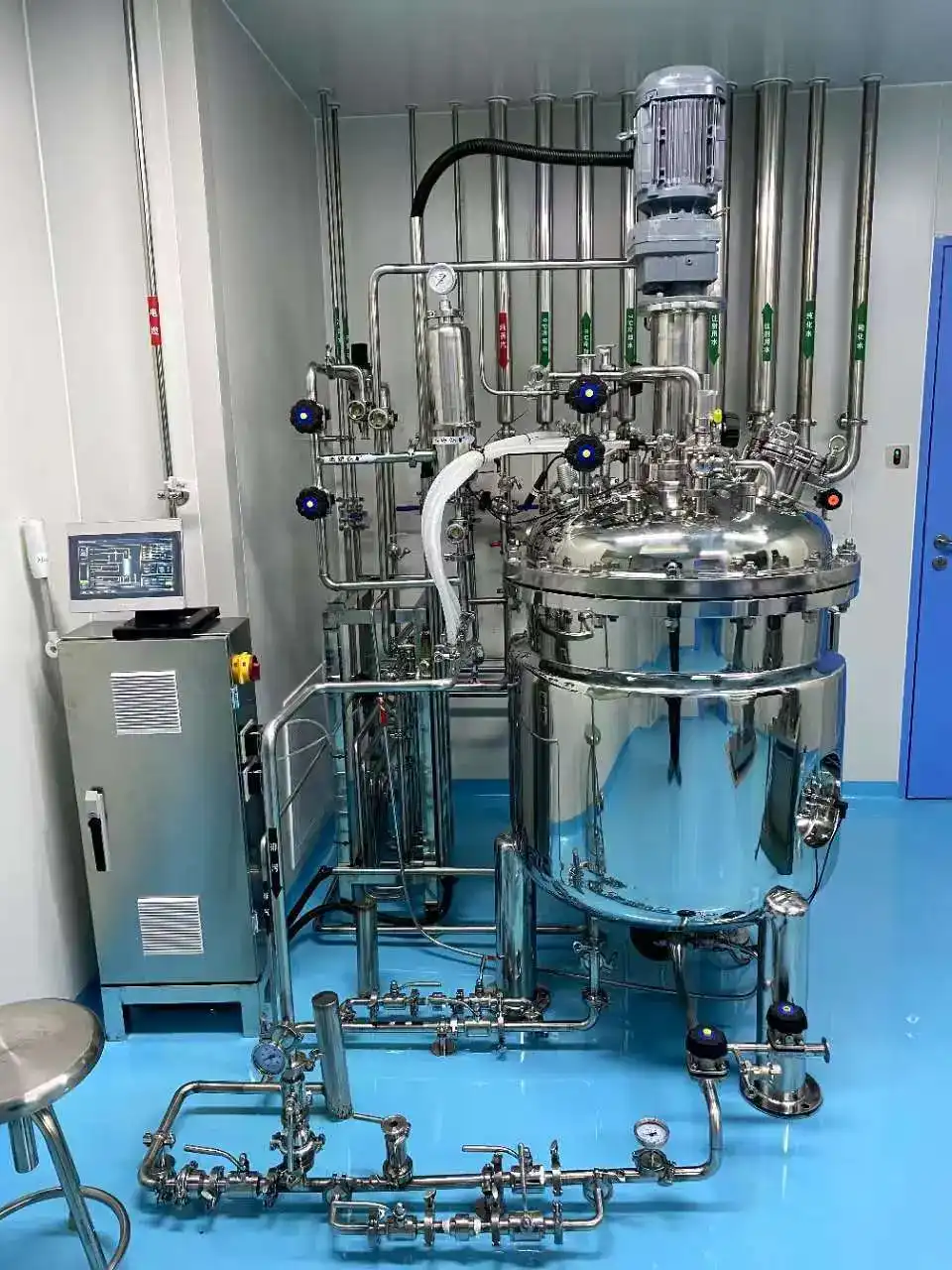
What Is a Trial Fermentation Vessel and How Does It Work?
Definition and Main Function
At Asianbios we define a trial fermentation vessel as a laboratory size device that replicates the growing conditions of micro-organisms within a tiny sealed vessel. It is used by researchers for small scale research and strain screening. It monitors and regulates conditions throughout the growth of the culture, unlike a flask or basic culture jar. Laboratory fermentor, bench bioreactor and pilot fermentor are all overlapping terms, but vary in size and level of control. We provide units for bench work and bigger development runs from 10L to 1000L. The tank is closed and instrumented to allow a team to repeat a run with the same parameters and confidently compare findings.
Equipment Components and Layout
A trial fermentor is a central tank and a variety of subsystems working around the tank. The stirring mechanism stirs cells, nutrients and gas. Air is supplied to the ventilation system via a sterile filter (0.22 μm). The temperature control system is electric heating or jacket circulating water. The detection probes assess pH, temperature, and dissolved oxygen. The feeding and defoaming units provide substrate or antifoam to the culture as necessary. Each component is linked to a PLC with touch screen, displaying live values and storing data. Important design considerations are identified in fermentation textbooks such as Stanbury et al (2016) include agitation, aeration, temperature control and sensing.
Typical Trial Fermentation Vessel Run Sequence
A run definitely has a sequence. The operator first cleans the tank with CIP and sterilizes it with SIP steam at 121 °C. The medium is then prepared and the inoculum is introduced under sterile conditions. As it expands the PLC regulates set points for temperature, pH, dissolved oxygen and stirring speed. The team may obtain samples from sampling ports for evaluation. It may be operated in batch, feed batch or continuous mode. After the harvest, the operator cleans the tank again to start the next batch from a set state. According to the FDA’s 2011 guidance on process validation, the first stage in validation is process design, and pilot runs provide that early process knowledge.
Major Trial Fermentation Vessel Applications in Biotech and Food Research
Strain Screening and Media Development
The most common use is strain screening. The team grows various lab strains side-by-side, varies one variable at a time and then examines how much the cells grow and what products they generate. The trial fermentation tank has a temperature control within ±0.1 °C and pH control within ±0.02 such that minute changes between strains may be recognized and not lost in noise. This is how media development works. They examine alternative carbon sources, nitrogen sources, feeding regimens and choose the best performing combination. Such repetitive activity is ideally suited to the simple sampling and multi-run architecture of the tank, and the recorded data enable a team to return to the precise circumstances under which any conclusion was generated.
Food, Probiotic, and Enzyme Research
Food specialists look at probiotics, fermented items and enzyme preparations in small containers before they proceed to a plant line. In probiotic operations, steady pH and temperature are required since they affect cell count and activity. Enzyme work is generally reliant on dissolved oxygen and stir speed. Food-grade projects also need sanitary surfaces, thus we make the tank of SUS304 or SUS316L stainless steel with an inner mirror polish of Ra ≤0.4 μm. The smooth walls prevent residue build-up and are easily cleaned by CIP. Asianbios also has research and testing facilities for plant extracts and functional food additives so our technical staff understands how a bench result needs to be transferred to a food process.
Amino Acid, Organic Acid, and Pharmaceutical Studies
Amino acids, organic acids are traditional fermentation products. Fed-batch feeding is a frequent strategy to generate them. Pharmaceutical teams also conduct early microbiological research, where sterility and thorough data records are of paramount importance. The feeding mechanism supplies substrate at a fixed pace and the operator monitors dissolved oxygen as the cell density increases. Garcia-Ochoa and Gomez (2009) highlighted oxygen transfer as a major problem in microbial scale-up, so dissolved oxygen measurements demand attention from the first run. Here’s a table that correlates the most important controls with frequent applications.
| Application | Typical experimental material | Main control focus |
|---|---|---|
| Strain screening | Laboratory strains | Temperature and pH repeatability |
| Probiotic research | Probiotic cultures | pH, temperature, sampling |
| Enzyme development | Enzyme preparations | Dissolved oxygen, stirring |
| Amino and organic acids | Fermentation liquids | Feeding, aeration, pH |
In every case, the data log supports traceability, which quality teams expect when a project moves toward validation.

How to Choose the Best Trial Fermentation Vessel for Research
Define the Organism, Working Volume, and Process Mode
The first step in selecting a trial fermentation vessel is to choose the organism and the question you want to answer. Bacteria , yeast and fungus have variable oxygen requirements , foaming and viscosity . Thus , each requires a separate air and stirring range . Next, split total volume from working volume. Foam, gas exchange and feeding need headroom therefore a 10L bioreactor seldom contains 10L of broth. Then choose the process mode: batch, fed-batch or continuous. Finally, consider what is next. Junker (2004) offers scale-up criteria such as power per volume, tip speed and oxygen transfer, so pick a size and control strategy that can be compared to your goal line. Buyers may tailor the volume to the research with our range of 10L-1000L.
Compare Glass, Stainless Steel, and Single-Use Systems
Each material is good for a distinct task and the proper one relies on the study. Glass is good to see the culture clearly which aids in early screening. But for tiny amounts, glass is the best. Single-use bags save cleaning time and danger of cross-contamination but add to consumable cost. Stainless steel survives repeated sterilization and bigger quantities, therefore is suited for multi-run programs and pilot-like testing. It also employs identical materials and surface logic as manufacturing plants, making it easier to compare afterward. For these reasons our trial fermentation vessel is stainless steel. Table highlights the primary tradeoffs.
| System | Strength | Limit |
|---|---|---|
| Glass | Visible culture | Best at small volume |
| Stainless steel | Durable, repeated SIP and CIP | Culture not fully visible |
| Single-use | Fast changeover | Ongoing consumable cost |
Match the column to your priority: visibility, changeover speed, or durability.
Check Material Grade, Surface Finish, and Safety Features
In writing, ask for the stainless steel grade. SUS304 is utilized for several food grade culture medium. SUS316L is more corrosion resistant when the media contains chlorides or when aggressive cleansers are applied. Also check the interior quality; ours is mirror polished to Ra ≤0.4 μm limiting locations where residue might hide. Check pressure and temperature ratings. Our design pressure is 0.2–0.3 MPa gage at 121°C for in-place steam sterilization. The vessel is equipped with pressure relief valves and emergency shutdown measures. US customers should check whether ASME requirements apply to their location, such as the ASME BPE standard for bioprocessing equipment, and request appropriate paperwork from the supplier. The trial fermentor is CE and ISO9001 certified.
Trial Fermentation Vessel Operating Procedures and Process Control
Cleaning, Sterilization, and Calibration Before Each Run
Good outcomes start before inoculating in a trial fermentation vessel. Operators should clean residue, check seals and ports, and verify probe readings. Calibrate the pH probe against buffer solutions and verify the dissolved oxygen probe according to the maker’s handbook, since many probes wander over time. CIP clean the tank in situ and SIP sterilize the tank with steam at 121 o C. The 0.22 μm air filter should be intact, protecting the culture from air contamination. Having a brief written checklist helps ensure that every operator is following the same process. And it offers quality teams a document that indicates the run started under control.
Holding Control Loops During Fermentation
Once the culture takes hold, the PLC undertakes the steady job. Temperature control: From 10°C to 60°C ±0.1°C, via jacket water, or heating by electricity. pH control range 2.00~12.00 ±0.02 precision. Dissolved oxygen 0 to 100 percent, ± 1 percent. The stirring speed varies from 50 to 600 rpm and the aeration from 0.1 to 1.5 vvm via a sterile filter. These ranges are suitable for mesophilic bacterium, yeast and fungi work. Operators still have to observe trends since a drifting number is typically an early warning of a problem before an alert is triggered. Our trial fermentor records every number so that a team may see the whole curve after the run.
Troubleshooting Common Problems
Most issues are repeated in laboratories. Sensor drift may cause incorrect readings so store extra probes and recalibrate on regularly. Unstable temperature generally signals to a problem with the jacket water supply or a clogged line. Low oxygen generally requires more stirring or air flow within the limitations of the culture (Doran, 2013). Mixing and oxygen delivery are interlinked. Antifoam should be dosed early and the filter should be monitored for foam accumulation. Leaks and contamination may be caused by a clogged sparger or damaged seal therefore check both during normal maintenance. Finally, design the utilities before delivery: steam, electricity, cooling water, compressed air and drainage.
Comparing and Customizing Trial Fermentation Vessel Solutions for B2B Procurement
Compare Total Cost, Not Only Price
A cheap quotation may conceal expenditures which surface later. Material grade, surface polish, sensor setup, control accuracy, utility demand, data functions and documentation are compared. Then add shipping, commissioning, replacement parts, consumables and training. For cross-border acquisitions, the quality of packing important, since the vessel and its probes move by water or air. Ask how the provider packs pH sensors, control panels and tank and what they do with claims. Check customs data as well, since machinery export classification influences tariffs and procedures. Request a detailed technical and commercial estimate to make sure that all bids cover the same scope. By comparing like for like, you’ll see which source gives you the most value throughout the lifetime of the equipment.
Customization Options and Core Specifications
All trial fermentation vessels are manufactured to order by Asianbios, minimum 1 unit. Buyers may alter the capacity, material (SUS304 or SUS316L), mixing power and control settings via the OEM and ODM service. Pilot users may add on feeding and defoaming modules, while research laboratories can stick to a basic system. “The PLC captures the data and allows for export so buyers can look at runs in their own quality system.” The table shows the main specifications of our standard design.
| Item | Specification |
|---|---|
| Volume | 10L–1000L |
| Tank material | SUS304/SUS316L, Ra ≤0.4 μm |
| Design pressure and temperature | 0.2–0.3 MPa gauge, 121°C |
| Stirring | 50–600 rpm, 0.37–10 kW |
| Temperature control | 10–60°C, ±0.1°C |
| pH control | 2.00–12.00, ±0.02 |
| Dissolved oxygen | 0–100%, ±1% |
| Aeration | 0.1–1.5 vvm, 0.22 μm filter |
| Control and certification | PLC + touchscreen; CE, ISO9001 |
Installation, Commissioning, and Validation Support
The halfway is delivery. The experimental fermentation vessel requires equipment setup, utility connections and system commissioning. Steam, electricity, cooling water, compressed air and drainage. These should be planned using the supplier’s utility list and installation sketch. Commissioning has to involve site inspections, calibration, dry runs and water trials before to any culture being put in. Large purchasers frequently need factory and site acceptance tests to verify surface polish, pressure integrity and sensor calibration. Asianbios offers operator training, technical papers, remote monitoring and rapid response maintenance. Our personnel and labs may also assist you with experimental verification and process direction. Then get some baselines on initial runs and compare subsequent outcomes to them before transferring to a pilot or production line.
Conclusion
A trial fermentation vessel is a closed, instrumented tank, in which research teams may test strains, medium and process parameters under repeatable conditions. The research showed how it assists in strain screening, how it works with probiotics, enzymes, amino acids and organic acids and why temperature, pH and dissolved oxygen management effect results. The choice depends on the organism, working volume, process mode and substance. Stainless steel is suitable for large trials and for recurrent sterilization. “Utilities should be planned before installation. “Every run is cleaned, sterilized, calibrated and sampled the same. In procurement, the price given is equally crucial to the entire cost, the documentation, the packing, the commissioning and the training. With careful definition and focused execution, small-scale data become usable evidence to inform pilot and production decisions.
FAQ
1. What does a trial fermentation vessel do?
It allows for strain screening and process research by cultivating microorganisms in a small sealed vessel, where the PLC controls temperature, pH, dissolved oxygen, stirring and aeration to preset setpoints.
2. What volume range does Asianbios offer?
We make customized 10L to 1000L units by capacity, SUS304 or SUS316L material, blending power and control settings.
3. How does the vessel stay sterile?
SIP steam sterilized at 121°C, CIP cleaned, 0.22 μm air filtered and interior mirror polished Ra ≤0.4 μm
4. What is the minimum order, and what support comes with it?
Support Installation, operator training, technical documentation, remote monitoring, process advice. Minimum Order Quantity: 1 Unit/Units
5. Which fermentation modes does it support?
It has batch, fed-batch and continuous modes for strain screening, probiotic, enzyme, amino acid and organic acid research.
6. Can the data be recorded?
Yes. The PLC stores process data in real time and allows export. This means teams can track and examine each run afterward.
Request a Trial Fermentation Vessel Quote from Asianbios
Looking for trial fermentation vessel manufacturer with OEM and ODM orders? Asianbios takes orders from 1 unit. It constructs 10L–1000L stainless steel systems with PLC control and offers installation, training and remote monitoring. Email plantex@asianbios.com your culture type, working volume, utilities and delivery place and our staff will offer a setup. Our items may be seen on asianbios.com also.
References
1. Principles of Fermentation Technology, 2016 (Stanbury, Whitaker, and Hall)
2. Bioprocess Engineering Principles, 2013 (Doran)
3. Biotechnology Advances, 2009 (Garcia-Ochoa and Gomez, "Bioreactor scale-up and oxygen transfer rate in microbial processes: An overview")
4. Journal of Bioscience and Bioengineering, 2004 (Junker, "Scale-up methodologies for Escherichia coli and yeast fermentation processes")
5. ASME BPE: Bioprocessing Equipment, 2022
6. FDA Guidance for Industry: Process Validation: General Principles and Practices, 2011
About the Author

Asianbios
Our purpose is to forge a legacy of stewardship, advancing initiatives that honor and preserve the ecological integrity of our planet.

Send Inquiry


Related Industry Knowledge
- Erythritol Production Process: How Crystallization Affects Yield
- What Is a Multi-effect Evaporator Machine and How Does It Work?
- Marigold Extract: The Benefits for Skin and Wellness
- Production Technology of Amylase: A Game-Changer in Industrial Processes
- Natural Sleep Aid Brewing Powder: Ingredients for Better Sleep Support
- How Does Glucose Production Technology Improve Yield?
- Benefits And Usage Of Dried Kale Powder
- Is Freeze Dried Kiwi Powder Rich in Vitamin C?
- Sea Buckthorn Freeze-Dried Powder Guide 2026: Skin, Health Benefits & How to Use It
- Freeze-Dried Strawberry Powder: Production and Nutrition