Exploring Modern Fermentation Tank Technology
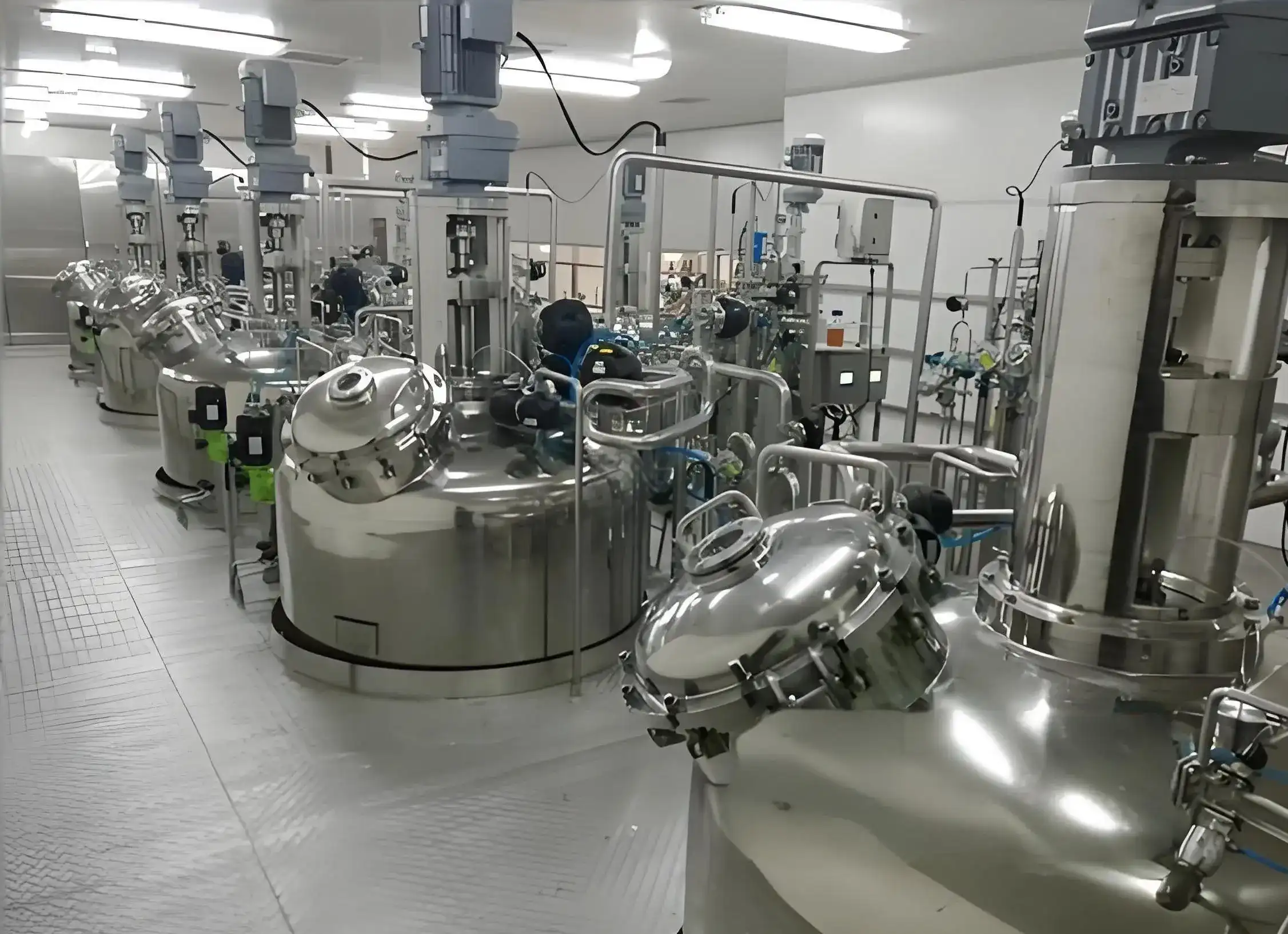
Modern fermentation tanks use stainless steel sealed tanks with stirring, ventilation, temperature control and PLC automation to provide a steady growing environment for the microbes. That system transforms strains, minerals and air into products including amino acids, enzyme preparations, probiotics and organic acids. A fermentation vessel nowadays as opposed to a basic process vessel controls temperature and pH within precise limits, permits steam sterilization and automated cleaning, and logs batch data. In this article, I’ll outline how these systems function, what designs are good for particular projects, and what U.S. customers should look for when they ask for a quote.
What Is a Fermentation Tank and How Does It Work?
Core Function and Working Principle
A fermentation tank is a mimic of the development environment of microorganisms that may turn a medium into a specific product. Most of the labor is done by three acts. Ventilation brings in oxygen, stirring distributes equally cells, nutrients, and heat, temperature control maintains metabolism within limits. Plants operate in batch, fed-batch or continuous mode. A typical run involves sterilizing the vessel, loading medium, introducing seed culture, monitoring conditions, harvesting and cleaning. In dense cultures oxygen is generally the first to be depleted and therefore engineers define the airflow in vvm – volume of air per volume of liquid per minute. This vessel is not a storage tank, it preserves a live culture, therefore one contamination incident may damage a batch.
Main Components and Their Roles
A similar arrangement is used by every industrial unit. Below is a table of the functions of each component of an Asianbios fermentation tank.
| Component | Function |
|---|---|
| Tank body | Stainless steel shell with jacket for heating and cooling; reinforced for pressure and vacuum |
| Stirring system | Variable-speed agitators spread cells, nutrients, and heat |
| Ventilation system | Sterile air filtration and sparger supply controlled oxygen |
| Temperature control | Jacket circulation heats and cools with fast response |
| Feeding system | Sterile medium and seed cultures enter through dedicated ports |
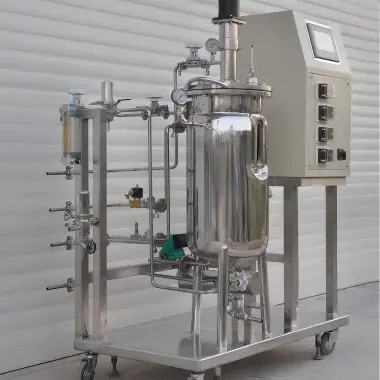
| Automatic control | PLC with touch screen monitors and logs data |
| Safety features | Pressure relief, emergency stops, and alarms |
These pieces function in a loop, therefore a weak link, such as a bad sparger, might restrict the overall system.
How Control Systems Hold the Process Steady
To achieve steady fermentation, the batch must be maintained under stable conditions. Jacketed systems are temperature regulated by chilled water, glycol, steam or hot water. Safe closed operation with pressure release devices. The sensors detect temperature, pH, dissolved oxygen, foam, level and agitation speed and relay the data to the PLC. alarms inform the operator when a value drifts and the controller may respond, for example, by dosing anti-foam when a probe senses foam. Foam should be considered since it might potentially transfer culture to exhaust lines, a problem well documented in the bioprocess literature. Data recording also creates a batch record for each batch in a fermentation tank. This enables traceability and supports audits.
Main Fermentation Tank Types and Best-Fit Applications
Tank Designs by Process Need
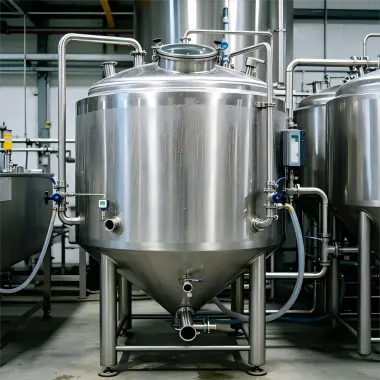
Select the design throughout the procedure, not from a catalog. Aerobic cultures need intense aeration and agitation; anaerobic cultures require tight sealing and gas control. Conical bottoms are suitable for brewery-type operations for the collection of yeast or sediment, whereas cylindrical agitation tanks are suitable for most industrial microbiological operations. Jacketed vessels give better temperature control than single wall vessels. Impeller selection depends on viscosity, solids content, oxygen transmission, shear sensitivity and energy consumption. A thick or shear sensitive broth needs different blades than a thin bacterial culture. Our range of fermentation tanks are available with a wide range of impeller types to suit your viscosity and shear needs.
Application Industries and Materials
Stainless steel fermentation tanks are used in biological fermentation, medicine, food, health items and feed. The pharmaceutical work deals with strategies for therapeutic proteins and antibiotics. Food & Beverage plants create probiotics and fermented products. Biotechnology teams generate strains and carry out research in pilot size containers, supplement makers produce helpful substances and agricultural companies build biofertilizer. Common resources for fermentation include microbial strains, fermentation liquids, amino acids, enzyme preparations, probiotics and organic acids. different requirements for sterility, paperwork and materials of construction for different applications, therefore a drug firm would need to have a more severe specification than a feed manufacturer.
Capacity Planning: Choosing the Right Size
Nominal volume is just half the story. Total volume Working volume Headspace These are different . Headspace allows area for foam and gas expansion . Many fermentors are operated at about 70 to 80 percent of their capacity, however foamy cultures could need additional room. Size a commercial fermentation tank based on production objectives, batch time, cleaning time, and anticipated growth. In a multi-product plant many smaller vessels might be more flexible than one big unit. Asianbios offers total sizes from 50 m³ up to 500 m³ (about. 13,200 to 132,000 US gallons) customized, and we may talk about smaller units such as 100 L for experiments. Plan for utilities, CIP expansion, floor loading and access for installation.
Fermentation Tank Materials, Sanitary Design, and Cleaning
Choosing Between 304 and 316L Stainless Steel
Our fermentation tank construction is offered in SUS304 and SUS316L. Depends on what comes in contact with the steel.
| Grade | Typical fit | Key trait |
|---|---|---|
| SUS304 | Many food and beverage processes | Common choice for non-corrosive media |
| SUS316L | Corrosive products, pharmaceutical, and biotech work | Molybdenum improves chloride resistance; low carbon helps welds |
Buyers choose 316L for media with high chloride content and certain cleaning agents. Whatever grade you chose, request material certifications with the quote.
Surface Finish and Sanitary Design
Smooth surfaces provide fewer sites for microorganisms to attach themselves. Our standard calls for internal mirror polishing to Ra < 0.4 µm. Finish alone does not ensure cleanability thus verify weld quality, dead legs, sloping bottoms, gasket compatibility, drainable pipework and spray-ball coverage on the designs before production. Dead legs are important because they may hold fluids that will skip cleaning. The tank body is made with reinforced construction for pressure and vacuum operation. The sealed design is to assist maintain the culture under the aseptic condition . Ask any provider for weld and surface roughness inspection documents before accepting a fermentation tank.
CIP and SIP Cleaning Routines
A typical CIP cycle includes pre-rinsing, caustic wash, intermediate rinse, acid wash (if necessary), final rinse and sanitization. SIP sterilizes the vessel with steam before to inoculation. Our tanks are intended for 121°C (250°F) steam sterilization, the accepted norm for moist-heat sterilization. The PLC automatically runs both algorithms, removing operator variation and recording each cycle. Our system begins with CIP, then SIP and sensor calibration, ending with automated cleaning to prepare the fermentation tank for the following batch. If your customers audit your plant, keep cycle records.
How to Choose a Fermentation Tank and Avoid Procurement Mistakes
Specify From the Process Outward
Start with the product, culture, aerobic or anaerobic requirements, batch mode, viscosity, solids content, temperature and pressure. Then translate those responses into a spec: working volume, material grade, surface polish, jacket type, agitator, ports, valves, sensors, CIP or SIP capabilities, insulation, automation. It’s not just about pricing. Compare providers on lifespan cost, warranty, energy usage, shipping, paperwork, replacement parts, commissioning and support. U.S. purchasers should additionally check whether codes apply. The ASME Boiler and Pressure Vessel Code, Section VIII, is commonly used to pressure vessels. ASME BPE includes bioprocessing equipment. Pharmaceutical users may need electronic record controls under FDA 21 CFR Part 11. Early ask your fermentation tank provider for paperwork it can give.
Custom Manufacturing for B2B Buyers
Standard sizes may not always be suitable for constrained floor space, peculiar process conditions or integration demands. Custom options might include size of the vessel, jacket zones, agitator type, variable speed drives, sample ports, pressure controls, plc programming and insulation. Asianbios provides customized fermentation tank project. Our professionals and labs provide experimental verification and technical help. If you are contemplating a new manufacturing line, we can provide you with a full set of technologies to develop it. We are quick and we are transparent so questions get answered in hours. Design to the U.S. site standards for matching electrical components and safety equipment.
Common Procurement Mistakes
Most of the difficulties emerge when consumers evaluate tanks based on price or notional capacity alone. If the working volume or headspace is too small, the batch size is limited and foam problems are likely to occur. Incorrect pressure or temperature values cause safety and quality issues. Unreviewed hygienic designs conceal dead legs, inadequate drainage, and insufficient spray-ball coverage until after manufacturing. Late utility planning delays. Check glycol, steam, compressed air, power, drainage, maintenance access throughout design. Think about the spare parts cost, installation, operator training, warranty terms, and service response as part of your buying choice. These will determine the long-term running cost of the fermentation tank.
Modern Fermentation Tank Technology Trends and Asianbios Solutions
Automation and Digital Batch Records
Fermentation equipment is more and more a part of automation and data collecting. Digital batch records, remote alerts, recipe management and predictive maintenance enable facilities track results and discover issues before they cease production. Asianbios fermentation tank systems are PLC controlled with touch screen monitoring and real time data recording. Our service includes remote monitoring and 24/7 helpdesk. Customers are asking for additional material certifications, verified cleaning and electronic records to support customer audits and regulatory assessments. Plan documentation from the quote stage, not at start-up.
Energy Efficiency and Modular Design
Energy cost influences many equipment decisions. Variable frequency drives enable operators to operate motors at the speed of the batch stage rather than at full power. Our mixing power is frequency adjustable. Stirring speed varies from 50 to 200 rpm in stepless control. Improved insulation, efficient jackets and heat recovery may minimize energy use without loss of control. The modular vessels and the standardized utility connections also enable the transition from pilot to commercial production and are well suited for contract manufacturing and multi-product operations. Sizing the motor to the actual viscosity of your broth saves you money on electricity you don’t need in your fermentation tank.
Asianbios Fermentation Tank Specifications
Below are the basic specs for the Asianbios fermentation tank.
| Parameter | Specification |
|---|---|
| Total volume | 50–500 m³, customizable |
| Tank material | SUS304 / SUS316L |
| Surface finish | Internal mirror polish, Ra ≤ 0.4 µm |
| Design pressure | 0.1–0.3 MPa gauge (about 14.5–43.5 psi) |
| Design temperature | 121 °C (250 °F), steam sterilization capable |
| Mixing power | 30–300 kW, frequency adjustable |
| Stirring speed | 50–200 rpm, stepless |
| Temperature control | 10–60 °C, ±0.1 °C |
| pH control | 2.0–12.0, ±0.02 |
| Aeration | 0.1–1.2 vvm, 0.01 µm filtration |
| Sterilization and cleaning | Automated SIP and CIP |
| Control system | PLC with touch screen |
In a technical review any parameter may be discussed against your procedure. We are certified to ISO 9001, ISO 14001, ISO 45001, CE, HACCP, FCC, UL and CSA. Each project is backed by installation services, operator training and documentation packages, consisting of operating manuals, maintenance schedules and troubleshooting guides.
Conclusion
A fermentation tank has control over the environment of microorganisms in terms of stirring , aeration , temperature control and PLC automation . The design relies on the procedure, aerobic or anaerobic culture, viscosity of the broth and cleanliness requirements of the business. The capacity should represent operating volume and headspace, not just nominal volume. Contamination risk is reduced by using SUS304 or SUS316L, a smooth finish, a hygienic arrangement, and automated CIP and SIP. Buyers who describe the process, establish appropriate ASME and FDA regulations, plan utilities and evaluate lifetime cost prevent the most frequent procurement mistakes. The current tendencies are toward digital batch records, energy-efficient drives and modular architectures.
FAQ
1. What is the difference between a fermentation tank and a bioreactor?
The terminology overlap and use vary between industries. “Bioreactor” frequently suggests stricter control or cell culture operations, but “fermentation tank” is prevalent in industrial microbial production.
2. Which steel grade should I choose?
SUS304 is well suited for various food and beverage applications. SUS316L for corrosive media, pharmaceutical and bio-tech applications.
3. What sizes does Asianbios offer?
Our specification mentions 50 m³ to 500 m³ with customisation and we can consider smaller units like 100 L.
4. What controls does the fermentation tank use?
PLC automation with touch screen monitoring. Temperature control ±0.1 °C, pH control ±0.02, real-time data recording for traceability.
5. Do you provide installation and training?
Yeah. We provide installation, operator & maintenance training and 24/7 technical assistance from our professionals.
Request a Fermentation Tank Quotation from Asianbios
Looking for a fermentation tank manufacturer that answers fast? Asianbios provides bespoke stainless steel tanks, PLC control and laboratory verification assistance. Send an email to plantex@asianbios.com with your product type, goal volume, temperature and pressure range and utilities and our engineers will provide a design and a project estimate. For additional information please visit asianbios.com.
References
1. Principles of Fermentation Technology (3rd ed.), Butterworth-Heinemann, 2016
2. Bioprocess Engineering Principles (2nd ed.), Academic Press, 2013
3. Bioreactor Scale-Up and Oxygen Transfer Rate in Microbial Processes: An Overview, Biotechnology Advances, 2009
4. Foam and Its Mitigation in Fermentation Systems, Biotechnology Progress, 2007
5. Bioprocessing Equipment (ASME BPE), American Society of Mechanical Engineers, 2022
6. Electronic Records; Electronic Signatures (21 CFR Part 11), U.S. Food and Drug Administration, 1997
About the Author

Asianbios
Our purpose is to forge a legacy of stewardship, advancing initiatives that honor and preserve the ecological integrity of our planet.

Send Inquiry






Related Industry Knowledge
- Organic Pineapple Fruit Powder for Food Applications
- The Benefits of Production Technology Of Ergothioneine
- How to Choose the Best Sleep Aid Capsule for Adults
- What Is Glucoamylase Production Technology and How It Works
- Hyaluronic Acid Powder: Its Uses, Benefits and Side Effects
- Best Isoleucine Production Technology for Industrial Use
- Benefits of Sustainable Valine Production Technology
- What Is Vitamin C Production Technology? Industry Overview
- Benefits of Sleep Aid Capsule for Deep Sleep Support
- Uses of Threonine Production Technology in Agriculture