Best Protease Production Technology for Low-Cost Manufacturing
Cheap proteases are best produced via submerged fermentation using a high-yield strain, closely controlled temperature, pH and oxygen, and a short downstream processing train. This technique controls the protease manufacturing plant cost since it uses cheap substrates such as soybean meal and bran, achieves high enzyme activity per batch and eliminates the usual extraction. At Asianbios we support this strategy with process research, line design, commissioning and operator training. Below I explain the key cost factors, equipment, investment possibilities and return measures so you can assess a project on clear statistics.
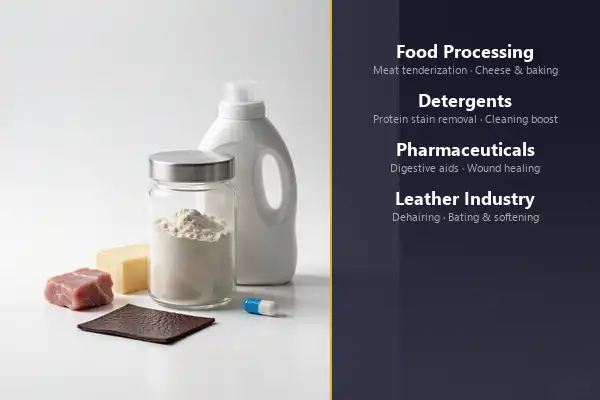
Protease Manufacturing Plant Cost Starts With Technology Choice
Cost Is More Than the Equipment Price
Before I read the machine list, I enquire about operational cost when I go over a new project. The cost of a protease production plant includes raw ingredients, fermentation output, batch time, energy, labour, downstream recovery, quality control, packaging and wastewater treatment. The form of the product is also important. Liquid, powder, granulated, food grade, feed grade and GMP goods demand a separate design. The cheapest equipment might lead to higher long-term costs due to downtime, inadequate cleaning access, inconsistent production and little possibility for expansion. So a low-cost plant begins with the end use and goes back via the technology, the architecture and the utilities.
How Fermentation Yield Sets Cost per Kilogram
Yield is the biggest lever on unit cost. Most commercial proteases are supplied by microbial fermentation. Reviews of proteases in industry identify proteases as accounting for around 60 percent of global enzyme sales (Kumar and Takagi, 1999; Rao et al., 1998). Efficient manufacturers are well positioned to benefit from this market size. More activity per batch implies fewer batches, less steam and less labour per kilogram sold. With our biological fermentation technique we achieve enzyme activities of >250,000 U/mL for alkaline protease and >200,000 U/mL for acidic protease. When modelling the cost of a protease production factory, enter yield first, since tiny increases there cascade over every other line item of the budget.
Raw Materials, Energy, and Recovery Losses
Four things make up the majority of the operational budget. Each is related to a useful control in the table.
| Cost driver | What it affects | Practical control |
|---|---|---|
| Raw materials | Medium cost per batch | Locally available substrates |
| Fermentation yield | Batches needed per ton | Strain choice and parameter control |
| Energy | Steam, cooling, aeration, drying | Right-sized utilities, efficient drying |
| Recovery | Activity lost after fermentation | Tuned filtration and ultrafiltration |
Asianbios employs locally accessible substrates such as soybean meal and bran, therefore decreasing the cost of the medium without any change in the biology. But equally, recovery demands care, as every filtration or drying stage might lose activity.
Process and Equipment Requirements for a Protease Plant
Upstream Preparation and Midstream Fermentation
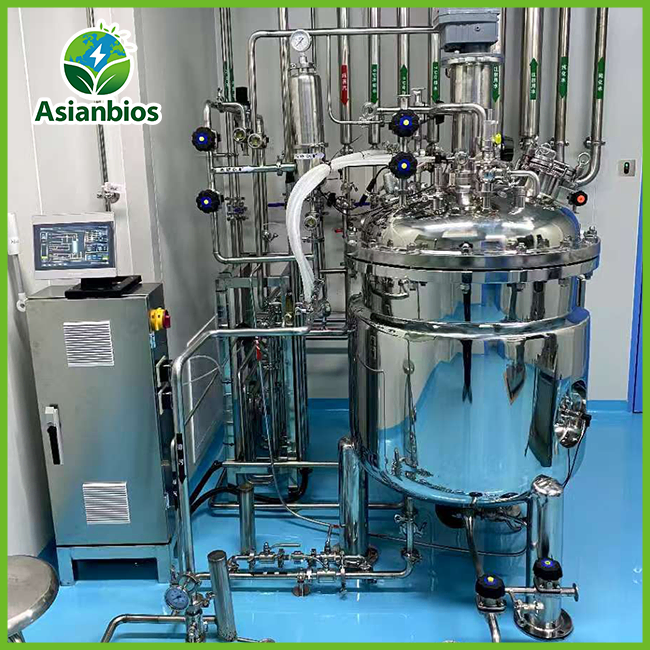
Our method is carried out in three steps. Upstream: strain selection and optimisation, seed liquid preparation under sterile conditions, medium preparation and sterilisation, and starting materials testing. Large-scale fermentation is carried out in a controlled midstream environment. Operators can see temperature, pH and oxygen develop in real time, feed nutrients in fed-batch mode and continuously monitor enzyme activity. Alkaline protease (pH 6.5–8.5) is produced by Bacillus subtilis while acid protease (pH 3.5–5.0) is produced by Aspergillus niger. Every batch is protected from contamination through sterile air, agitation, CIP and SIP procedures as necessary.
Downstream Recovery and Finishing
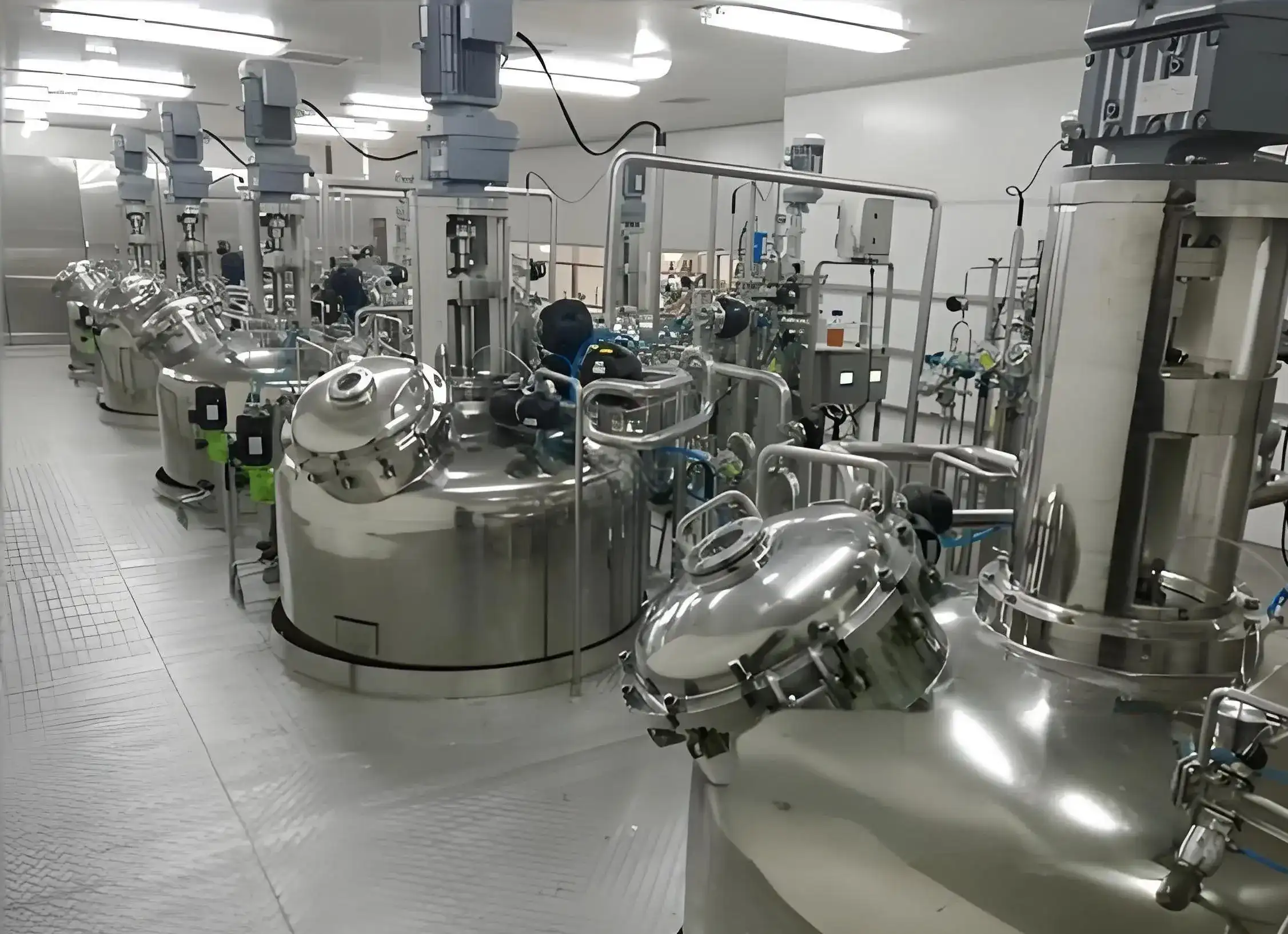
Downstream, the cells are removed via solid-liquid separation. The enzyme product is purified in multiple steps, including ultrafiltration and chromatography, concentrated, dried and finally formulated. Quality control is performed on the finished product. Most of the work is done by centrifuges, filter presses, membrane units, and evaporators. Every step loses some activity; therefore, I am as careful about the recovery design as I am about the fermenter. Powders simplify shipping, storage and customer handling. Liquid goods may save drying investment. Select the form your customers really purchase. This option affects equipment, energy utilisation and the cost of a protease production facility.
Core Equipment and Utility List
The equipment for a comprehensive facility is listed by area in the following table. List each item based on your protease production technology needs, local circumstances and hygiene standards. U.S. customers should additionally verify the facility against 21 CFR Part 117 for human food and Food Chemicals Codex criteria if applicable.
| Area | Typical equipment |
|---|---|
| Upstream | Seed tanks, production fermenters, agitators, sterile air filters, sensors, automated controls |
| Downstream | Centrifuges, filter presses, membrane units, blending tanks, stabilization systems |
| Finishing | Spray dryers, granulators, filling machines, dust collection |
| Laboratory | Tests for activity, moisture, pH, microbiology, and stability |
| Utilities | Boilers, compressors, cooling, water treatment, CIP units, wastewater treatment, backup power |
A concise list like this also makes every cost proposal from a protease-producing factory comparable. Leave room and services for a second line.
How Much Does a Protease Manufacturing Plant Cost?
What Goes Into CAPEX
The cost of a plant to produce proteases will vary widely depending on capacity, product, level of automation, construction requirements, local labour and energy costs and regulatory restraints. CAPEX generally includes process design, civil works, fermentation systems, downstream equipment, drying or formulation, packaging, utilities, laboratory systems, installation, commissioning, validation, contingency and working capital. I don’t provide a single dollar value here. A number without capacity and product form would mislead you. Ask for a project quotation that separates out equipment, engineering, installation, shipping, commissioning and service. The complete cost is concealed in the isolated machine price.
Why Small Plants Often Raise Cost per Kilogram
The cost per kilogram is frequently greater for a small plant, even though the initial investment is lower. Fixed labour, laboratory, and utility expenses are divided over fewer kilos, and a low operating rate leaves capacity unused. A bigger production volume spreads those expenses out, but only if it’s filled with demand. Modular fermenters and designated space allow you to begin by determining the volume you can sell and add vessels later. Asianbios offers pilot and production scale trials and industrial installation so you may verify yield first and estimate your protease manufacturing facility cost on verified results.
Comparing Investment Options
As this chart indicates for protease manufacturing plant cost planning, each investment model has its own cost and risk.
| Option | Best fit | Main risk |
|---|---|---|
| Outsourcing | Market testing, limited demand, no fermentation team | Less control over supply and quality |
| Buying a line | Teams with strong engineering staff | Buyer manages engineering and integration |
| Turnkey project | Buyers who want one accountable party | Needs a detailed specification up front |
New equipment generally has greater documentation and support than old equipment, which is important in GMP operations. A turnkey project may include design, installation, commissioning, training and technology transfer, with one company responsible for the output.
Choosing the Best Low-Cost Protease Production Technology
Strain, Medium, and Process Control
The most suitable low-cost technology for protease production depends on strain selection, medium composition and process control. The most inexpensive technology provides steady output, excellent recovery, controllable energy consumption and constant quality. It is not necessarily the cheapest to acquire. The success rate of batches is determined by strain selection, media design, oxygen transmission, temperature and pH management and real-time monitoring. Plant managers should also establish strain ownership, use rights and stability before signing in writing. Our techs and labs provide experimental verification so you may test your own substrates and get activity data before you invest funds. That evidence reduces the likelihood of rework, and keeps protease manufacturing plant cost closer to plan.
Modular Design and Automation
Modular fermenters, expandable utilities, standard pipework and reserved installation space support progressive investment. Automation, CIP and digital batch records minimise manpower and cleaning expenditures. Smaller enterprises might adopt semi-automatic systems. Consider separation and drying in combination. A dryer that saves capital but hurts activity raises the cost per kg for the protease manufacturing plant, while a membrane step that saves energy may lose too much output. Think of recovery, energy demand, maintenance and product stability as one option, not four.
Why a Customized Plant Solution Lowers Total Cost
A bespoke plant has capacity matched to real demand, eliminates over-sizing and enables development without changing core systems. The integration of fermentation, recovery, formulation and packaging avoids transfer losses and interface issues. Asianbios covers the full chain, from technical consultancy on project planning, line design and process schemes, formula development, process design and parameter tuning, pilot to production trials, equipment commissioning, operator training and on-site guidance, to after-sales maintenance, fault handling and process upgrades. We also explain that project success is 30 percent process design and 70 percent local execution. “Seventy percent of it is on-the-job training and coaching.”
Supplier Evaluation, ROI, and Procurement Planning
How to Evaluate a Protease Production Line Supplier
When choosing a provider of protease production technology, don’t only look at price. Look at their technical skills, project experience, paperwork and lifetime support. Request process flow diagrams (PFDs), P&IDs, mass and utility balances, equipment specifications, layouts, automation architecture, material certifications, capacity estimations and commissioning plans. Quotations should cover engineering, fabrication, shipping, installation, validation, training, replacement parts, warranty, taxes and service. Confirm factory and site acceptance testing, performance guarantees and technical support after start-up. Also ask about the delivery timetable, since delays in freight might delay the commissioning. The weighted grading sheet will provide an even comparison.
Feasibility Study, ROI, and Payback
Money is related to technical assumptions in a feasibility study. Inputs include annual capacity, operating rate, enzyme activity, selling price, raw material and utility costs, manpower, maintenance, packaging, financing and working capital. Divide the whole annual operating cost by the annual salable output (the annual production less the downtime and failed batches). The standard steps for such an estimate are described by Peters, Timmerhaus and West (2003). Then compute gross margin, EBITDA, payback period, break-even output, NPV and IRR for conservative, base case and optimistic scenarios. Test the cost of the protease manufacturing plant against output volatility, delays, contamination, adverse market conditions and utility inflation.
Recommended Procurement Path
First decide the application, enzyme activity, annual production, type of product, regulatory standard, utilities, budget, location, and growth plan. Before you ask for quotes, develop a preliminary process flow, mass balance, utility balance, equipment list, layout and CAPEX/OPEX model. Score all providers on weighted criteria. Include quantitative acceptance criteria in the contract: capacity, activity, yield, utility consumption, cycle time, uptime and product quality. The standard sequence is process review, small scale test, pilot, contract, fabrication, commissioning and acceptance. Following structured commissioning and operator training, the plant can be transitioned to steady production.
Conclusion
The price of a low-cost protease manufacturing plant is not determined by the lowest equipment bid but by the technology used. Biological fermentation with a stable high-yield strain, careful management of temperature, pH and oxygen and excellent recovery keeps the protease manufacturing plant cost per kilogram low. A complete plant needs fermentation, downstream, finishing, laboratory and utilities systems specific to the product form. The capital cost is linked to the capacity, the degree of automation and the standards. Small facilities have higher unit costs and the three investment models include a trade-off between control and risk. The modular architecture allows for incremental growth. Before construction, verify the investment through a feasibility study using payback period, NPV and IRR. Good vendors supply full documentation, itemised quotations and quantitative acceptance criteria. The success of the project depends on the design of the process and its local execution.
FAQ
1. What affects protease manufacturing plant cost the most?
The biggest factors are capacity, product format, enzyme activity, automation level, GMP requirements, facility standards and local construction and utility costs. A high-active liquid for technical application requires a less complex plant than a GMP powder for food.
2. Is outsourcing cheaper than building a plant?
If you are at the market validation stage and you avoid investing in fermentation equipment and labour, outsourcing may be cheaper at modest quantities. When demand is high and predictable, producing in-house provides greater control and higher profitability.
3. How long does construction take?
The schedule is dependent on design complexity, approvals, equipment production, shipping, installation and validation. Ask each supplier for a schedule with dates for each milestone, including sea freight.
4. How can I lower production cost?
Boost production, enhance recovery, conserve energy, perform preventative maintenance, and operate the plant near its rated capacity. With every stage, the price per kg falls.
Request a Protease Manufacturing Plant Cost Estimate From Asianbios
Are you searching for a cost-effective supplier for a protease production facility or developing your first fermentation line? Please provide your target application, yearly output, enzyme activity, product form and location data to plantex@asianbios.com. Asianbios will provide a process flow sheet, equipment list and explicit cost break-up for the protease production facility, including protease manufacturing plant cost, along with pilot testing, commissioning and operator training. See our fermentation services at asianbios.com.
References
1. Biotechnology Advances (1999) – Kumar, C.G., Takagi, H., "Microbial alkaline proteases: from a bioindustrial viewpoint."
2. Microbiology and Molecular Biology Reviews (1998) – Rao, M.B., et al., "Molecular and Biotechnological Aspects of Microbial Proteases."
3. Applied Microbiology and Biotechnology (2002) – Gupta, R., Beg, Q.K., Lorenz, P., "Bacterial alkaline proteases: molecular approaches and industrial applications."
4. Frontiers in Bioengineering and Biotechnology (2019) – Razzaq, A., et al., "Microbial Proteases Applications."
5. World Journal of Pharmacy and Pharmaceutical Sciences (2014) – Sawant, R., Nagendran, S., "Protease: An Enzyme with Multiple Industrial Applications."
6. Plant Design and Economics for Chemical Engineers (2003) – Peters, M.S., Timmerhaus, K.D., West, R.E.
About the Author

Asianbios
Our purpose is to forge a legacy of stewardship, advancing initiatives that honor and preserve the ecological integrity of our planet.

Send Inquiry
Related Industry Knowledge
- L-Glutamine: The Unsung Hero of Gut Repair
- Best Sleep Aid Tablets with Melatonin: How the Formula Works
- Centrifugal Discharge Machine Applications in Food Manufacturing
- Berberine Hydrochloride Extract 97%: Uses, Quality Standards & Supplier Guide
- What Is Glucoamylase Production Technology and How It Works
- Ergothioneine Benefits for Longevity, Brain and Skin Health
- What Is Production Technology Of Ergothioneine Used For?
- How Isoleucine Production Technology Supports High Efficiency
- What are the benefits of apple powder?
- Radish Freeze-Dried Powder: Benefits, Uses, and Nutritional Value Explained